Expression of Concern: Tumor Associated Macrophage × Cancer Cell Hybrids May Acquire Cancer Stem Cell Properties in Breast Cancer

Abstract
Genes, proteins, chemicals, diseases, species, mutations and cell lines named across the full text — each resolved to its canonical identifier and authoritative record.
Click any figure to enlarge with its caption.
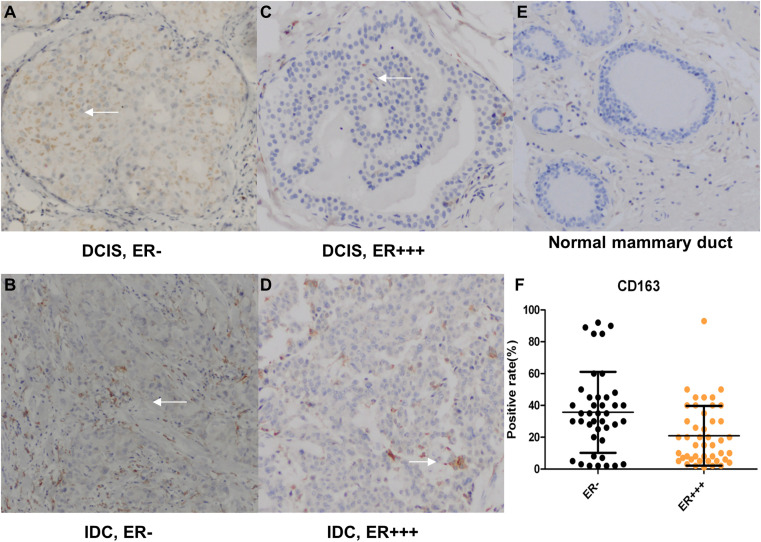 Figure 1
Peer Reviews
No public reviews on file for this paper yet. If you reviewed it on a platform where reviews are public (OpenReview, ICLR, NeurIPS, ICML), you can paste yours below so the community can read it here.
Videos
No videos yet. Explain this paper in a talk, walkthrough, or lecture? Add one.
Taxonomy
TopicsImmune cells in cancer · Cancer Cells and Metastasis · Phagocytosis and Immune Regulation
Following the publication of this article [1], concerns were raised regarding results presented in Figs 2, 4, and 7, and the methods. Specifically:
The first author stated that Fig 1B in [1] is incorrect, and provided replacement images from the original experiments for Figs 1A-E and a corrected Fig 1. The underlying images for the updated Fig 1 are provided in S1 File, and the individual-level underlying data for Fig 1F are provided in S2 File. Underlying images for the remainder of the 89 samples were not provided on editorial request.
The first author also stated that, in Fig 4F, the size markers were spliced into the gel images for visualization purposes. The original, uncropped gel images for Fig 4F were not provided upon editorial request and therefore these concerns cannot be fully resolved. The first author provided some underlying data for Figs 4E and G (S4 File). They also stated that the product sizes of all lanes in the right-hand panel of the GAPDH samples and the size Marker lanes of both Snail 1 panels in Fig 4F are incorrect. The first author provided an updated Fig 4 with corrected product size labels (S5 File).
A statistical reviewer reanalyzed the underlying data for Fig 2C provided by the first author in S3 File. Using ANOVA, with p values adjusted with Bonferroni’s method for pairwise group comparison, they stated that the p-values remain significant.
The first author stated that the animal experiments in [1] were outsourced to an external company, and that they are unable to provide any approval documentation or further information regarding the animal experiments carried out in this study.
The first author also stated that the remainder of the underlying data for [1] are available upon request.
The PLOS One Editors issue this Expression of Concern to notify readers of the above concerns and to relay the data provided by the first author.
Supporting information
S1 FileUnderlying images in support of Figs 1A-E.(ZIP)
S2 FileOriginal quantitative data underlying Fig 1F.(PZF)
S3 FileOriginal quantitative data underlying Fig 2C.(XLS)
S4 FileOriginal quantitative data underlying Fig 4G and partial original quantitative data underlying Fig 4E.(ZIP)
S5 FileFigure 4 with updated product size labelling.(TIF)
The reference list from the paper itself. Each links out to its DOI / PubMed record.
- 1Ding J, Jin W, Chen C, Shao Z, Wu J. Tumor associated macrophage × cancer cell hybrids may acquire cancer stem cell properties in breast cancer. P Lo S One. 2012;7(7):e 41942. doi: 10.1371/journal.pone.0041942 22848668 PMC 3405038 · doi ↗ · pubmed ↗
- 2Ding J, Guo Y, Jiang X, Li Q, Li K, Liu M, et al. Polysaccharides Derived from Saposhnikovia divaricata May Suppress Breast Cancer Through Activating Macrophages. Onco Targets Ther. 2020;13:10749–57. doi: 10.2147/OTT.S 267984 33132702 PMC 7592155 · doi ↗ · pubmed ↗