Feeding and resting behaviours of natural Anopheles gambiae s.l. populations in an area of low malaria transmission in south-western Senegal: A comparative study between mainland and island settings
Moussa Diop, Youssouph Coulibaly, Cheikh Lo, Abdoulaye Kane Dia, Ndeye Aita Ndoye, Edouard Guedj Tine, Ndeye Seny Diagne, Yaya Ibrahim Coulibaly, Modibo Sangaré, Omar Thiaw, Mouhamadou Bassir Faye, Mame Fatou Tall, Oumar Ciss, Ousmane Faye, Abdoulaye Niang, Lassana Konaté

TL;DR
This study compares the feeding and resting behaviors of malaria-carrying mosquitoes in mainland and island areas of Senegal to improve malaria control strategies.
Contribution
The study provides new insights into the behavior of Anopheles gambiae s.l. in different geographical settings for malaria control.
Findings
Anopheles gambiae s.l. was the predominant species, with seasonal variation observed.
Indoor resting densities were higher on the island compared to the mainland.
Human blood index was significantly higher for indoor resting mosquitoes in mainland areas.
Abstract
The biting and resting behaviours of Anopheles species, which are human malaria vectors, are specifically linked to ecological and climatic requirements that characterize certain geographical settings, such as forests and humid savannah areas where favourable conditions for malaria mosquitoes are found. In southern Senegal, the outdoor resting behaviour of Anopheles gambiae s.l. populations is suspected to be a major problem in malaria control, given that indoor-based control tools are currently deployed across the country. A longitudinal study was conducted to investigate the population dynamics, trophic preferences and resting behaviours of Anopheles gambiae s.l. in mainland and island areas in south-western Senegal. Indoor and outdoor resting mosquitoes were collected from September 2020 to November 2021 using Pyrethrum Spray Catches and Prokopack aspirators, respectively.…
Genes, proteins, chemicals, diseases, species, mutations and cell lines named across the full text — each resolved to its canonical identifier and authoritative record.
Click any figure to enlarge with its caption.
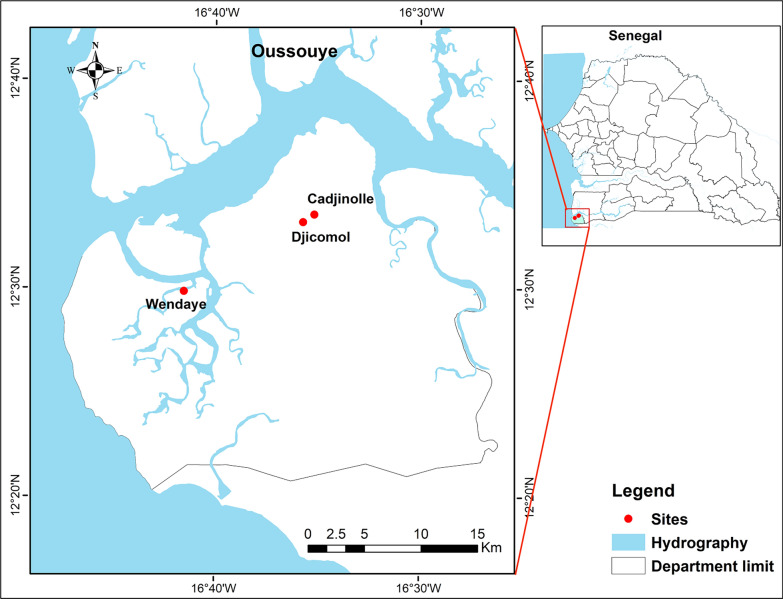 Figure 1
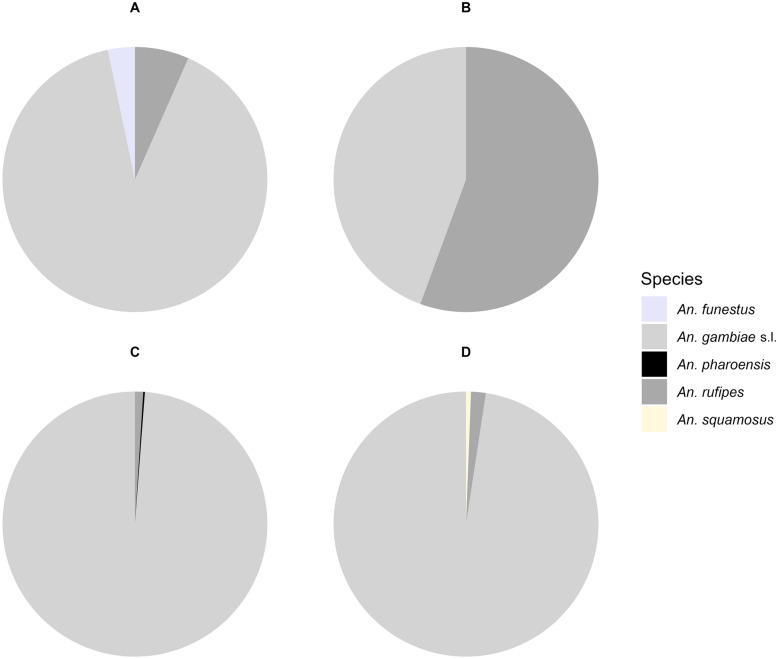 Figure 2
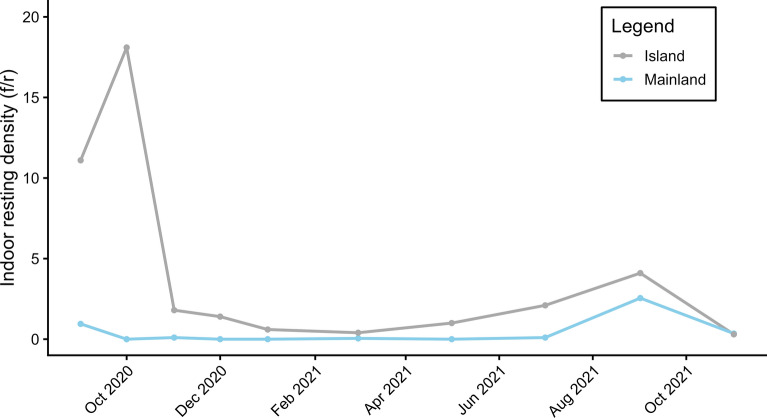 Figure 3
 Figure 4
Peer Reviews
No public reviews on file for this paper yet. If you reviewed it on a platform where reviews are public (OpenReview, ICLR, NeurIPS, ICML), you can paste yours below so the community can read it here.
Videos
No videos yet. Explain this paper in a talk, walkthrough, or lecture? Add one.
Taxonomy
TopicsMalaria Research and Control · Parasitic Diseases Research and Treatment · Mosquito-borne diseases and control
Background
Several Anopheles species are vectors of infectious diseases, such as malaria, which is among the major public health problems in sub-Saharan Africa [1]. In the western African region, malaria incidence is particularly high in humid savannah and forests, where vectors find favourable conditions for their development and survival [2, 3]. In Senegal, more than 20 anopheline species have been described thus far, including at least seven known malaria vectors. Of these, Anopheles gambiae s.s., Anopheles coluzzii, Anopheles arabiensis [4, 5] and Anopheles funestus play a primary role in malaria transmission, while the remaining species, such as Anopheles. nili, Anopheles melas and Anopheles pharoensis, are secondary vectors [6–9]. Each of these vector species has its own bionomic traits, including resting behaviour, which govern species adaptation to vector control interventions.
Current core malaria vector interventions include indoor residual spraying (IRS) and long-lasting-insecticide-treated nets (LLINs) [10], which primarily target indoor resting (endophilic) and indoor biting (endophagic) anopheline populations [1]. Indoor residual spraying can be very effective for endophilic vector populations that are susceptible to the insecticide formulated for spraying purposes. Over the past two decades, IRS and LLINs have contributed to averting almost 70% of malaria cases worldwide [11]. Despite the effectiveness of these interventions, several studies have demonstrated that malaria elimination goals are jeopardized by residual transmission sustained by outdoor biting and outdoor resting vectors [12, 13]. Understanding vector resting behaviour is fundamental before implementing IRS at a given site. Vector resting behaviour is also an important factor when evaluating the impact of IRS, thus enabling possible shifts to be pinpointed as adaptive responses to control tools. Indoor resting mosquitoes are usually collected using the pyrethrum spray catches (PSC) method, which has several limitations, mainly because of its inability to obtain samples of outdoor resting specimens. To fill this gap, the Prokopack aspirator has often been used simultaneously with PSCs.
In Senegal, the coverage rates of LLINs and IRS in the southern part of the country in 2022 reached 99% and 94.6%, respectively. Thus, these strategies have significantly contributed to reducing malaria incidence in this region [14]. In addition to their effectiveness, the widespread implementation of IRS and LLINs has consequently induced evolutionary adaptations in malaria vector populations, leading to resistance to or escape from these insecticide-based interventions. Major adaptations include insecticide resistance and shifts in biting and resting behaviours [15–17]. To maintain the effectiveness of current vector control tools and reduce protection gaps, more targeted control measures are needed. This study investigated the feeding and resting behaviours of An. gambiae s.l. populations from mainland and island areas in south-western Senegal.
Methods
Study area
A longitudinal study was conducted in south-western Senegal from September 2020 to November 2021 in two different ecological settings (mainland and island). Two neighbouring sites, Djicomol (12°33′11″N, 16°35′43″W) and Cadjinolle (12°33′33″N, 16°34′70″W), located in the village of Mlomp, were selected in the mainland area. In the island area, Wendaye (12°29′51″N;,16°41′31″W), which is in the Diembering heath district and one of the numerous insular villages within the specific Bolong ecosystem (swampy brackish water river system), was selected. Mlomp and Diembering are located in Oussouye, one of the three departments of the Ziguinchor region (Fig. 1). The village of Mlomp, which covers an area of 70 km^2^, is located approximately 500 km from Dakar, the capital city of Senegal, 50 km west of the city of Ziguinchor and 25 km north of the border with Guinea-Bissau [18]. The health district of Diembering, covering 237 km^2^, is located alongside the coast of the Atlantic Ocean. It is bounded towards the north by the Casamance River, to the east by the communes of Mlomp and Oukout, to the south by the Republic of Guinea-Bissau and to the west by the Atlantic Ocean. The Casamance River and various tributaries provide a Diembering hydrographic network, which has created, in the deltaic area, the Bolong’s swampy brackish water river ecosystem, specific to the Casamance Natural Region and its multitudes and scattered insular villages. Wendaye, as with other islands, is characterized by the density and extent of the hydrographic network running deep into the communes. All villages are either adjacent to riverine backwaters or have a river running through them [19]. The climate of the study area is of the Sudano-Guinean type, with a rainy season lasting from mid-June to November and a dry season from December to mid-June. The annual rainfall is relatively high, estimated between 1200 and 2000 mm. The temperatures are generally moderate, ranging from 15 to 18 °C during the cold season and from 27 to 32 °C during the hot season [20]. The major activity in the southern part of the country is rice growing, along with microgardening, which generates substantial anopheline larval breeding sites.Fig. 1. Location of the study sites
Mosquito sampling and laboratory processing
Indoor and outdoor resting mosquitoes were sampled monthly in 2020 and bimonthly in 2021 using pyrethrum spray catches (PSCs) and Prokopack aspirators, respectively. Pyrethrum spray catches were carried out from 7 a.m. to 9 a.m. inside ten randomly selected rooms in each study village. In the meantime, collections with the Prokopack aspirator were conducted for approximately 10 min, targeting all potential outdoor shelters within and around the ten concessions selected for PSCs, within a radius of up to 50 m centred on each surveyed household. Upon collection, the mosquitoes were sorted to the genus level, and Anopheles species were identified using conventional keys [6]. The collected resting females were further classified according to their abdomen state, i.e., unfed, fed, half-gravid and gravid females. All the sampled anopheline specimens were individually stored in numbered Eppendorf tubes containing desiccant and kept for subsequent laboratory processing.
In the laboratory, a subsample of randomly selected indoor and outdoor-resting blood-fed females of anopheline mosquitoes was processed to determine the origin of blood meals (i.e., humans, bovines, ovines, chickens and equines) using the direct enzyme-linked immunosorbent assay (ELISA) method described by Beier et al. [21]. Genomic DNA was extracted from individual An. gambiae s.l. samples using the protocol of Collins et al. [22], and molecular identification was performed using the polymerase chain reaction (PCR) method described by Wilkins et al. [23].
Data analysis
Indoor resting densities were calculated by dividing the number of Anopheles females collected from PSCs by the number of collection points (PSC rooms). The human blood index (HBI) was estimated as the ratio of the number of blood meals taken from humans to the total number of blood meals identified. The data were recorded in an Excel spreadsheet. R software (version 4.3.0) was used for all the statistical tests. The Student’s t-tests was used to compare means, and the Pearson’s chi-squared test was used to compare proportions. The significance level was set at 5%.
Results
Composition and distribution of the anopheline fauna
A total of 765 Anopheles female mosquitoes were collected during the entire study period. The collected samples consisted of 697 (91.1%) An. gambiae s.l., 63 (8.2%) Anopheles rufipes, 3 (0.4%) An. funestus, 1 (0.1%) An. pharoensis and 1 (0.1%) Anopheles squamosus. Mainland sites represented 23.7% (n = 181) of the collections, with 50.3% (*n *= 91) collected indoors and 49.7% (n = 90) collected outdoors. The abundance of Anopheles was significantly greater (χ^2^ = 19.09, df = 1, P = 1.25 × 10^−5^) on Wendaye Island (n = 584, 76.3%), with 70.9% (n = 414) collected indoors and 29.1% (n = 170) collected outdoors.
Overall, Anopheles-specific diversity was low during the study period at both the mainland and island study sites (Fig. 2). Indoor resting females included An. gambiae s.l., An. funestus , An. rufipes and An. pharoensis specimens, whereas the outdoor collections consisted of An. gambiae s.l., An. rufipes and An. squamosus. At mainland sites, An. gambiae s.l. and An. rufipes were found indoors and outdoors, whereas An. funestus was only collected indoors. Similarly, at island sites, An. gambiae s.l. and An. rufipes were collected both indoors and outdoors, whereas An. funestus was absent during the study period. Anopheles pharoensis was collected indoors, and An. squamosus was collected outdoors, in low proportions (Fig. 2). As An. gambiae s.l. was predominant, subsequent comparisons focused on this species.Fig. 2. Species composition of resting Anopheles mosquitoes on the mainland and the island in south-western Senegal. A Indoor mainland. B Outdoor mainland. C Indoor island. D Outdoor island
Anopheles gambiae s.l. population dynamics and relative abundance
Endophilic and exophilic An. gambiae s.l. populations were dense at mainland sites in September of each study year. The mean relative abundances of the endophilic and exophilic populations were 23.2% and 40%, respectively, in 2020. Conversely, in 2021, the percentages of endophilic and exophilic females were 62.2% and 27.5%, respectively. Notably, An. gambiae s.l. females displayed an exophilic tendency during December 2020 and January 2021 (Table 1).Table 1. Monthly variation in the relative abundance of An. gambiae s.l.MonthsMainlandIslandPSCProkopackPSCProkopackn%n%n%n%September 20201923.21640.011127.1402.4October 20200000.00000.018144.32112.7November 20200202.40205.01804.41509.0December 20200000.00615.01403.43018.1January 20210000.00102.50601.51207.2March 20210101.20000.00401.00603.6May 20210000.00000.01002.41307.8July 20210202.40205.02105.13018.1September 20215162.21127.54110.01911.4November 20210708.50205.00300.71609.6Total8240409166PSC, pyrethrum spray catches
In comparison, the natural populations of An. gambiae s.l. displayed clear indoor resting behaviour in September (27.1%) and October (44.3%) of 2020. Anopheles gambiae s.l. outdoor resting behaviour was observed in October (12.7%) and December of 2020 (18.1%) and in July (18.1%) and September of 2021 (11.4%). Globally, An. gambiae s.l. females were more abundant in outdoor shelters and even more abundant in island populations regardless of the collection method (Table 1).
Physiological state of An. gambiae s.l. resting females
The abdominal statuses of 697 An. gambiae s.l. resting females were determined. Among the 122 females collected from mainland sites, 75.6% and 57.5% of the samples collected indoor and outdoor, respectively, had recently fed. At the island sites, 63.3% of females collected indoors and 44.0% of females collected outdoors had recently fed (Table 2).Table 2. Physiological state of An. gambiae s.l. femalesSitesMethodsUnfedFedHalf-gravidGravidTotaln%n%n%n%MainlandPSC0506.16275.61315.90202.482Prokopack0717.52357.50410.00615.040IslandPSC6215.225963.32806.86014.7409Prokopack3621.77344.02313.83420.5166Total11041768102697PSC, pyrethrum spray catches
Resting behaviour and feeding pattern of An. gambiae s.l. females
Indoor resting densities
The mean indoor resting density (IRD) of An. gambiae s.l. was significantly (t = −1.9461, P = 0.082) lower at mainland sites [0.41 females per room (f/r)] than at island sites (4.09 f/r). The highest IRDs were recorded in October 2020, with 18.1 f/r at island sites, and in September 2021, with 2.55 f/r at mainland sites (Fig. 3).Fig. 3. Indoor resting density of An. gambiae s.l. populations on the mainland and on the island in south-western Senegal from 2020 to 2021
Trophic preferences
The blood meals of 87 An. gambiae s.l. females were tested, including 65 from indoor collections and 22 from outdoor shelters at mainland sites. For indoor resting females, 63 blood meals were successfully identified, including 48 samples from humans, 9 from bovines, 2 from sheep, 1 from chickens and 1 from mixed origin (sheep + chickens + equines). Of the 22 exophilic females tested, 21 blood meals were successfully identified, including 8 from humans, 6 from bovines and 2 from mixed origins 1 from humans + sheep + equines and 1 from humans + sheep + chickens + equines).
Meanwhile, a total of 330 blood meals from island sites were tested, including 257 from indoor resting females and 73 from outdoor resting females. Of the 231 successfully identified blood meals, 55 were from humans, 157 from bovines, 13 from sheep and 3 from mixed origins (human + sheep). Among the 73 outdoor resting females, 90 blood meals were successfully identified, with 16 from humans, 30 from bovines, 5 from sheep and 12 from mixed origins 2 from human + sheep, 1 from humans + bovines, 1 from humans + chickens, 1 from humans + sheep + equines and 7 from humans + sheep + chickens + equines) (Table 3).Table 3. Origin of the blood meal of An. gambiae s.l. femalesSitesVertebrate hostsMixedHBI (%)TINHBSCEHSHBHCHSESCEHSCEMainland PSC6563448921000001076.2 Prokopack222168600000010147.6 Total878410561521000011169.0Island PSC2572312955157130030000025.1 Prokopack739010163050021110731.1 Total3303213971187180051110726.8Total41740549127202201051121835.5T, tested; I, identified; N, negative; PSC, pyrethrum spray catches; H, human; B, bovine; S, sheep; C, chicken; E, equine; HBI, human blood index
Indoor and outdoor human blood index
At mainland sites, the human blood indices (HBIs) were 76.2% (48/63) and 47.6% (10/21) for endophilic and exophilic An. gambiae s.l. populations, respectively. The HBI was significantly greater in endophilic populations (χ^2^ = 4.42, df = 1, P = 0.035). Blood meals obtained from bovine hosts accounted for 14.3% (9/63) and 28.6% (6/21) of the endophilic and exophilic populations, respectively. Bovines were the second host of choice for An. gambiae s.l. resting females both indoors and outdoors. Conversely, the HBI at the island sites was 25.1% (58/231) for endophilic females and 31.1% (28/90) for outdoor resting females, with no significant difference between the two subpopulations (χ^2^ = 0.43, df = 1, P = 0.51). Therefore, bovines were the main blood source for both endophilic and exophilic An. gambiae s.l. populations at island sites constituted 68.0% (157/231) and 34.4% (31/90) of the blood sources, respectively.
The HBIs of An. gambiae s.l. significantly differed between mainland and island sites. The HBI was 25.1% at the island sites and 76.2% at the mainland sites for the indoor resting population. For exophilic populations, the HBI was 31.1% at island sites and 47.6% at mainland sites. The endophilic population at the mainland sites had a greater HBI than that at the island sites did (χ^2^ = 17.67, df = 1, P = 2.63 × 10^−5^). Conversely, the HBIs obtained for the exophilic populations did not significantly differ between the mainland and island sites (χ^2^ = 2.32, df = 1, P = 0.13) (Table 3).
Molecular identification of An. gambiae sibling species
Subsamples of 324 An. gambiae s.l. specimens were identified at mainland (n = 75) and island (n = 249) sites by PCR. Molecular analysis identified An. gambiae s.s. (85.3%, n = 64), An. arabiensis (6.7%, n = 5), An. coluzzii (2.7%, n = 2) and An. gambiae/An. coluzzii hybrids (5.3%, n = 4) at mainland sites, whereas An. gambiae s.s. (77.1%, n = 192), An. arabiensis (20.9%, n = 52) and An. gambiae/An. coluzzii hybrids (2.0%, n = 5) were observed at the island sites. Anopheles gambiae s.s. was the most common species at both the mainland and island sites.
Discussion
During this study, 5 of the 20 Anopheles species described in Senegal [6] were collected in the study area using two sampling methods targeting both indoor and outdoor resting mosquitoes. Anopheles gambiae s.s. was the predominant species, and its relative abundance displayed seasonal variation, following the rainfall regimes at the mainland and island sites. Compared with exophilic females, endophilic An. gambiae s.l. females exhibited a greater feeding preference for humans at mainland sites. Conversely, at the island sites, both endophilic and exophilic populations tended to be zoophilic.
The predominance of An. gambiae s.s. a primary malaria vector in several parts of Senegal is consistent with the findings of previous studies [24–26]. Its predominance could be explained by the existence of suitable ecological conditions for larval breeding sites and the survival of adult populations in the humid savannah and forest ecosystems in the southern part of Senegal. Moreover, the presence of multiple rice farms created favourable conditions for the proliferation of anopheline larval habitats, as reported elsewhere [1, 26–29]. The resting density of An. gambiae was greatest during the middle and end of the rainy season, between September and October, when permanent breeding sites were more common. The high mosquito densities during the dry season (December 2020 and May 2021) recorded in Wendaye are possibly attributable to the creation of ponds and paddles following the withdrawal of the watercourses crossing the island in their minor riverbeds during the dry season and/or the tidal rhythm [9]. The high densities of exophilic populations, especially at island sites at the beginning of the rainy season and during the dry season, could be explained by the existence of widespread favourable well-shaded outdoor resting sites offered by the abundant surrounding vegetation cover. Furthermore, the greater tendency towards the observed exophilic behaviour of An. gambiae s.l. could be an induced behavioural shift in response to the deployment of indoor insecticide-based vector control interventions, such as LLINs and IRS [30].
During the study, mosquito host preferences varied according to the sampling method and collection site. Some species show a highly specific trophic tendency, whereas others display more plasticity in terms of blood-feeding patterns, following the availability and accessibility of alternative hosts. Anopheles gambiae s.l. is generally known to have a stronger anthropophilic preference [24, 31–34].
On the mainland, An. gambiae s.l. endophilic females were highly anthropophilic, as observed by Faye et al. [35] in the middle Senegal River valley, as well as in other previous studies carried out under similar ecological conditions [9, 31, 36]. However, the exophilic tendency of An. gambiae s.l. populations provide a wider alternative blood source spectrum, which could explain the observed lower HBI and the greater tendency to feed on alternative animal hosts. This preference for alternative animal hosts may have resulted from the repellent effect of the LLINs used indoors, which could divert host-seeking females towards more available and accessible alternative animal hosts [8, 37].
At island sites, bovine hosts were the primary blood source for both the endophilic and the exophilic populations, which displayed lower anthropophilic preference. This preference could be explained by the predominance of bovine animals within the livestock population at this site. Indeed, the island is a restricted area and offered little space for keeping pets, which resulted in a high abundance of cattle and other animals living in the vicinity of households, and, consequently, the probable trophic deviation noted on Wendaye Island. Moreover, the widespread use of LLINs may also partially explain the observed tendency towards zoophagy [35]. These results are in line with previous observations on Reunion Island [38]. On Madagascar Island, Ravoahangimalala et al. [39] reported low HBIs, especially at the Ambohimahavelona (20%) and Kalandy (16%) sites. In Dogo (Ghana), very low HBIs were reported for An. gambiae s.l. populations [40]. Observations of the trophic preferences of endophilic [41] and exophilic An. gambiae s.l. populations revealed that the human host became increasingly inaccessible under natural conditions and that several vector species are diverted to alternative domestic animals. However, multiple animals are kept close to human habitations, and zoophagic species can maintain residual transmission when gaps in protection occur. Further investigations are needed to address opportunistic tendencies.
The results of this study provide key information on the predominant species in the area while revealing different feeding and resting patterns between mainland and island sites. During this study, An. gambiae s.l. resting females were found both indoors and outdoors. Natural An. gambiae s.l. populations displayed variable trophic preferences depending on the availability and accessibility of different hosts. Anopheles gambiae s.l. remained highly polyphagous, although endophilic females fed preferentially on humans at mainland sites. Bovines were the preferred host for zoophagous females at both the mainland and island sites. However, the persistence of competent malaria vectors in the area should be considered residual outdoor malaria transmission. Evidence on vector behaviours will enable control programmes to select appropriate interventions. This study serves as a starting point for providing preliminary evidence on key vector feeding and resting behaviours to optimize and complement current and future control strategies.
In terms of limitations, evaluating the involvement in malaria transmission and assessing the contribution of exophilic An. gambiae s.l. populations in malaria transmission would be interesting. In the south of the country, changes in resting behaviour need to be closely monitored to implement interventions complementary to LLINs and IRS that will target outdoor resting vectors. The sterile insect technique, which involves altering the fertility of an insect to control its population, would be an effective tool for combating exophilic An. gambiae s.l. populations in the area.
Conclusions
This study was conducted in an area with a low malaria incidence in south-western Senegal, where few areas of residual transmission provide preliminary information about the feeding and resting behaviours of An. gambiae s.l. Preliminary results revealed variable dynamics, with marked seasonal fluctuations in indoor and outdoor resting An. gambiae s.s., the main malaria vector that feeds both on humans and animals. However, the observed high HBIs at mainland sites contrasts with the high level of zoophagic rates observed at island sites. The persistence of competent malaria vectors in the study area, which is not impacted by indoor-based vector control interventions, placed the human population at risk of outdoor residual malaria transmission across the entire study area. These preliminary results provide basic information for understanding An. gambiae s.s. feeding and resting behaviours, which are key for evidence-based interventions to control the southern Senegal zoophilic and exophilic malaria vector populations and eliminate malaria in this region.
The reference list from the paper itself. Each links out to its DOI / PubMed record.
- 1PDC. Diagnostic report for the Commune of Mlomp. Report. 2018. http:// www.pouyelayese.com/ardzig/media/attachments/2020/11/23/rapport-final_pdc_mlomp-ouss.pdf.