Synthesis of an A/B-cis-Fused Cyclopenta[b]fluorene (6/5/6/5) Ring System for Embellicine A via the Eight-Membered Silylene-Tethered IMDA Reaction
Yuya Sakai, Ryoma Murata, Akihiro Hirakawa, Yusuke Nakatani, Tsubasa Maeda, Yuki Kuwano, Shunya Morita, Hiromi Uchiro

TL;DR
Scientists developed a new method to synthesize a complex ring structure found in embellicine A using a silylene-tethered Diels–Alder reaction.
Contribution
A novel eight-membered silylene-tethered IMDA approach for constructing a cis-fused cyclopenta[b]fluorene ring system.
Findings
The A/B-cis-fused tetracyclic compound was obtained with complete stereoselectivity.
Functional group manipulations led to the synthesis of a fully elaborate embellicine tetracyclic fragment.
Abstract
The first synthesis of an A/B-cis-fused cyclopenta[b]fluorene (6/5/6/5) ring system was successfully achieved via an intramolecular Diels–Alder (IMDA) reaction of an eight-membered silylene-tethered precursor. In this key step, a significant conformational change in the diene moiety was achieved by introducing an eight-membered silylene tether, and the desired A/B-cis-fused tetracyclic compound was obtained with complete stereoselectivity. After several functional group manipulations on the D-ring, a fully elaborate tetracyclic fragment of embellicines was successfully synthesized.
Genes, proteins, chemicals, diseases, species, mutations and cell lines named across the full text — each resolved to its canonical identifier and authoritative record.
Click any figure to enlarge with its caption.
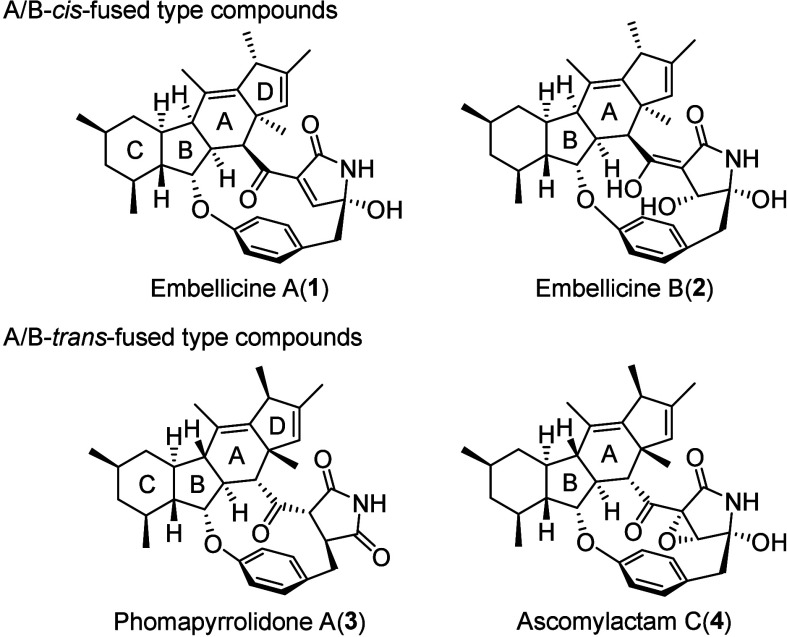 Figure 1
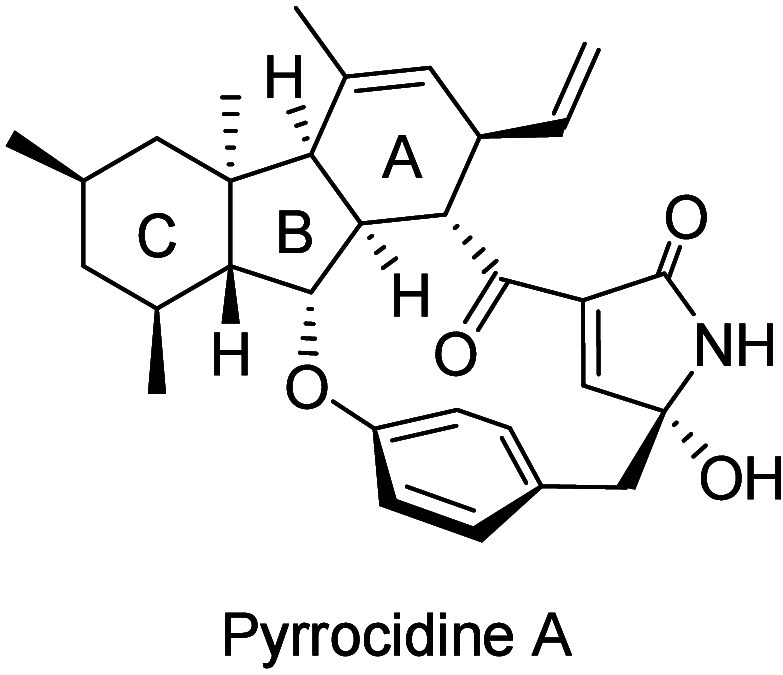 Figure 2
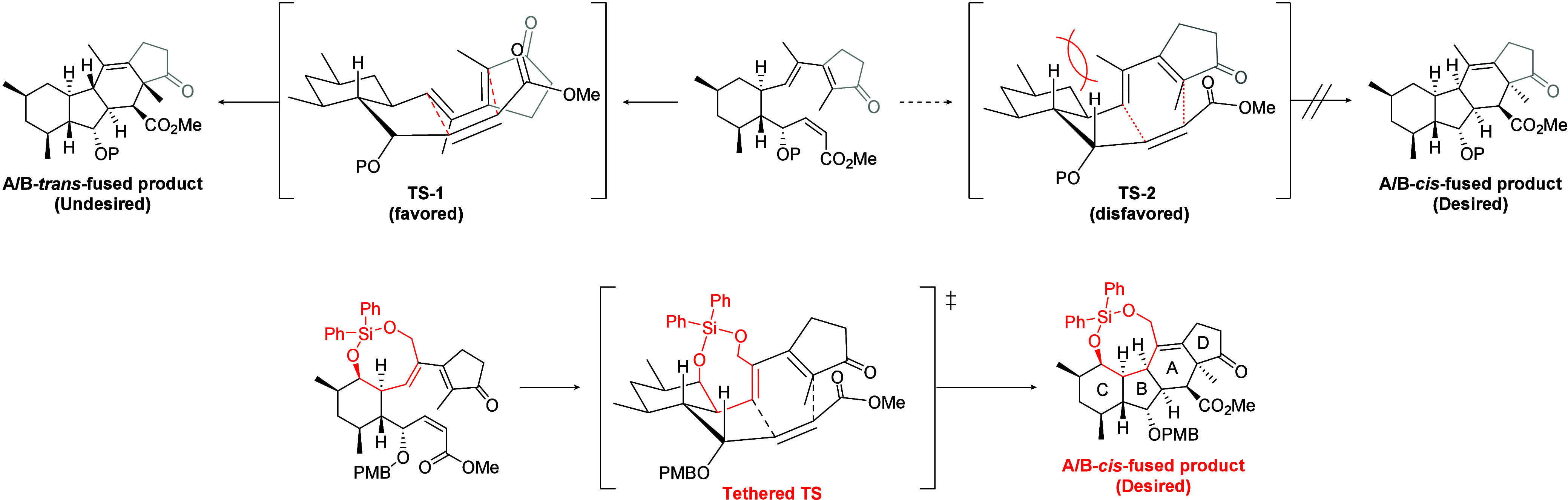 Figure 3
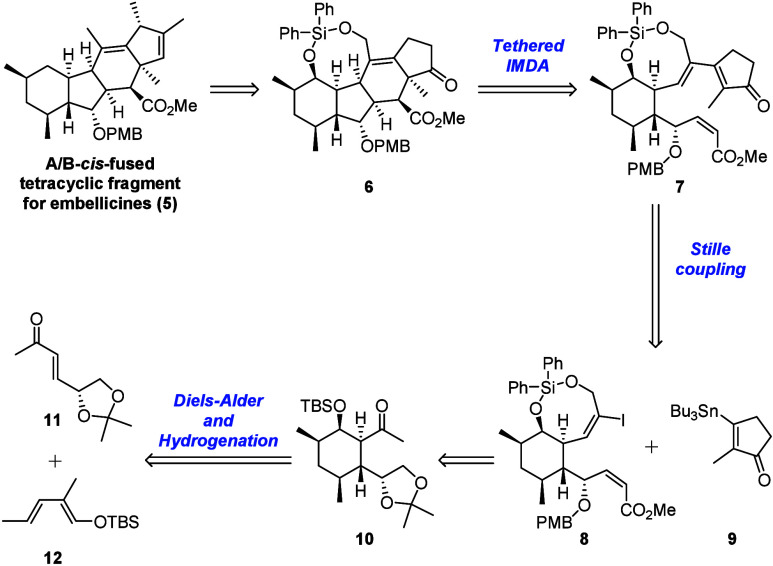 Figure 4
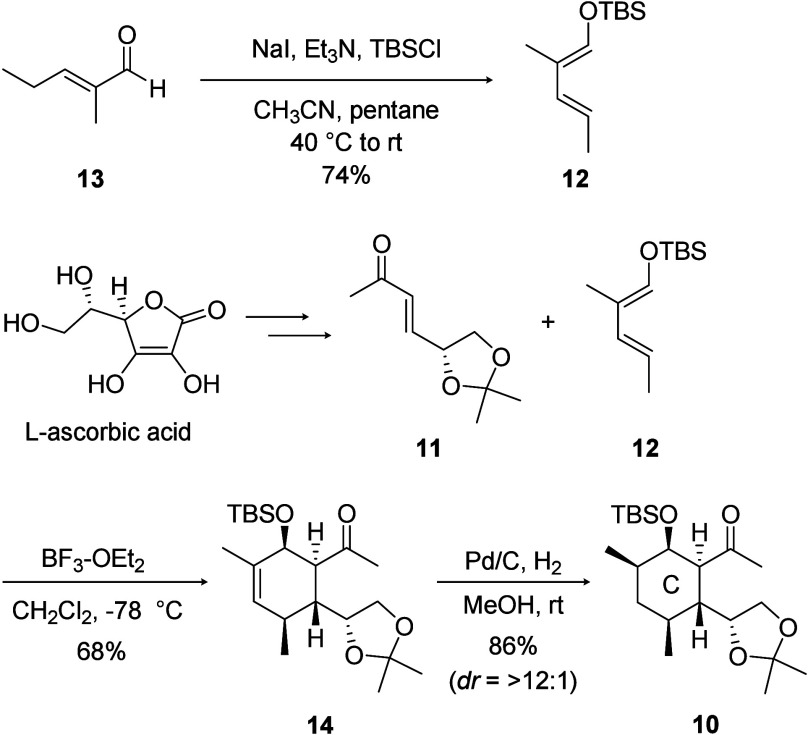 Figure 5
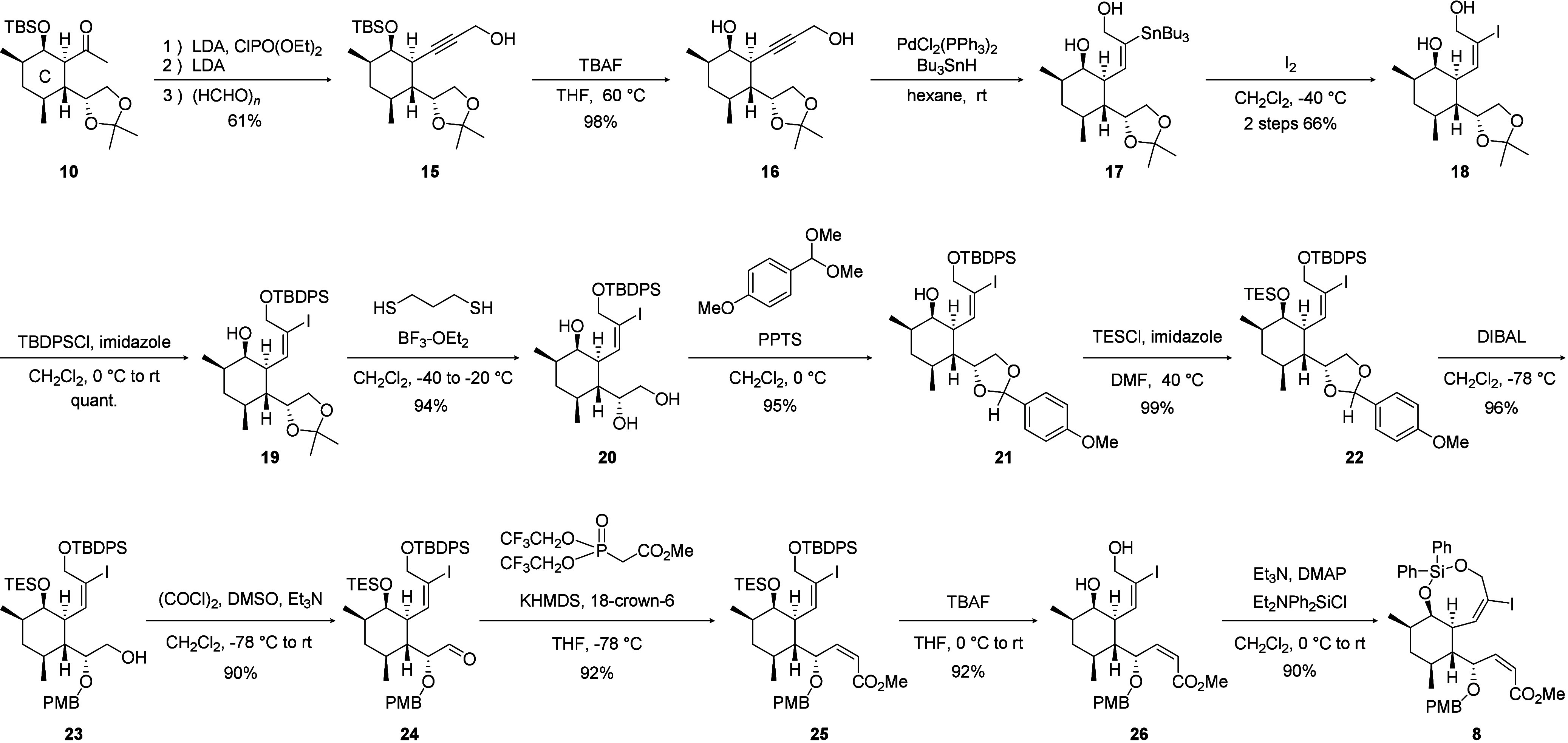 Figure 6
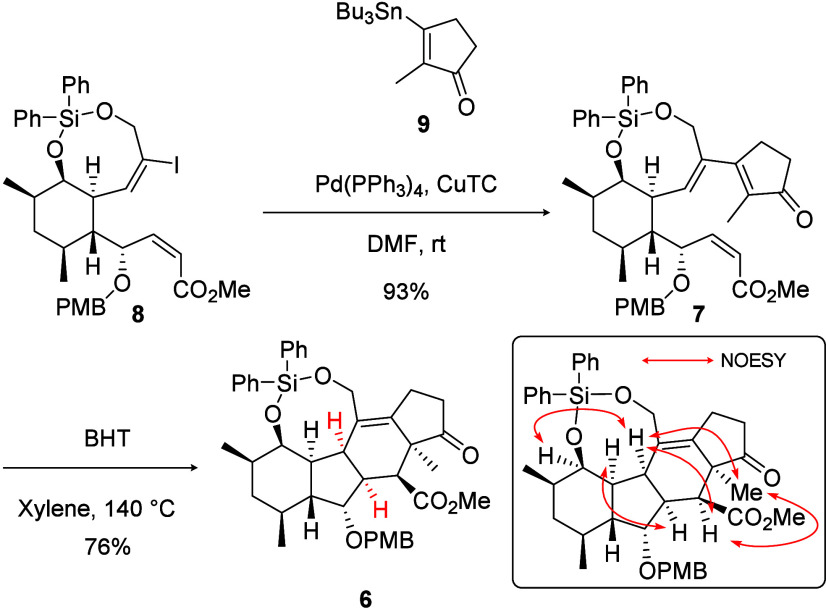 Figure 7
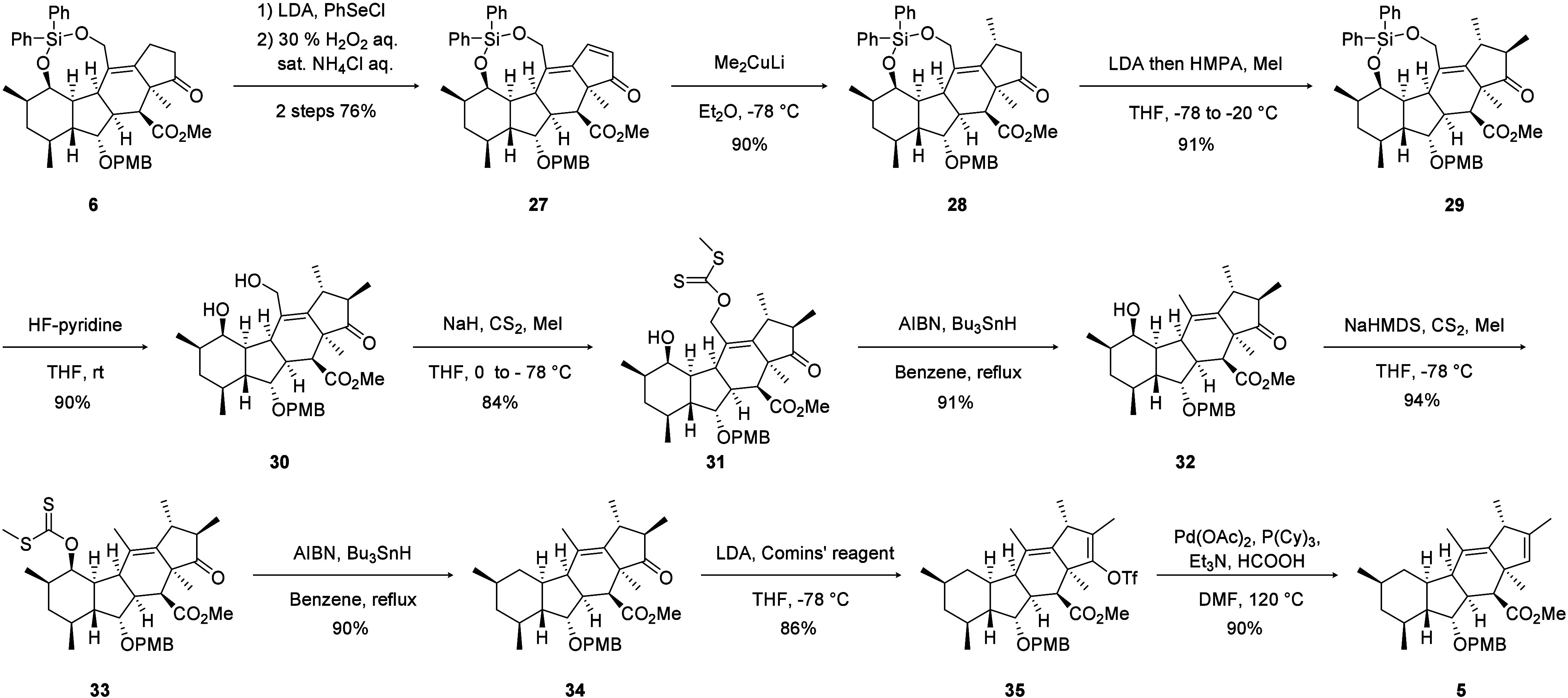 Figure 8
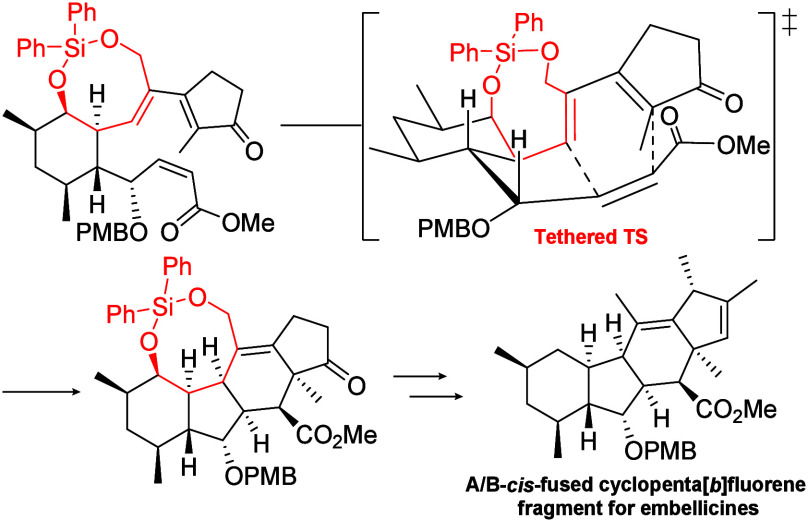 Figure 9
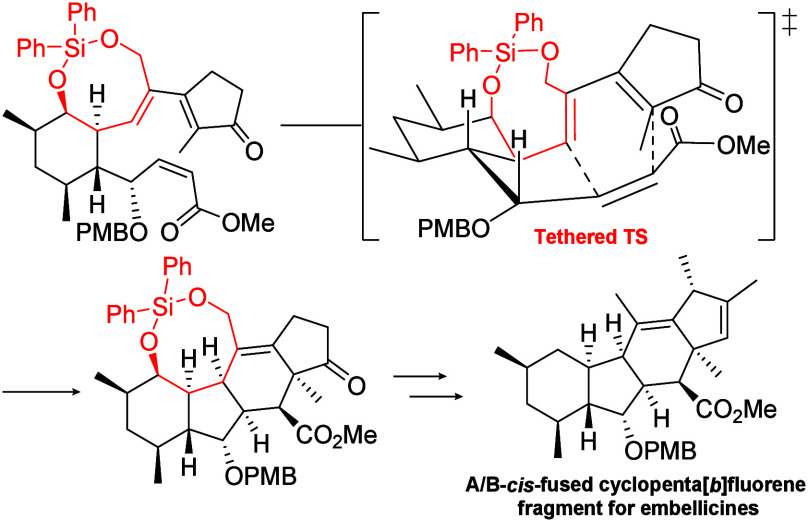 Figure 10
- —Japan Society for the Promotion of Science10.13039/501100001691
- —Japan Society for the Promotion of Science10.13039/501100001691
Peer Reviews
No public reviews on file for this paper yet. If you reviewed it on a platform where reviews are public (OpenReview, ICLR, NeurIPS, ICML), you can paste yours below so the community can read it here.
Videos
No videos yet. Explain this paper in a talk, walkthrough, or lecture? Add one.
Taxonomy
TopicsAdvanced Synthetic Organic Chemistry · Cyclization and Aryne Chemistry · Alkaloids: synthesis and pharmacology
Recently, natural organic compounds containing cyclopenta[b]fluorene (6/5/6/5) ring systems have been reported. These are classified as A/B-trans-fused compounds such as phomapyrrolidones,? ascomylactams,? other related compounds,? and A/B-cis-fused embellicines? (Figure). Among these compounds, embellicines exhibit potent cytotoxic activity against human cancer cell lines. In particular, embellicines A (1) and B (2) strongly inhibit the TNFα-induced transcriptional activity of NF-κB and are expected to serve as new leads for anticancer and anti-inflammatory drugs.? Therefore, we undertook the total synthesis of embellicines to elucidate their detailed structure–activity relationships. Herein, we report the first synthesis of an A/B-cis-fused cyclopenta[b]fluorene (6/5/6/5) fragment of embellicines.
The most challenging task in the synthesis of tetracyclic fragments of embellicines is constructing an A/B-cis-fused ring system. In 2012, Kobayashi et al. reported the synthesis of an A/B-*cis-*fused tricyclic decahydrofluorene skeleton of pyrrocidine A? (Figure). They utilized a Diels–Alder reaction between five-membered cyclic enone containing the B/C-ring and a Danishefsky–Kitahara type diene to construct the A/B-cis-fused tricyclic framework. Although this synthetic strategy is reliable for constructing A/B-cis-fused structures, many additional reactions are required for functional group transformations on the A- and C-rings.
By contrast, we previously reported the efficient synthesis of A/B-trans-fused decahydrofluorene skeletons in the total synthesis of hirsutellone B? and GKK1032A_2_.? In this strategy, the intramolecular Diels–Alder (IMDA) reaction was effectively utilized for the stereoselective construction of the A/B-ring system. To apply a strategy similar to that used for the construction of the tetracyclic skeleton of embellicine A, it is necessary to completely reverse the stereoselectivity of the IMDA reaction from A/B-trans-selective to A/B-cis-selective.
Then we considered the transition state of the IMDA reaction (Scheme). In the thermodynamically stable transition state of the IMDA reaction (TS-1), the diene moiety would be distributed to the α-side toward the C-ring because, in the alternative transition state where the diene moiety is located on the β-side (TS-2), non-negligible steric repulsion between a methyl group of the diene moiety and the axial hydrogen on the C-ring should be generated. Therefore, we introduced a tethered structure into the IMDA precursor to reverse the orientation of the diene moiety toward the β-side of the C-ring. Specifically, two hydroxyl groups were introduced on the β-side of the C-ring and diene moiety. If these groups were connected by a silicon atom, the resulting eight-membered tether would play the desired role in the transition state of the IMDA reaction (Tethered TS). Furthermore, introducing a cyclopentanone structure at the terminus of the diene moiety would enable the simultaneous construction of the desired tetracyclic skeleton through the IMDA reaction. Although such Diels–Alder reactions utilizing electron-deficient dienes conjugated with carbonyl groups have rarely been reported,? we dare to employ this type of reaction precursor considering the following modifications of the D-ring.
Our retrosynthetic analysis of the A/B-cis-fused tetracyclic fragment (5) of embellicines is shown in Scheme. Target compound 5 could be obtained from tetracyclic intermediate 6 via deoxygenation of the silylene moiety and elaboration of the D-ring. The A/B-cis-fused tetracyclic skeleton of 6 could be constructed by using the tethered IMDA reaction described above. Cyclization precursor 7 could be prepared via a Stille coupling reaction between vinyl iodide 8 and cyclic vinyl stannane 9. Silylene-bridged vinyl iodide 8 could be obtained by functional group manipulation of the methyl ketone moiety on C-ring intermediate 10. Intermediate 10 is expected to be obtained by a Diels–Alder reaction between the previously reported dienophile 11 and siloxydiene 12, and the subsequent diastereoselective hydrogenation of the olefin moiety.
The construction of the C-ring was investigated first (Scheme). Chiral dienophile 11 was synthesized from l-ascorbic acid in a four-step reaction using a reported procedure.? Siloxydiene 12 was prepared by treating commercially available (E)-2-methyl-2-pentenal 13 with TBSCl and NaI in the presence of Et_3_N. Resulting dienophile 11 and diene 12 underwent an asymmetric Diels–Alder reaction promoted by BF_3_·OEt_2_. The reaction proceeded stereoselectively, and cyclohexene 14 possesses a β-configured siloxy group, which is crucial for constructing the designed tethered structure. After the diastereoselective hydrogenation of 14, the desired C-ring intermediate 10 was successfully obtained.
Next, silylene-tethered vinyl iodide 8 was prepared (Scheme). The methyl ketone moiety of C-ring intermediate 10 was converted into enol phosphate,? and the subsequent elimination? and hydroxymethylation were conducted to afford propargyl alcohol 15. After removal of the TBS group, hydrostannylation of the alkyne moiety,? and subsequent iodination, nontethered vinyl iodide 18 was obtained. The primary hydroxyl group of 18 was protected with a TBDPS group, and the construction of the dienophile moiety was started. The acetonide group of 19 was removed by a treatment of propanedithiol and BF_3_·OEt_2_,? and the resulting 1,2-diol was once more protected with a p-methoxybenzylidene group. The remaining secondary hydroxyl group on the C-ring of acetal 21 was protected with a TES group, and reductive cleavage of the p-methoxybenzylidene acetal using DIBAL yielded alcohol 23. After Swern oxidation of the primary hydroxyl group of 23, resulting aldehyde 24 was converted into (Z)-configured α,β-unsaturated ester 25 by the Horner–Wadsworth–Emmons (HWE) reaction using the Stille–Gennari reagent.?
Finally, an eight-membered silylene tether was introduced. The TES and TBDPS groups of α,β-unsaturated ester 25 were simultaneously removed by treatment with TBAF, giving diol 26. Diol 26 was then treated with Et_2_NPh_2_SiCl under basic conditions,? followed by the gradual addition of DMAP, resulting in the desired eight-membered silylene-bridged vinyl iodide 8 in high yield.?
Thus, the designed eight-membered silylene tether was successfully introduced, and a tetracyclic skeleton was constructed (Scheme). A Stille coupling reaction between silylene-bridged vinyl iodide 8 and independently prepared cyclic vinyl stannane 9 was conducted to obtain cyclization precursor 7.? Upon heating to 140 °C in xylene, the expected IMDA reaction proceeded smoothly, producing the desired A/B-cis-fused tetracyclic compound 6 in good yield with complete stereoselectivity. The A/B-cis-fused structure of compound 6 was elucidated by the NOESY correlation. It is noteworthy that the carbonyl group conjugated with the diene moiety of precursor 7 did not inhibit the IMDA reaction.
Next, deoxygenation of the silylene moiety and elaboration of the D-ring were investigated (Scheme). The cyclopentanone moiety of 6 was converted into enone 27 via α-selenenylation, followed by oxidative elimination. Conjugate addition of a methyl group to enone 27 using the Gilman reagent proceeded with complete stereoselectivity. Resulting β-methylketone 28 was further methylated at the α-position by successive treatment with LDA and methyl iodide. Cleavage of the silylene tether of bismethylated intermediate 29 was achieved using HF-pyridine to obtain diol 30. The two resulting hydroxyl groups were sequentially removed by repeated Barton–McCombie deoxygenation to afford compound 34. Finally, the cyclopentanone moiety of this compound was converted into enol triflate 35, and palladium-catalyzed hydrogenolysis was conducted to obtain the desired tetracyclic fragment 5. Interestingly, the use of electron-rich phosphine ligands, such as tricyclohexylphosphine or tributylphosphine, was essential for the reaction to proceed.? The NOE correlations observed for the tetracyclic skeleton of compound 5 were consistent with those of embellicine A. In this research field, there has been some confusion about the process of structural elucidation of natural samples. For example, the structure of the cyclopenta[b]fluorene skeleton of phomapyrrolidone A was revised from the A/B-cis type to the A/B-trans type.? Our results strongly suggest that embellicines possess an A/B-cis-fused tetracyclic skeleton.
In conclusion, we achieved the first synthesis of an A/B-cis-fused cyclopenta[b]fluorene (6/5/6/5) fragment of embellicines via an IMDA reaction of an eight-membered silylene-tethered precursor with complete stereoselectivity. Further investigations of the total synthesis of embellicine A are currently in progress. In addition, we recently achieved the synthesis of an A/B-trans-fused tetracyclic ring system for phomapyrrolidones and ascomylactams by the nontethered IMDA reaction, and these results will be reported in the near future.
Supplementary Material
The reference list from the paper itself. Each links out to its DOI / PubMed record.
- 1Wijeratne E. M. K.He H.Franzblau S. G.Hoffman A. M.Gunatilaka A. A. L.Phomapyrrolidones A-C, Antitubercular alkaloids from the endophytic fungus Phoma sp. NRRL 46751 J. Nat. Prod.201376101860186510.1021/np 400391 p 24079882 PMC 3896239 · doi ↗ · pubmed ↗
- 2Chen Y.Liu Z.Huang Y.Liu L.He J.Wang L.Yuan J.She Z.Ascomylactams A–C, cytotoxic 12- or 13-membered-ring macrocyclic alkaloids isolated from the mangrove endophytic fungus Didymella sp. CYSK-4, and structure revisions of Phomapyrrolidones A and CJ. Nat. Prod.20198271752175810.1021/acs.jnatprod.8b 0091831251621 · doi ↗ · pubmed ↗
- 3a Ariantari N. P.Ancheeva E.Frank M.Stuhldreier F.Meier D.Gröner Y.Reimche I.Teusch N.Wesselborg S.Müller W. E. G.Kalscheuer R.Liu Z.Proksch P.Didymellanosine, a new decahydrofluorene analogue, and ascolactone C from Didymella sp. IEA-3B.1, an endophyte of Terminalia catappa RSC Adv.202010127232724010.1039/C 9RA 10685 E 35493894 PMC 9049863 · doi ↗ · pubmed ↗
- 4a Ebrahim W.Aly A. H.Wray V.Mándi A.Teiten M. H.Gaascht F.Orlikova B.Kassack M. U.Lin W.Diederich M.Kurtán T.Debbab A.Proksch P.Embellicines A and B: absolute configuration and NF-κB transcriptional inhibitory activity J. Med. Chem.20135672991299910.1021/jm 400034 b 23484593 · doi ↗ · pubmed ↗
- 5Tanaka R.Ohishi K.Takanashi N.Nagano T.Suizu H.Suzuki T.Kobayashi S.Synthetic study of Pyrrocidines: first entry to the decahydrofluorene core of Pyrrocidines Org. Lett.201214184886488910.1021/ol 302211622937974 · doi ↗ · pubmed ↗
- 6Uchiro H.Kato R.Arai Y.Hasegawa M.Kobayakawa Y.Total synthesis of Hirsutellone B via ullmann-type direct 13-membered macrocyclization Org. Lett.201113236268627110.1021/ol 202748 e 22040033 · doi ↗ · pubmed ↗
- 7Sugata H.Inagaki K.Ode T.Hayakawa T.Karoji Y.Baba M.Kato R.Hasegawa D.Tsubogo T.Uchiro H.Total synthesis of GKK 1032 A 2 via direct 13-membered macrocyclization using a nucleophilic aromatic substitution of an (η6‑Arene) chromium complex Chemistry, an Asian Journal 201712662863210.1002/asia.20160172828181417 · doi ↗ · pubmed ↗
- 8Loke I.Bentzinger G.Holz J.Raja A.Bhasin A.Sasse F.Köhn A.Schobert R.Laschat S.Synthesis of the AB ring system of clifednamide utilizing Claisen rearrangement and Diels-Alder reaction as key steps Org. Biomol. Chem.20161488489410.1039/C 5OB 01491 C 26599642 · doi ↗ · pubmed ↗