Synthesis of 2‑Fluoroalkylated Pyridines and Fluoropyridines by Thermal Denitrogenation of N‑Fluoroalkyl-1,2,3-triazoles and Cyclization of Ketenimines
Svatava Voltrová, Blanka Klepetářová, Petr Beier

TL;DR
A new method was developed to synthesize 2-fluoroalkylated pyridines and fluoropyridines using thermal reactions and cyclization.
Contribution
The paper introduces a novel synthetic pathway for fluorinated pyridines via thermal denitrogenation and cyclization of triazoles.
Findings
2-Fluoro-6-fluoroalkylpyridines were synthesized via thermal denitrogenation and cyclization of N-fluoroalkyl-1,2,3-triazoles.
2-Fluoroalkylpyridines were prepared using a different triazole starting material and a hydride shift step.
Nucleophilic substitution of the synthesized pyridines produced highly functionalized derivatives.
Abstract
2-Fluoro-6-fluoroalkylpyridines and their ring-fused analogues were synthesized from N-fluoroalkyl-4-alkenyl-1,2,3-triazoles by thermal denitrogenation, fluorine shift, cyclization, and hydrogen fluoride elimination. This reaction proceeds via ketenimine intermediates. Conversely, 2-fluoroalkylpyridines were prepared starting from N-fluoroalkyl-4-alkyl-1,2,3-triazoles and proceeded by denitrogenation, fluorine shift, hydride shift, cyclization, and hydrogen fluoride elimination. Nucleophilic aromatic substitution of 2-fluoro-6-fluoroalkylpyridines afforded highly functionalized 2-fluoroalkylpyridines.
Genes, proteins, chemicals, diseases, species, mutations and cell lines named across the full text — each resolved to its canonical identifier and authoritative record.
Click any figure to enlarge with its caption.
 1
1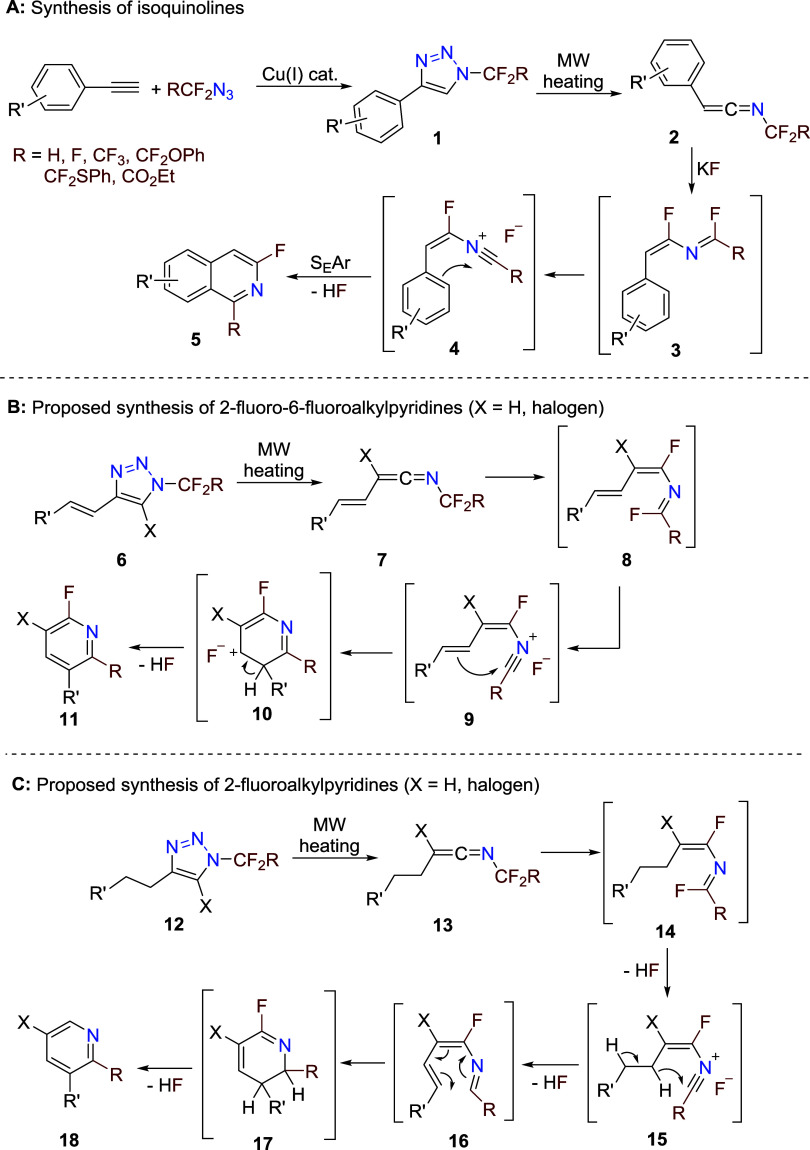 1
1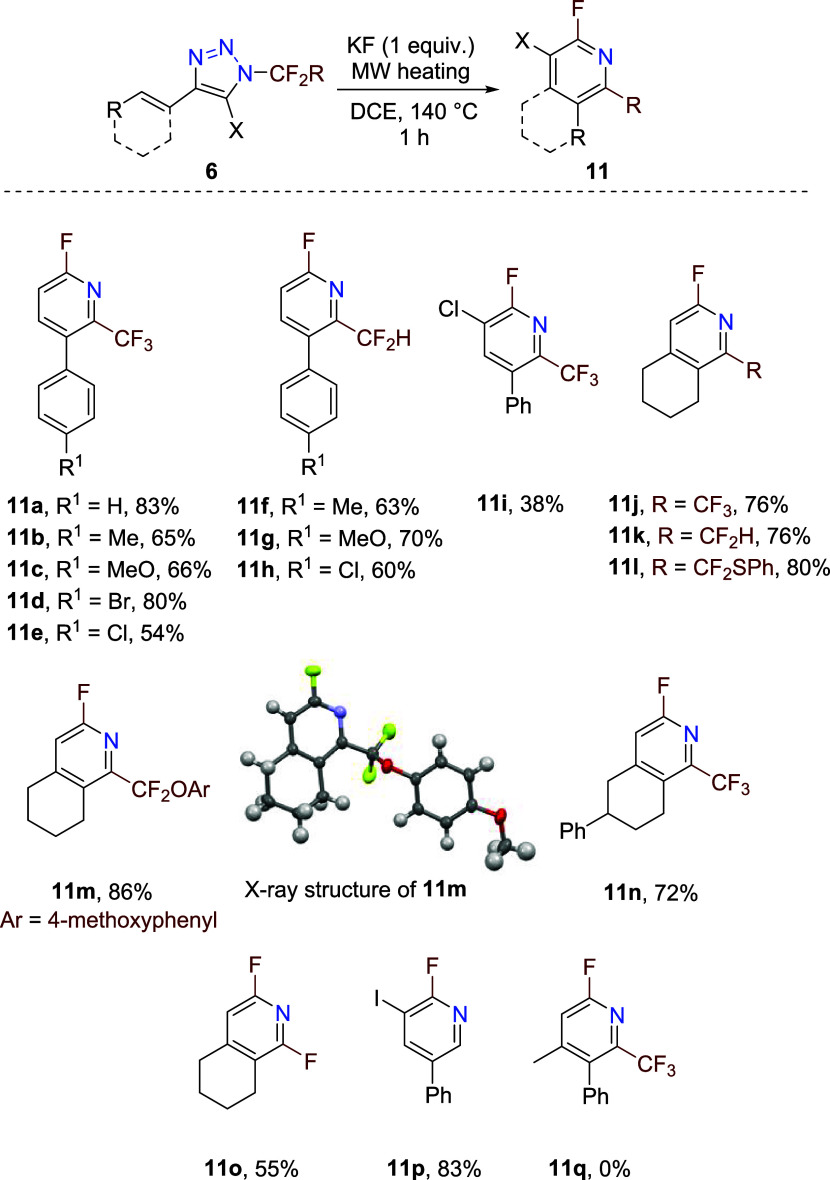 2
2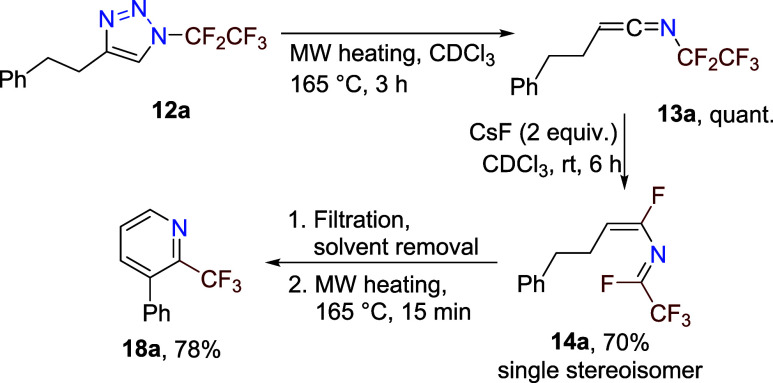 3
3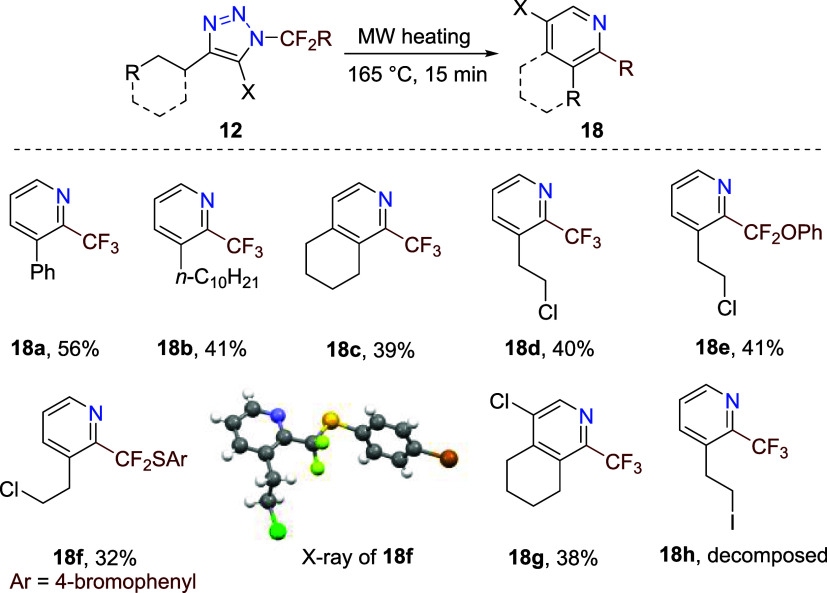 4
4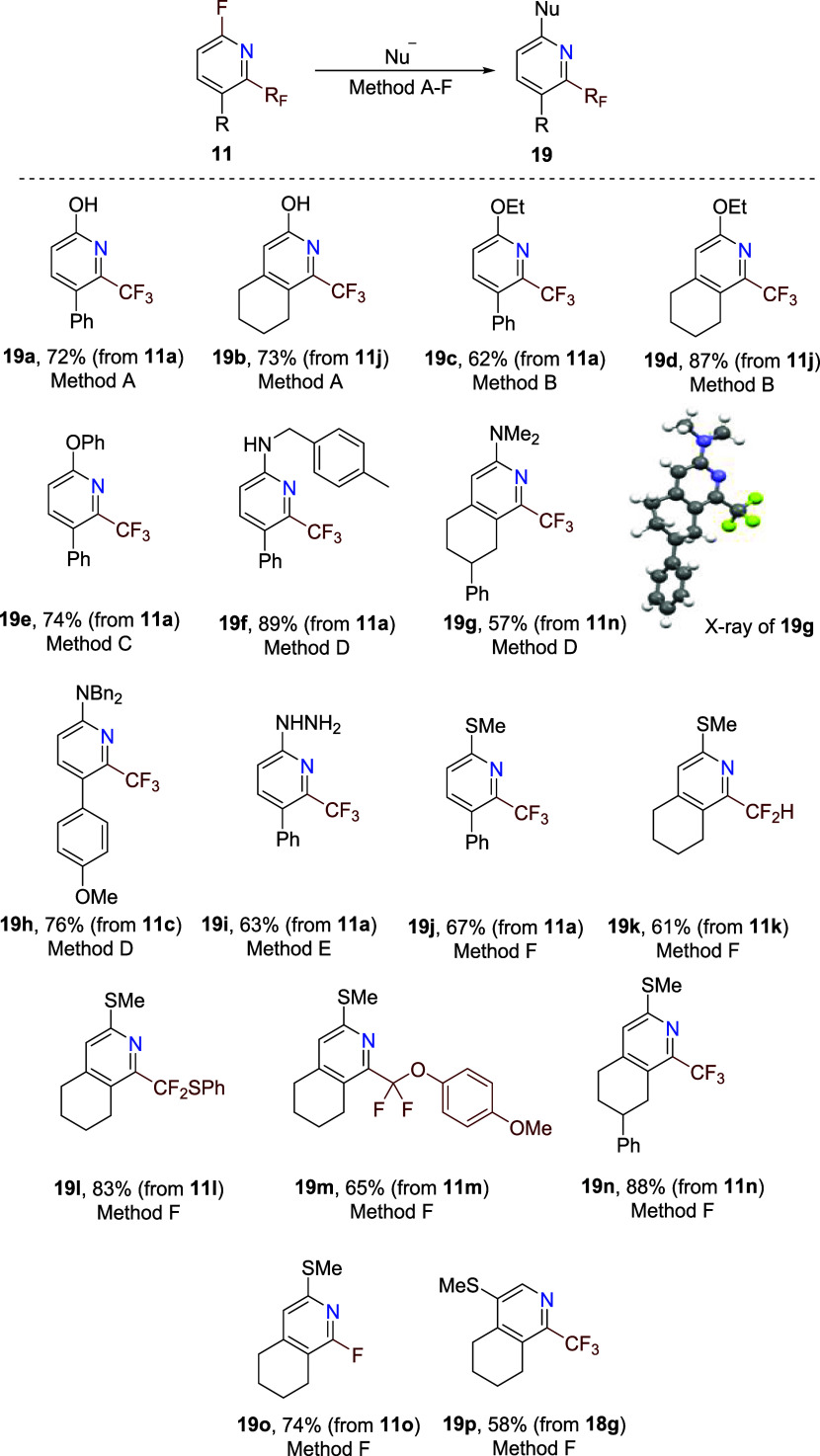 5
5| yield | ||||||
|---|---|---|---|---|---|---|
| entry | Temp. (°C) | time (min) | additive (1 equiv) |
|
|
|
| 1 | 140 | 30 | 64 | 22 | 4 | |
| 2 | 160 | 30 | 7 | 2 | 4 | |
| 3 | 140 | 30 | K2CO3 | 7 | 7 | 59 |
| 4 | 140 | 30 | CsF | 0 | 0 |
|
| 5 | 140 | 30 | KF | 11 | 26 | 62 |
| 6 | 140 | 60 | KF | 0 | 2 | 83 |
| 7 | 140 | 1 | KF | 0 | 18 | 57 |
| 8 | 140 | 1 | 0 | 25 | 34 | |
| yield | ||||||
|---|---|---|---|---|---|---|
| entry | Temp. (°C) | time (min) | additive (1 equiv) |
|
|
|
| 1 | 140 | 300 | 42 | 0 | 5 | |
| 2 | 160 | 420 | 0 | 0 | 34 | |
| 3 | 180 | 120 | 2 | 36 | 24 | |
| 4 | 160 | 420 | KF | 0 | 0 | 20 |
| 5 | 180 | 120 | CsF | 0 | 17 | 10 |
| 6 | 180 | 120 | K2CO3 | 7 | 2 | 14 |
| 7 | 160 | 15 | 2 | 7 | 29 | |
| 8 | 165 | 15 | 3 | 12 | 56 | |
| 9 | 180 | 5 | 2 | 12 | 11 | |
| 10 | 165 | 15 | KF | 0 | 0 |
|
- —Grantov? Agentura Cesk? Republiky10.13039/501100001824
- —Akademie Ved Cesk? Republiky10.13039/501100004240
Peer Reviews
No public reviews on file for this paper yet. If you reviewed it on a platform where reviews are public (OpenReview, ICLR, NeurIPS, ICML), you can paste yours below so the community can read it here.
Videos
No videos yet. Explain this paper in a talk, walkthrough, or lecture? Add one.
Taxonomy
TopicsFluorine in Organic Chemistry · Click Chemistry and Applications · Synthesis and Reactivity of Heterocycles
Introduction
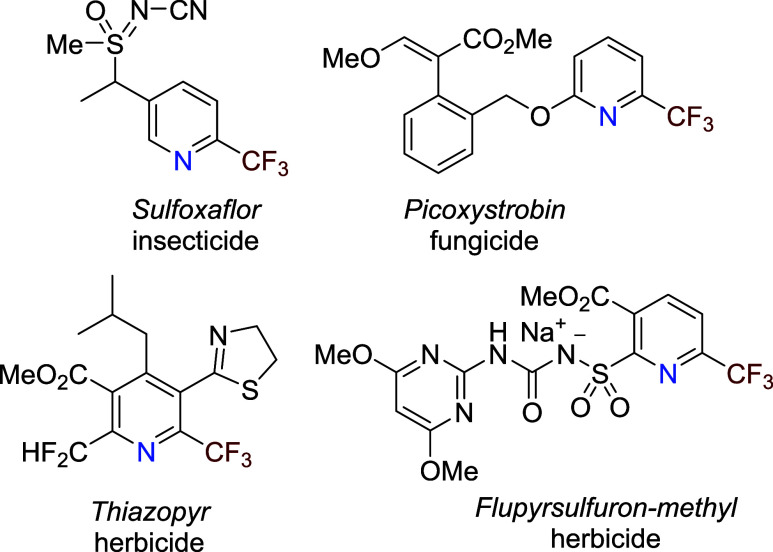
2-Trifluoromethylated pyridines are key building blocks and intermediates in the production of pharmaceuticals, agrochemicals, and specialty chemicals.? Numerous insecticides, herbicides, and fungicides featuring these structural elements are in use (Figure). The synthesis of 2-trifluoromethylated pyridines is traditionally based on deoxofluorination of pyridinecarboxylic acids with SF_4_/hydrogen fluoride (HF),? hetero-Diels–Alder reaction of butadiene with CF_3_CN in flow,? Cu(II)-catalyzed cyclization of ynones with vinyl azides,? cyclization of chalcones with 1-(3,3,3-trifluoro-2-oxopropyl)pyridine-1-ium,? and more recently on cross-coupling of halogenated pyridines with CuCF_3_ species. ?−? ? ? ? A recent report describes C–H trifluoromethylation in position 2 of N-methylpyridinium salts with trifluoroacetic acid mediated by silver salts.? Despite these advances, novel synthetic approaches to selectively fluoroalkylated pyridines and fluoropyridines are in demand.
Examples of 2-trifluoromethylated pyridines in agrochemistry.
We have recently described a thermal denitrogenation of N-fluoroalkylated 1,2,3-triazoles 1, derived from azido(per)fluoroalkanes, to ketenimines 2, which in the presence of KF underwent a fluorine shift, followed by S_E_Ar cyclization to 1-fluoroalkyl-3-fluoroisoquinolines 5 (SchemeA). ?,? We envisaged a related process of utilization of triazole-derived ketenimines,? starting from alkenyl triazoles 6, where the nitrilium intermediate 9 would react with the sp2 carbon of the alkenyl moiety in a 6-endo-dig cyclization to afford 2-fluoro-6-fluoroalkylpyridines 11 (SchemeB). Conversely, alkyl triazoles 12, which after rearrangement, fluorine shift, HF elimination, and hydride shift might form azatriene 16. After cyclization and another HF elimination, the final products would be 2-fluoroalkylpyridines 18 (SchemeC). Both processes, if feasible, would represent new synthetic methodologies to selectively substitute 2-fluoroalkylpyridines and their ring-fused analogues.
Triazoles and Ketenimines as Key Intermediates in the Synthesis of Isoquinolines 5 and 2-Fluoroalkylated Pyridines 11 and 18
Results and Discussion
Starting triazoles 6 and 12 were prepared in good to high yields by azide–alkyne cycloaddition catalyzed with Cu(I) salts (see the Supporting Information). Optimization of the formation of 11a was conducted using model triazole 6a (Table). The optimization was performed in 1,2-dichloroethane (DCE) solution or neat with or without additives.
1: Optimization of the Formation of Fluoropyridine 11a from Triazole 6a
The triazole denitrogenation to ketenimine required microwave (MW) heating to at least 140 °C. Without an additive, the major product was ketenimine 7a (Entry 1), and heating to 160 °C only provided low product yields (Entry 2). A good product yield was obtained with the K_2_CO_3_ additive (Entry 3), while with CsF, the product 11a formed but decomposed (Entry 4). The highest product yield was achieved using DCE solution with KF additive (Entry 6), which is believed to facilitate the fluorine shift to species 8 by fluoride addition to the sp-hybridized carbon triggering fluoride elimination from the CF_2_ group. Using solvent-free conditions proved to be suboptimal (Entries 7 and 8).
Structurally diverse triazoles 6 were subjected to the thermal process in the presence of KF in order to establish the scope of fluorinated pyridines 11 (Scheme). Good product yields were obtained with 4-cinnamyl-substituted 1-perfluoroethyl triazoles 6a–6e and 1-tetrafluoroethyl triazoles 6f–6h, while the 5-chloro analogue afforded the product 11i in a much lower yield. This effect might be due to the decreased electron density of the double bond (chlorine atom in the allylic position) in intermediate 9 for cyclization. Ring-fused products 11j–11n formed in good efficiency from 4-cyclohexenyl triazoles with various fluoroalkyl substitutions on the nitrogen atom. Starting from N-trifluoromethyl triazole 6o, ring-fused o,o-difluoropyridine 11o was obtained. Finally, N-difluoromethyl-4-cinnamyl-5-iodotriazole 6p afforded after denitrogenation, cyclization, and HF elimination 2-fluoro-3-iodo-5-substituted pyridine 11p in a high yield. On the other hand, certain scope limitations were found. For example, the 4-(2-methylcinnamyl) triazole 6q, although some signals of denitrogenated intermediates were found, did not afford any traces of pyridine 11q. Here, the methyl group on the double bond prevented the cyclization of planar intermediate 9. All fluoropyridines 11 were liquids except for 11m, whose X-ray structure was determined. This unique synthetic methodology leads to 2-fluoro-6-fluoroalkylpyridines, which are unprecedented in literature.
Synthesis of 2-Fluoro-6-fluoroalkylpyridines 11 from Triazoles 6
Next, optimization of the formation of 2-fluoroalkylpyridines 18 from triazoles 12 was performed starting from triazole 12a as a model substrate (Table). It was found that this process required heating to a higher temperature than in the case of pyridines 11 (165 °C was optimal), and solvent-free and additive-free conditions were preferred. The fluoride additive favored the formation of azadiene 14 but disfavored the formation of azatriene 16 (SchemeC). The optimized process consisted of heating neat triazole 12a to 165 °C for 15 min (entry 8).
2: Optimization of the Formation of Fluoropyridine 18a from Triazole 12a
The proposed reaction mechanism (SchemeC) was partially supported by a series of mechanistic experiments that included the isolation of reactive intermediates. Microwave heating of 12a in deuterochloroform led to the quantitative formation of ketenimine 13a. When CsF was added, a fluorine shift occurred at room temperature (rt) to compound 14a, which formed in a good yield and as a single stereoisomer (Scheme). After filtration, solvent removal under reduced pressure, and microwave heating under solvent-free conditions, compound 18a formed in good yield. These experiments demonstrated that compounds 13a and 14a are intermediates on the reaction pathway to pyridine 18a. We were not able to observe other proposed intermediates 16 and 17 by NMR spectroscopy.
Stepwise Synthesis of 2-Trifluoromethyl-3-phenylpyridine 18a from Triazole 12a
The product scope of the synthesis of 2-fluoroalkylpyridines 18 from triazoles 12 was investigated (Scheme). Isolated yields of pyridines 18 were lower than in the pyridines 11 series, partly due to their volatility. 4-Alkyl-, 4-substituted alkyl-, and 4-cycloalkyl-triazoles 12 were subjected to microwave heating, and products 18 were obtained in low to good yields. The crystal structure of 18f was determined. The reaction of 4-cycloalkyl-5-chlorotriazole 12g afforded ring-fused 5-chloropyridine derivative 18g in moderate yield. Iodoethylpyridine 18h was detected in the crude reaction mixture after heating of triazole 12h, but its isolation in pure form was unsuccessful.
Synthesis of 2-Fluoroalkylpyridines 18 from Triazoles 12
In order to demonstrate the synthetic utility of primary products, pyridines 11, the S_N_Ar fluorine substitution reaction was investigated. Reactions with various oxygen-, nitrogen-, and sulfur-nucleophiles afforded substitution products 19, generally in good to high yields (Scheme). Thus, hydroxypyridines 19a and 19b were prepared by microwave heating of fluoropyridines 11 with aqueous sodium hydroxide, ethoxy-substituted pyridines 19c and 19d were formed by room temperature reaction with EtONa, and phenoxy-substituted product 19e was prepared by microwave heating with PhONa. Amination of fluoropyridines 11 was performed by microwave heating with primary or secondary amines, and the introduction of the methylthio group (products 19j–19p) was achieved by room temperature reaction with MeSNa. 5-Chloropyridine derivative 18g afforded under similar conditions the substitution product 19p in a good yield. This work establishes new synthetic access to unprecedented functionalized 2-fluoroalkylpyridines 19.
Functionalization of 2-Fluoro-6-fluoroalkylpyridines 11 by SNAr
Conclusion
In summary, a novel methodology for the synthesis of 2-fluoro-6-fluoroalkylpyridines and 2-fluoroalkylpyridines, including ring-fused products, is presented based on thermal decomposition of N-fluoroalkyl-4-alkenyl-1,2,3-triazoles available by CuAAC click reaction. The synthetic pathway proceeds via ketenimines, followed by a series of HF elimination, fluorine shift, and cyclization steps, leading to new pyridines of an uncommon substitution pattern. This mechanistic scenario was corroborated by control mechanistic experiments. Follow-up transformations of 2-fluoro-6-fluoroalkylpyridines via nucleophilic aromatic substitution provide a series of substituted 2-fluoroalkylpyridines. This synthetic strategy offers a metal-free, step-economical route to fluorinated pyridine scaffolds that are widely relevant in pharmaceuticals and agrochemicals.
Supplementary Material
The reference list from the paper itself. Each links out to its DOI / PubMed record.
- 1Fluorinated Heterocyclic Compounds, Synthesis, Chemistry, and Applications; Petrov, V. A. , Ed.; John Wiley & Sons, 2009.
- 2Raasch M. S.The Chemistry of Sulfur Tetrafluoride. IX. Reaction with Amino Acids in Hydrogen Fluoride J. Org. Chem.196227140610.1021/jo 01051 a 068 · doi ↗
- 3Jarvie J. M. S.Fitzgerald W. E.Janz G. J.2-Trifluoromethylpyridine J. Am. Chem. Soc.19567897810.1021/ja 01586 a 028 · doi ↗
- 4Wang J.Ba D.Yang M.Cheng G.Wang L.Regioselective Synthesis of 2,4-Diaryl-6-trifluoromethylated Pyridines through Copper-Catalyzed Cyclization of CF 3-Ynones and Vinyl Azides J. Org. Chem.202186642310.1021/acs.joc.1c 0027533905254 · doi ↗ · pubmed ↗
- 5Hong B.Teng Y.Fang Z.Wu W.Weng Z.Synthesis of 2-Trifluoromethyl Pyridines through Multicomponent Kröhnke Reaction Eur. J. Org. Chem.202427 e 20240029910.1002/ejoc.202400299 · doi ↗
- 6Lishchynskyi A.Novikov M. A.Martin E.Escudero-Adán E. C.Novák P.Grushin V. V.Trifluoromethylation of Aryl and Heteroaryl Halides with Fluoroform-Derived Cu CF 3: Scope, Limitations, and Mechanistic Features J. Org. Chem.2013781112610.1021/jo 401423 h 23964731 · doi ↗ · pubmed ↗
- 7Mormino M. G.Fier P. S.Hartwig J. F.Copper-Mediated Perfluoroalkylation of Heteroaryl Bromides with (phen)Cu RF Org. Lett.201416174410.1021/ol 500422 t 24621138 PMC 3993863 · doi ↗ · pubmed ↗
- 8Cottet F.Marull M.Lefebvre O.Schlosser M.Recommendable Routes to Trifluoromethyl-Substituted Pyridine- and Quinolinecarboxylic Acids Eur. J. Org. Chem.20032003155910.1002/ejoc.200390215 · doi ↗