Oxidative Rearrangement of Indoles Enabled by Promiscuous Cryptic Halogenation with Vanadium-Dependent Haloperoxidases
Hyung Ji Lee, Carter U. Brzezinski, Sergio A. Solis, Raina S. Semenick, Ana Villalobos Galindo, Sophia G. Barthel, John Bacsa, Kyle F. Biegasiewicz

TL;DR
This paper introduces a new biocatalytic method for making 2-oxindoles using vanadium-dependent enzymes, avoiding harmful chemicals and expanding substrate scope.
Contribution
A general biocatalytic platform using vanadium-dependent haloperoxidases for oxidative indole rearrangement is developed.
Findings
The enzymatic system effectively converts indoles into 2-oxindoles and 2-spirooxindoles.
The method is applied in multienzymatic and chemoenzymatic syntheses and late-stage molecule functionalization.
Gram-scale syntheses of coerulescine and horsfiline were achieved using the developed protocol.
Abstract
The 2-oxindole class of heterocycles are privileged structural components in natural products and biologically active compounds. One of the most attractive methods for accessing 2-oxindoles is through direct oxidation of indoles, but current methods rely on the use of chemical oxidizing agents that lead to the generation of harmful waste products or biocatalytic methods using enzymes with a limited substrate scope. Herein, we describe the development and application of a general biocatalytic platform for the oxidative rearrangement of indoles using enzymatic halide recycling with vanadium-dependent haloperoxidases (VHPOs) facilitated by a catalytic quantity of halide salt and hydrogen peroxide as the terminal oxidant. This catalytic system is effective for the oxidative rearrangement of indoles into 2-oxindoles and 2-spirooxindoles. The developed protocol has been applied in…
Genes, proteins, chemicals, diseases, species, mutations and cell lines named across the full text — each resolved to its canonical identifier and authoritative record.
Click any figure to enlarge with its caption.
 1
1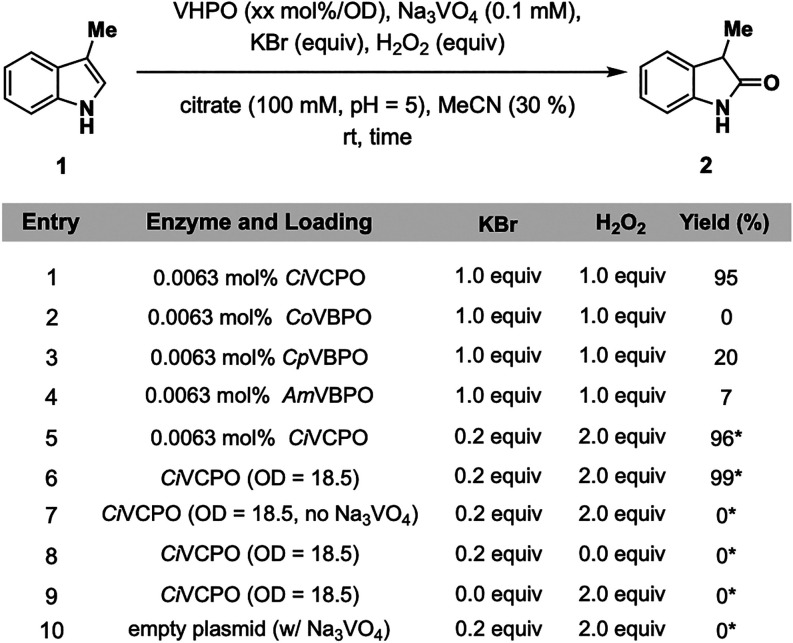 2
2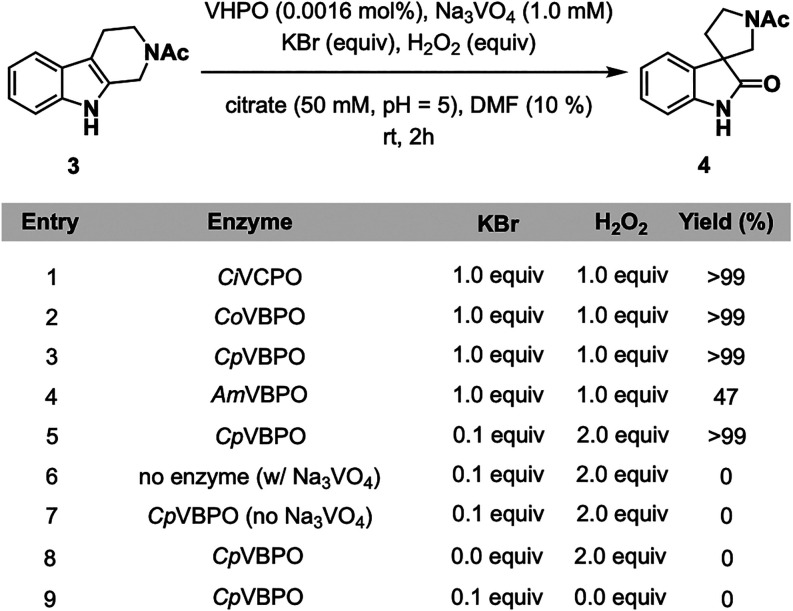 3
3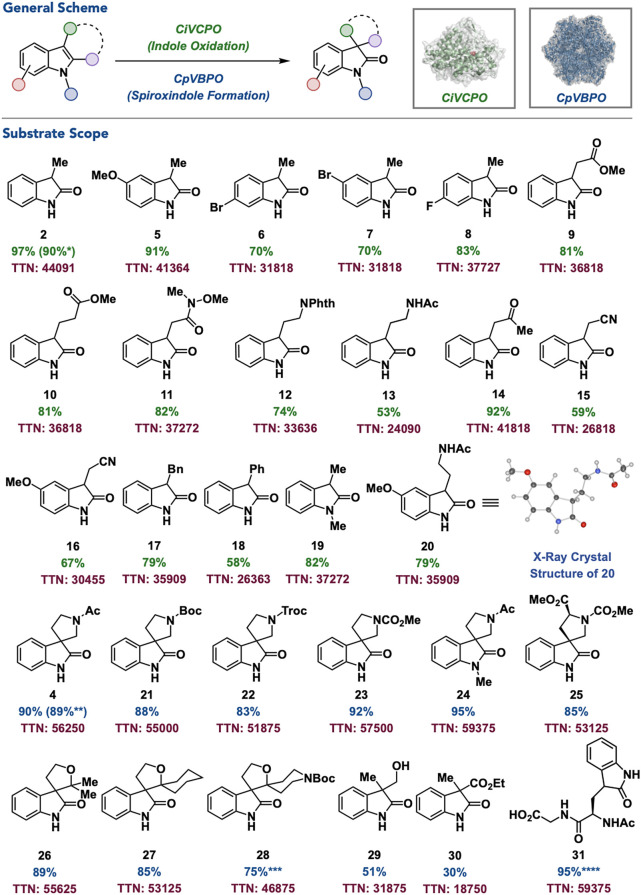 4
4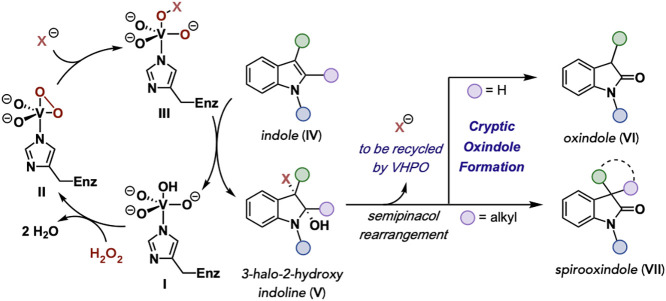 5
5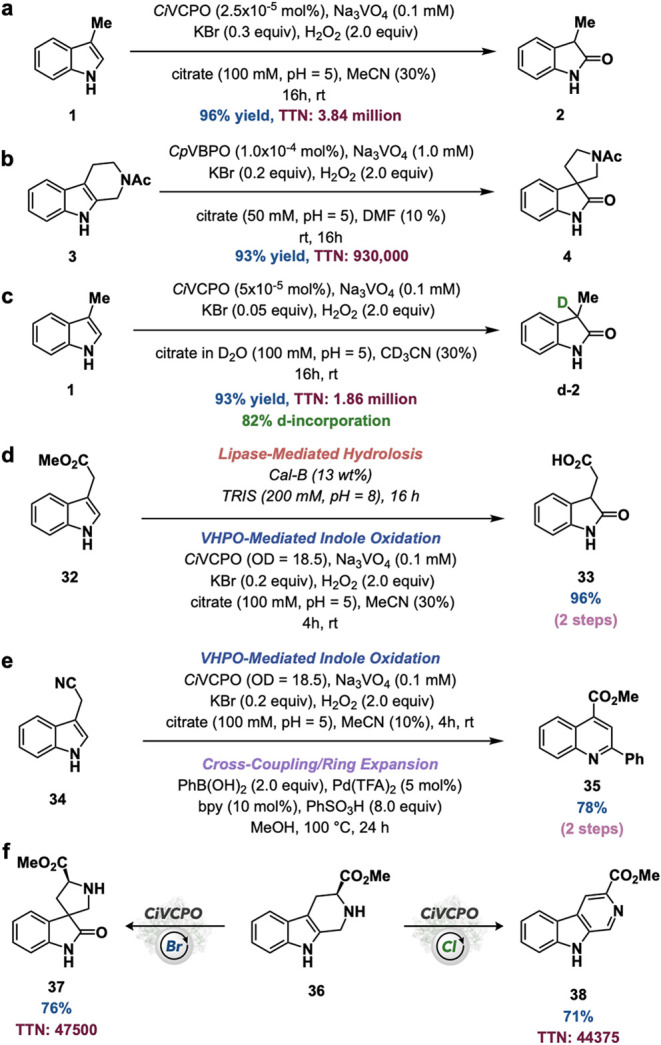 6
6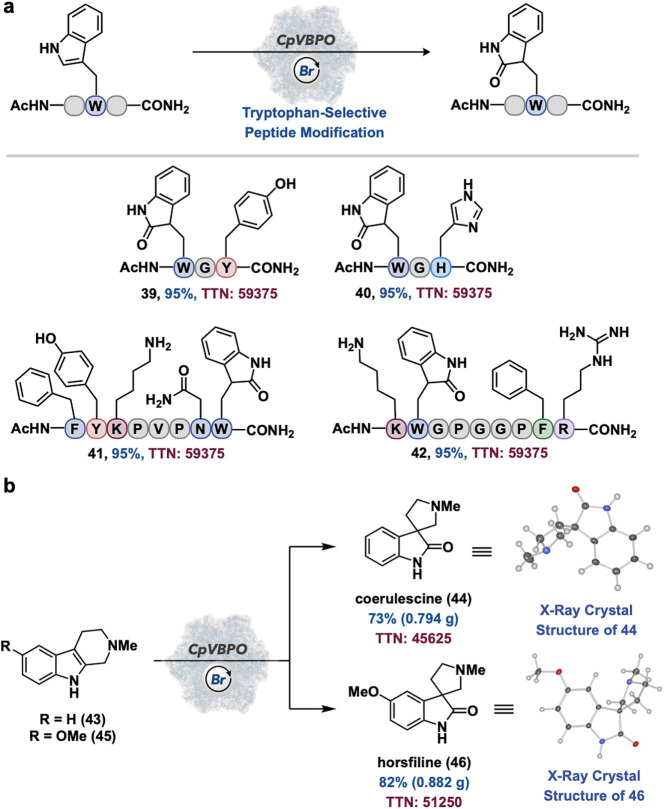 7
7- —National Institute of General Medical Sciences10.13039/100000057
- —Emory University10.13039/100006939
- —Arizona State University10.13039/100007482
Peer Reviews
No public reviews on file for this paper yet. If you reviewed it on a platform where reviews are public (OpenReview, ICLR, NeurIPS, ICML), you can paste yours below so the community can read it here.
Videos
No videos yet. Explain this paper in a talk, walkthrough, or lecture? Add one.
Taxonomy
TopicsVanadium and Halogenation Chemistry · Catalytic C–H Functionalization Methods · Oxidative Organic Chemistry Reactions
Introduction
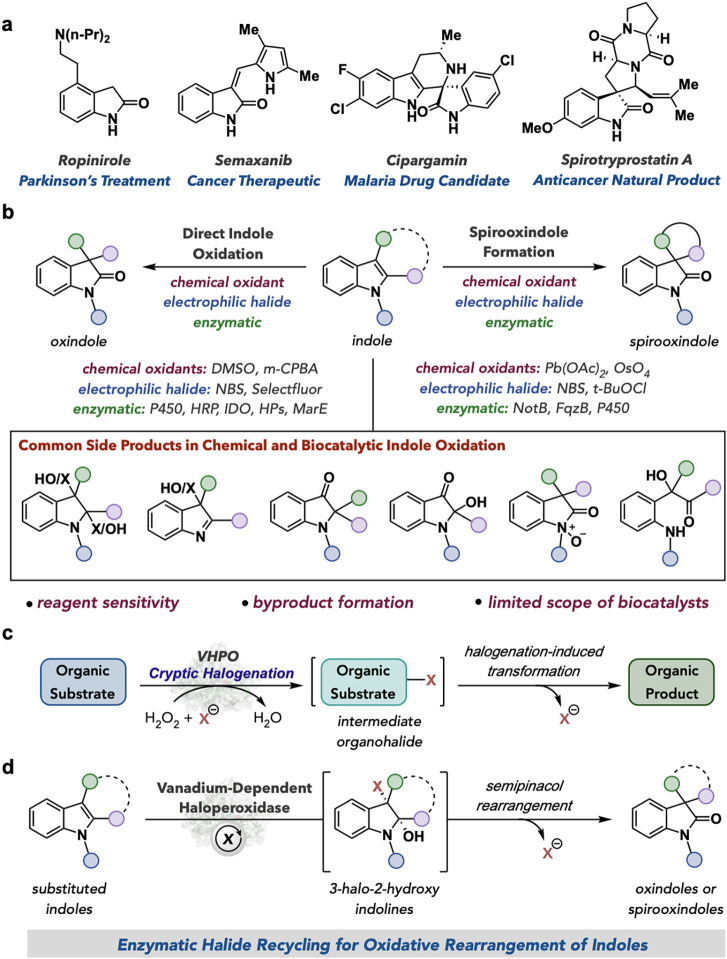
The 2-oxindole class of heterocycles are privileged motifs in pharmaceuticals and natural products with a diverse range of biological activities (Figurea). ?−? ? ? ? ? ? ? ? One of the most extensively studied methods for accessing 2-oxindoles is through the direct oxidation of indoles to generate oxindoles or spirooxindoles. Despite the logistical efficiency of this strategy, traditional methods for indole oxidation involve the use of chemical oxidants that are hazardous, lead to a host of undesired oxidized side products, or generate a stoichiometric quantity of downstream waste, all of which present significant challenges for conducting this reaction type at scale. ?−? ? ? ? ? ? ? ? ? ? ? ? ? ? ? ? ? ? ? ? ? ? In recent years, greener methods for indole oxidation have been developed using electrochemistry, ?−? ? catalytic halide with oxone as the terminal oxidant,? or catalytic metal salts with hydrogen peroxide (H_2_O_2_) as the terminal oxidant.? However, these protocols require significant quantities of organic solvents, limiting their potential applications in chemoenzymatic synthesis. Enzymes are an attractive alternative to current methods for indole oxidation because of their selectivity and sustainability parameters. ?,? While many enzymes have been explored for performing direct enzymatic oxidation of indoles including cytochrome P450 enzymes (P450), ?−? ? horseradish peroxidase (HRP),? indoleamine 2,3-dioxygenase (IDO),? and heme-dependent haloperoxidase enzymes (HP), ?−? ? ? ? these biocatalysts are limited to narrow substrate scopes and strictly catalyze direct indole oxidation. Similarly, while a small selection of enzymes has been reported to initiate the oxidative rearrangement of 2,3-disubstituted indole-containing scaffolds to generate spirooxindoles in the context of natural product biosynthesis, ?−? ? ? ? these examples are restricted to enzymes with limited substrate promiscuity for this single reaction type, leaving a general biocatalytic platform for oxidative rearrangement of indoles elusive and highly desirable (Figureb).
*Oxidative rearrangement of indoles overview. (a) Biologically active indole and spirooxindoles. −
(b) Chemical and enzymatic strategies for oxidative rearrangement of indoles. −
, (c) Cryptic halide recycling by VHPOs. ,, (d) Proposed general biocatalytic strategy for oxidative rearrangement of indoles using enzymatic halide recycling.*
We recently hypothesized that the vanadium-dependent haloperoxidase (VHPO) class of enzymes could address the above challenges on the basis of their recent emergence as a biocatalyst platform in synthetic organic chemistry. ?−? ? ? ? ? In nature, VHPOs are responsible for the selective halogenation of organic substrates through the generation of hypohalous acid (HOX) using simple halide salts and relying on hydrogen peroxide (H_2_O_2_) as the terminal oxidant. ?−? ? ? In addition to their more traditional reaction modes of performing direct halogenations, VHPOs are known for their ability to perform cryptic halogenation reactions. This reactivity regime refers to an enzyme-catalyzed halogenation of an organic substrate that activates a substrate for an ensuing halogenation-induced bond formation and loss of the halide (Figurec).? Halogenating enzymes have used this strategy to perform a host of transformations including cyclopropanation, ?−? ? ? ? ? ? alkyne formation, ?−? ? alkylation, ?−? ? ? ? and biaryl coupling reactions. ?,? For reaction development, we were particularly intrigued by two important reports. First, studies by Butler and co-workers demonstrated that vanadium-dependent bromoperoxidases (VBPOs) could perform regioselective indole oxidation on 1,3-di-tert-butylindole to give the corresponding oxindole.? In addition, studies by Moore and co-workers have revealed that vanadium-dependent chloroperoxidases (VCPOs) enable chlorination-induced α-hydroxyketone rearrangement in marinone natural product biosynthesis.? We have recently capitalized on the catalytic capabilities of VHPOs to perform halogenation-mediated transformations using enzymatic halide recycling (EHR). ?−? ? Mechanistically, VHPO is responsible for the repetitive oxidation of a catalytic quantity of halide to generate HOX as the halogenating agent, activating the substrate for an ensuing chemical transformation with loss of halide. In the context of the oxidative rearrangement of indoles, we hypothesized that VHPO would be responsible for initiating the formation of the key 3-halo-2-hydroxyindoline through halogenation and subsequent trapping by water. This intermediate would proceed through semipinacol rearrangement to give the corresponding oxindole or spirooxindole, while the halide was released to be recycled by the enzyme. Herein, we report that VHPOs are a general biocatalyst platform for performing oxidative rearrangement of indoles to give oxindoles and spirooxindoles (Figured).
Methods and Results
Our studies commenced by interrogating our in-house library of VHPOs in both direct oxidation and spirooxindole formation reactions (Figure). We began by screening structurally diverse VHPOs, including chloroperoxidase from Curvularia inaequalis (CiVCPO),? and bromoperoxidases from Corallina officinalis (CoVBPO),? Corallina pilulifera (CpVBPO),? and Acaryochloris marina (AmVBPO),? for the conversion of 3-methyl-1H-indole (1) to 3-methylindolin-2-one (2). Subjection of 1 to each biocatalyst (0.0063 mol %), sodium orthovanadate (Na_3_VO_4_, 0.1 mM), potassium bromide (KBr, 1.0 equiv), and H_2_O_2_ (1.0 equiv) in citrate buffer (100 mM, pH = 5) and acetonitrile (MeCN, 30% v/v) for 2 h provided 2 in yields ranging from 7 to 95% (Figure, entries 1–4), with the most superior performance from CiVCPO (Figure, entry 1). Gratifyingly, by simply increasing the reaction time to 4 h and increasing H_2_O_2_ loading to 2.0 equiv, the KBr loading could be decreased to 0.2 equiv to provide 2 in 96% yield (Figure, entry 5). To enhance the practical feasibility of the protocol, the reaction is run with Escherichia coli cells harboring CiVCPO with an optical density (OD) of 18.5 to give 2 in 99% yield (Figure, entry 6). A series of control experiments excluding the addition of Na_3_VO_4_, H_2_O_2_, and KBr in turn confirmed the necessity of all reaction components (Figure, entries 7–9). Finally, a reaction was performed with an empty plasmid, confirming the necessity of CiVCPO in the reaction (Figure, entry 10). Some other notable features of the reaction include tolerance of H_2_O_2_ loadings up to 4.0 equiv (Figure S8), optimal KBr loadings in the range of 0.1–0.3 equiv (Figure S9), and ideal reaction buffering with citrate buffer at pH = 5 (Figure S10) in the range of 5–400 mM (Figure S11). The reaction also performs well in a range of polar protic (MeOH, EtOH), polar aprotic (MeCN, DMSO, DMF, EtOAc, THF, 2-MeTHF), and nonpolar solvents (toluene, hexane) (Figure S12), with the most general compatibility with MeCN up to as much as 50% (v/v) (Figure S13). Importantly, when this reaction was conducted using chemical generation of hypobromous acid,? no reactivity was observed.
*Optimization experiments for direct indole oxidation. Reaction conditions: 1 (4.0 μmol, 0.5 mg), VHPO (0.0022–0.0063 mol %), Na3VO4 (0.1 mM final concentration), KBr (0.2–1.0 equiv), H2O2 (1.0–2.0 equiv), citrate buffer (100 mM, pH = 5, 200 μL), MeCN (300 μL), 2 h, rt. 1 mL total reaction volume. Reaction run for 4 h. Yields determined by HPLC based on a calibration curve. See the Supporting Information for details.
With optimized conditions for direct oxidation of indoles in hand, we next turned to spirooxindole formation in the conversion of 1-(1,3,4,9-tetrahydro-2H-pyrido[3,4-b]indol-2-yl)ethan-1-one (3) to 1′-acetylspiro[indoline-3,3′-pyrrolidin]-2-one (4). When the same set of biocatalysts (0.0016 mol %) was screened using similar conditions that featured Na_3_VO_4_ (1.0 mM), KBr (1.0 equiv), and H_2_O_2_ (1.0 equiv) in citrate buffer (50 mM, pH = 5) and N,N-dimethylformamide (DMF, 10% v/v) for 2 h (Figure, entries 1–4), three VHPOs (CiVCPO, CoVBPO, and CpVBPO) produced 4 in >99% yield (Figure, entries 1–3). Out of these well-performing biocatalysts, CpVBPO was chosen as the featured enzyme for the transformation because of its comparatively higher expression levels and substrate promiscuity in the study. The reaction was readily conducted under EHR conditions with only 0.1 equiv of KBr by simply increasing the H_2_O_2_ loading to 2.0 equiv (Figure, entry 5). A series of control experiments excluding the addition of enzyme, Na_3_VO_4_, KBr, and H_2_O_2_ in turn confirmed the necessity of all reaction components (Figure, entries 6–9). Some other notable features of the reaction include tolerance of H_2_O_2_ loadings as high as 4.0 equiv (Figure S14), an optimal KBr loading of 0.1 equiv (Figure S15), and ideal reaction performance in both sodium acetate (NaOAc) and citrate buffers at pH = 5 (Figure S16) and in citrate buffer loadings from 50 to 500 mM (Figure S17). The reaction primarily performs well in DMF and dimethyl sulfoxide (DMSO) (Figure S18) and an optimal DMF loading of 10% (v/v) (Figure S19) because of substrate solubility. Similar to indole oxidation, no reactivity was observed using chemical generation of hypobromous acid.?
Optimization experiments for spirooxindole formation. Reaction conditions: 3 (4.0 μmol, 0.7 mg), VHPO (0.0016 mol %), Na3VO4 (1.0 mM final concentration), KBr (0.1–1.0 equiv), H2O2 (1.0–2.0 equiv), citrate buffer (50 mM, pH = 5, 100 μL), DMF (100 μL), 2 h, rt. 1 mL total reaction volume. Yields determined by HPLC based on a calibration curve. See the Supporting Information for details.
With our optimized conditions in hand for VHPO-catalyzed oxidative rearrangement of indoles, a series of 3-substituted and 2,3-substituted indoles were investigated for their performance in the catalyst system. For direct indole oxidation, the developed conditions for the conversion of indole 1 to oxindole 2 were tested at the preparative scale (0.4 mmol) in 97% yield and with a total turnover number (TTN) of 44,091 (Figure, 2) without the need for further optimization. Notably, this reaction was demonstrated on a gram scale to generate 2 in 90% yield and 40,909 TTN. The catalyst system was applied to other 3-methyl-substituted N–H indoles to generate the corresponding 5-methoxy-, 6-bromo-, 5-bromo-, and 6-fluorooxindoles in 70–91% yield and a TTN range of 31,818–41,364 (Figure, 5–8). Two- and three-carbon linkages on the 3-position of the indole containing methyl esters were well-tolerated in 81% yield and 36,818 TTN with no detected ester hydrolysis (Figure, 9–10). A range of other functional groups were accommodated including an N-methoxy-N-methyl amide, phthalimide, N-acyl primary amine, ketone, and nitrile in 53–92% yield and a TTN range of 24,090–41,818 (Figure, 11–15). To further highlight the functional group tolerance of the catalyst system, a 3-substituted indole containing both an arylmethoxy- and alkylnitrile substituent undergoes indole oxidation to give the corresponding oxindole in 67% yield and a TTN of 30,455 (Figure, 16). To demonstrate the comparative utility of this catalyst system to established methods, reactions to generate the 3-benzyl- and 3-phenyl-substituted oxindoles were performed in 58–79% yield and a TTN range of 26,363–35,909 (Figure, 17–18). These substrates are documented to be incompatible with electrochemical? and other halide recycling systems,? respectively, making this the first catalyst system to accommodate both substrate types. The reaction also tolerates an N-methyl substituent on the indole scaffold, giving the corresponding oxindole in 82% yield and TTN of 37,272 (Figure, 19). Finally, the developed protocol could be used directly on the bioactive hormone melatonin to give the corresponding oxindole (20) in 79% yield and 35,909 TTN (Figure, 20). Using our developed conditions for spirooxindole formation, the conversion of 3 to 4 is readily performed on a preparative scale in 90% yield and a TTN of 56,250 (Figure, 4) as well as on a gram scale in 89% yield and a TTN of 55,625. The protocol is tolerant of analogous substrates containing tert-butyloxycarbonyl- (Boc), 2,2,2-trichloroethoxycarbonyl- (Troc), and methylcarbamate protecting groups in 83–92% yield and TTNs of 51,875–57,500 (Figure, 21–23). Like the indole oxidation protocol, an N-methylindole containing substrate is tolerated, generating oxindole in 95% yield and a TTN of 59,375 (Figure, 24). The catalyst system performs on a substrate directly derived from tryptophan to give the corresponding oxindole in 85% yield and a TTN of 53,125 as a single diastereomer (Figure, 25). Gratifyingly, the developed conditions for aza-spirooxindole formation directly translate to the synthesis of oxa-spirooxindoles generating mono- and dispirooxindoles in 75–89% yield and a TTN range of 48,875–55,625 (Figure, 26–28). The system can perform direct hydroxymethyl and acyl migration on acyclic 2,3-substituted indoles to give the corresponding acyclic spirooxindoles in 30–51% yield and 18,750–31,875 TTN (Figure, 29–30). To further highlight the substrate tolerance of the catalyst system, the reaction performs selective oxidation on a tryptophan-containing dipeptide in >95% conversion (Figure, 31). Notably, no enantioselectivity was observed across the substrate scope, and a detailed investigation of these findings is currently underway in our laboratory.
*Substrate scope for oxidative rearrangement of indoles. Standard reaction conditions for indole oxidation: substrate (0.4 mmol), CiVCPO whole cells (0.0022 mol %), Na3VO4 (0.1 mM final concentration), KBr (0.2 equiv), H2O2 (2.0 equiv), citrate buffer (100 mM, pH = 5), MeCN (30%), 4 h, rt. Yields determined by isolation. TTNs were determined by dividing the quantity of the resulting product by the concentration of the enzyme used. See the Supporting Information for more details. *Gram-scale reaction. Standard reaction conditions for spirooxindole formation: substrate (0.4 mmol), CpVBPO (0.0016 mol %), Na3VO4 (1.0 mM final concentration), KBr (0.1 equiv), H2O2 (2.0 equiv), citrate buffer (50 mM, pH = 5), DMF (10%), 2 h, rt. Yields determined by isolation. TTNs were determined by dividing the quantity of the resulting product by the concentration of the enzyme used. See the Supporting Information for more details. **Gram-scale reaction. ***20% DMF (v/v) used as cosolvent. ***Percent represents conversion.
A proposed mechanism for the VHPO-catalyzed oxidative rearrangement of indoles is outlined in Figure. In analogy to previously proposed mechanisms, ?,?,? the vanadate cofactor is bound to a histidine residue in the enzyme active site (I). Exposure of I to H_2_O_2_ causes displacement of two water molecules to generate the corresponding peroxovanadium intermediate II. A subsequent nucleophilic attack of halide leads to the ring opening of II, leaving a vanadium-bound hypohalite (III) that can either participate directly in a halogenation event or be released from the coordination sphere as the corresponding hypohalous acid that would serve as the halogenating agent. We propose that one of these events is ultimately responsible for an indole (IV) halogenation event leading to the corresponding 3-halo-2-hydroxyindoline (V) after the trapping of the intermediate iminium ion with water from the aqueous solution. Like other established catalytic halogenating systems for oxidative rearrangement of indoles, ?,? the formation of V would lead to spontaneous semipinacol rearrangement, giving either the corresponding 3-substituted oxindole (VI) or 3-disubstituted oxindole (VII), completing a net oxidative rearrangement through a cryptic halogenation mechanism and releasing the starting halide to be recycled by the VHPO.
Proposed mechanism for oxidative rearrangement.
With an understanding of the substrate scope capabilities of the VHPO-catalyzed oxidative rearrangement of indoles, further exploration of its synthetic applicability was interrogated. When using purified CiVCPO for indole oxidation, the catalyst loading could be decreased to as low as 2.5 × 10^–5^ mol % while increasing the loading of KBr to 0.3 equiv to give 2 in 96% yield and a TTN of 3.84 million, nearly doubling the best reported TTN of 2.0 million for a VHPO to date (Figurea).? Similarly, CpVBPO-catalyzed spirooxindole formation could be performed with as low as 1.0 × 10^–4^ mol % catalyst loading, providing spirooxindole 4 in 93% yield and a TTN of 930,000 (Figureb). By simply switching the reaction medium to deuterated solvents, the developed indole oxidation process can be used to perform an oxydeuteration of indoles, exemplified in the conversion of indole 1 to the corresponding oxindole 2-d in 93% yield, a TTN of 1.86 million, and 82% deuterium incorporation (Figurec). With an interest in incorporating oxidative rearrangement of indoles into multienzyme sequences, VHPO-catalyzed indole oxidation is readily coupled to lipase-mediated ester hydrolysis in the conversion of methyl 2-(1H-indole-3-yl)acetate (32) to the corresponding carboxylic acid-containing spirooxindole, 2-(2-oxoindolin-3-yl)acetic acid (33), in 96% over two steps (Figured). As an entryway into new chemoenzymatic heterocycle synthesis, VHPO-catalyzed indole oxidation was coupled to palladium-catalyzed cross-coupling and ring expansion to convert 2-(1H-indol-3-yl)acetonitrile (34) to the corresponding quinoline, methyl 2-phenylquinoline-4-carboxylate (35), in 78% yield over two steps (Figuree).? Finally, during reaction development, an interesting discovery was made while applying this protocol to a 2,3-disubstituted indole derived from tryptophan methyl ester and formaldehyde (36). When 36 was subjected to CiVCPO under standard conditions with bromide as the halide, the corresponding spirooxindole (37) was generated in 76% yield and a TTN of 47,500. In contrast, when the same compound was subjected to conditions using the identical biocatalyst and chloride as the halide, methyl 9H-pyrido[3,4-b]indole-3-carboxylate (38) was generated in 71% yield and a TTN of 44,375 (Figuref). These results serve as a unique example of halide divergent EHR for a VHPO in organic synthesis. The mechanistic details of this reactivity divergence are currently under investigation in our laboratory.
Synthetic applicability experiments. (a) High TTN indole oxidation experiment with purified CiVCPO. (b) High TTN spirooxindole formation with CpVBPO. (c) Oxydeuteration of indoles. (d) Multienzymatic ester hydrolysis/VHPO-mediated oxindole formation. (e) Chemoenzymatic synthesis of quinolines. (f) Halide divergent reactivity of CiVCPO.
One of the major goals of this work is the development of a catalyst system for the late-stage functionalization or synthesis of biologically active molecules. Encouraged by the oxidation results for dipeptide 31, we were interested in testing this reaction type on more complex peptides in tryptophan-selective peptide modification. Gratifyingly, using CpVBPO as the biocatalyst, this desired transformation is performed on tyrosine- and histidine-containing tripeptides in 95% conversion, with a TTN of 59,375, and with complete tryptophan selectivity (Figurea, 39–40). Remarkably, this protocol was extended to 8- and 9-mer peptides in 95% conversion, a TTN of 59,375, and complete selectivity over phenylalanine, tyrosine, lysine, asparagine, and guanidine residues (Figurea, 41–42). Finally, CpVBPO-catalyzed oxidative rearrangement was applied to the gram-scale synthesis of spirooxindole natural products coerulescine (conversion of 43 to 44) in 73% yield and a TTN of 45,625 and horsfiline (conversion of 45 to 46) in 82% yield and a TTN of 51,250 (Figureb).
Tryptophan-selective peptide modification and biocatalytic synthesis of natural products. (a) Tryptophan-selective peptide modification (b) Gram-scale biocatalytic synthesis of coerulescine and horsfiline.
Conclusion
In conclusion, VHPOs serve as a general biocatalytic platform for the oxidative rearrangement of indoles. This catalyst system is effective for both direct indole oxidation of 3-substituted indoles and spirooxindole formation from 2,3-substituted indoles in moderate to high yield, high TTN, and excellent regioselectivity. This biocatalytic protocol has been applied in enzymatic and chemoenzymatic cascades, oxydeuteration of indoles, tryptophan-selective peptide modification, and natural product synthesis. These studies not only demonstrate the versatility of VHPOs to perform oxidative rearrangements of indoles but also expand their synthetic application in chemoenzymatic synthesis.
Supplementary Material
The reference list from the paper itself. Each links out to its DOI / PubMed record.
- 1Sharma S.Monga Y.Gupta A.Singh S.2-Oxindole and Related Heterocycles: Synthetic Methodologies for Their Natural Products and Related Derivatives RSC Adv.20231321142491426710.1039/D 3RA 02217 J 37179999 PMC 10173257 · doi ↗ · pubmed ↗
- 2Kaur M.Singh M.Chadha N.Silakari O.Oxindole: A Chemical Prism Carrying Plethora of Therapeutic Benefits Eur. J. Med. Chem.201612385889410.1016/j.ejmech.2016.08.01127543880 · doi ↗ · pubmed ↗
- 3Khetmalis Y. M.Shivani M.Murugesan S.Chandra Sekhar K. V. G.Oxindole and Its Derivatives: A Review on Recent Progress in Biological Activities Biomed. Pharmacother.202114111184210.1016/j.biopha.2021.11184234174506 · doi ↗ · pubmed ↗
- 4Norwood V. M.Huigens R. W.Harnessing the Chemistry of the Indole Heterocycle to Drive Discoveries in Biology and Medicine Chem Bio Chem 201920182273229710.1002/cbic.20180076830609199 · doi ↗ · pubmed ↗
- 5Aguilar A.Sun W.Liu L.Lu J.Mc Eachern D.Bernard D.Deschamps J. R.Wang S.Design of Chemically Stable, Potent, and Efficacious MDM 2 Inhibitors That Exploit the Retro-Mannich Ring-Opening-Cyclization Reaction Mechanism in Spiro-Oxindoles J. Med. Chem.20145724104861049810.1021/jm 501541 j 25496041 PMC 4281096 · doi ↗ · pubmed ↗
- 6Ziarani G. M.Gholamzadeh P.Lashgari N.Hajiabbasi P.Oxindole as Starting Material in Organic Synthesis Arkivoc 20132013147053510.3998/ark.5550190.p 008.074 · doi ↗
- 7Yeung B. K.Zou B.Rottmann M.Lakshminarayana S. B.Ang S. H.Leong S. Y.Tan J.Wong J.Keller-Maerki S.Fischli C.Goh A.Schmitt E. K.Krastel P.Francotte E.Kuhen K.Plouffe D.Henson K.Wagner T.Winzeler E. A.Petersen F.Brun R.Dartois V.Diagana T. T.Keller T. H.Spirotetrahydro β-Carbolines (Spiroindolones): A New Class of Potent and Orally Efficacious Compounds for the Treatment of Malaria J. Med. Chem.201053145155516410.1021/jm 100410 f 20568778 PMC 6996867 · doi ↗ · pubmed ↗
- 8Galliford C. V.Scheidt K. A.Pyrrolidinyl-Spirooxindole Natural Products as Inspirations for the Development of Potential Therapeutic Agents Angew. Chem., Int. Ed.200746468748875810.1002/anie.20070134217943924 · doi ↗ · pubmed ↗