The role of stress hyperglycemia in in-hospital new-onset atrial fibrillation among patients with acute myocardial infarction: a narrative review
Xin Wei, Yanxiang Sun

TL;DR
This paper reviews how stress-induced high blood sugar in heart attack patients increases the risk of new-onset atrial fibrillation and suggests future research directions.
Contribution
The paper provides a narrative review consolidating evidence and mechanisms linking stress hyperglycemia to new-onset atrial fibrillation in acute myocardial infarction patients.
Findings
Stress hyperglycemia and its ratio are significant predictors of adverse outcomes in AMI patients.
SHG promotes NOAF through mechanisms like inflammation, oxidative stress, and autonomic remodeling.
Future research should focus on standardizing SHG criteria and developing predictive models.
Abstract
Stress hyperglycemia (SHG) is frequently observed in patients with acute myocardial infarction (AMI). Substantial evidence has established both SHG and the stress hyperglycemia ratio (SHR) as significant, independent predictors of adverse outcomes, linking them to an increased risk of major adverse cardiovascular events and demonstrating a strong association with in-hospital new-onset atrial fibrillation (NOAF). This review consolidates epidemiological evidence linking SHG to these clinical endpoints and details the key underlying pathophysiological mechanisms by which SHG promotes NOAF, including inflammatory activation, oxidative stress activation, calcium handling dysfunction, and autonomic remodeling. Future research should prioritize standardizing diagnostic criteria for SHG, developing integrated dynamic prediction models that incorporate SHG/SHR for NOAF risk, and conducting…
Genes, proteins, chemicals, diseases, species, mutations and cell lines named across the full text — each resolved to its canonical identifier and authoritative record.
Click any figure to enlarge with its caption.
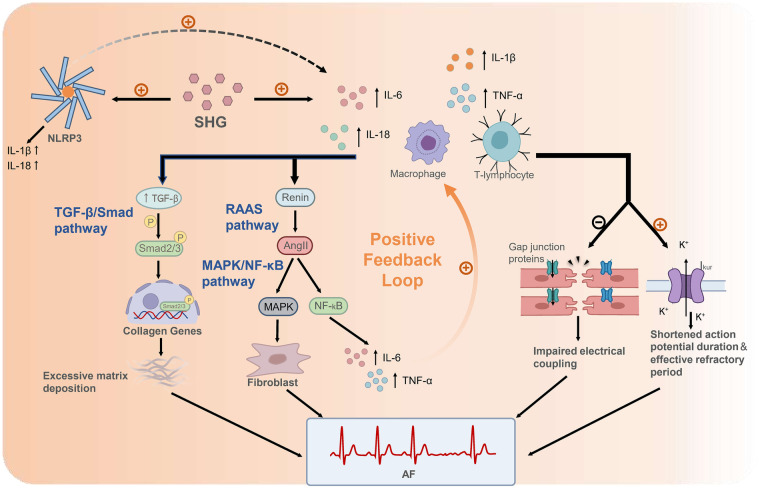 Figure 1
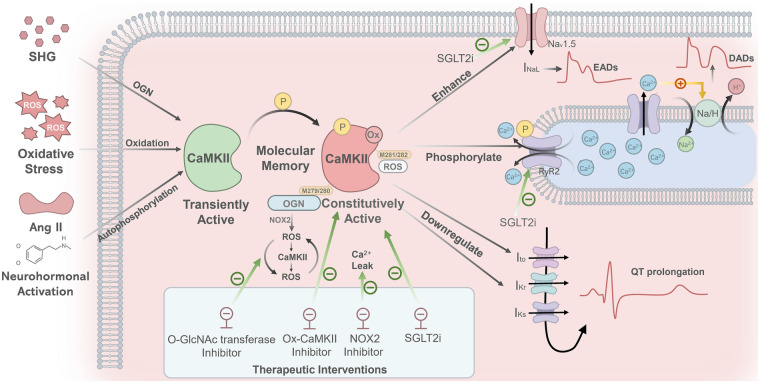 Figure 2
| First author, year | Country | Study group | Follow-up duration | Patients ( | HR/OR | 95%CI |
|---|---|---|---|---|---|---|
| Horst et al. 2007 ( | Netherlands | Primary PCI-Treated AMI | 30 days | 417 | Persistent Hyperglycemia: HR: 1.12 (Overall Cohort) HR: 1.19 (Subgroup without DM) Normoglycemia Cohort (Reference) | CI: 1.04–1.20 (Overall Cohort) CI: 1.05–1.36 (Subgroup without DM) |
| Kitada et al. 2010 ( | Japan | AMI Patients with IGT | 2 years | 422 | OR: 1.85 | 1.07–3.21 |
| Eitel et al. 2012 ( | Germany | Primary PCI-Treated AMI | 19 months | 401 | HR: 2.6 | 1.6–4.4 |
| Ekmekci et al. 2014 ( | Turkey | Primary PCI for STEMI without prior DM | In-Hospital | 503 | Tertile 3: OR: 9.55 | 1.99–46.5 |
| Stalikas et al. 2022 ( | Greece | Primary PCI-Treated STEMI | 1.7 years | 309 | HR: 1.802 | 1.01–3.21 |
| Savic et al. 2024 ( | Serbia | Primary PCI for STEMI without prior DM | Short-term: 30 days Long-term: 8 years | 2,362 | Short-term: HR 1.99 | Short-term: 1.03–3.85 Long-term: 1.01–1.89 |
| Su et al. 2013 ( | China | Elderly AMI patients | 1 year | 186 | Tertile 3: HR: 3.107 (High MAGE level) | 1.190–8.117 |
| Yang et al. 2024 ( | China | STEMI patients with DM and HF | 1 year | 484 | HR: 3.645 | 1.287–10.325 |
| Xu et al. 2022 ( | China | STEMI patients | 30 days | 5,417 | HR: 1.277 | 1.182–1.380 |
| Luo et al. 2024 ( | China | AMI without Prior AF | 2.7 years | 2,145 | High SHR (≥1.119) + SR: HR: 1.32 | 0.97–1.78 |
| Gao et al. 2023 ( | China | MINOCA patients | 3.5 years | 1,179 | HR: 2.30 | 1.21–4.38 |
| First author, year | Country | Study group | Follow-up duration (years) | Patients ( | OR | 95%CI |
|---|---|---|---|---|---|---|
| Koracevic et al. 2008 ( | Serbia | AMI without Prior AF | In-hospital | 543 | admission glucose ≥8.0 mmol/L: 2.07 DM: 2.04 | 1.180–3.637 1.06–3.93 |
| Li et al. 2021 ( | China | AMI without Prior AF | 11.2 | 563 | High Fasting Hyperglycemia: 2.56 | High Fasting Hyperglycemia: 1.53–4.30 Per 1 mmol/L increase in Fasting Hyperglycemia: 1.00–1.10 |
| Pan et al. 2022 ( | China | AMI without Prior AF | 5.4 | 3,194 | Quartile 4: 1.733 | 1.130–2.657 |
| Luo et al. 2024 ( | China | AMI without Prior AF | 2.7 | 2,145 | Per 10% increase in SHR: 1.05 | 1.01–1.10 |
Peer Reviews
No public reviews on file for this paper yet. If you reviewed it on a platform where reviews are public (OpenReview, ICLR, NeurIPS, ICML), you can paste yours below so the community can read it here.
Videos
No videos yet. Explain this paper in a talk, walkthrough, or lecture? Add one.
Taxonomy
TopicsAtrial Fibrillation Management and Outcomes · Cardiovascular Function and Risk Factors · Hyperglycemia and glycemic control in critically ill and hospitalized patients
Introduction
1
Acute myocardial infarction (AMI), the most severe and life-threatening manifestation of coronary artery disease, imposes a devastating global burden and stands as a foremost cause of mortality worldwide (1, 2). Within this context, elevated admission blood glucose emerges as a remarkably prevalent clinical finding. Epidemiological studies have reported a common prevalence of elevated admission glucose in AMI patients, ranging from 25% to 50% (3–5). This transient elevation of blood glucose secondary to acute stress is termed stress hyperglycemia (SHG) (6). It can manifest both in individuals without a prior diabetes diagnosis and in diabetic patients, even in those whose blood glucose was previously well-controlled (7, 8). As an adaptive survival mechanism, SHG establishes a new glycemic equilibrium to maximize glucose utilization under stress, thus partially mitigating ischemic injury and, as a transient mechanism, typically resolving after the acute stressor subsides (9). Accumulating evidence further indicates that SHG and the stress hyperglycemia ratio (SHR) serve not only as predictors of major adverse cardiovascular events (MACE), but are also strongly associated with the occurrence of in-hospital new-onset atrial fibrillation (NOAF) (10–12). Accordingly, this narrative review systematically summarizes the evidence and recent advances regarding the relationship between SHG and these clinical endpoints, with a particular focus on NOAF in the setting of AMI, and explores the underlying pathophysiological mechanisms to provide insights for future research. While the primary focus is on AMI-associated in-hospital NOAF, the mechanistic insights discussed may also inform the understanding of hyperglycemia-related arrhythmogenesis in other acute cardiovascular conditions.
Association between SHG and cardiovascular outcomes in AMI patients
2
Despite its high clinical prevalence and prognostic significance in the acute phase of AMI, SHG remains poorly recognized and managed due to the absence of universally accepted diagnostic criteria. Consequently, in previous research, biomarkers such as admission glucose, fasting plasma glucose (FPG), and glycated hemoglobin A1c (HbA1c) were commonly employed as quantitative measures of acute dysglycemia in AMI patients (4, 13–18). Critically, SHG is robustly associated with elevated all-cause mortality, both short- and long-term after an AMI (4, 12). In the following sections, we will review and synthesize the evidence connecting SHG with the risks of MACE and NOAF.
Association between SHG and MACE
2.1
MACE is a composite endpoint that encompasses cardiogenic shock, cardiac arrest, recurrent myocardial infarction, malignant arrhythmias, heart failure, and stroke (19–21). Studies on the association between glycemic levels and MACE were summarized (Table 1). Horst et al. firstly linked post-AMI hyperglycemia to MACE in 2007 (13). Their investigation, which followed 417 percutaneous coronary intervention (PCI)-treated AMI patients for 30 days, demonstrated that persistent in-hospital hyperglycemia significantly correlated with a higher MACE risk (HR 1.12, 95% CI 1.04–1.20) in the overall cohort, pointing to its potential as an independent predictor for short-term adverse events. Subsequently, Kitada et al. identified 2 hour post-load plasma glucose ≥160 mg/dL (OR 1.85, 95% CI 1.07–3.21) as an independent predictor of subsequent MACE risk within 2 years in AMI patients (14). Furthermore, Eitel et al. conducted a prospective analysis of ST-segment elevation myocardial infarction (STEMI) patients who received primary PCI and identified a significant association between increased admission glucose and escalated long-term MACE risk (HR 2.6, 95% CI 1.6–4.4, P < 0.001) (16), and the result was validated in other populations (4, 17, 18). Beyond static measures, glycemic variability (GV), quantified via metrics such as the mean amplitude of glycemic excursions and standard deviation (SD) derived from continuous glucose monitoring, has emerged as an independent prognostic predictor. Tokue et al. revealed that glycemic fluctuation patterns within 48 h post-PCI in STEMI patients were strongly associated with 180-day major adverse cardiac and cerebrovascular events (MACCE) (22). Compared to a normoglycemic group, intermittent hyperglycemia and persistent hyperglycemia increased MACCE risk by 5.32-fold (HR = 5.32, 95% CI 1.08–26.45) and 7.73-fold (HR = 7.73, 95% CI 1.09–54.77), respectively. Subsequently, both Su et al. and Yang et al. corroborated that high GV during early hospitalization or at admission was a potent, independent predictor of 1-year MACE in AMI patients (Su et al.: HR = 3.107, 95% CI 1.190–8.117, P = 0.021; Yang et al.: HR = 3.645, 95% CI 1.287–10.325, P = 0.015), whereas HbA1c showed no independent association in either study (15, 23). Additionally, hypoglycemia has also been linked to cardiovascular events. A meta-analysis incorporating 9 RCTs revealed a higher MACE risk (HR = 1.66, 95% CI 1.35–2.06, P < 0.01) in patients with hypoglycemia compared to those without, underscoring that avoiding severe hypoglycemia is equally crucial for improving outcomes alongside glycemic control (24). However, none of these conventional and dynamic glycemic indicators is capable of distinguishing the acute hyperglycemic response to stress from chronic dysglycemia due to pre-existing diabetes.
To overcome the critical limitation, SHR (SHR = admission glucose (mmol/L)/[1.59 × HbA1c (%)−2.59]), developed by Roberts, is a novel composite metric that concurrently reflects acute and chronic glycemic status, providing a more precise characterization of relative SHG and has demonstrated a robust correlation with heightened incidence of MACE in AMI patients (25). Xu et al. demonstrated in a large STEMI population that each increase of SD in SHR significantly elevated 30-day MACE risk (HR 1.277, 95% CI 1.182–1.380, P < 0.001). Notably, further subgroup analysis categorized patients by SHR and diabetes mellitus (DM) status, revealing that those with both elevated SHR and pre-existing DM exhibited the highest risk of MACE (HR 1.34, 95% CI 1.130–1.589, P = 0.001) (7). Extending beyond these fundamental associations, Luo et al. highlighted that the risk conferred by a high SHR is substantially amplified by the co-occurrence of in-hospital NOAF (HR 1.32, 95% CI 0.97–1.78, P < 0.001) (8). Importantly, broadening the etiological scope, Gao et al. specifically evaluated patients with myocardial infarction with nonobstructive coronary arteries and demonstrated that elevated SHR was independently associated with over a two-fold increase in long-term MACE risk (HR 2.30, 95% CI 1.21–4.38, P = 0.011), offering superior risk stratification compared to admission glucose alone, particularly in diabetic patients (26).
In summary, the evidence reviewed establishes a spectrum of glycemic derangements, including static hyperglycemia, GV, and relative hyperglycemia quantified by the SHR, as significant predictors of both short- and long-term MACE in AMI patients. Critically, the SHR refines risk stratification by distinguishing acute stress-induced hyperglycemia from chronic dysglycemia, with the highest risk observed in patients exhibiting both an elevated SHR and pre-existing diabetes. Furthermore, the association of hypoglycemia with adverse events underscores the complexity of glycemic management, highlighting the need for strategies that mitigate hyperglycemic risk without inducing harmful glucose lows. However, significant heterogeneity in defining and applying these glycemic metrics persists, and their prognostic utility in high-risk AMI subpopulations (e.g., those with renal or hepatic comorbidities) remains inadequately characterized. Future research should therefore prioritize standardizing these metrics, elucidating their role in vulnerable cohorts, and defining optimal glycemic control protocols that balance efficacy with safety.
Association between SHG and NOAF
2.2
NOAF is a common but underestimated complication with an in-hospital incidence ranging from 3.48% to 16.9% (27). Previous studies have highlighted the occurrence of AF is associated with subsequent risk of adverse outcomes, including cardiogenic stroke, heart failure, malignant arrhythmia and mortality (28–31). Although the link between SHG and NOAF remains less explored than that with MACE (Table 2), early evidence points to an increased incidence of NOAF in AMI patients with in-hospital hyperglycemia (31–33). Koracevic et al. demonstrated that AMI patients with admission glucose ≥8.0 mmol/L exhibited significantly higher NOAF incidence vs. normoglycemic counterparts(15% vs. 7.87%, P = 0.010). Moreover, the coexistence of hyperglycemia and NOAF was associated with a markedly elevated in-hospital mortality (1.67% vs. 24.14%) (34). Further corroborating this link, Li et al. identified fasting hyperglycemia as a powerful, independent predictor of NOAF through multivariable analysis (OR 2.65, 95% CI 1.53–4.30) (35). Their study additionally demonstrated a graded association, noting a 5% increase in NOAF risk for every 1 mmol/L increment in fasting glucose (OR 1.05, 95% CI 1.00–1.10). To adjust for the confounding effect of diabetes on underlying glycemic status, Pan conducted a large-scale study (n = 3,194) and reported a markedly elevated NOAF risk in the highest vs. lowest SHR quartile (OR 1.733, 95% CI 1.130–2.657, P = 0.012) (36). Most recently, Luo et al. not only reconfirmed the positive SHR-NOAF association (OR 1.05 per 10% SHR increase, 95% CI 1.01–1.10) but notably demonstrated particularly pronounced effects in non-diabetic patients (OR 1.08, 95% CI 1.01–1.17) (8). Expanding beyond acute hyperglycemia in AMI, evidence suggests that chronic glycemic instability also constitutes a pro-arrhythmic risk factor. A large cohort study of 27,246 patients with type 2 DM (median follow-up 70.7 months) found that higher long-term visit-to-visit GV, measured by HbA1c variability score, was independently associated with an increased risk of NOAF (HR 1.29, 95% CI 1.12–1.50, P < 0.001) (37). Collectively, this evidence establishes that dysglycemia, including both acute stress-induced hyperglycemia and chronic glucose fluctuations, is a significant, independent contributor to AF risk, with the SHR serving as a pivotal metric for quantifying the acute risk component specifically in AMI.
Predictive performance of glycemic metrics for clinical endpoints
2.3
Given that SHR is a biomarker of acute glycemic stress with independent predictive value for multiple post-AMI endpoints, its prognostic performance has been explored in comparative studies of various glycemic metrics (11, 38, 39). Cui et al. and Fu et al. demonstrated that fasting SHR had moderate prognostic utility comparable to FPG for predicting in-hospital mortality in AMI patients, irrespective of diabetes status (AUC 0.689–0.702) (40). However, studies specifically evaluating the predictive utility of SHR for MACE remain limited and have yielded suboptimal results. For instance, data from Luo et al. indicated poor discriminatory power of SHR for MACE (AUC 0.52, 95% CI 0.97–1.78; sensitivity 0.22, specificity 0.87) (8). Similarly, Horst et al. reported only modest predictive performance using admission blood glucose for MACE (AUC 0.59, 95% CI 0.52–0.65) (13). The poor performance might be attributed to a key limitation that SHR is a static, ratio-based snapshot in essence, although it refines the concept of hyperglycemia by accounting for chronic status.
Accordingly, it underscores a key advantage of GV: its ability to capture dynamic glucose fluctuations that static metrics miss. While numerous studies establish GV as a predictor for cardiovascular endpoints including MACE and NOAF, dedicated analyses quantifying its model performance metrics remain scarce (37). For instance, studies seldom benchmark GV's discriminative power against established predictors for MACE, and there is a notable paucity of research evaluating the AUC of GV specifically for predicting in-hospital NOAF or its incremental value over clinical scores. One possible reason is that the indicator itself requires longitudinal frequent measurement of patients' blood glucose level, requiring a sufficiently long follow-up time and high degree of patient compliance to ensure accuracy.
To bridge the gap, a promising path lies in integrating diverse indicators into multivariable prediction models, incorporating both glycemic and non-glycemic indicators. For example, adopting SHR into existing tools or multivariate models, such as the Global Registry of Acute Coronary Events risk score and the CHA2DS2-VASc score, might improve the estimation. Consequently, future predictive models for NOAF may achieve superior, multifaceted risk stratification by concurrently evaluating acute glycemic stress, dynamic glycemic instability, and established clinical risk factors (41–43).
Potential mechanisms underlying SHG-induced NOAF
3
The development of SHG entails a complex pathophysiological process driven by neuroendocrine activation, inflammatory responses, and insulin resistance (6, 44). This acute dysmetabolism is associated with adverse outcomes in patients with AMI (45–48). However, the precise mechanisms by which SHG induces NOAF remain incompletely elucidated. Current evidence indicates that SHG and GV trigger a pathophysiological cascade encompassing four interrelated core processes: inflammatory activation, oxidative stress activation, calcium handling dysfunction, and autonomic remodeling (49, 50). These mechanisms synergistically promote atrial fibrosis and electrical remodeling, ultimately leading to the development of AF (51–53).
Upregulation of inflammatory cytokines
3.1
Systemic inflammation is implicated in the initiation and perpetuation of AF. A robust inflammatory response is an integral part of tissue injury during AMI. Multiple studies have established that acute elevations in inflammatory markers (e.g., C-reactive protein, interleukins) are strongly associated with an increased risk of NOAF in these patients, both during hospitalization and at one-year follow-up (54, 55). Furthermore, SHG serves as a key driver of this inflammatory activation during the acute phase. It can significantly raise plasma levels of key cytokines, including interleukin-6 (IL-6), tumor necrosis factor-α (TNF-α), and interleukin-18 (IL-18), within two hours with levels promptly decline upon restoration of normoglycemia (54, 56–59). Notably, this hyperglycemia-induced inflammatory response can be suppressed by antioxidants such as glutathione, suggesting that oxidative stress acts as an upstream trigger (58).
Figure 1 illustrates the key pathways through which SHG, by activating an inflammatory response, leads to the occurrence of AF. Elevated inflammatory cytokines collectively establish a pathological microenvironment conducive to AF initiation and maintenance through several interconnected pathways (53, 60). The mechanisms involve driving structural remodeling, inducing electrical alterations, and engaging in crosstalk with other pathways. Atrial structural remodeling is driven by inflammatory cells (e.g., macrophages, T lymphocytes) and cytokines (e.g., IL-1β, TNF-α) through an interconnected signaling network (54). In particular, the TGF-β/Smad pathway plays a central role in fibrosis. Inflammatory cells release cytokines that activate this pathway, thereby promoting collagen deposition and fibrotic remodeling. These cytokines also stimulate the local renin-angiotensin-aldosterone system (RAAS), leading to angiotensin II (Ang II)-mediated activation of the MAPK/NF-κB pathway. This, in turn, further amplifies the production of cytokines such as IL-6 and TNF-α, enhances fibroblast activity, and establishes a positive feedback loop. In parallel, electrical remodeling is induced as inflammatory mediators directly or indirectly alter the electrophysiological properties of cardiomyocytes. For instance, cytokines such as TNF-α can downregulate or disrupt the function of gap junction proteins (e.g., connexin 40/43), thereby impairing electrical coupling between cells. Concurrently, the inflammatory response can upregulate the function of channels such as the ultra-rapid delayed rectifier potassium current (I_k__u__r_), leading to a shortening of the atrial action potential duration and effective refractory period. These changes not only facilitate the formation of reentrant circuits but may also synergize with calcium handling abnormalities to increase the propensity for triggered activity (59, 61, 62). Critically, this inflammatory upregulation establishes a vicious cycle with other mechanisms. It does not occur in isolation. Recent mechanistic studies indicate that the inflammatory state triggered by SHG is closely associated with the activation of the NOD-like receptor family, pyrin domain containing 3 (NLRP3) inflammasome (63, 64). The activated NLRP3 inflammasome not only directly releases pro-inflammatory cytokines such as IL-1β and IL-18 but also amplifies the expression of other inflammatory mediators including IL-6 and TNF-α. Furthermore, the inflammatory response extensively interacts with other pathological processes, such as oxidative stress, Calmodulin-dependent protein kinase II (CaMKII) pathway activation, and autonomic remodeling. These interconnected mechanisms form a mutually reinforcing network that continuously drives both structural and electrical remodeling of the atria, ultimately facilitating the initiation and perpetuation of atrial fibrillation (60, 65).
Mechanisms linking SHG-induced inflammation to AF following AMI. SHG rapidly elevates pro-inflammatory cytokines (e.g., IL-6, TNF-α, IL-1β/IL-18). These cytokines promote fibrosis primarily by activating the TGF-β/Smad pathway, wherein TGF-β induces Smad2/3 phosphorylation. The resulting Smad complex translocates into the nucleus and initiates transcription of collagen genes, leading to excessive extracellular matrix deposition. Inflammatory cytokines also stimulate local renin release, activating the RAAS pathway. The resultant Ang II activates the MAPK/NF-κB pathway, which promotes fibroblast activation through MAPK kinases and induces NF-κB signaling. NF-κB drives transcription of cytokines such as IL-6 and TNF-α, establishing a positive feedback loop that further amplifies inflammation. In parallel, inflammatory mediators induce electrical remodeling by downregulating gap junction proteins, thereby impairing cell-cell coupling, and by upregulating potassium currents (e.g., Ikur), which shortens the atrial action potential duration and effective refractory period. Furthermore, SHG activates the NLRP3 inflammasome. The activated NLRP3 inflammasome directly releases pro-inflammatory cytokines such as IL-1β and IL-18 and amplifies the expression of other inflammatory mediators including IL-6 and TNF-α. These interconnected pathways cooperatively drive structural and electrical remodeling of the atria, ultimately culminating in AF. SHG, stress hyperglycemia; IL-6, interleukin-6; TNF-α, tumor necrosis factor-alpha; IL-1β, interleukin-1 β; TGF-β, transforming growth factor-β; RAAS, renin-angiotensin-aldosterone system; Ang II, angiotensin II; MAPK, mitogen-activated protein kinase; NF-κB, nuclear factor kappa-light-chain-enhancer of activated B cells; Ikur, ultra-rapid delayed rectifier potassium current; NLRP3, NOD-like receptor family, pyrin domain containing 3; AF, atrial fibrillation.
Activation of oxidative stress
3.2
Hyperglycemia induces excessive production of reactive oxygen species (ROS) (66). When ROS production surpasses the scavenging capacity of endogenous antioxidant enzymes, including superoxide dismutase and glutathione peroxidase, the redox homeostasis is disrupted, resulting in widespread cellular damage. This pathological process is termed oxidative stress (66, 67). Oxidative stress can cause mitochondrial dysfunction and ion channel abnormalities, thereby increasing susceptibility to abnormal electrical activity in the atria (53, 68). Animal studies provide direct evidence for these mechanisms. In diabetic model rats, compared with the glucose-controlled group, the uncontrolled glucose group exhibited more pronounced cardiac fibrosis (evidenced by increased expression of collagen type 1, collagen type 3, and α-smooth muscle actin) and a higher inducibility of atrial fibrillation. Glycemic fluctuation further exacerbated these pathological changes (69). Similarly, in a mouse model of myocardial ischemia/reperfusion, high-glucose perfusion aggravated myocardial injury and enhanced cardiac oxidative stress (63). A key molecular link in these pathological effects is the upregulation of thioredoxin-interacting protein (Txnip) by hyperglycemia or glucose fluctuations. Elevated Txnip promotes ROS generation and cardiomyocyte apoptosis, ultimately driving fibrosis (63, 64, 69, 70).
Critically, as a core pathological nexus, oxidative stress not only directly drives atrial fibrosis but also mediates electrical remodeling and calcium dyshomeostasis by activating a detrimental ROS–ox-CaMKII circuit. Furthermore, it contributes to autonomic nervous system dysfunction and participates in the pathological remodeling of epicardial adipose tissue. These mechanisms cooperatively establish a complex substrate that favors the initiation and maintenance of AF (discussed in Sections 2.3 and 2.4) (71–74).
CaMKII activation and disruption of calcium homeostasis
3.3
CaMKII is an enzyme that plays an important regulatory role in the heart and brain. Its chronic activation has been documented in various pathological conditions, including diabetes and heart failure (75). Upregulation of Upregulation of CaMKII promotes cardiac remodeling and elevates the risk of arrhythmias. Moreover, CaMKII serves as a critical node linking metabolic stress to both atrial and ventricular arrhythmogenesis.
Figure 2 illustrates the key pathways whereby SHG and other stimuli trigger AF by activating CaMKII. Under acute pathological conditions, multiple pathological stimuli, such as SHG, oxidative stress, and neurohormonal activation (e.g., by Ang II and catecholamines), can induce persistent and autonomous CaMKII activation. These factors promote persistent CaMKII activation via various post-translational modifications, including O-GlcNAcylation (OGN), oxidation, and autophosphorylation, among others. Consequently, CaMKII shifts from a transiently activated physiological modulator into a constitutively active pathological driver, a transition that establishes a form of “molecular memory”. Aberrantly activated CaMKII promotes arrhythmogenesis through two synergistic pathways. The first pathway provides immediate triggers for abnormal electrical activity: by enhancing the late sodium current (I_NaL_), CaMKII prolongs the action potential, thereby inducing early afterdepolarizations (EADs). Concurrently, through phosphorylation of the ryanodine receptor 2 (RyR2), it increases spontaneous calcium release from the sarcoplasmic reticulum (SR). This elevated cytosolic calcium activates the Na+/H+ exchanger, generating a transient inward current that underlies delayed afterdepolarizations (DADs) (59, 60). The second pathway establishes a sustained pro-arrhythmic substrate: CaMKII downregulates several potassium currents (I_to_, I_Kr_, I_Ks_), thereby reducing the repolarization reserve and prolonging the action potential (manifested as QT prolongation). Furthermore, it promotes inflammation, fibrosis, apoptosis, and mitochondrial dysfunction, collectively impairing cell-to-cell coupling and slowing cardiac conduction (76–78).
Mechanisms linking CaMKII activation to NOAF. SHG, oxidative stress, and neurohormonal activation (e.g., by angiotensin II and catecholamines) promote persistent CaMKII activation through distinct post-translational modifications: OGN, oxidation, and autophosphorylation, respectively. This shifts CaMKII from a transiently active state into a constitutively active one, establishing a form of “molecular memory.” Specifically, SHG induces OGN at M279/280 of the CaMKIIδ isoform, which triggers a NOX2-dependent ROS burst and initiates a self-amplifying “ROS–CaMKII–ROS” cycle. Oxidative stress generates ROS that oxidize CaMKII at M281/282, shifting it from a transiently active state into a constitutively active one. The oxidized CaMKII phosphorylates RyR2, leading to increased sarcoplasmic reticulum Ca²+ release, which activates the Na/H exchanger and thereby generates DADs. Furthermore, abnormally activated CaMKII enhances the INaL, which prolongs action potential duration and induces EADs. Additionally, CaMKII downregulates several potassium currents (Ito, IKr, IKs), leading to QT interval prolongation. Inhibitors of O-GlcNAc transferase, ox-CaMKII, or NOX2 can effectively block ROS bursts, suppress oxidized CaMKII, and reduce calcium leakage, respectively. Empagliflozin lowers CaMKII activity and reduces abnormal phosphorylation of both RyR2 and NaV1.5. SHG, stress hyperglycemia; CaMKII, calmodulin-dependent protein kinase II; OGN, O-linked β-N-acetylglucosaminylation; ROS, reactive oxygen species; NOX2, NADPH oxidase 2; RyR2, ryanodine receptor 2; DADs, delayed afterdepolarizations; EADs, early afterdepolarizations; INaL, late sodium current; Ito, transient outward potassium current; IKr, rapid delayed rectifier potassium current; IKs, slow delayed rectifier potassium current; QT, QT Interval; NaV1.5, voltage-gated sodium channel 1.5.
A well-established consensus recognizes the pathway “ROS → ox-CaMKII (M281/282) → RyR2 phosphorylation → SR Ca²^+^ leak → DADs → arrhythmia” as a common mechanism contributing to both atrial and ventricular arrhythmias (76–78). More recently, studies in cellular models of acute hyperglycemia have further shown that OGN directly modifies the M279/280 residue of the CaMKIIδ isoform, inducing its sustained activation. Then it triggers an arrhythmogenic cascade that includes NOX2-dependent ROS burst and RyR2-mediated SR Ca²^+^ leak (71), as well as a “ROS–CaMKII–ROS” vicious cycle (72). In contrast, OGN-modified CaMKII is not detected in chronic diabetes-related atrial fibrillation models. Although OGN is markedly elevated in the diabetic heart, its pro-arrhythmic effect in the atria appears to operate primarily through a pathway independent of and parallel to CaMKII “hyperglycemia → increased OGN → targets other than CaMKII (potentially including RyR2, transcription factors, or structural proteins) → arrhythmia” (78). Thus, the direct modification of CaMKII by OGN may play distinct roles in arrhythmogenesis under acute vs. chronic conditions, as well as between atrial and ventricular tissues. In conclusion, these mechanisms collectively contribute to cardiac structural remodeling and arrhythmogenesis.
Building on these mechanisms, targeting CaMKII and its upstream modification pathways has emerged as a promising therapeutic strategy, with studies providing multi-layered support for precise interventions. On one hand, targeted intervention at key pathological steps in different models shows considerable potential (79, 80). In acute hyperglycemic models, inhibiting O-GlcNAc transferase or NOX2 activity effectively blocks ROS bursts and calcium leakage (71). In chronic diabetes-related atrial fibrillation models, specifically inhibiting ox-CaMKII or enhancing O-GlcNAcase activity to reduce global protein OGN also significantly attenuates arrhythmia (78). On the other hand, some cardiovascular drugs already in clinical use can improve cardiomyocyte electrophysiological and mechanical function. For example, empagliflozin reduces CaMKII activity and the abnormal phosphorylation of its downstream targets (including RyR2 at S2814 and the sodium channel Na_V_1.5 at S571), thereby enhancing calcium handling and electrical stability in cardiomyocytes (81, 82). Moreover, a recent study demonstrates that semaglutide directly suppresses pathological late sodium current and reduces diastolic SR calcium leak, thereby improving myocardial contractility (83).
Autonomic remodeling and epicardial adipose tissue remodeling
3.4
Hyperglycemia serves as a key driver of pathological cardiac autonomic remodeling. Under stress, neurotrophic factors released from the myocardium trigger sympathetic nerve sprouting and hyperinnervation in the atria, thereby forming a structural “neural substrate” conducive to AF. Subsequently, the intrinsic cardiac ganglia become hyperactive and act as aberrant integration centers. These ganglia not only receive and process abnormal sympathetic and vagal inputs but also generate spontaneous or simultaneous sympathetic–vagal co-discharges, representing critical initiating events for AF. Specifically, sympathetic overactivation primarily acts through the β-adrenergic receptor–Gα_s_–cAMP–PKA/CaMKII pathway. This cascade enhances the L-type calcium current (I_CaL_) and RyR2 activity, while suppressing the inward rectifier potassium current (I_K1_), leading to SR calcium leak and the eventual induction of DADs. In parallel, vagal activation releases acetylcholine, which activates acetylcholine-activated potassium currents. This markedly shortens the atrial effective refractory period. The resulting spatial heterogeneity in refractoriness facilitates the formation of a re-entry-prone substrate. Although functionally antagonistic, the sympathetic and vagal systems can act synergistically. The coexistence of sympathetic-mediated prolongation of calcium transients and vagal-induced shortening of the action potential duration particularly in regions such as the pulmonary veins, readily facilitates the generation of “late phase-3 early afterdepolarizations”, which serve as critical triggering events for AF (73).
Furthermore, remodeling of epicardial adipose tissue (EAT) in metabolic disorders such as obesity and diabetes represents another key mechanism underlying increased AF susceptibility. Through paracrine signaling, EAT releases bioactive substances into the adjacent atrial myocardium, including inflammatory mediators (e.g., TNF-α, IL-6), pro-fibrotic exosomes, and ROS. These factors act in concert to drive both structural remodeling (e.g., fibrosis) and electrical remodeling (e.g., conduction disturbances and increased electrophysiological heterogeneity) of the atrial substrate, thereby creating and sustaining a pathological microenvironment conducive to the initiation and perpetuation of AF (59, 74, 84, 85).
Therapeutic strategies for AMI with concomitant SHG
4
The optimal management of SHG in AMI remains a clinically evolving challenge. The core of current intervention strategies lies in balancing the cardiovascular benefits of glycemic control against potential risks such as hypoglycemia. Insulin rapidly corrects hyperglycemia, ameliorates metabolic disturbances, and may attenuate inflammatory responses (86, 87). Early studies, such as the DIGAMI trial, demonstrated that insulin-based therapy reduced mortality in AMI patients, regardless of diabetes status (46, 88–90). However, a subsequent large-scale meta-analysis demonstrated that intensive insulin therapy failed to significantly reduce all-cause mortality (RR 1.03, 95% CI 0.96–1.10) and was associated with an increased risk of iatrogenic hypoglycemia. Notably, iatrogenic hypoglycemia is a recognized independent risk factor for poor prognosis (88). This evidence has tempered the initial enthusiasm for universal intensive insulin therapy, shifting the current clinical focus toward “safe and stable glycemic control,” which aims to maintain reasonable glycemic targets while strictly avoiding hypoglycemia. The advent of novel glucose-lowering agents has reshaped the therapeutic landscape. Drugs such as GLP-1RA, dipeptidyl peptidase-4 inhibitors, and SGLT2i have demonstrated clear benefits in reducing the risk of heart failure hospitalization and MACE in patients with type 2 diabetes or established cardiovascular disease (91–98). In addition to providing cardiovascular protection, these agents carry a substantially lower risk of hypoglycemia compared to insulin, better aligning with the modern therapeutic principle of “benefit-risk balance.” Although preclinical studies suggest that some of these drugs may confer potential atrial protective effects through mechanisms such as mitigating inflammation, suppressing oxidative stress, and improving myocardial electrophysiological stability (68, 81–83, 99), large cardiovascular outcome trials (CVOTs) have not consistently demonstrated a significant reduction in the incidence of atrial fibrillation (100).
In summary, although novel glucose-lowering agents are mechanistically plausible for preventing SHG-associated NOAF, this remains a hypothesis awaiting validation. Future studies need to prospectively pre-specify NOAF as a clinical endpoint in dedicated trials to determine whether targeted interventions can effectively mitigate this risk.
Conclusion
5
In summary, this review demonstrates that SHG and the SHR are independent predictors of both MACE and in-hospital NOAF following AMI, primarily through pathways involving inflammatory activation, oxidative stress, calcium handling dysfunction, and autonomic remodeling. Nevertheless, clinical translation remains constrained by the absence of a uniform SHG definition, limited discriminative ability of existing glycemic indices for NOAF, and a shortage of prospective interventional evidence. Consequently, future research must focus on standardizing diagnostic approaches, constructing integrated dynamic prognostic tools, and most critically, implementing targeted trials to evaluate whether pathophysiology-informed strategies can effectively lower NOAF incidence and enhance outcomes in this high-risk population.
Literature search strategy
5.1
A systematic literature search was conducted in PubMed, Web of Science, and Embase for studies published up to November 2025. The search strategy combined terms related to acute myocardial infarction (including STEMI and NSTEMI), stress hyperglycemia and the stress hyperglycemia ratio (SHR), as well as in-hospital new-onset atrial fibrillation and major adverse cardiovascular events, using Boolean logic with syntax adapted to each database. As a narrative review, study selection was guided by their relevance to the pathophysiological mechanisms and clinical implications central to this discussion.
The reference list from the paper itself. Each links out to its DOI / PubMed record.
- 1Dai H Much AA Maor E Asher E Younis A Xu Y Global, regional, and national burden of ischaemic heart disease and its attributable risk factors, 1990–2017: results from the global burden of disease study 2017. Eur Heart J Qual Care Clin Outcomes. (2022) 8:50–60. 10.1093/ehjqcco/qcaa 07633017008 PMC 8728029 · doi ↗ · pubmed ↗
- 2Rao SV O'Donoghue ML Ruel M Rab T Tamis-Holland JE Alexander JH 2025 ACC/AHA/ACEP/NAEMSP/SCAI guideline for the management of patients with acute coronary syndromes: a report of the American College of Cardiology/American Heart Association joint committee on clinical practice guidelines. Circulation. (2025) 151:e 771–862. 10.1161/CIR.000000000000132840014670 · doi ↗ · pubmed ↗
- 3Liu J Zhou Y Huang H Liu R Kang Y Zhu T Impact of stress hyperglycemia ratio on mortality in patients with critical acute myocardial infarction: insight from American MIMIC-IV and the Chinese CIN-II study. Cardiovasc Diabetol. (2023) 22:281. 10.1186/s 12933-023-02012-137865764 PMC 10589959 · doi ↗ · pubmed ↗
- 4Savic L Mrdovic I Asanin M Stankovic S Lasica R Krljanac G Long-term prognostic impact of stress hyperglycemia in non-diabetic patients treated with successful primary percutaneous coronary intervention. J Pers Med. (2024) 14:591. 10.3390/jpm 1406059138929812 PMC 11204510 · doi ↗ · pubmed ↗
- 5Alawaji R Musslem M Alshalahi E Alanzan A Sufyani A Alhati M A systematic review and meta-analysis of the effect of hyperglycemia on admission for acute myocardial infarction in diabetic and non-diabetic patients. Diabetol Metab Syndr. (2024) 16:224. 10.1186/s 13098-024-01459-w 39267155 PMC 11391676 · doi ↗ · pubmed ↗
- 6Song G Liu X Lu Z Guan J Chen X Li Y Relationship between stress hyperglycaemic ratio (SHR) and critical illness: a systematic review. Cardiovasc Diabetol. (2025) 24:188. 10.1186/s 12933-025-02751-340317019 PMC 12049067 · doi ↗ · pubmed ↗
- 7Xu W Yang YM Zhu J Wu S Wang J Zhang H Predictive value of the stress hyperglycemia ratio in patients with acute ST-segment elevation myocardial infarction: insights from a multi-center observational study. Cardiovasc Diabetol. (2022) 21:48. 10.1186/s 12933-022-01479-835351149 PMC 8962934 · doi ↗ · pubmed ↗
- 8Luo J Li Z Qin X Zhang X Liu X Zhang W Association of stress hyperglycemia ratio with in-hospital new-onset atrial fibrillation and long-term outcomes in patients with acute myocardial infarction. Diabetes Metab Res Rev. (2024) 40:e 3726. 10.1002/dmrr.372637712510 · doi ↗ · pubmed ↗