Effect of Probiotic and Synbiotic Supplementation on Growth Performance, Serum Parameters and Gut Histomorphometry in Broiler Chickens Challenged With Eimeria
Subash Chhetri, Dinesh Kumar Singh, Bibash Bahadur Tiwari, Sushil Neupane, Bikas Raj Shah, Deepak Subedi

TL;DR
This study shows that adding probiotics or synbiotics to the water of chickens infected with Eimeria improves their growth, gut health, and blood markers.
Contribution
The study demonstrates that probiotic and synbiotic supplementation can mitigate the negative effects of Eimeria infection in broiler chickens.
Findings
Eimeria challenge reduced weight gain, body weight, and feed efficiency in broilers.
Probiotic and synbiotic supplementation improved gut morphology and spleen weight in infected chickens.
Both supplements had similar effectiveness in alleviating coccidiosis-induced damage.
Abstract
This study evaluated the effects of probiotic and synbiotic supplementation on growth performance, serum biochemistry, immune organ development, intestinal length and histomorphometry in broilers challenged with Eimeria. A total of 360 Cobb 500 broilers were assigned to six treatment groups (3 replicates of 20 birds), and from Day 14 to 35, birds received water supplemented with either probiotic, synbiotic or control. On Day 14, challenged groups received a 10× dose of Eimeria from a commercial live vaccine. Data were analyzed using a 2×3 factorial ANOVA. Eimeria challenge significantly reduced average weight gain, final body weight and feed conversion efficiency. Intestinal morphology was adversely affected, as evidenced by decreased villus height (VH) and villus height to crypt depth ratio (VCR) in both the duodenum and jejunum. Eimeria challenge also induced significant alterations…
Genes, proteins, chemicals, diseases, species, mutations and cell lines named across the full text — each resolved to its canonical identifier and authoritative record.
Click any figure to enlarge with its caption.
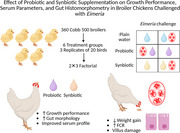 Figure 1
| Water treatment | ||||
|---|---|---|---|---|
| Plain Water | Probiotic | Synbiotic | ||
|
|
| Unchallenged + Plain water | Unchallenged + Probiotic | Unchallenged + Synbiotic |
|
| Challenged + Plain water | Challenged + Probiotic | Challenged + Synbiotic | |
| Calculated nutrient composition | B0 | B1 | B2 |
|---|---|---|---|
| Moisture | 11 | 11 | 11 |
| Crude protein | 22 | 21 | 20 |
| Crude fibre | 6 | 6 | 6 |
| Crude fat | 3.5 | 3.5 | 3.5 |
| Acid insoluble ash | 3.5 | 3.5 | 3.5 |
| Calcium | 1 | 0.9 | 0.8 |
| Salt as sodium chloride | 0.5 | 0.5 | 0.5 |
| Total phosphorus | 0.7 | 0.7 | 0.7 |
| Lysine | 1.4 | 1.3 | 1.2 |
| Methionine | 0.5 | 0.5 | 0.5 |
| Methionine and cysteine | 1 | 0.9 | 0.9 |
| Metabolizable energy kcal/kg | 2900 | 3000 | 3100 |
| Factors | Treatments | TFI (g) | TWI (mL) | TAWG (g) | FCR |
|---|---|---|---|---|---|
|
| |||||
| Unchallenged × Plain | 49130.00a | 86045.00a | 1548.43 | 1.67 | |
| Unchallenged × Synbiotic | 46528.33d | 84121.66b | 1671.26 | 1.47 | |
| Unchallenged × Probiotic | 46035.00e | 82403.34c | 1663.97 | 1.46 | |
| Challenged × Plain | 48245.00b | 80260.00e | 1394.2 | 1.85 | |
| Challenged × Synbiotic | 48235.00b | 82760.00c | 1523.13 | 1.68 | |
| Challenged × Probiotic | 47308.33c | 81176.66d | 1511.6 | 1.67 | |
|
| <0.001 | <0.001 | 0.952 | 0.177 | |
| LSD (0.05) | 314.08 | 789.10 | 31.19 | 0.026 | |
| SEM | 42.313 | 103.26 | 3.98 | 0.004 | |
| CV % | 0.36 | 0.49 | 1.1 | 0.88 | |
| Grand mean | 47580.28 | 82794.44 | 1552.102 | 1.64 | |
|
| |||||
|
| Unchallenged | 47231.11b | 84190a | 1627.89a | 1.54b |
| Challenged | 47929.44a | 81398.88b | 1476.31b | 1.74a | |
|
| <0.001 | <0.001 | <0.001 | <0.001 | |
| LSD (0.05) | 181.33 | 426.14 | 18.00 | 0.015 | |
| Water treatment | Plain | 48687.5a | 83152.5a | 1471.31b | 1.76a |
| Synbiotic | 47381.67b | 83440.83a | 1597.2a | 1.58b | |
| Probiotic | 46671.67c | 81790b | 1587.78a | 1.56b | |
|
| <0.001 | <0.001 | <0.001 | <0.001 | |
| LSD (0.05) | 222.80 | 521.91 | 22.05 | 0.018 | |
| Factors | Treatments | BWG at d21 (g) | BWG at d28 (g) | BWG at d35 (g) |
|---|---|---|---|---|
|
| ||||
| Unchallenged × Plain | 829.6b | 1382.66 | 1971.46 | |
| Unchallenged × Synbiotic | 893.46a | 1489.53 | 2086.60 | |
| Unchallenged × Probiotic | 888.20a | 1485.00 | 2084.46 | |
| Challenged × Plain | 730.60d | 1284.467 | 1815.26 | |
| Challenged × Synbiotic | 784.30c | 1363.80 | 1934.40 | |
| Challenged × Probiotic | 784.20c | 1364.80 | 1930.66 | |
|
| <0.001 | 0.405 | 0.986 | |
| LSD (0.05) | 18.27 | 30.34 | 33.95 | |
| SEM | 2.789 | 4.349 | 4.889 | |
| CV % | 3.07 | 2.99 | 2.37 | |
| Grand mean | 818.66 | 1395.04 | 1970.47 | |
|
| ||||
|
| Unchallenged | 870.42a | 1452.40a | 2047.51a |
| Challenged | 766.91b | 1337.69b | 1893.44b | |
|
| <0.01 | <0.001 | <0.001 | |
| LSD (0.05) | 10.55 | 17.54 | 19.6 | |
| Water treatment | Plain | 780.10b | 1333.57b | 1893.37b |
| Synbiotic | 838.833a | 1426.67a | 2010.50a | |
| Probiotic | 837.06a | 1424.9a | 2007.56b | |
|
| <0.001 | <0.001 | <0.001 | |
| LSD (0.05) | 12.92 | 21.45 | 24.00 | |
| Factors | Treatments | AST (U/L) | ALT (U/L) | TP (g/dL) | ALB (g/dL) | Urea (mg/dL) | Creat. (mg/dL) |
|---|---|---|---|---|---|---|---|
|
| |||||||
| Unchallenged × Plain | 154.54 | 18.68 | 4.826 | 2.77 | 6.94d | 0.533 | |
| Unchallenged × Synbiotic | 94.187 | 17.136 | 5.71 | 2.946 | 10.226cd | 0.727 | |
| Unchallenged × Probiotic | 107.07 | 27.18 | 5.76 | 2.91 | 9.736cd | 0.707 | |
| Challenged × Plain | 171.44 | 38.343 | 4.816 | 2.29 | 20.353a | 0.73 | |
| Challenged × Synbiotic | 107.37 | 27.743 | 5.27 | 2.74 | 12.576bc | 0.793 | |
| Challenged × Probiotic | 124.39 | 32.53 | 5.513 | 2.773 | 16.913ab | 0.75 | |
|
| 0.993 | 0.601 | 0.836 | 0.499 | 0.01 | 0.697 | |
| LSD (0.05) | 58.83 | 23.96 | 1.16 | 0.50 | 4.45 | 0.33 | |
| SEM | 7.793 | 2.868 | 0.146 | 0.061 | 0.611 | 0.039 | |
| CV % | 25.56 | 48.89 | 12 | 10.07 | 19.14 | 25.51 | |
| Grand mean | 126.49 | 26.93 | 5.31 | 2.73 | 12.79 | 0.7 | |
|
| |||||||
|
| Unchallenged | 118.6 | 20.998 | 5.432 | 2.875 | 8.967b | 0.656 |
| Challenged | 134.4 | 32.872 | 5.2 | 2.601 | 16.61a | 0.758 | |
|
| 0.32 | 0.061 | 0.441 | 0.044 | <0.001 | 0.216 | |
| LSD (0.05) | 33.96 | 13.83 | 0.67 | 0.29 | 2.57 | 0.19 | |
| Water treatment | Plain | 162.99a | 28.511 | 4.821 | 2.53 | 13.646 | 0.632 |
| Synbiotic | 100.78b | 22.44 | 5.49 | 2.843 | 11.401 | 0.76 | |
| Probiotic | 115.73b | 29.855 | 5.636 | 2.841 | 13.325 | 0.728 | |
|
| 0.01 | 0.548 | 0.09 | 0.093 | 0.305 | 0.406 | |
| LSD (0.05) | 41.6 | 16.94 | 0.82 | 0.35 | 3.15 | 0.23 | |
| Factors | Treatments | Amylase (mg/dL) | Lipase (U/L) | Cholesterol (mg/dL) | TG (mg/dL) |
|---|---|---|---|---|---|
|
| |||||
| Unchallenged × Plain | 161.926 | 26.31 | 147.553 | 97.75 | |
| Unchallenged × Synbiotic | 390.713 | 35.156 | 111.803 | 78 | |
| Unchallenged × Probiotic | 414.66 | 35.11 | 111.773 | 73.253 | |
| Challenged × Plain | 153.846 | 22.456 | 155.513 | 111.796 | |
| Challenged × Synbiotic | 377.613 | 29.703 | 124.066 | 76.813 | |
| Challenged × Probiotic | 391.3 | 25.876 | 116.49 | 80.223 | |
|
| 0.985 | 0.173 | 0.83 | 0.156 | |
| LSD (0.05) | 140.48 | 4.68 | 22.85 | 11.95 | |
| SEM | 18.354 | 0.558 | 2.508 | 1.492 | |
| CV % | 24.51 | 8.84 | 8.96 | 7.6 | |
| Grand mean | 315.01 | 29.1 | 127.86 | 86.3 | |
|
| |||||
|
| Unchallenged | 322.433 | 32.192a | 123.71 | 83.001 |
| Challenged | 307.586 | 26.012b | 132.023 | 89.611 | |
|
| 0.693 | <0.001 | 0.123 | 0.047 | |
| LSD (0.05) | 81.1 | 2.7 | 12.04 | 6.89 | |
| Water treatment | Plain | 157.886b | 24.383b | 151.533a | 104.773a |
| Synbiotic | 384.163a | 32.43a | 117.935b | 77.406b | |
| Probiotic | 402.98a | 30.493a | 114.131b | 76.738b | |
|
| <0.001 | <0.001 | <0.001 | <0.001 | |
| LSD (0.05) | 99.33 | 3.31 | 14.74 | 8.44 | |
| Factors | Treatments | Duodenum (cm/kg) | Jejunum (cm/kg) | Ileum (cm/kg) | SI (cm/kg) | Cecum (cm/kg) |
|---|---|---|---|---|---|---|
|
| ||||||
| Unchallenged × Plain | 19.226 | 38.926 | 38.383 | 96.536 | 19.833 | |
| Unchallenged × Synbiotic | 19.883 | 40.816 | 40.64 | 101.34 | 20.213 | |
| Unchallenged × Probiotic | 19.853 | 42.596 | 42.47 | 104.923 | 20.546 | |
| Challenged × Plain | 17.346 | 38.496 | 37.73 | 93.573 | 19.326 | |
| Challenged × Synbiotic | 18.76 | 39.963 | 39.76 | 98.483 | 19.776 | |
| Challenged × Probiotic | 17.643 | 39.936 | 40.17 | 97.75 | 20.876 | |
|
| 0.643 | 0.235 | 0.494 | 0.265 | 0.508 | |
| LSD (0.05) | 1.77 | 2.11 | 2.14 | 4.77 | 1.29 | |
| SEM | 0.237 | 0.267 | 0.298 | 0.583 | 0.158 | |
| CV % | 5.17 | 2.84 | 2.94 | 2.65 | 3.5 | |
| Grand mean | 18.78 | 40.12 | 39.85 | 98.76 | 20.09 | |
|
| ||||||
|
| Unchallenged | 19.65a | 40.78a | 40.49 | 100.93a | 20.19 |
| Challenged | 17.916b | 39.465b | 39.22 | 96.60b | 19.99 | |
|
| 0.003 | 0.03 | 0.053 | 0.003 | 0.53 | |
| LSD (0.05) | 1.02 | 1.21 | 1.23 | 2.75 | 0.75 | |
| Water treatment | Plain | 18.28 | 38.71b | 38.05b | 95.055b | 19.58b |
| Synbiotic | 19.32 | 40.39a | 40.2a | 99.911a | 19.995b | |
| Probiotic | 18.75 | 41.26a | 41.32a | 101.336a | 20.711a | |
|
| 0.244 | 0.007 | 0.002 | 0.002 | 0.038 | |
| LSD (0.05) | 1.25 | 1.49 | 1.5 | 3.37 | 0.92 | |
| Day 21 | Day 35 | ||||||
|---|---|---|---|---|---|---|---|
| Challenges | Treatments | Bursa (g/kg) | Spleen (g/kg) | Thymus (g/kg) | Bursa (g/kg) | Spleen (g/kg) | Thymus (g/kg) |
|
| |||||||
| Unchallenged × Plain | 0.74 | 0.906 | 1.163 | 1.58 | 1.293 | 1.966 | |
| Unchallenged × Synbiotic | 0.673 | 1.083 | 1.37 | 1.67 | 1.4 | 2.246 | |
| Unchallenged × Probiotic | 0.72 | 1.136 | 1.206 | 1.65 | 1.396 | 2.26 | |
| Challenged × Plain | 0.523 | 0.706 | 1.07 | 1.496 | 1.23 | 1.88 | |
| Challenged × Synbiotic | 0.556 | 1.123 | 1.136 | 1.613 | 1.39 | 2.013 | |
| Challenged × Probiotic | 0.566 | 0.84 | 1.153 | 1.593 | 1.376 | 2.053 | |
|
| 0.42 | 0.141 | 0.39 | 0.942 | 0.829 | 0.748 | |
| LSD (0.05) | 0.115 | 0.25 | 0.2 | 0.14 | 0.14 | 0.31 | |
| SEM | 0.019 | 0.031 | 0.025 | 0.019 | 0.018 | 0.039 | |
| CV % | 10.1 | 8.2 | 9.66 | 4.84 | 5.89 | 8.45 | |
| Grand mean | 20.09 | 0.966 | 1.18 | 1.6 | 1.34 | 2.07 | |
|
| |||||||
|
| Unchallenged | 0.71a | 1.042 | 1.246a | 1.633 | 1.363 | 2.157 |
| Challenged | 0.548b | 0.89 | 1.12b | 1.567 | 1.332 | 1.982 | |
|
| <0.001 | 0.04 | 0.04 | 0.106 | 0.425 | 0.059 | |
| LSD (0.05) | 0.066 | 0.144 | 0.12 | 0.81 | 0.083 | 0.18 | |
| Water treatment | Plain | 0.631 | 0.806c | 1.116 | 1.538 | 1.261b | 1.923 |
| Synbiotic | 0.615 | 1.103a | 1.253 | 1.641 | 1.395a | 2.13 | |
| Probiotic | 0.643 | 0.988b | 1.18 | 1.621 | 1.386a | 2.156 | |
|
| 0.747 | 0.011 | 0.16 | 0.097 | 0.02 | 0.084 | |
| LSD (0.05) | 0.082 | 0.177 | 0.147 | 0.09 | 0.1 | 0.22 | |
| Factors | Treatments | Duodenum, D 21 | Duodenum, D 35 | ||||
|---|---|---|---|---|---|---|---|
| VH (µm) | CD (µm) | VCR | VH (µm) | CD (µm) | VCR | ||
|
| |||||||
| Unchallenged × Plain | 903.02c | 216.5 | 4.32d | 989.11c | 231.7b | 4.33b | |
| Unchallenged × Synbiotic | 1505.38a | 185.08 | 8.50a | 1629.82a | 272.43a | 5.99a | |
| Unchallenged × Probiotic | 1470.18a | 214.31 | 7.07b | 1633.56a | 280.43a | 6.06a | |
| Challenged × Plain | 778.86d | 209.52 | 3.98d | 878.45d | 245.19b | 3.62c | |
| Challenged × Synbiotic | 1145.50b | 214.59 | 5.60c | 1309.6b | 231.03b | 5.73a | |
| Challenged × Probiotic | 1171.79b | 220.21 | 5.57c | 1330.97b | 291.61a | 4.56b | |
|
| 0.003 | 0.33 | 0.003 | <0.001 | 0.002 | 0.01 | |
| LSD (0.05) | 98.06 | 34.72 | 1.04 | 80.38 | 23.96 | 0.57 | |
| SEM | 11.619 | 3.447 | 0.082 | 14.079 | 5.042 | 0.151 | |
| CV % | 11.61 | 22.76 | 24.65 | 8.54 | 12.75 | 15.62 | |
| Grand mean | 1162.45 | 210.03 | 5.84 | 1295.25 | 258.73 | 5.05 | |
|
| |||||||
|
| Unchallenged | 1292.86a | 205.29 | 6.63a | 1417.50a | 261.51 | 5.46a |
| Challenged | 1032.05b | 214.77 | 5.05b | 1173.01b | 255.94 | 4.63b | |
|
| <0.001 | 0.35 | <0.001 | <0.001 | 0.424 | <0.001 | |
| LSD (0.05) | 56.62 | 20.05 | 0.6 | 46.40 | 13.84 | 0.33 | |
| Water treatment | Plain | 840.94b | 213 | 4.15b | 933.78b | 238.44b | 3.98c |
| Synbiotic | 1325.44a | 199.84 | 7.05a | 1469.7a | 251.72b | 5.86a | |
| Probiotic | 1320.99a | 217.26 | 6.32a | 1482.26a | 286.02a | 5.31b | |
|
| <0.001 | 0.344 | <0.001 | <0.001 | <0.001 | <0.001 | |
| LSD (0.05) | 69.34 | 24.56 | 0.74 | 56.83 | 23.96 | 0.57 | |
| Jejunum, D21 | Jejunum, D35 | ||||||
|---|---|---|---|---|---|---|---|
| Challenges | Treatments | VH (µm) | CD (µm) | VCR | VH (µm) | CD (µm) | VCR |
|
| |||||||
| Unchallenged × Plain | 733.7e | 219.15 | 3.56b | 897.42 | 205.07 | 4.6 | |
| Unchallenged × Synbiotic | 919.49a | 191.19 | 5.19a | 1124.79 | 213.71 | 5.53 | |
| Unchallenged × Probiotic | 887.96b | 194.58 | 5.06a | 1099.17 | 213.72 | 5.48 | |
| Challenged × Plain | 763.13e | 204.81 | 3.96b | 868.2 | 190.38 | 4.75 | |
| Challenged × Synbiotic | 807.80d | 199.01 | 4.17b | 1001.15 | 191.93 | 5.55 | |
| Challenged × Probiotic | 840.03c | 205.86 | 4.19b | 1099.17 | 202.4 | 5.27 | |
|
| <0.001 | 0.597 | 0.038 | 0.154 | 0.912 | 0.876 | |
| LSD (0.05) | 29.79 | 37.93 | 0.84 | 67.97 | 34.98 | 8.85 | |
| SEM | 9.747 | 5.029 | 0.141 | 4.404 | 5.478 | 0.122 | |
| CV % | 4.96 | 25.79 | 26.54 | 9.32 | 23.73 | 25.86 | |
| Grand mean | 825.35 | 202.43 | 4.36 | 1003.07 | 202.86 | 5.2 | |
|
| |||||||
|
| Unchallenged | 847.05a | 201.64 | 4.60a | 1040.46a | 210.83 | 5.20 |
| Challenged | 803.66b | 203.33 | 4.11b | 965.69b | 194.9 | 5.19 | |
|
| <0.001 | 0.885 | 0.045 | <0.001 | 0.12 | 0.679 | |
| LSD (0.05) | 17.19 | 21.89 | 0.48 | 39.24 | 23.74 | 5.1 | |
| Water treatment | Plain | 748.41b | 211.98 | 3.76b | 882.81b | 197.72 | 4.67b |
| Synbiotic | 863.65a | 195.1 | 4.68a | 1062.97a | 202.82 | 5.54a | |
| Probiotic | 863.99a | 200.22 | 4.63a | 1063.44a | 208.05 | 5.38a | |
|
| <0.001 | 0.442 | 0.003 | <0.001 | 0.709 | 0.03 | |
| LSD (0.05) | 21.06 | 26.82 | 0.59 | 48.06 | 24.73 | 6.26 | |
| Ileum, D21 | Ileum, D35 | ||||||
|---|---|---|---|---|---|---|---|
| Factors | Treatments | VH (µm) | CD (µm) | VCR | VH (µm) | CD (µm) | VCR |
|
| |||||||
| Unchallenged × Plain | 653.48cd | 168.62 | 4.09 | 835.88 | 244.34 | 3.84 | |
| Unchallenged × Synbiotic | 693.57abc | 194.1 | 3.97 | 850.27 | 250.07 | 3.84 | |
| Unchallenged × Probiotic | 716.84ab | 182.53 | 4.17 | 853.58 | 257.82 | 3.9 | |
| Challenged × Plain | 637.33d | 192.1 | 3.51 | 805.99 | 244.61 | 3.8 | |
| Challenged × Synbiotic | 731.55a | 187.4 | 4.1 | 894.57 | 233.44 | 4.38 | |
| Challenged × Probiotic | 678.88bcd | 191.27 | 3.76 | 846.65 | 247.66 | 3.99 | |
|
| 0.02 | 0.468 | 0.464 | 0.267 | 0.758 | 0.313 | |
| LSD (0.05) | 39.5 | 34.29 | 0.85 | 65.25 | 26.58 | 0.56 | |
| SEM | 9.433 | 3.584 | 0.082 | 5.760 | 4.943 | 0.122 | |
| CV % | 7.93 | 25.37 | 29.59 | 10.59 | 15.45 | 19.39 | |
| Grand mean | 685.27 | 186 | 3.93 | 847.82 | 219.04 | 3.96 | |
|
| |||||||
|
| Unchallenged | 687.96 | 181.75 | 4.08 | 846.58 | 223.91 | 3.86 |
| Challenged | 682.59 | 190.26 | 3.79 | 849.07 | 214.18 | 4.06 | |
|
| 0.641 | 0.395 | 0.245 | 0.896 | 0.178 | 0.229 | |
| LSD (0.05) | 22.81 | 19.79 | 0.49 | 37.67 | 14.19 | 0.32 | |
| Water treatment | Plain | 645.40b | 180.36 | 3.8 | 820.94 | 218.41 | 3.82 |
| Synbiotic | 712.56a | 190.75 | 4.03 | 872.42 | 217.11 | 4.11 | |
| Probiotic | 697.86a | 186.9 | 3.97 | 850.12 | 221.61 | 3.95 | |
|
| <0.001 | 0.69 | 0.719 | 0.09 | 0.869 | 0.347 | |
| LSD (0.05) | 27.93 | 24.24 | 0.59 | 46.14 | 17.38 | 0.39 | |
Peer Reviews
No public reviews on file for this paper yet. If you reviewed it on a platform where reviews are public (OpenReview, ICLR, NeurIPS, ICML), you can paste yours below so the community can read it here.
Videos
No videos yet. Explain this paper in a talk, walkthrough, or lecture? Add one.
Taxonomy
TopicsAnimal Nutrition and Physiology · Coccidia and coccidiosis research · Rabbits: Nutrition, Reproduction, Health
Introduction
1
Coccidiosis, a parasitic disease caused by protozoa of the genus Eimeria, poses a significant threat to the poultry industry worldwide. The disease's economic impact is evident through reduced growth rates, feed conversion rates and increased mortality among poultry (Chapman 2014; Abebe and Gugsa 2018). The economic loss due to coccidiosis is about USD 14 billion globally (Blake et al. 2020). The severity of coccidiosis varies with Eimeria species, dose and site of infection, ranging from mild enteritis with fluid loss and nutrient malabsorption (E. acervulina, E. mitis), to intestinal inflammation with epithelial sloughing and haemorrhages (E. brunetti*, E. maxima*), and severe villus destruction with extensive haemorrhage and mortality (E. necatrix, E. tenella) (Chapman 2014). The clinical symptoms of coccidiosis in broilers are determined by the severity of the infection, which frequently depends upon the species of Eimeria (Abebe and Gugsa 2018). Some typical warning signs of coccidiosis are diarrhoea, dehydration, reduced feed intake, weight loss and elevated mortality (Chapman 2014; Gerhold et al. 2016). Control measures for coccidiosis primarily rely on the use of anticoccidial agents such as ionophores and chemicals like amprolium and sulfaquinoxaline (Chapman 2014). However, prolonged use of these drugs can lead to the development of drug‐resistant strains of Eimeria, posing a serious threat to flock health (Shirley and Lillehoj 2012). As a result, effective management strategies are necessary to combat this significant disease in poultry.
Probiotics and synbiotics are increasingly recognized as effective alternatives to conventional anticoccidial drugs in broiler production, particularly in developing poultry systems such as Nepal. These dietary supplements enhance intestinal health, reduce the severity of coccidiosis and improve growth performance, thereby decreasing reliance on antibiotics and chemical anticoccidials (Kabir 2009; Cheng et al. 2017; Prentza et al. 2022). The most commonly used probiotic strains in poultry are Lactobacillus, Bifidobacterium and Bacillus (Gaggìa et al. 2010). In addition, other strains such as Enterococcus, Streptococcus and Escherichia coli have also been used in poultry. Probiotic can improve gut health by competitive exclusion of pathogenic bacteria, reducing intestinal inflammation, enhancing gut barrier function and modulating the immune response (Knap et al. 2011). Synbiotics are combination of both probiotic and prebiotic and have emerged as a promising approach in animal nutrition regarding their potential benefits in poultry health, growth and productivity. Prebiotics serves as a selective feed ingredient for probiotic bacteria and exert synergistic beneficial effects in production and disease resilience in poultry. Commonly used synbiotics in poultry nutrition include combinations such as Lactobacillus with inulin, Bifidobacterium with oligofructose and Streptococcus with galactooligosaccharides (GOS). The synergistic effect of probiotics and prebiotics in synbiotics has been shown to enhance the survival and proliferation of beneficial gut microorganisms, leading to improved gut health, nutrient digestion and immune function (Rehman et al. 2020). In poultry production, probiotics and synbiotics supplementation has demonstrated benefits in improving growth performance, feed efficiency, gut health and reducing pathogen colonization (Pourabedin and Zhao 2015; Froebel et al. 2019; Zhang et al. 2021).
Supplementation with probiotics or synbiotics has consistently improved growth performance and feed efficiency in broilers. Synbiotic formulations containing Lactobacillus acidophilus with inulin, as well as probiotic mixtures including L. acidophilus and Bacillus subtilis, have been shown to increase body weight gain (BWG) and improve feed conversion ratio (FCR) (Awad et al. 2009). In addition to performance benefits, these supplements enhance immune competence, as indicated by increased relative weights of the thymus, spleen and bursa of Fabricius and elevated lymphocyte and macrophage populations in immune organs (Nikpiran et al. 2013; Fathi et al. 2017).
Probiotics and synbiotics also exert beneficial effects on metabolic and biochemical parameters. Reduced serum alanine aminotransferase (ALT) and aspartate aminotransferase (AST) concentrations have been reported following supplementation, reflecting improved hepatic function. In coccidiosis‐challenged broilers, additional reductions in serum urea nitrogen have been observed, suggesting alleviation of metabolic stress (Pourakbari et al. 2016; Wang et al. 2019). Furthermore, increases in serum total protein (TP) and albumin (ALB) levels have been consistently associated with probiotic and synbiotic supplementation, indicating improved protein metabolism and nutrient utilization (Dev et al. 2020; Yazhini et al. 2018).
Marked improvements in digestive function and intestinal morphology have also been documented. Probiotic and synbiotic supplementation enhance digestive enzyme activity, including amylase and lipase, particularly under coccidiosis challenge. These effects are accompanied by increased gut length, villus height (VH), and villus height to crypt depth ratio (VCR) in the small intestine, reflecting improved absorptive capacity and intestinal integrity (Awad et al. 2009; Calik et al. 2019; Mohamed et al. 2022).
Poultry industry is shifting from antibiotics to non‐antibiotic alternatives following concerns regarding antibiotic resistance. Optimizing productivity and health outcomes in the poultry industry necessitates the systematic evaluation of various interventions and the application of evidence‐based management practices. Innovative strategies are increasingly focused on enhancing the effectiveness of alternative approaches while minimizing the dependence on antibiotics in food‐producing animals (Khomayezi and Adewole 2022). Despite numerous studies, there are very less evidence on effectiveness of probiotics and synbiotics in Nepalese scenario. Therefore, this research aims to determine the impact of probiotic and synbiotic supplementation on growth performance, serum parameters and gut histomorphometry of broilers challenged with Eimeria spp. in hilly region of Nepal.
Materials and Methods
2
Study Site and Duration
2.1
The Animal Welfare Division, Ministry of Agriculture and Livestock Development, Bagmati Province, approved the animal care and use protocols for this study (Ref no: 1404). A licensed veterinarian in Nepal trained the research team in animal handling. Experiment was conducted at the poultry farm of Dhading Polytechnic School, Gajuri Rural Municipality‐1, Dhading, from March to June 2023. Laboratory work was conducted at Dhading Polytechnic School, serum biochemistry at the Veterinary Research and Diagnostic Laboratory (VRDL), and histomorphometry at the Center for Molecular Dynamics Nepal (CMDN), Kathmandu.
Birds, Experimental Treatments and Coccidiosis Infection
2.2
A total of 360 one‐day‐old Cobb 500 chicks were reared on deep litter in a circular cage system (10 m diameter) until Day 13. Birds were reared according to recommended Cobb 500 management practices, including maintenance of appropriate temperature, humidity, lighting regime, ventilation and stocking density (COBB Broiler Management Guide 2023). On Day 14, chicks were assigned to six treatment groups in a 2×3 factorial design: Two levels of Eimeria challenge (challenged and unchallenged) and three water treatments (plain water, probiotic, synbiotic) (Table 1). Each treatment was replicated in three pens with 20 birds per pen (5 sq. ft./bird). Feed and borewell water were provided ad libitum using commercial pelleted feed (Nepal Feed Ltd.): B0 (Day 0–14), B1 (Day 15–28), and B2 (Day 29–35) (Table 2).
On Day 14, birds in challenged groups were orally gavaged with 1 mL of a commercial live heptavalent Eimeria vaccine (Vaxxon Coccivet R, 10× recommended dose), while unchallenged groups received 1 mL of distilled water. The vaccine contained E. acervulina, E. brunetti, E. maxima, E. necatrix, E. praecox, E. tenella, and E. mitis, propagated in Specific Pathogen Free (SPF) birds. Post‐inoculation, birds were observed twice daily at 6‐h intervals. Probiotic (Yea‐Sacc, Alltech, KY, USA) and synbiotic (Provita, SOOCOM, China) were administered through drinking water from Day 14 at 1 g/L. The probiotic consisted of Saccharomyces cerevisiae strain 1026 (2.5 × 10^8^ CFU/g). The synbiotic included Clostridium butyricum, B. subtilis, Enterococcus faecium, Lactobacillus spp., and bifidus factor (5 × 10^8^ CFU/g). Probiotic and synbiotic supplementation were administered at a concentration of 1 g/L of drinking water. Daily water intake was monitored to ensure uniform availability of the supplemented water across treatment groups. The probiotic and synbiotic solutions were freshly prepared each day prior to administration to minimize loss of viability. Products were stored according to the manufacturer's recommendations, and supplementation was completed within the stated shelf life. Although formal stability testing under field conditions was not conducted, daily preparation was intended to maintain product potency and consistency throughout the experimental period.
Performance Parameters
2.3
The body weight (BW) was measured weekly starting from Day 14. Daily feed and water intake were recorded, along with mortality. Calculations were performed using standard formulas:
- Body weight gain (BWG): BWG was calculated as the difference between the average BW of two successive weeks.Weekly BWG (g) = Current week weight (g) − Previous week weight (g).
- Feed consumption (FC):Daily feed consumption (g) = Feed offered on previous day − Remaining feed.Weekly feed consumption (g) = Summation of daily feed consumption on 7 days.
- Feed conversion ratio (FCR):FCR = [Total feed consumption (g) at a particular age]/[Total live BW (g) at a particular age]
- Mortality: Treatment‐wise mortality percentage was calculated.Mortality Percentage = (Number of bird dead during experiment)/[Number of total birds per treatment (60)] × 100%
Gut Length and Organ Weight
2.4
On Day 35, ten birds per pen were euthanized. The gastrointestinal tract was dissected and divided into four regions: Duodenum (from ventriculus to bile duct), jejunum (from bile duct to Meckel's diverticulum), ileum (from Meckel's diverticulum to ileocecal junction), and cecum. The length of each section was measured. Relative gut length was calculated using: Relative Gut Length (cm/kg) = Length of gut segment (cm) / Live BW (kg). Weights of immune organs (spleen, bursa of fabricius, and thymus) were recorded on Days 21 and 35. Relative organ weight was calculated as: Relative Organ Weight (g/kg) = Organ weight (g) / Live BW (kg)
Biochemical Analysis
2.5
Blood samples were collected and serum was separated by centrifugation at 3000 rpm for 10 min and stored at −20°C until analysis. Serum biochemical parameters including AST (U/L), ALT (U/L), TP (g/dL), ALB (g/dL), urea (mg/dL), creatinine (mg/dL), amylase (mg/dL), lipase (U/L), total cholesterol (mg/dL) and triglycerides (TG, mg/dL) were analysed using BioMaxima clinical chemistry kits following the manufacturers’ instructions. Enzyme activities (AST, ALT, amylase, lipase) were determined using kinetic colorimetric methods, while TP, ALB, urea, creatinine, cholesterol and TG were measured using standard enzymatic colorimetric assays. All assays were run on a fully automated clinical chemistry analyzer such as the Diatron Pictus 500 platform, with internal quality control procedures applied throughout the analytical process to ensure accuracy and reproducibility.
Sampling and Histological Slide Preparation
2.6
On Days 21 and 35, intestinal samples (duodenum, jejunum, ileum and cecum) were collected from 10 birds per group and fixed in 10% buffered formalin. Histological processing at Center of Molecular Dynamics (CMDN), Kathmandu, Nepal followed standard protocols: Formalin fixation, graded alcohol dehydration (70%, 90% and 95%), xylene clearing and paraffin embedding. Five‐micrometer tissue sections were cut using a rotary microtome, mounted on glass slides and stained with haematoxylin and eosin (H&E). Stained slides were air‐dried and prepared for microscopic evaluation.
Gut Histomorphometry
2.7
Histomorphometric measurements were conducted at the Pathology Laboratory, Polytechnic Institute, Chitwan, Nepal. VH and crypt depth (CD) were measured in duodenum, jejunum and ileum from ten well‐oriented villi per segment. VH was measured from tip to base, CD from the base of the villus to the base of the crypt. VCR was calculated. An Olympus AX70 microscope with a Sony DXC‐930P digital video camera was used for image analysis. Average VH, CD and VCR were computed per segment.
Statistical Analysis
2.8
All data were subjected to two‐way analysis of variance (ANOVA) using R statistical software version 4.2.2. The model evaluated the main effects of Eimeria challenge and water treatment, as well as their interaction. Differences among treatment means were determined using Duncan's Multiple Range Test (DMRT). Statistical significance was set at p < 0.05.
Results
3
Performance Parameters
3.1
The total feed intake (TFI), total water intake (TWI), total average weight gain (TAWG) and FCR from Day 14 to Day 35 of age, as influenced by Eimeria challenge and different water treatments is shown in Table 3. A significant interaction between Eimeria challenge and water treatment was observed for TFI (p < 0.001) and TWI (p < 0.001); however, no significant interaction was found for TAWG and FCR. In unchallenged birds, both probiotic and synbiotic supplementation reduced TFI and TWI compared to plain water. In challenged birds, probiotic supplementation reduced TFI compared to synbiotic and plain water treatments. Similarly, under challenge conditions, both probiotic and synbiotic supplementation increased TWI compared to plain water. In addition, both Eimeria challenge and water treatment had significant main effects on TAWG and FCR (p < 0.001). Eimeria challenge reduced TAWG and increased FCR. In contrast, both probiotic and synbiotic supplementation improved TAWG and reduced FCR, indicating beneficial effects on growth performance.
Body Weight Gain
3.2
Table 4 presents the BW of broilers on Days 21, 28 and 35 of age, as influenced by Eimeria challenge and different water treatments. There was significant interaction effect of Eimeria challenge and water treatments on BWG (p < 0.001) only at Day 21 of age. In both unchallenged and challenged birds, probiotic and synbiotic supplementation increased the BWG compared to plain water. Similarly, there was significant main effect of both Eimeria challenge and water treatment on BWG at Day 28 and Day 35 of age (p < 0.001). At Day 28 of age, Eimeria challenge decreased the BWG and probiotic and synbiotic supplementation increased the BWG of birds. Furthermore, at Day 35 of age, Eimeria challenge decreased the BWG and only synbiotic supplementation increased the BWG of birds.
Mortality
3.3
Highest mortality was seen in Eimeria‐challenged group administered with plain drinking water and lowest mortality was observed in the Eimeria‐unchallenged group administered with synbiotic.
Serum Parameters
3.4
Table 5 summarizes the serum biochemical parameters—AST, ALT, TP, ALB, urea and creatinine—on Day 35 of age as influenced by Eimeria challenge and water treatments. A significant interaction between Eimeria challenge and water treatment was observed for serum urea concentration (p = 0.01), while no significant interaction was noted for the other parameters. In unchallenged birds, neither probiotic nor synbiotic supplementation affected serum urea levels compared to plain water. However, in challenged birds, synbiotic supplementation significantly reduced serum urea concentration compared to plain water, while probiotic supplementation had no effect. In addition, water treatment exerted a significant main effect on serum AST levels (p = 0.01), with both probiotic and synbiotic supplementation resulting in reduced AST concentrations.
Table 6 presents the effects of Eimeria challenge and water treatments on serum levels of amylase, lipase, cholesterol and TG on Day 35. No significant interaction effects were observed for any of these parameters. However, Eimeria challenge significantly reduced serum lipase levels (p < 0.001). Water treatments had significant main effects on all four parameters (p < 0.001), where both probiotic and synbiotic supplementation increased serum amylase and lipase levels, and decreased cholesterol and TG concentrations.
Relative Gut Length
3.5
Table 7 presents the relative gut length measurements on Day 35 of age as influenced by Eimeria challenge and different water treatments. No significant interaction effect between Eimeria challenge and water treatment was observed for the relative lengths of the duodenum, jejunum, ileum, entire small intestine or cecum. However, Eimeria challenge exerted a significant main effect on the relative lengths of the duodenum (p = 0.003), jejunum (p = 0.03), and whole small intestine (p = 0.003), resulting in reduced lengths in challenged birds. Water treatment also had a significant main effect on the relative lengths of the jejunum (p = 0.007), ileum (p = 0.002), whole small intestine (p = 0.002) and cecum (p = 0.04). Both probiotic and synbiotic supplementation increased the relative lengths of the jejunum, ileum and whole small intestine compared to plain water. In addition, only probiotic supplementation increased the relative length of the cecum.
Relative Weight of Immune Organs
3.6
Table 8 presents the relative weights of immune organs (bursa, spleen and thymus) on Days 21 and 35 of age as influenced by Eimeria challenge and water treatments. No significant interaction effect between Eimeria challenge and water treatment was observed for the relative weights of any immune organ at either time point. However, Eimeria challenge exerted a significant main effect on the relative weights of the bursa (p < 0.001), spleen (p = 0.04) and thymus (p = 0.04) on Day 21. Birds exposed to the challenge showed reduced relative weights of all three immune organs compared to unchallenged birds. Water treatment also showed a significant main effect on spleen weight on both Day 21 (p = 0.01) and Day 35 (p = 0.02). At both time points, probiotic and synbiotic supplementation increased the relative spleen weight compared to plain water.
Gut Histomorphometry
3.7
Duodenum
3.7.1
Table 9 summarizes the histomorphometric measurements of the duodenum on Days 21 and 35 of age as influenced by Eimeria challenge and water treatments. A significant interaction between Eimeria challenge and water treatment was observed for VH (p = 0.003) and VCR (p = 0.003) on Day 21, and for VH (p < 0.001), CD (p = 0.002) and VCR (p = 0.01) on Day 35. At both time points, probiotic and synbiotic supplementation increased VH and VCR in both challenged and unchallenged birds compared to plain water. On Day 35, both supplements also increased CD in unchallenged birds, while only probiotic supplementation increased CD in challenged birds.
Jejunum
3.7.2
Table 10 presents the histomorphometric measurements of the jejunum on Days 21 and 35. A significant interaction effect of Eimeria challenge and water treatments was found for VH (p < 0.001) and VCR (p = 0.03) on Day 21. In unchallenged birds, both probiotic and synbiotic treatments increased VH and VCR, whereas in challenged birds, both supplements increased VH but not VCR. On Day 35, no significant interaction effect was observed for VH, CD or VCR. However, there was a significant main effect of Eimeria challenge on VH (p < 0.001), and significant main effects of water treatments on VH (p < 0.001) and VCR (p = 0.03). At this time point, coccidiosis challenge reduced VH, while both probiotic and synbiotic supplementation increased VH and VCR.
Ileum
3.7.3
Table 11 outlines the histomorphometric measurements of the ileum on Days 21 and 35. A significant interaction effect was detected for VH (p = 0.02) on Day 21. In unchallenged birds, probiotic supplementation increased VH, while in challenged birds, synbiotic supplementation resulted in higher VH compared to plain water. On Day 35, there were no significant interaction or main effects of Eimeria challenge or water treatments on VH, CD or VCR.
Discussion
4
The current study demonstrate that Eimeria‐challenged broilers exhibited elevated mortality. Eimeria infection causes severe intestinal damage which promotes colonization of pathogenic bacteria inviting secondary infection leading to mortality (Madlala et al. 2021). Water treatments with both probiotic and synbiotic application decreased the mortality in both challenged and unchallenged treatment groups. Probiotic and synbiotic supplementation could decreases mortality in Eimeria‐challenged chickens by enhancing immune function through increased antioxidant enzyme activity, reducing pathogenic Clostridium overgrowth, and improving intestinal barrier integrity via tight junction proteins and villus morphology (Duff et al. 2020; Madlala et al. 2021; Mohsin et al. 2022).
Water treatments with both probiotic and synbiotic decreased the TFI in both non‐challenged and challenged birds. Probiotic component increases the short chain fatty acids (SCFAs) production, which further stimulates the secretion of satiety hormone, as well as improve nutrient absorption, ultimately reducing the demand of feed intake (Shah et al. 2023). Similarly, coccidiosis typically leads to reduced feed intake due to intestinal damage and inflammation, and similar result was found by Reid and Pitois (1965). However, when probiotic and synbiotic was supplemented during challenge, the reduction of feed intake is relatively lesser than the untreated non‐infected birds. This relative improvement is due to probiotic bacteria helping in maintaining intestinal integrity and function, and improving nutrient absorption capacity, allowing birds to continue consuming adequate feed despite the challenge (Duff et al. 2020; Acharya et al. 2024). Both probiotic and synbiotic supplementation in drinking water decreased the TWI in non‐challenged birds, while increased the TWI in challenged birds. Probiotics reduce the water intake in non‐challenged broilers by enhancing nutrient absorption, stabilizing gut microbiota, improving intestinal barrier integrity, which together help to reduce the physiological need for excess drinking water (Awad et al. 2009; Mountzouris et al. 2010; Markowiak and Ślizewska 2018). In addition, prebiotic component of synbiotic may provide additional benefit by maintaining the osmotic balance in the intestinal environment, ultimately supporting the growth of beneficial bacteria (Guarino et al. 2020; Śliżewska et al. 2020). Eimeria challenge typically reduces the water intake, and similar result was found in another study (Reid and Pitois 1965). When probiotic and synbiotic was supplemented to challenged birds, there was relative increase in water intake because probiotic and synbiotic may reduce the severity of coccidial infection and associated intestinal damage. Eimeria challenge significantly decreased the TAWG and BWG of broiler birds, which was similar to the findings of Lee et al. (2020). However, water treatments with both probiotic and synbiotic significantly increased the TAWG and BWG, and similar results was observed in other studies (Duff et al. 2020; Acharya et al. 2024). This improved wt. gain might be due to reduced intestinal damage, modulation of inflammatory response and direct inhibition of parasite reproduction by probiotic and synbiotic, reducing overall challenge burden (Duff et al. 2020; Acharya et al. 2024).
The FCR is critical performance and economic parameter in broiler production which is negatively impacted during coccidial infections, and similar finding was seen in our experiment too. However, both probiotic and synbiotic supplementation in water improved the FCR, and similar findings was observed by other studies (Midilli et al. 2008; Mookiah et al. 2014). Both probiotic and synbiotic supplementation improve the FCR by enhancing the nutrient availability, digestibility and absorption, reducing the intestinal inflammatory response and improving the gut barrier function (Śliżewska et al. 2020; Idowu et al. 2025).
Bood serum urea and AST are critical indicator of protein utilization and liver damage respectively in broilers. Synbiotic supplementation during Eimeria challenge significantly reduced the serum urea level, which suggests the improved protein utilization and absorption, by promoting beneficial gut microbes that utilize ammonia, reducing its conversion to urea in liver (LatipuDin et al. 2024; Liu et al. 2025). Similarly, both probiotic and synbiotic supplementation decreased the serum AST level irrespective of challenge, which might be due to reduced liver stress and damage. Both probiotic and synbiotic supplementation strengthen the gut barrier and limits the translocation of endotoxins to the liver, which prevents the hepatic inflammation and injury (Liu et al. 2025), and their antioxidant effects neutralize free radicals to protect liver cells from oxidative damage, leading to reduction of AST in blood serum (LatipuDin et al. 2024).
Lipase and amylase are digestive enzymes that hydrolyze dietary fats and starch, respectively into simpler forms for optimum absorption and metabolic utilization. Eimeria challenge significantly reduced the serum amylase level because Eimeria damages the gut lining and disrupts pancreatic function. In addition, intestinal lesions and reduced feed intake can leads in endogenous enzymes insufficiency in challenged birds (Kiarie et al. 2019). However, probiotic and synbiotic supplementation through water significantly decreased the serum amylase and lipase levels in birds, and similar finding was observed in a study by Mohamed et al. (2022). Probiotic bacteria can elevate the lipase and amylase levels by secreting their one enzymes (lipases and amylases) as well as stimulating intestinal and pancreatic cells to increase secretion of endogenous enzymes (Mohamed et al. 2022; Wang et al. 2024).
Serum cholesterol and TG are blood lipids essential for cellular functions and energy storage, but elevated levels can indicate dysregulated lipid metabolism and increased disease risk. Both probiotic and synbiotic supplementation through water significantly decreased the serum cholesterol and TG levels in broilers, and similar findings was observed in previous studies (Yazhini et al. 2018; Mohamed et al. 2022). Several probiotic bacteria including Lactobacillus and Bifidobacterium, binds cholesterol to their cell walls and efficiently remove it from the intestinal lumen. Some probiotic bacteria often produce the enzyme bile salt hydrolase, which deconjugates the bile acids, reduce the reabsorption of deconjugated bile acids and increase the excretion rate of cholesterol (since cholesterol is used to synthesize new bile acids).
Relative gut length is a critical indicator of gut development and capacity for nutrient absorption. Eimeria challenge significantly reduced the relative length of different segments of the intestine (duodenum, jejunum and entire SI). This might be due to extensive mucosal damage which is caused by Eimeria parasites during cycles of replication that physically destroys enterocytes and villi, leading to lesions and haemorrhages in the gut wall, ultimately resulting in morphological alterations of the intestinal mucosa and reduction of absorptive surface area (Nabian et al. 2018). This further leads to poor growth and reduced wt. gain and increased FCR (Cowieson et al. 2020), resulting in under‐developed and may be shorter and lighter intestinal segments. In addition, severe inflammation can cause fibrosis or thickening of intestinal tissue (Graham et al. 2023), which might reduce its elasticity and extensibility, potentially shortening the effective length of the gut. Conversely, both probiotic and synbiotic supplementation through water increase the relative length of different segments of the intestine (jejunum, ileum, entire SI and cecum), and similar finding was observed in a study (Stęczny and Kokoszyński 2020). Both probiotic and prebiotic supplementation decreases the colonization of pathogenic bacteria in gut, reduce the intestinal inflammation and increase the production of short chained fatty acid (SCFA) in hind‐gut (Wang et al. 2024), that improves the intestinal epithelial cells and help thicken and lengthen the gut lining.
Bursa of Fabricius and thymus are primary lymphoid organs in poultry, crucial for B cell and T cell development respectively, and their relative weights reflect immune status of the chickens. Our study indicated that Eimeria challenge significantly decreased the relative wt. of bursa of Fabricius and thymus, and similar findings was observed in multiple studies (Awadalla 1988; Li et al. 2009; Gottardo et al. 2017). This might be due to an immunological stress caused by coccidial infection. During severe coccidial infection, there is marked elevation of corticosteroids (stress hormones), which can induce the rapid atrophy of lymphoid organs such as bursa of Fabricius and thymus (Dohms and Metz 1991). In addition, coccidiosis may directly damage the gut‐associated lymphoid tissues and disrupt the immune cell production, further contributing to reduced relative wt. of bursa of Fabricius and thymus. Furthermore, spleen is a secondary lymphoid organs that filters blood and modulate immune responses by producing lymphocytes and antibodies. An active, healthy immune system may have moderately enlarged spleen due to higher lymphocyte proliferation. In our study, both probiotic and synbiotic supplementation increased the relative wt. of spleen, and similar finding was observed in previous studies (Li et al. 2009; Hashemitabar and Hosseinian 2024). This might be because several components of both probiotic and prebiotic act as immunostimulants, and can stimulate gut‐associated lymphoid tissue, which in turn signals peripheral lymphoid organs to develop (Li et al. 2009), and improves the relative wt. of spleen.
VH and CD are critical histomorphometric parameters of gut health, where taller villi provide more absorptive surface, while an optimal CD indicates healthy tissue turnover. A higher VCR generally signifies more efficient nutrient absorption. In our study, we found both probiotic and synbiotic supplementation increased either VH, CD, and VCR or all irrespective of the Eimeria challenge, and similar findings was observed in multiple studies (Hashemitabar and Hosseinian 2024; Wang et al. 2024). Both probiotic and prebiotic components induce the production of SCFAs which serve as a fuel for enterocytes as well as triggers the release of trophic hormones like GLP‐2, which expands the VH and CD (Hashemitabar and Hosseinian 2024). Probiotic bacteria also suppress pathogenic bacteria that could deteriorate gut lining (Gopal and Dhanasekaran 2021) as well as reduce gut inflammatory response by increased production of anti‐inflammatory cytokines (IL‐10), and reduction of pro‐inflammatory cytokines (Shah et al. 2023). In addition, amylase also induce the growth of villi (Ritz et al. 1995), and our study suggested the increase amylase activity in probiotic and synbiotic supplemented groups, which might be contributing the increased length of villi, crypts and VCR in probiotic and synbiotic supplemented treatment groups.
Conclusions
5
The present study highlights the beneficial effects of both probiotic and synbiotic supplementation in mitigating the adverse impacts of Eimeria infection in broiler chickens. Eimeria‐challenged birds exhibited increased mortality, impaired growth performance, compromised gut health and altered physiological and immune parameters. However, water‐based administration of probiotics and synbiotics significantly alleviated these effects by enhancing intestinal morphology, strengthening gut barrier integrity, improving nutrient absorption, modulating digestive enzyme activities and supporting immune organ development. In addition, supplementation reduced serum biomarkers of liver damage and lipid imbalance, further demonstrating systemic health benefits. These findings suggest that strategic supplementation with probiotic or synbiotic products via drinking water can serve as an effective, non‐antibiotic approach to improve broiler performance and resilience under Eimeria challenge, supporting sustainable poultry production. However, further research is warranted to assess their long‐term efficacy and economic feasibility under commercial production conditions.
Author Contributions
Subash Chhetri: writing – original draft, writing – review and editing, conceptualization, data curation, formal analysis, investigation, methodology, resources, visualization, software. Dinesh Kumar Singh: writing – review and editing, resources, validation, supervision. Bibash Bahadur Tiwari: writing – review and editing, methodology. Sushil Neupane: writing – reveiw & editing, methodology. Bikas Raj Shah: writing – review and editing, formal analysis, resources, supervision, validation, visualization. Deepak Subedi: writing – review and editing, formal analysis, resources, visualization.
Funding
The authors have nothing to report.
Ethics Statement
The study was approved by the Animal Welfare Division, Ministry of Agriculture and Livestock Development, Bagmati Province, Nepal (Reference Number: 1404, approval date: 2,February 2023).
Consent
The authors have nothing to report.
Conflicts of Interest
The authors declare no conflicts of interest.
The reference list from the paper itself. Each links out to its DOI / PubMed record.
- 1Abebe, E. , and G. Gugsa . 2018. “A Review on Poultry Coccidiosis.” Abyssinia Journal of Science and Technology 3: 1–12.
- 2Acharya, A. , B. Devkota , H. B. Basnet , and S. R. Barsila . 2024. “Effect of Different Synbiotic Administration Methods on Growth, Carcass Characteristics, Ileum Histomorphometry, and Blood Biochemistry of Cobb‐500 Broilers.” Veterinary World 17: 1238–1250.39077438 10.14202/vetworld.2024.1238-1250 PMC 11283621 · doi ↗ · pubmed ↗
- 3Awad, W. A. , K. Ghareeb , S. Abdel‐Raheem , and J. Böhm . 2009. “Effects of Dietary Inclusion of Probiotic and Synbiotic on Growth Performance, Organ Weights, and Intestinal Histomorphology of Broiler Chickens.” Poultry Science 88: 49–56.10.3382/ps.2008-0024419096056 · doi ↗ · pubmed ↗
- 4Awadalla, S. 1988. “Effect of some Stressors on Pathogenicity of Eimeria Tenella in Broiler Chicken—Pub Med.” Journal of the Egyptian Society of Parasitology 28: 683–690.9914692 · pubmed ↗
- 5Blake, D. P. , J. Knox , B. Dehaeck , et al. 2020. “Re‐calculating the Cost of Coccidiosis in Chickens.” Veterinary Research 51: 1–14.32928271 10.1186/s 13567-020-00837-2PMC 7488756 · doi ↗ · pubmed ↗
- 6Calik, A. , I. I. Omara , M. B. White , W. Li , and R. A. Dalloul . 2019. “Effects of Dietary Direct Fed Microbial Supplementation on Performance, Intestinal Morphology and Immune Response of Broiler Chickens Challenged With Coccidiosis.” Frontiers in Veterinary Science 6: 463. 10.3389/fvets.2019.00463.31921920 PMC 6920127 · doi ↗ · pubmed ↗
- 7Chapman, H. D. 2014. “Milestones in avian Coccidiosis Research: A Review.” Poultry Science 93: 501–511.10.3382/ps.2013-0363424604841 · doi ↗ · pubmed ↗
- 8Cheng, Y. , Y. Chen , X. Li , et al. 2017. “Effects of Synbiotic Supplementation on Growth Performance, Carcass Characteristics, Meat Quality and Muscular Antioxidant Capacity and Mineral Contents in Broilers.” Journal of the Science of Food and Agriculture 97, no. 11: 3699–3705. Portico. 10.1002/jsfa.8230.28111775 · doi ↗ · pubmed ↗