Corynebacterium drakensteinense sp. nov., isolated from the nasopharynx of a healthy South African infant
Robbie R. Haines, Anastasia Basuki, Vanessa P. Tenaglia, Heather J. Zar, Mark P. Nicol, Ritika Kar Bahal

TL;DR
A new species of Corynebacterium, named C. drakensteinense, was discovered in the nasopharynx of a healthy South African infant and is distinct from related species.
Contribution
The discovery and classification of a novel Corynebacterium species based on genomic and phenotypic analyses.
Findings
The isolate MNWGS58T is phylogenetically close to C. propinquum and C. pseudodiphtheriticum but distinct enough to be a new species.
Genomic analysis showed 85% ANI with C. propinquum and low digital DNA-DNA hybridization values with related species.
The new species has a unique cell wall composition with higher C17:0 content compared to related Corynebacterium species.
Abstract
Emerging evidence supports the role of the nasopharyngeal microbiome in respiratory health, including association with conditions such as asthma and respiratory tract infections. One dominant commensal genus is Corynebacterium, members of which are commonly present in the nasopharynx of infants. These commensal Corynebacterium spp. have been reported to correlate with respiratory health. In this paper, we present isolate MNWGS58T isolated from the nasopharynx of a South African infant. Genomic analysis of the whole-genome sequence of MNWGS58T revealed that it is phylogenetically closely related to other Corynebacterium spp. found in the nasopharynx, Corynebacterium propinquum [85% average nucleotide identity (ANI)] and Corynebacterium pseudodiphtheriticum (84% ANI). Bacterial identification using matrix-assisted laser desorption/ionization time-of-flight MS identified MNWGS58T as C.…
Genes, proteins, chemicals, diseases, species, mutations and cell lines named across the full text — each resolved to its canonical identifier and authoritative record.
Click any figure to enlarge with its caption.
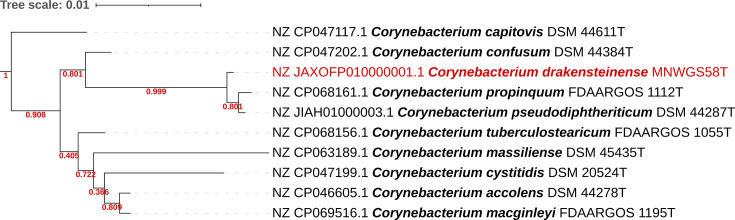 Fig. 1
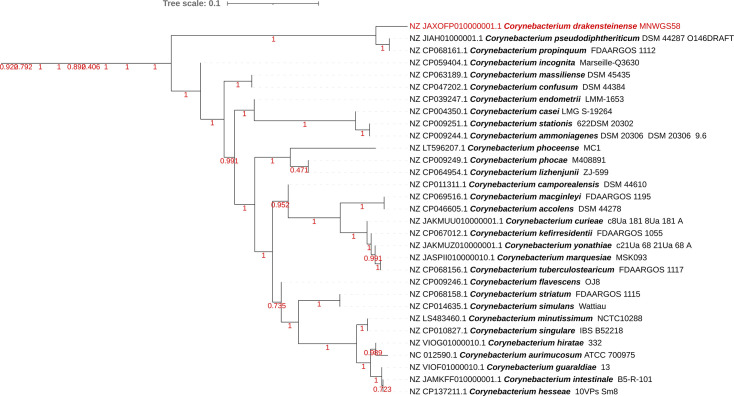 Fig. 2
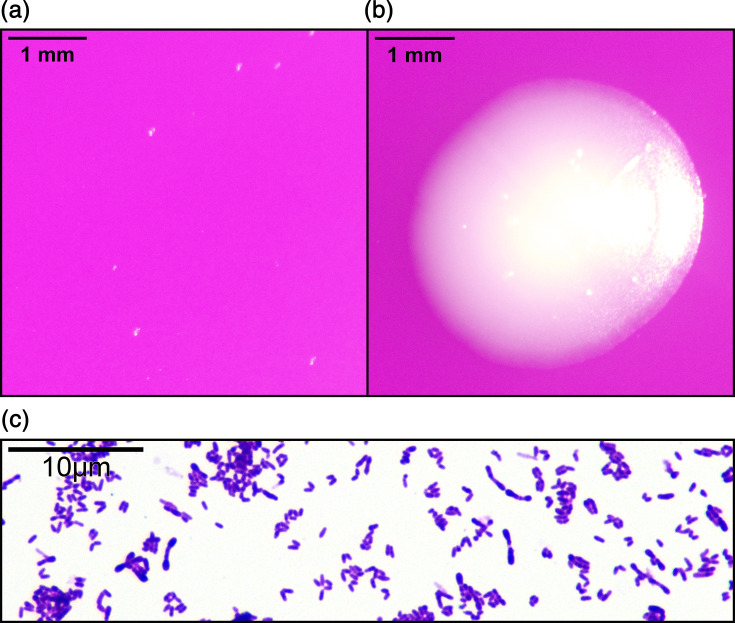 Fig. 3
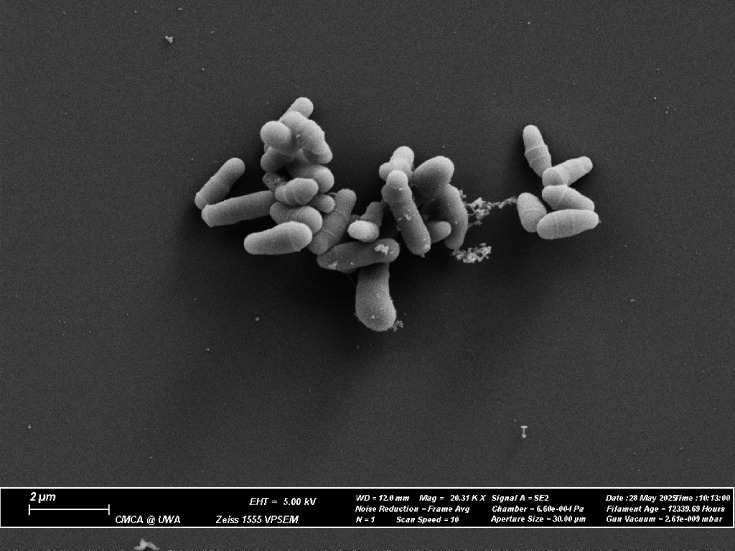 Fig. 4
| Species and strain | Percentage identity | Accession |
|---|---|---|
| 99.45 | ||
| 99.28 | ||
| 99.27 | ||
| 99.19 | ||
| 95.53 | ||
| 95.5 | ||
| 95.44 | ||
| 95.31 | ||
| 95.25 | ||
| 95.24 | ||
| 95.03 |
| Biochemical substrate | MNWGS58T | ||
|---|---|---|---|
| − | − | − | |
| Leucine arylamidase | + | − | + |
| Ellman | − | − | − |
| Phenylalanine arylamidase | + | + | + |
| + | + | + | |
| − | − | − | |
| − | − | − | |
| Tyrosine arylamidase | + | + | + |
| Ala-Phe-Pro arylamidase | + | + | + |
| − | − | − | |
| − | − | − | |
| − | − | − | |
| Saccharose/sucrose | − | − | − |
| Arbutin | − | − | − |
| − | − | − | |
| 5-Bromo-4-chloro-3-indoxyl- | − | − | − |
| Urease | − | + | + |
| 5-Bromo-4-chloro-3-indoxyl- | − | − | − |
| − | − | − | |
| − | − | − | |
| 5-Bromo-4-chloro-3-indoxyl- | − | − | − |
| − | − | − | |
| Arginine GP | − | − | − |
| Pyruvate | + | + | + |
| Maltotriose | − | − | − |
| Aesculin hydrolysis | − | − | − |
| − | − | − | |
| 5-Bromo-4-chloro-3-indoxyl- | − | − | − |
| 5-Bromo-4-chloro-3-indoxyl- | − | − | − |
| − | − | − | |
| Phosphatase | − | − | − |
| − | − | − | |
| − | − | − | |
| Phenylphosphonate | − | − | + |
| − | − | − | |
| − | − | − |
| Phenotype tested | MNWGS58T | ||
|---|---|---|---|
| Reduction of nitrates | + | + | + |
| Expression of pyrazinamidase | − | − | − |
| Expression of pyrrolidonyl arylamidase | − | + | + |
| Expression of alkaline phosphatase | + | + | + |
| Expression of | − | − | − |
| Expression of | − | − | − |
| Expression of | − | − | − |
| Expression of | − | − | − |
| Hydrolysis of aesculin | − | − | − |
| Expression of urease | − | + | − |
| Hydrolysis of gelatin | − | − | − |
| Utilization of | − | − | − |
| Utilization of | − | − | − |
| Utilization of | − | − | − |
| Utilization of | − | − | − |
| Utilization of | − | − | − |
| Utilization of | − | − | − |
| Utilization of | − | − | − |
| Utilization of glycogen | − | − | − |
| Expression of catalase | + | + | + |
| Fatty acid | Percentage of cell wall fatty acids detected | ||
|---|---|---|---|
| MNWGS58T | |||
| Saturated | |||
| C12:0 | 0.06 | 0.07 | 0.08 |
| C14:0 | 1.03 | 0.88 | 0.65 |
| C15:0 | 0.61 | 0.07 | 0.16 |
| C16:0 | 63.13 | 63.22 | 42.32 |
| C17:0 | 3.60 | 0.41 | 1.03 |
| C18:0 | 22.87 | 27.80 | 51.65 |
| C19:0 | 0.10 | 0.04 | 0.05 |
| C20:0 | 0.14 | 0.17 | 0.25 |
| C22:0 | 0.05 | 0.06 | 0.04 |
| C23:0 | 0.02 | 0.01 | 0.01 |
| C24:0 | 0.04 | 0.04 | 0.02 |
| Unsaturated | |||
| C16:1 | 0.75 | 0.36 | 0.20 |
| C18:1 | 7.47 | 6.78 | 3.43 |
| C18:2 | 0.08 | 0.04 | 0.08 |
| C20:1 | 0.05 | 0.05 | 0.03 |
- —http://dx.doi.org/10.13039/100000009 Foundation for the National Institutes of Health
- —http://dx.doi.org/10.13039/100000865 Bill and Melinda Gates Foundation
- —http://dx.doi.org/10.13039/100000865 Bill and Melinda Gates Foundation
- —http://dx.doi.org/10.13039/501100000925 National Health and Medical Research Council
- —Western Australian Child Research Fund
Peer Reviews
No public reviews on file for this paper yet. If you reviewed it on a platform where reviews are public (OpenReview, ICLR, NeurIPS, ICML), you can paste yours below so the community can read it here.
Videos
No videos yet. Explain this paper in a talk, walkthrough, or lecture? Add one.
Taxonomy
TopicsDiphtheria, Corynebacterium, and Tetanus · Enterobacteriaceae and Cronobacter Research · Otolaryngology and Infectious Diseases
Introduction
Several cohort studies provide evidence that Corynebacterium spp. are present in the nasopharyngeal microbiome in early childhood, particularly in the first year of life [13]. Nasopharyngeal Corynebacterium spp. in infants have been associated with significant health benefits, such as protection from recurrent respiratory tract infections [4]. Commensal Corynebacterium spp. have been shown to have an inhibitory effect on Streptococcus pneumoniae, a known pathobiont of the nasopharynx [5]. Additionally, in a mouse model, Corynebacterium pseudodiphtheriticum conferred increased resistance to respiratory syncytial virus infection [6]. The manner in which Corynebacterium spp. exert this protective effect is not yet fully understood; however, in vitro data support the notion that the secretion of siderophores may deprive pathogens of iron that is essential for their successful colonization [7].
The bacterial composition of the nasopharyngeal microbiome, especially during childhood, is a key determinant of susceptibility to respiratory infections and may influence respiratory health [189]. Microbiome studies have relied heavily on 16S rRNA gene amplicon sequencing for determining the microbial composition; however, this approach often fails to distinguish to the species level [10]. For instance, the 16S rRNA gene of common nasopharyngeal Corynebacterium spp., C. pseudodiphtheriticum and Corynebacterium propinquum, is >99% conserved. Whole metagenome shotgun sequencing or single isolate-level sequencing of the microbiome enables species- or strain-level characterization of the microbiome, including the identification of novel species.
This study describes the identification of strain MNWGS58^T^ isolated from the nasopharynx of an infant in South Africa [11]. Based on its biochemical, phylogenetic and genomic characteristics, we propose that this strain be classified as a novel species, Corynebacterium drakensteinense sp. nov.
Methods
Sample collection and isolation of bacteria
In the Drakenstein Child Health study, flocked nasopharyngeal swabs were collected in skim milk, tryptone, glucose and glycerin (STGG) broth and stored at −80 °C [12]. In this case, the stored swab belonged to a 30-week-old, male, HIV-exposed, but HIV-uninfected. The child did not develop any symptomatic lower respiratory tract infection through 5 years of age. The approximate location of the study participant at the time of sampling was Paarl, Western Cape, South Africa (33° 43′ 48″ S 18° 57′ 36″ E) as part of the Drakenstein Child Health Study [11]. Briefly, 100 µl of STGG samples were spread on Columbia agar base supplemented with 5% sheep’s blood (blood agar) and chocolate agar for cultivation at 37 °C in aerobic conditions enriched with 5% CO_2_ to replicate the conditions in the nasopharynx. After 24–48 h, morphologically distinct colonies were streaked for purity, and pure bacterial cultures were stored in brain-heart infusion broth supplemented with 25% glycerol for long-term storage at −80 °C. Presumptive identities of each bacterial isolate were made using matrix-assisted laser desorption/ionization time-of-flight (MALDI-TOF) MS (MALDI Biotyper sirius one IVD system, Bruker) with the latest sirius one library as of September 2023.
Next-generation sequencing and genomic characterization
Next-generation sequencing was used to determine genome sequence and confirm identity.
Genomic DNA was extracted from pure culture using Qiagen DNeasy Blood and Tissue kit with enzymatic lysis (20 mM Tris-Cl pH 8.0, 2 mM sodium EDTA, 1.2% Triton X-100 and lysozyme 50 mg ml^−1^). The concentration of the extracted DNA was measured by Qubit^™^ dsDNA Quantification assay kit according to manufacturer’s instructions. DNA was sequenced using an Illumina MiSeq platform in conjunction with the MiSeq Reagent Kit v3 2×300 bp (Illumina, San Diego, CA, USA). Reads were filtered for quality using the bbduk from the BBTools suite with the following settings: qtrim=r trimq=20 ktrim=r k=23 mink=11 hdist=1 tpe=t tbo=t [13]. Quality-controlled reads were introduced into the SPAdes (v3.13.1) assembly pipeline to produce contigs [14]. Contigs <500 bp were removed from the assembly. The DFAST annotation tool (v1.2.14) was used to annotate the draft genome with coding sequences (CDSs), clustered regularly interspaced short palindromic repeats (CRISPRs), tRNA genes and rRNA genes, including the 16S rRNA gene [15]. Functional data on CDS were later annotated using the KEGG orthology.
The National Centre for Biotechnology Information’s (NCBI) basic local alignment search tool (blast) was utilized with the 16S rRNA database to obtain a genus-level identity for the isolate using the previously identified 16S rRNA gene. Once the genus was identified, all genomes of that genus deposited in the NCBI Reference Sequence database were downloaded. Average nucleotide identity (ANI) was calculated using the fastANI tool, with the genome sequence of the isolate used as the query, and the Reference Sequence database of the genus was used as the reference [16]. Digital DNA–DNA hybridization (dDDH) values were calculated using genome-to-genome distance calculator (v3.0) [17]. A phylogenomic tree of all species belonging to the genus was constructed using GToTree (v1.8.2), which was configured to perform multiple sequence alignments of 138 conserved Actinomycetota genes using the gene library described in the GToTree tool documentation [18]. Additionally, FastTree was used to generate a phylogenetic tree of the 16S rRNA gene in the genus Corynebacterium (bootstrap calculated from 1,000 replicates) [19]. Both SPAdes and GToTree have several dependencies, which can be found in the documentation for these tools [2025]. Interactive Tree of Life (iTOL) version 7.4 was used to visualize all trees [26].
Phenotypic characterization
Metabolic and phenotypic characterization was carried out using the VITEK 2 ANC assay (bioMérieux SA, Marcy-l'Étoile, France) and the API Coryne assay (bioMérieux SA, Marcy-l'Étoile, France) following the manufacturer’s instructions. MICs to seven antimicrobial agents (erythromycin, gentamicin, penicillin, vancomycin, ciprofloxacin, meropenem and tetracycline) were determined using the standard antimicrobial susceptibility testing described by the Clinical Laboratory Standards Institute’s protocol for coryneform bacteria [27]. Cell wall fatty acid composition was determined by triple quadrupole MS, and spectrometry peaks were annotated using the Shimadzu Smart Fatty Acids Database.
Morphology
Photographs of bacterial colonies on blood agar were captured using a dissecting microscope equipped with a digital eyepiece with a calibration device and images had scales added using ImageJ (v1.54g, National Institutes of Health, USA) [28]. Gram-stained slides were prepared and imaged at 1,000× magnification using light microscopy (Olympus BX43) with a digital camera T piece (Olympus DP27), and scale bars were added using Olympus Cellsens entry v2.3. Scanning electron microscopy (Zeiss 1555 VP-FESEM) was used to gain higher resolution images of cell morphology.
Results
Genome features
A total of 154 Mbp in 540,672 reads were obtained by Illumina sequencing. Following quality control and processing, 57 Mbp in 536,497 reads remained, resulting in 45.8× technical coverage. A total of 43 contigs were assembled with an N_50_ of 129 kbp. DFAST detected 2,227 CDS, 3 rRNA genes, 47 tRNA genes and 4 CRISPRs. The final assembly for the whole genome of MNWGS58^T^ was determined to be 2.48 Mbp with a G+C content of 56.9 mol%. The 16S rRNA gene sequence was deposited in NCBI GenBank under accession number OR912475. The annotated draft genome was deposited in NCBI Genome as Corynebacterium sp. MWGS58 accession number JAXOFP000000000.1.
Phylogenetic and genomic analysis
Based on the NCBI 16S rRNA gene database, the 16S rRNA gene sequence of MNWGS58^T^ exhibited 99.45% similarity to C. propinquum (NCBI accession NR_037038.1) and 99.27% similarity to C. pseudodiphtheriticum (NCBI accession NR_042137.1). All 16S rRNA hits with >95% identity to the full-length 16S rRNA gene for MNWGS58^T^ are shown in Table 1. Additionally, a 16S phylogenetic tree can be seen in Fig. 1. For the whole genome, fastANI only returned two matches with an ANI of ≥70% with the full genome sequence of the novel species: C. propinquum (85.12% ANI) and C. pseudodiphtheriticum (84.24% ANI). The low ANI values indicate that MNWGS58^T^ is a new species, not yet described in the literature. Similarly, dDDH values were low: 28.4 and 27.4% when comparing MNWGS58^T^ to C. propinquum MNWGS51 and C. pseudodiphtheriticum MNWGS56, respectively. Phylogenomic analysis shows clustering of MNWGS58^T^ with C. propinquum MNWGS51 and C. pseudodiphtheriticum MNWGS56 (Fig. 2). The full phylogenomic tree is available as Fig. S1, available in the online Supplementary Material. A spreadsheet of KEGG orthologs detected in C. propinquum MNWGS51, C. pseudodiphtheriticum MNWGS56 and MNWGS58^T^ is contained in Fig. S2.
Phylogenetic subtree of the full-length 16S rRNA gene for MNWGS58T (shown in red) and phylogenetically close type strains. Scale bar shows substitutions per site as calculated using the FastTree command line tool and visualized using iTOL. Bootstrap values from 1,000 replicates are shown in red on branches. Accession numbers correspond to the NCBI RefSeq database.
Phylogenomic subtree of the genus Corynebacterium evaluated using 138 conserved genes in the phylum Actinomycetota using the GToTree tool. Trees were visualized using iTOL. Values shown are arbitrary distance values as calculated by GToTree. Bootstrap values are shown in red. MNWGS58T is also shown in red. Full tree containing all Corynebacterium spp. is available as Fig. S1.
Phenotypic characteristics
MALDI-TOF MS identified MNWGS58^T^ as C. pseudodiphtheriticum with a score of >2.0, indicating a high-confidence identification. This suggests that there is a high degree of overlap between the mass spectrum of the MNWGS58^T^ and the reference mass spectrum of C. pseudodiphtheriticum in the MALDI-TOF MS database.
The VITEK 2 ANC (Anaerobic and Coryneform) cards use a panel of 36 biochemical tests to identify a bacterial isolate. Using the VITEK 2, MNWGS58^T^ was a close match (97%) to Corynebacterium otitidis (formerly Turicella otitidis) (Table 2). The VITEK 2 report also notes that a positive result in the Ala-Phe-Pro arylamidase (APPA) test is not typical for C. otitidis, while it is typical of both C. propinquum and C. pseudodiphtheriticum.
The API Coryne assay uses a smaller scale panel of biochemical tests compared to VITEK 2 for identification of coryneform bacteria to species level. The API Coryne assay identified MNWGS58^T^ as C. propinquum with an 89.7% probability and a note ‘POSSIBILITY OF Rhodococcus equi’. API Coryne results are shown in Table 3. Notably, MNWGS58^T^ is negative for pyrrolidonyl arylamidase (PyrA), while C. propinquum and C. pseudodiphtheriticum are positive for PyrA. This may be a useful biochemical test for differentiating MNWGS58^T^ from these closely related species. PyrA is involved in the catabolic metabolism of peptides, which some organisms may rely on as a primary carbon or nitrogen source.
Fatty acid methyl ester analysis showed that the cell wall of MNWGS58^T^ had a substantially higher amount of C_17:0_ than its phylogenetically close relatives (Table 4). MICs were determined for MNWGS58^T^ and its close relatives MNWGS56 and MNWGS51 against erythromycin, gentamicin, penicillin, vancomycin, ciprofloxacin, meropenem and tetracycline. MNWGS58^T^ was sensitive to all antimicrobials tested. Colony pictures at 24 and 48 h timepoints are shown in Fig. 3, alongside a Gram stain at the 48 h time point. Scanning electron microscopy is shown in Fig. 4. Both optical and scanning electron microscopy show discrete 1–2 µm coryneform cells. The cells are Gram-stain positive, with optimal growth observed after incubation on blood agar for 48 h at 37 °C in aerobic conditions enriched with 5% CO_2_.
(a) Pinpoint MNWGS58T colonies on blood agar after 24 h of incubation (37 °C, 5% CO2). (b) Mature MNWGS58T colony on blood agar after 48 h of incubation (37 °C, 5% CO2). (c) Gram stain of MNWGS58T showing Gram-positive rod-shaped cells with coryneform morphology.
Scanning electron microscope image of MNWGS58T.
Given the clear genetic, genomic and phenotypic divergence from other Corynebacterium spp., we propose that strain MNWGS58^T^ represents a novel species, for which the name C. drakensteinense sp. nov. is proposed. The species name reflects its geographic origin.
Description of Corynebacterium drakensteinense sp. nov.
Corynebacterium drakensteinense (dra.ken.stein.en’se. N.L. neut. adj. drakensteinense, pertaining to the Drakenstein municipality, South Africa).
Aerobic, Gram-stain positive, non-motile, 1–2 µm rod-shaped cells with typical coryneform clubbing visible by optical and electron microscopy. Optimal growth is observed on blood agar at 37 °C in aerobic conditions enriched with 5% CO_2_ for 48 h. Small colonies, ~1 mm in diameter, appear within 24 h. Mature colonies are circular and 2–4 mm in diameter with well-demarcated sharp margins. The colonies are white, and the centre is slightly raised from the growth medium. Non-CO_2_ enriched incubation yields few stunted colonies. Does not use glucose, mannose, maltose, xylose, arabinose, maltotriose or sucrose as a carbon source. Uses pyruvate as a carbon source. Metabolizes amino acids as a nitrogen and carbon source. Can reduce nitrates and is catalase positive.
The type strain is MNWGS58^T^ (=TSD-445^T^=NCTC 15058^T^), which was isolated from the nasopharynx of a healthy 30-week-old South African child in the Drakenstein municipality. The whole-genome length is 2.48 Mb with 56.9 mol% G+C content.
The annotated genome of strain MNWGS58^T^ is deposited on NCBI Genome with accession number JAXOFP000000000, and the 16S rRNA gene is deposited into NCBI GenBank with accession number OR912475.
Supplementary material
10.1099/ijsem.0.007068Uncited Supplementary Material 1.
The reference list from the paper itself. Each links out to its DOI / PubMed record.
- 1Teo SM Mok D Pham K Kusel M Serralha M et al The infant nasopharyngeal microbiome impacts severity of lower respiratory infection and risk of asthma development Cell Host Microbe 20151770471510.1016/j.chom.2015.03.00825865368 PMC 4433433 · doi ↗ · pubmed ↗
- 2Bogaert D Keijser B Huse S Rossen J Veenhoven R et al Variability and diversity of nasopharyngeal microbiota in children: a metagenomic analysis P Lo S One 20116 e 1703510.1371/journal.pone.001703521386965 PMC 3046172 · doi ↗ · pubmed ↗
- 3Claassen-Weitz S Gardner-Lubbe S Xia Y Mwaikono KS Mounaud SH et al Succession and determinants of the early life nasopharyngeal microbiota in a South African birth cohort Microbiome 20231112710.1186/s 40168-023-01563-537271810 PMC 10240772 · doi ↗ · pubmed ↗
- 4Mortensen MS Brejnrod AD Roggenbuck M Abu Al-Soud W Balle C et al The developing hypopharyngeal microbiota in early life Microbiome 201647010.1186/s 40168-016-0215-928038686 PMC 5203717 · doi ↗ · pubmed ↗
- 5Xu L Earl J Pichichero ME Nasopharyngeal microbiome composition associated with Streptococcus pneumoniae colonization suggests a protective role of Corynebacterium in young children PLOS ONE 202116 e 025720710.1371/journal.pone.025720734529731 PMC 8445455 · doi ↗ · pubmed ↗
- 6Kanmani P Clua P Vizoso-Pinto MG Rodriguez C Alvarez S et al Respiratory commensal bacteria Corynebacterium pseudodiphtheriticum improves resistance of infant mice to respiratory syncytial virus and Streptococcus pneumoniae superinfection Front Microbiol 20178161310.3389/fmicb.2017.0161328878760 PMC 5572367 · doi ↗ · pubmed ↗
- 7Stubbendieck RM May DS Chevrette MG Temkin MI Wendt-Pienkowski E et al Competition among nasal bacteria suggests a role for siderophore-mediated interactions in shaping the human nasal microbiota Appl Environ Microbiol 201985 e 02406-1810.1128/AEM.02406-1830578265 PMC 6498180 · doi ↗ · pubmed ↗
- 8Teo SM Tang HHF Mok D Judd LM Watts SC et al Airway microbiota dynamics uncover a critical window for interplay of pathogenic bacteria and allergy in childhood respiratory disease Cell Host Microbe 20182434135210.1016/j.chom.2018.08.00530212648 PMC 6291254 · doi ↗ · pubmed ↗