Revisiting Acalypha medicinal interest: ethnobotany, experimental studies, and the implications of taxonomic misuse pitfalls
Lucía Villaescusa-González, José María Cardiel, Iris Montero-Muñoz, Pablo Muñoz-Rodríguez

TL;DR
This paper reviews the medicinal uses of Acalypha plants globally, highlighting the importance of accurate taxonomy for reliable research.
Contribution
The study provides the first standardized, taxonomically validated global synthesis of Acalypha's medicinal knowledge.
Findings
62 Acalypha species with medicinal uses were identified across 55 countries.
Nearly 25% of reviewed studies contained taxonomic errors, affecting reliability.
Medicinal uses include antibacterial, antifungal, antioxidant, and anti-inflammatory effects.
Abstract
Acalypha L. (Euphorbiaceae) is a pantropical genus comprising approximately 470 species, many of which have been traditionally used to treat human and animal ailments. Despite its widespread use, the interpretation of ethnobotanical information has been hindered by misidentifications, outdated or incorrect names, and the lack of studies for many species – factors that limit its value for pharmacological research and conservation. Previous efforts to synthesise medicinal knowledge in Acalypha have been constrained by limited taxonomic coverage, inconsistent methodologies, and narrow geographic scope. In this study, a comprehensive global review of medicinal uses in Acalypha was conducted, based on data retrieved from peer-reviewed literature, scientific databases, historical sources, and other publications. A total of 62 species with reported uses across 55 countries were identified.…
Genes, proteins, chemicals, diseases, species, mutations and cell lines named across the full text — each resolved to its canonical identifier and authoritative record.
Click any figure to enlarge with its caption.
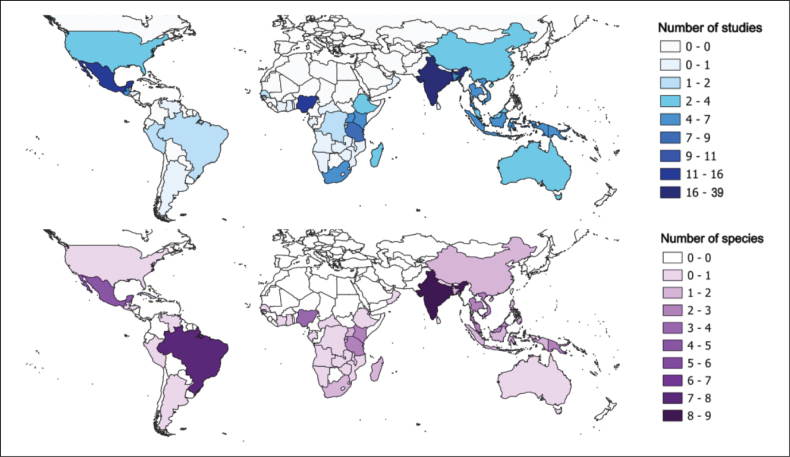 Figure 1
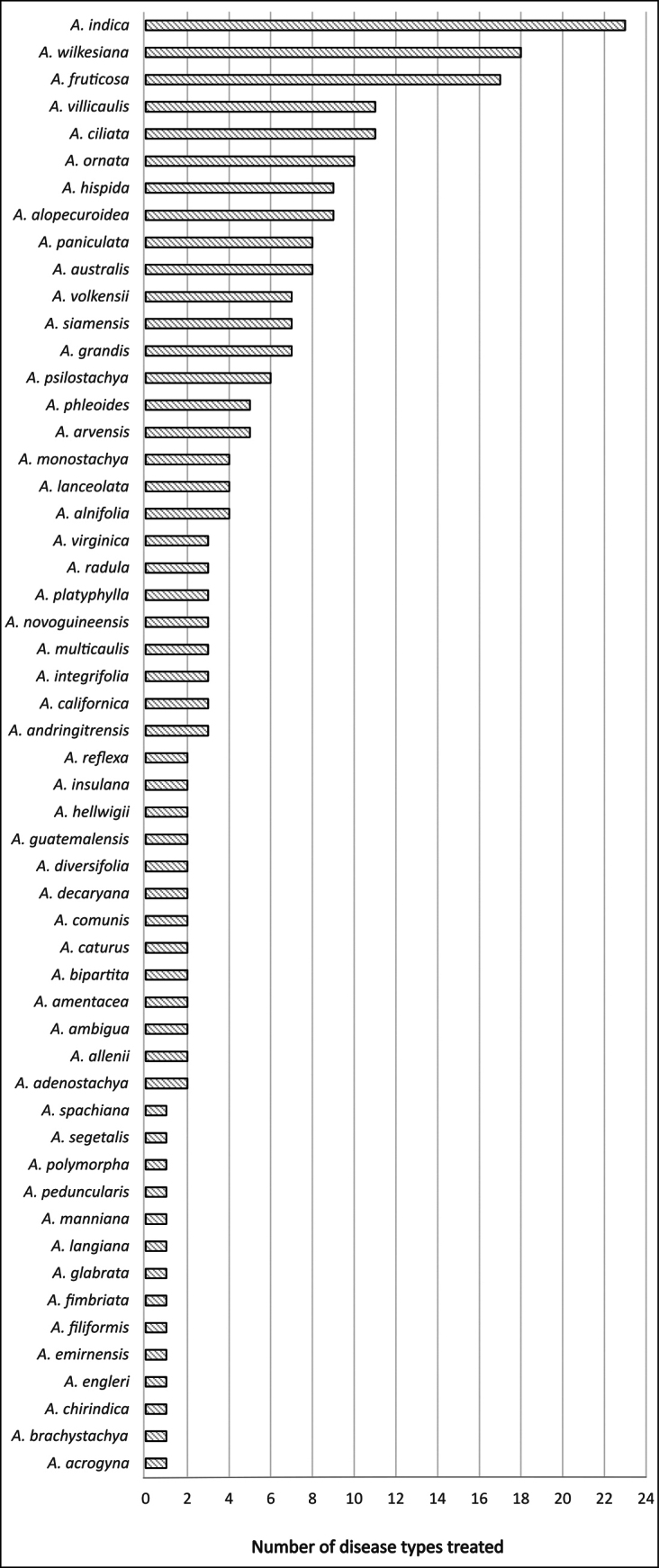 Figure 2
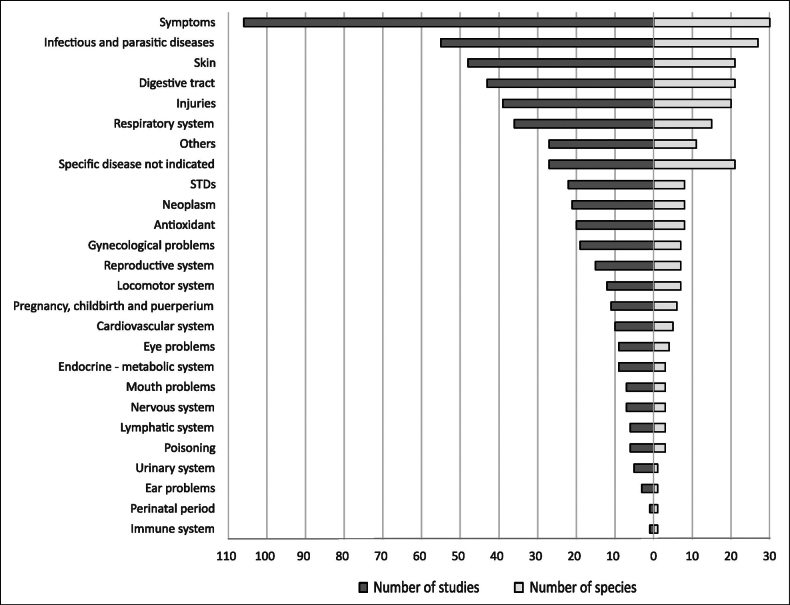 Figure 3
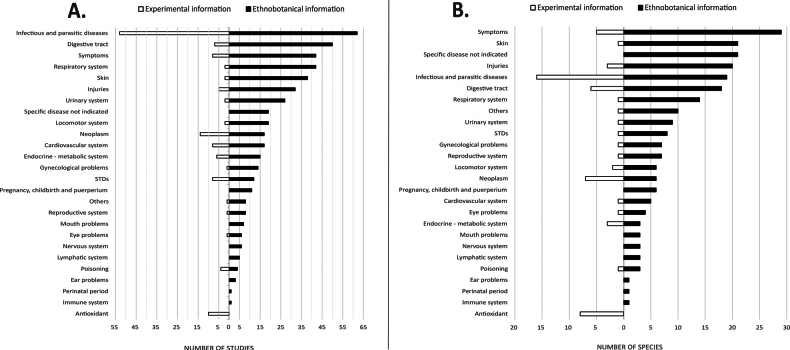 Figure 4
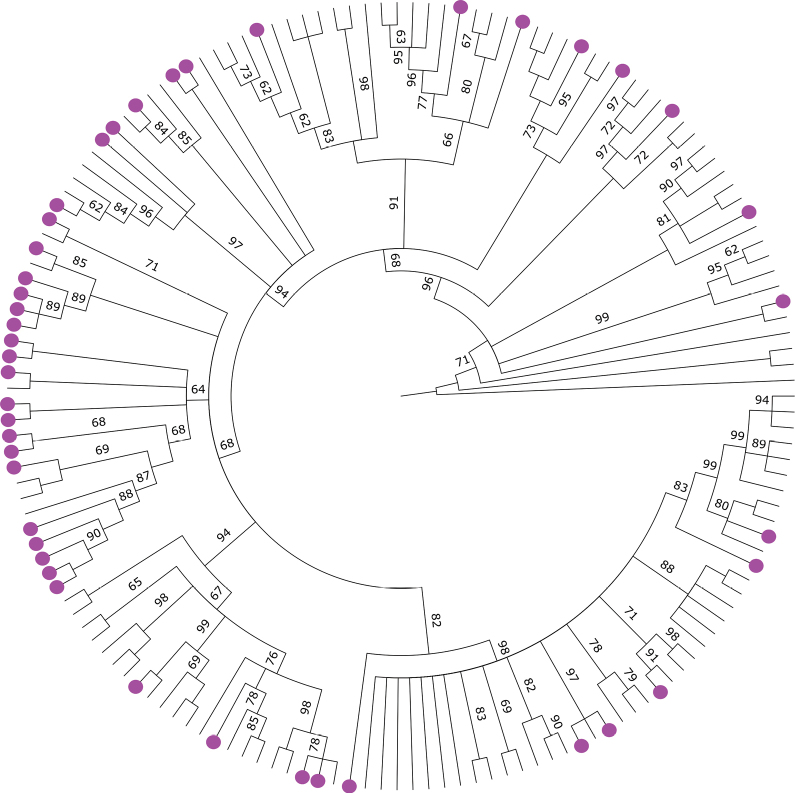 Figure 5
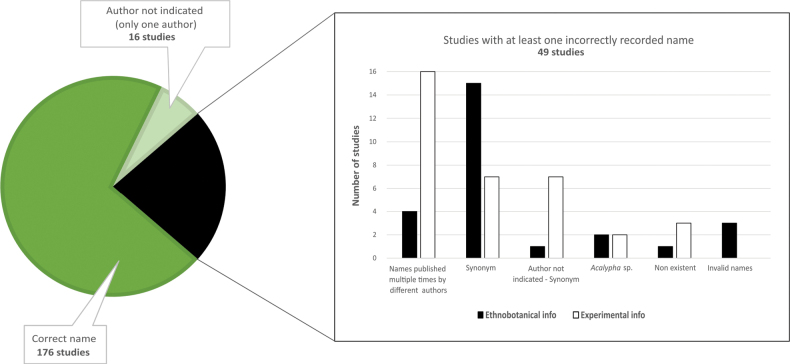 Figure 6
| Classification used in this study | Specifications | |
|---|---|---|
| Primary classification | Subcategories | |
| Cardiovascular system | - | Diseases related to the heart and blood vessels, such as hypertension, strokes, etc. |
| Digestive tract | - | Conditions affecting the stomach, liver, intestines, and related organs. |
| Urinary system | - | Diseases of the kidneys, bladder, and urinary tract (e.g. “diuretic” and “urinary complaints”). |
| Pregnancy, childbirth, and puerperium | - | Conditions occurring during pregnancy, labour, delivery, and the postpartum period, such as “postpartum pain” or “stop bleeding during pregnancy”. |
| Perinatal period | - | Diseases affecting the foetus or newborn (e.g. perinatal infections). |
| Reproductive system | Abortifacient | Use as agents to induce abortion or interrupt pregnancy. |
| Fertility | Related to enhancing or impairing fertility, including treatments for infertility or as contraceptives. | |
| Others | Other reproductive issues not covered by the above. | |
| Gynaecological problems | - | Disorders specific to the female reproductive system (e.g. “menstrual pain” and “regulate menstruation”). |
| Respiratory system | - | Diseases of the lungs and airways, including asthma, bronchitis, coughs, etc. |
| Endocrine-metabolic system | - | Conditions related to hormonal imbalances and metabolic disorders, such as diabetes and thyroid problems. |
| Immune system | - | Diseases related to immune function. |
| Locomotor system | - | Disorders involving muscles, bones, and joints (e.g. “arthritis” and “rheumatism”). |
| Skin | - | Dermatological conditions, both specific and general (e.g. scabies, pimples, itching). |
| Mental disorders | - | Disorders related to psychological or psychiatric conditions such as depression, anxiety, or other forms of mental distress or behavioural disturbance. Although included in the classification system for completeness, no records referring to this group were identified in the data reviewed. |
| Nervous system | - | Includes records associated with neurological conditions or imbalances (e.g. epilepsy, convulsions). |
| Eye problems | - | Disorders affecting the eyes, such as “conjunctivitis” or “sore eyes”. |
| Ear problems | - | Diseases or symptoms related to the ears, such as “earache” or ear infections. |
| Mouth problems | - | Conditions affecting the mouth (e.g. “toothache”, “tooth decay”, “gum disease”). |
| Infectious or parasitic diseases | - | Bacterial, viral, fungal, and parasitic infections not categorised elsewhere. |
| STDs | - | Sexually transmitted diseases (e.g. syphilis and gonorrhoea) are treated as a separate category from general infections. |
| Neoplasm | - | Tumours or abnormal tissue growths, benign or malignant. |
| Symptoms | Pain-killer | Records referring to isolated symptoms or general sensations of discomfort. These cases are often reported without a clear underlying diagnosis, and the symptom itself is treated as a sufficient basis for classification. Subcategories are organised according to the type of manifestation, allowing for the inclusion of records that reflect common patterns of suffering even when their aetiology remains unspecified. |
| Diarrhoea | ||
| Fever | ||
| Inflammation | ||
| Dizziness | ||
| Others | ||
| Injuries | Bites and stings | Records referring to external harm or damage, typically acute and visible, such as wounds, burns, or stings. Subcategories reflect the type of injury rather than the anatomical system affected. |
| Wounds | ||
| Ulcers, sores | ||
| Burns | ||
| Others | ||
| Poisoning | - | Uses in cases of suspected intoxication. |
| Lymphatic system | - | Both localised and systemic manifestations of lymph-related dysfunction (e.g. lymphoid swellings, elephantiasis). |
| Others | - | Records that do not clearly fit into any of the predefined categories. This may include ambiguous or broad health-related indications that could not be confidently assigned elsewhere. |
| Country | N° accepted | N° accepted | N° studies with |
|---|---|---|---|
| Argentina | 17 | 1 | 1 |
| Australia | 9 | 1 | 3 |
| Bangladesh | 1 | 2 | 5 |
| Belize | 18 | 1 | 1 |
| Brazil | 41 | 8 | 2 |
| Burundi | 13 | 1 | 2 |
| Cambodia | 2 | 2 | 1 |
| Central African Republic | 5 | 1 | 1 |
| China | 18 | 2 | 4 |
| Comoras | 7 | 1 | 1 |
| Cuba | 19 | 1 | 1 |
| Djibouti | 2 | 2 | 5 |
| Democratic Republic of the Congo | 26 | 1 | 2 |
| Ethiopia | 15 | 2 | 3 |
| Fiji | 6 | 2 | 4 |
| Gabon | 2 | 1 | 1 |
| Ghana | 8 | 1 | 1 |
| Guatemala | 31 | 1 | 7 |
| Honduras | 14 | 1 | 1 |
| India | 12 | 9 | 39 |
| Indonesia | 20 | 6 | 6 |
| Ivory Coast | 5 | 1 | 1 |
| Kenya | 19 | 3 | 6 |
| Madagascar | 41 | 2 | 3 |
| Malawi | 21 | 1 | 1 |
| Malaysia | 5 | 3 | 5 |
| Mauritius | 5 | 2 | 3 |
| Mexico | 92 | 5 | 15 |
| Mozambique | 16 | 1 | 1 |
| Namibia | 8 | 1 | 1 |
| Nepal | 3 | 1 | 1 |
| Nigeria | 9 | 4 | 16 |
| Oman | 1 | 1 | 1 |
| Papua New Guinea | 18 | 7 | 6 |
| Peru | 29 | 1 | 2 |
| Philippines | 8 | 2 | 1 |
| Reunion | 4 | 2 | 1 |
| Rwanda | 9 | 1 | 1 |
| Samoa | 5 | 1 | 1 |
| Senegal | 5 | 1 | 2 |
| Seychelles | 2 | 1 | 1 |
| Solomon Islands | 5 | 1 | 1 |
| South Africa | 19 | 2 | 5 |
| Sri Lanka | 2 | 1 | 1 |
| Tanzania | 27 | 3 | 8 |
| Thailand | 10 | 3 | 5 |
| Uganda | 17 | 2 | 6 |
| United States of America | 11 | 1 | 4 |
| Vanuatu | 1 | 1 | 2 |
| Venezuela | 17 | 1 | 1 |
| Vietnam | 7 | 3 | 7 |
| Zimbabwe | 15 | 1 | 2 |
| Total number of accepted ethnomedicinal species without specific geographical record | 15 | Total number of accepted species with ethnobotanical uses | 59 |
| Species | Ethnobotanical information | Experimental information | |
|---|---|---|---|
| 1 | X | ||
| 2 | X | ||
| 3 | X | ||
| 4 | X* | ||
| 5 | X | X | |
| 6 | X | X | |
| 7 | X | ||
| 8 | X | ||
| 9 | X* | ||
| 10 | X | ||
| 11 | X | ||
| 12 | X | X | |
| 13 | X | X | |
| 14 | X* | ||
| 15 | X | X | |
| 16 | X | ||
| 17 | X | ||
| 18 | X | X | |
| 19 | X | X | |
| 20 | X | ||
| 21 | X* | ||
| 22 | X | ||
| 23 | X | ||
| 24 | X* | ||
| 25 | X* | ||
| 26 | X | ||
| 27 | X* | ||
| 28 | X | X | |
| 29 | X | ||
| 30 | X | ||
| 31 | X | ||
| 32 | X | ||
| 33 | X | X | |
| 34 | X* | X* | |
| 35 | X | ||
| 36 | X | X | |
| 37 | X | X | |
| 38 | X | ||
| 39 | X | X* | |
| 40 | X | ||
| 41 | X | X | |
| 42 | X | ||
| 43 | X | X | |
| 44 | X | ||
| 45 | X | ||
| 46 | X | ||
| 47 | X | X | |
| 48 | X | X | |
| 49 | X* | ||
| 50 | X | X | |
| 51 | X* | X | |
| 52 | X | ||
| 53 | X* | ||
| 54 | X | ||
| 55 | X* | ||
| 56 | X | X | |
| 57 | X* | X | |
| 58 | X | X | |
| 59 | X* | ||
| 60 | X | ||
| 61 | X* | ||
| 62 | X | X | |
| General use/type of study | Number of species | Number of studies | |
|---|---|---|---|
| Studies with ethnobotanical information | Human medicine | 58 | 125 |
| Veterinary medicine | 4 | 16 | |
| Rituals | 7 | 2 | |
| Plaguicide | 5 | 3 | |
| Category not indicated | 1 | 1 | |
| Studies with experimental information |
| 19 | 60 |
|
| 3 | 6 | |
|
| 14 | 42 | |
| Total | 62 | 216 |
- —Ministerio de Ciencia, Innovación y Universidades 100014440 https://ror.org/05r0vyz12 http://doi.org/10.13039/100014440
Peer Reviews
No public reviews on file for this paper yet. If you reviewed it on a platform where reviews are public (OpenReview, ICLR, NeurIPS, ICML), you can paste yours below so the community can read it here.
Videos
No videos yet. Explain this paper in a talk, walkthrough, or lecture? Add one.
Taxonomy
TopicsEthnobotanical and Medicinal Plants Studies · Biological Stains and Phytochemicals · Chemical synthesis and alkaloids
Introduction
Throughout history, humans have relied on plants for diverse purposes, particularly for food, clothing, disease prevention, and treatment. Understanding how and why communities use plants is not only valuable from a historical perspective but also critical for identifying new pharmacologically active compounds and establishing conservation priorities (Wheeler 2024). However, many plants with ethnobotanical significance remain poorly studied, especially in the tropics, and the lack of rigorous taxonomic assessment often complicates their accurate identification. Taxonomic uncertainty raises concerns about the reliability of many studies, as misidentifications lead to confusion and even pose risks to human health (Malaspina et al. 2022; Parnmen et al. 2023). Beyond scientific inaccuracies, the misuse of taxonomy also has broader implications, affecting bioprospecting efforts, conservation policies, and the preservation of traditional knowledge. Inaccurate species identification may hinder drug discovery, misinform conservation priorities, and contribute to the erosion of ethnobotanical heritage.
Euphorbiaceae Juss. stands out among the plant families with medicinal use for its high species diversity and global distribution. Within the family, genera such as Euphorbia L., Jatropha L., and Ricinus L. are well known for their medicinal value (Mwine and Van Damme 2011; Islam et al. 2019), but other medicinally relevant genera within the family have received less scientific attention. One such example is Acalypha L., the third largest genus in the family, with approximately 470 accepted species and a pantropical distribution (Cardiel et al. 2023). Despite its species richness and documented uses – about one-eighth of Acalypha species have been cited in ethnobotanical literature – Acalypha remains understudied in comparison to its relatives, and existing studies contain both valuable insights and significant taxonomic inconsistencies, as highlighted in this work. As with many other tropical plant groups, misidentification of Acalypha specimens is common, and research frequently includes misapplied or synonymous names and outdated classifications. Understanding the ethnobotanical diversity of Acalypha therefore requires a robust and up-to-date taxonomic framework, which remains incomplete for many species.
Over the past two decades, Acalypha has received growing taxonomic attention, particularly in South America (Cardiel and Muñoz-Rodríguez 2012; Cardiel et al. 2013a, 2013b, 2023), as well as in Southeast Asia (Sagun et al. 2010), the Western Indian Ocean Region (Montero-Muñoz et al. 2023), and parts of West Africa (Cardiel and Montero-Muñoz 2018). However, geographic coverage remains uneven, with little or no work conducted in many countries, and the majority of species still poorly understood. These gaps hinder the development of a consistent taxonomic framework and reduce the accessibility and usability of existing information (Soladoye et al. 2008). In parallel, attempts to review the genus’s medicinal uses have been constrained by heterogeneous data, a lack of taxonomic verification, and limited source coverage, further complicating systematic comparison.
In this study, we present a critical synthesis of ethnobotanical knowledge and experimental research on Acalypha. We compile and categorise all reported uses within a rigorous taxonomic framework. By integrating data from diverse sources, standardising reported uses, and correcting taxonomic inconsistencies, we aim to provide a clearer and more reliable foundation for future research. Several Acalypha species show promising medicinal properties, underscoring the need for a systematic reassessment of their ethnobotanical and pharmacological potential.
Methods
Data collection and classification
Data collection
We conducted a systematic literature review using major scientific databases and specialised repositories (Google Scholar, PubMed, Biodiversity Heritage Library, HathiTrust), applying various keyword combinations (e.g. ‘Acalypha ethnobotany’, ‘Acalypha medicinal properties’) in multiple languages and refining results with Boolean operators. To improve coverage, we also examined the reference lists of retrieved studies and repeated the search iteratively until reaching saturation – that is, when no new relevant articles emerged. Although herbarium specimens often include annotations on medicinal use, this review focuses exclusively on published bibliographic sources for practical reasons.
Data classification
A key limitation in previous studies was the lack of standardised classification, which hinders meaningful comparisons. To address this, we compiled all information into a searchable database (Suppl. material 1) and classified the data into five major categories: 1) ethnobotanical, 2) in vitro experiments, 3) in vivo experiments, 4) ex vivo experiments, and 5) phytochemical studies. Each category was further subdivided, and we recorded the following parameters consistently across study types:
Plant part used: roots, stems, stem bark, branches, leaves, flowers, fruits, or the whole plant. Plant use: categorised by purpose (human or veterinary medicine, plaguicidal, and ritual uses). For medicinal uses, we standardised specific ailments by disease type or symptoms treated. Location: for experimental studies, the collection site; for ethnobotanical studies, the country and, when available, the human group or locality.
Data organisation
Ethnobotanical studies
We compiled all recorded traditional uses of Acalypha species from ethnobotanical sources, experimental studies, and relevant secondary literature. In addition to standardised categories, we recorded the following specific features:
General use categories: human medicine (treatment of human diseases), veterinary medicine (treatment of non-human animal diseases), plaguicidal use targeting insect vectors of human diseases (excluding agricultural pesticides), and ritual uses (e.g. “insanity and possession” or “magical properties”), where the exact purpose of use is often unclear. Use method: preparation techniques, including combinations with other plants, which may influence the concentration, efficacy, and therapeutic effect of active compounds. Disease classification: standardised following the International Classification of Diseases for Mortality and Morbidity Statistics (World Health Organization 2022) and the Spanish Inventory of Traditional Knowledge related to Biodiversity (Pardo de Santayana et al. 2014) (Table 1, Suppl. material 1). We applied this classification system uniformly to both ethnobotanical and experimental studies to enable direct comparison.
In vitro studies
We classified studies testing Acalypha extracts in cellular models (excluding living animals) according to the following criteria:
Extract and assay type: we documented solvents used (e.g. acetone, methanol, ethyl acetate) and assay methods (e.g. disc diffusion method, dilution method), as these can influence the observed biological effects. Effect: we standardised the biological activity of each plant extract (e.g. antibacterial, antifungal) using the disease classification applied throughout this review. Cell lines: we documented the specific cell lines used, as they are critical for interpreting the potential therapeutic applications of each extract.
In vivo and ex vivo studies
For studies conducted on living animals (in vivo tests) or isolated tissues (ex vivo tests), we applied the same methodology as for in vitro studies, with the primary distinction that the experiments were conducted in whole organisms or tissues rather than in cell cultures.
Phytochemical studies
We documented studies that conducted phytochemical screenings as part of experimental research, as well as those focused exclusively on identifying compounds potentially responsible for medicinal activity. Although a detailed classification of phytochemical compounds is beyond the scope of this review, our dataset provides a valuable foundation for future research on bioactive compounds in the genus.
Taxonomic and geographic data verification
Taxonomic name verification
We carried out a comprehensive taxonomic and nomenclatural review of all Acalypha species names cited in the literature reviewed. We verified all names according to the taxonomic framework current at the time of this assessment (2025), following the most authoritative and up-to-date sources available. We classified each name into one of three categories:
Correctly recorded names, i.e. names that match current accepted nomenclature, including author citation, orthography, and usage. Names lacking author citation but attributable to a single validly published name, i.e. cases where the omission does not create ambiguity because only one author has validly published the name; these were considered tractable. Incorrectly recorded names, defined as meeting one or more of the following criteria:
Synonyms, i.e. names not accepted under current taxonomic criteria. Although synonyms are not considered errors, they were quantified here to reflect outdated nomenclature and to provide a reference framework for future taxonomic updates. Ambiguous names lacking author citation, where the epithet has been validly published by more than one author, rendering the name unassignable without the full citation. Names not in accordance with the rules of the ICN, including nomina illegitima or names not validly published. Undetermined names, such as Acalypha sp., which lack species-level resolution and are thus considered incomplete. Non-existent names, i.e. names based on misattributed authorship or orthographic errors that do not correspond to any validly published names.
We corrected all names using taxonomic literature published by ourselves and others, as well as resources such as the Acalypha Taxonomic Information System (ATIS; Cardiel et al. 2025), developed and maintained by us, and Plants of the World Online (RBG Kew 2025). When authorship was ambiguous, we used species distribution data to infer the most likely identity of the plant. However, in a few cases, limited geographic information prevented us from resolving the ambiguity.
Although Acalypha sp. is a properly formatted designation, it lacks species-level specificity, and we treated it as an incompletely recorded taxon. We also flagged and corrected “non-existent” names based on incorrect author attribution. We included secondary sources such as review papers in our assessment, as these often contribute to the spread of taxonomic errors.
Vernacular name documentation
We recorded common names where provided, specifying the places, human groups, and languages in which they are used. This facilitates linking vernacular names with their corresponding scientific taxa, aiding future research.
Geographic data collection and mapping
We categorised location data from ethnobotanical and experimental sources. Standardising ethnobotanical study locations was challenging due to varying specificity levels – from vague regional references to highly detailed locality names – and almost always without geographical coordinates. In contrast, experimental studies generally provide clear collection site information.
For cases lacking precise coordinates, we estimated locations using the centroid of the smallest identifiable geographic area.
We generated all maps using QGIS, with map layers sourced from Natural Earth. We used species distribution data from ATIS, since these have been verified by us as taxonomic experts.
Evolutionary relationships and phylogenetic exploration
We aimed to explore whether Acalypha species with recorded medicinal or ethnobotanical uses are phylogenetically clustered or dispersed across the genus, as this may inform future research by identifying clades with shared bioactive traits. To investigate this, we mapped all medicinally relevant species onto a phylogeny reconstructed from sequence data published by Levin et al. (2022). A phylogenetic signal in medicinal use (evident through clustering) could suggest that related species share similar phytochemical profiles. In contrast, a scattered distribution might indicate that such properties are more strongly shaped by ecological factors than by shared ancestry.
We focused on the nuclear ribosomal internal transcribed spacer (nrITS), which provides limited but sufficient resolution for comparative purposes within Acalypha. We retrieved 155 nrITS sequences from GenBank, including four outgroup taxa: Bernardia viridis, Erythrococca natalensis, Micrococca capensis, and Mareya micrantha (Suppl. material 2). We aligned the sequences using MAFFT v.7.310 (Katoh and Standley 2013, 2016) and filtered the alignment using -automated1 (Capella-Gutiérrez et al. 2009). We then inferred an approximate maximum-likelihood phylogeny using IQ-TREE v.2.4.1 (Minh et al. 2020), with automatic model selection via ModelFinder (Kalyaanamoorthy et al. 2017) and 1,000 ultrafast bootstrap replicates. The SYM+I+G4 model was selected based on the Bayesian Information Criterion. In the resulting phylogeny, we collapsed all nodes with less than 60% support into polytomies.
Results
Literature coverage and geographic distribution
We compiled information from 216 published works, including peer-reviewed articles, books, and other documents published between 1816 and 2024. Of these, 137 studies contain ethnobotanical information, and 100 included experimental data, with several contributing to both categories.
We documented Acalypha species with ethnomedicinal uses in 55 countries (Table 2), primarily in tropical regions. Despite high species richness in some countries – such as Mexico with 92 species or Brazil and Madagascar with 41 species each (Cardiel et al. 2025) – medicinal research has focused on a limited subset of taxa, often repeatedly across studies. The countries with the highest number of medicinal species reported are India (9 species), Brazil (8 species), Indonesia (6 species), and Papua New Guinea (6 species). In addition, 16 species with reported traditional medicinal uses lacked specific geographic records: A. allenii Hutch., A. amentacea Roxb., A. brachystachya Hornem., A. decaryana Leandri, A. engleri Pax, A. emirnensis Baill., A. filiformis Poir., A. guatemalensis Pax & K.Hoffm., A. peduncularis Meisn. ex C.Krauss, A. platyphylla Müll.Arg., A. polymorpha Müll.Arg., A. integrifolia Willd., A. radula Baker, A. segetalis Müll.Arg., A. spachiana Baill., and A. volkensii Pax.
Research efforts are heavily concentrated in a few countries, notably India (39 studies), Nigeria (16 studies), and Mexico (15 studies). In contrast, several countries with high Acalypha species richness – such as Angola, Brazil, the Democratic Republic of the Congo, Madagascar, Peru, and Tanzania – are severely underrepresented. In many cases, Acalypha is only mentioned incidentally, with just a single study available for the entire country, as seen in Argentina, the Central African Republic, or Oman (Fig. 1).
Geographical distribution of Acalypha ethnobotanical knowledge. Top: number of studies with ethnobotanical information per country. Bottom: number of species with reported medicinal uses per country. Darker colours indicate higher values in both cases.
Medicinal species and disease types
We identified 62 Acalypha species with documented medicinal uses (Table 3). The species reported to treat the highest number of disease types include A. indica (used for treating 23 diseases), A. wilkesiana Müll.Arg. (18), A. fruticosa Forssk. (17), A. ciliata Forssk. and A. villicaulis Hochst. ex A.Rich. (11 each), and A. ornata Hochst. ex A.Rich. (nine) (Fig. 2). With few exceptions, most species have been cited in only a handful of studies (Suppl. materials 1, 3). The most frequently reported disease categories are ‘symptoms’, ‘infectious diseases’, ‘skin’, ‘digestive tract’, and ‘injuries’, which also involved the highest number of species (Fig. 3).
Number of disease types reported for each medicinal Acalypha species. Species for which no specific disease type was reported (A. accedens, A. amblyodonta, A. cuneata, A. glandulifolia, A. gracilis, A. neptunica, and A. poiretii), or whose use pertains exclusively to non-medicinal categories (pesticides and rituals: A. echinus, A. gaumeri, and A. neptunica), are not shown.
Total number of Acalypha studies and species associated with each disease category, sorted by frequency.
Of the 62 species reviewed, 59 have recorded ethnobotanical uses. Of these, 23 have also been included in at least one experimental study, while 36 have not been studied experimentally. Three additional species (A. diversifolia Jacq., A. gaumeri Pax & K.Hoffm., and A. fimbriata Schumach. & Thonn.) have been studied in the laboratory despite lacking known ethnobotanical records (Table 3). However, the boundary between ethnobotanical and experimental studies is often blurred, as many experimental papers also include ethnobotanical information, and vice versa.
Among the 137 studies with ethnobotanical data, we classified uses into four main categories: ‘human medicine’ (125 studies), ‘veterinary medicine’ (16), ‘rituals’ (2), and ‘pesticide’ (3) (Table 4). Several species appeared in multiple use categories and had more than one use per category (Suppl. materials 1, 3).
In human medicine, Acalypha species have been used to treat all disease categories listed in Table 1, except mental disorders. The five most frequently cited categories are ‘infectious and parasitic diseases’, ‘digestive tract’, ‘symptoms’, ‘respiratory system’, and ‘skin’. In general, the disease categories with the highest number of studies also correspond to those involving the greatest number of species (Fig. 4).
Comparative analysis of Acalypha medicinal use, showing the number of studies (A) and species (B) reported in ethnobotanical and experimental data for each disease category.
We identified 100 studies with experimental data. Among the 23 species studied experimentally, only three (A. fruticosa, A. phleoides, and A. wilkesiana) have been tested in vitro, ex vivo, and in vivo. Five species have been included in both in vitro and in vivo experiments (but not ex vivo), 11 species have been studied exclusively in vitro, and four exclusively in vivo. Phytochemical information was inconsistently reported and will be treated in a separate synthesis currently underway (Villaescusa-González et al. in prep.).
Most experimental studies target ‘infectious and parasitic diseases’ and, to a lesser extent, ‘neoplasms’ and ‘antioxidant’ activity. The number of species studied follows a similar trend, while other disease categories are rarely represented (Fig. 4).
Phylogenetic relationships and experimental focus
To examine evolutionary relationships, we inferred a phylogenetic tree based on 155 sequences, 46 of which correspond to species included in this review. These species are distributed throughout the phylogeny, with no evident clustering except perhaps in subgenus Acalypha (Fig. 5). However, this pattern should be regarded as preliminary, since the available molecular data represent only c. 30% of the nearly 470 species of Acalypha – and sampling in subgenus Acalypha, where most species with medicinal properties belong, is very limited.
Phylogenetic distribution of medicinal Acalypha species (purple dots). The tree is a maximum-likelihood phylogeny inferred from 155 nrITS sequences. Nodes lacking a reported support value have 100% bootstrap support. See expanded phylogeny with taxon names in Suppl. material 2.
Taxonomic reliability
Our comprehensive taxonomic and nomenclatural review revealed that nearly 25% of the articles reviewed contained at least one incorrectly written species name. Specifically, we found 18 studies citing names now considered synonyms. Although such names were likely valid at the time of publication, we quantified them to reflect outdated nomenclature and to provide a reference framework for future taxonomic updates. We also found 20 studies lacking author citations that could not be assigned, eight without any author citation, four that did not specify the species, four with non-existent names, and three with formally incorrect names (Fig. 6).
Taxonomic and nomenclatural uncertainties appear in c. 25% of Acalypha medicinal records. An incorrectly recorded name is defined here as one meeting any of the following criteria: (1) a synonym; (2) lacking author citation for names published multiple times by different authors; (3) a combination of synonymy and missing author citation; (4) an incorrect name, including either nomina illegitima or names invalidly published; (5) genus-only identification (Acalypha sp.); or (6) a non-existent name due to incorrectly attributed authorship.
Taken together, these findings reveal a fragmented and uneven picture of medicinal knowledge in Acalypha. The distribution of studies is biased across species, countries, and disease categories, and widespread taxonomic inaccuracies further hinder interpretation. We explore these gaps and inconsistencies in detail in the following section.
Discussion
Despite being a large and diverse pantropical genus with over 470 recognised species, only 62 species of Acalypha have documented medicinal uses, and just 23 have been evaluated through experimental studies. Our phylogenetic analysis, which includes approximately one-third of the genus, shows that medicinally relevant species are scattered across the tree (Fig. 1), suggesting that unexplored pharmacological potential may be widespread. This pattern highlights significant opportunities for discovery across multiple clades.
Many Acalypha species remain poorly known, often collected only once or a few times, and have not been studied since their original description. These underexplored taxa may hold valuable medicinal properties and should be prioritised in future research alongside species that have already shown pharmacological potential. Our review offers a structured baseline to guide such work, combining taxonomic rigour with a standardised synthesis of ethnobotanical and experimental knowledge.
In the following sections, we examine key geographic, taxonomic, methodological, and thematic gaps and biases affecting current knowledge of Acalypha’s medicinal uses and outline priorities for a more integrative and comprehensive approach moving forward. Detailed information for all species and uses is provided in Suppl. materials 1, 3, and the ATIS online platform (https://acalypha.es).
Geographic biases in ethnobotanical and experimental research
Ethnobotanical information on Acalypha has been documented from 55 countries, although research efforts are disproportionately concentrated in a few, notably India (39 studies), Nigeria (16 studies), and Mexico (15 studies). In contrast, several regions with high Acalypha species richness are severely underrepresented. This geographic bias is even more pronounced in experimental research, which is largely confined to Nigeria and India. As a result, many regions rich in Acalypha species remain virtually unexplored from a pharmacological perspective, representing a significant gap in current knowledge.
Notably, some of the most widely distributed species also emerge as the most studied and versatile in terms of reported medicinal uses. For instance, Acalypha indica, a broadly distributed palaeotropical weedy species, is reported to treat up to 23 disease types, likely reflecting its widespread accessibility. Acalypha wilkesiana and A. fruticosa follow with 18 and 17 disease types, respectively (Fig. 2). This pattern suggests that wider geographic distribution and weedy habit may increase the likelihood of both ethnobotanical documentation and experimental investigation – a pattern already suggested in previous studies in Ecuador (Hart et al. 2017), Spain (Mateo-Martín et al. 2023), and the Balkan Mountains (Alrhmoun et al. 2024), among others. However, many other Acalypha species with wide distributions or ecological significance, such as A. paniculata Miq. or A. diversifolia, remain understudied, indicating that distribution alone does not determine research attention.
Methodological and thematic biases
Beyond geographical limitations, available studies on Acalypha are affected by methodological and thematic biases rooted in the inherent differences between ethnobotanical and experimental approaches. Ethnobotanical studies typically document treatment of symptoms rather than clinically defined diseases, reflecting traditional knowledge systems that focus on observable signs rather than clinical diagnostic categories (Staub et al. 2015). This approach, while culturally valid, complicates direct comparisons with experimental studies, which usually target well-defined pathologies (Fig. 3).
Experimental research, in contrast, tends to concentrate on infectious and parasitic diseases – and to a lesser extent on cancer (classified under neoplasms) – likely because in vitro models using bacteria, fungi, and parasites are more affordable and logistically feasible than in vivo studies that require specialised infrastructure, trained personnel, and regulatory compliance (Houghton et al. 2007). Similarly, additional funding interest in oncology likely amplifies the focus on neoplasms. In contrast, other disease categories, especially those requiring more complex experimental models, remain underrepresented.
Ethnobotanical research, by avoiding heavy infrastructure or funding requirements, often captures a broader array of medicinal uses across a wider spectrum of health conditions (Fig. 4). However, reliability varies depending on accurate species identification and the depth and continuity of local knowledge.
Finally, heterogeneity in methods and reporting remains a challenge. Studies range widely in scope, terminology, and methodological rigour, making synthesis difficult. In addition, many experimental studies test Acalypha extracts in combination with other plants or use diverse extraction methods (e.g. ethanol, methanol, etc.), making it challenging to isolate the specific effects of Acalypha. While some degree of methodological variability is inevitable, there is growing consensus on the need for improved standardisation – otherwise, the lack of standardisation contributes to the fragmentation of existing knowledge and limits the integration of findings across studies (De Albuquerque and Hanazaki 2009).
Data heterogeneity and limitations of previous studies
A major challenge in assessing the medicinal potential of Acalypha lies in the heterogeneity of available data and the limitations of previous reviews. Most existing reviews have focused on individual species – most notably Acalypha indica – or have been restricted to either ethnobotanical or experimental data. A representative example is the review by Zahidin et al. (2017), which provides a useful overview of experimental studies on A. indica but does not incorporate ethnobotanical information.
Until this work, Seebaluck et al. (2015) was the only published attempt at a global review integrating both ethnobotanical and experimental data across Acalypha species. While the work by Seebaluck and colleagues was a valuable contribution, it presents several limitations. First, the number of studies reviewed was relatively small: in our assessment, we identified 158 studies that were entirely or partially omitted from Seebaluck et al.’s compilation – of which only 16 were published after their review and a further eight in the same year. In addition, the taxonomic treatment was inconsistent, and the information was not standardised. This highlights a gap not only in available data but also in how that information has been historically selected and synthesised, suggesting that some relevant contributions may have been underrepresented.
Beyond the scope of specific reviews, a broader issue is the marked variability in the structure, focus, and terminology used across ethnobotanical and experimental studies. These differences hinder direct comparison and systematic analyses. In particular, the absence of unified standards for classifying diseases, uses, and pharmacological assays contributes to fragmented and often incomparable datasets. Although language could in theory act as a barrier to accessing relevant literature, we found that the number of pertinent publications in languages other than English – such as French, Spanish, or Chinese – is relatively small. Therefore, we do not consider language bias to be a significant factor affecting the availability or accessibility of information included in this review.
Taxonomic shortcomings and consequences
A persistent and critical limitation in both ethnobotanical and pharmacological studies on Acalypha is the lack of taxonomic rigour. We identified 49 published studies – approximately 25% of all references analysed – in which at least one species name was misapplied, misspelled, or incompletely cited (Fig. 6). While some of these issues, such as outdated synonyms, can be resolved through standard taxonomic verification, others pose more serious challenges. Missing author citations, incorrect species attributions, or ambiguous names complicate efforts to accurately link data to the correct taxa. This problem is particularly concerning given that secondary sources often perpetuate these errors, amplifying taxonomic inaccuracies across successive publications. Furthermore, the majority of studies fail to provide or cite voucher specimens, making independent verification of identifications virtually impossible. The absence of such essential documentation severely limits reproducibility and precludes later taxonomic reassessment as knowledge advances. Although we noted whether vouchers were cited when reported, we did not systematically record this information across all studies, as it lay beyond the scope of the present review. This aspect is being addressed in our ongoing synthesis of Acalypha phytochemical research (Villaescusa-González et al. in prep.), where voucher documentation is being tracked comprehensively.
These inconsistencies are often based on the unexamined assumption that species identifications are correct – a premise that our review shows is frequently unfounded. For instance, Acalypha alnifolia J.G.Klein ex Willd., a species endemic to India, was reportedly collected in Nigeria (Noumedem et al. 2013), while A. communis Müll.Arg., a South American species, was cited from India (Rajasekaran and Anandan 2016). Such geographically implausible records strongly suggest misidentification, raising concerns about species attribution and limiting the reliable assignment of findings to specific taxa. While these are clear-cut examples, many other misidentifications are likely more difficult to detect, particularly given the limited taxonomic knowledge available for a large proportion of Acalypha species. This pronounced lack of taxonomic verification not only hampers the comparability of studies but also undermines the translational potential of pharmacological research. Addressing this issue is essential for the accurate and reliable documentation of medicinal uses within the genus and for building a trustworthy foundation for future investigations.
Potential applications and future research directions
Research on Acalypha species has revealed promising applications in both medicinal and experimental contexts, yet much remains unexplored. Two areas in particular stand out for their potential: cancer-related activity and the use of Acalypha as a pesticide.
Cancer research and antioxidant potential
Cancer-related studies represent the second most common category of experimental research on Acalypha. These works often assess both direct antiproliferative effects and antioxidant properties of plant extracts. Some studies report a reduction in tumour cell mass (Sivakumar et al. 2010), while others highlight the ability of certain extracts to neutralise oxidative stress (Onocha et al. 2011), a factor known to contribute to carcinogenesis (Hanahan and Weinberg 2011; Moloney and Cotter 2018). This distinction is important, as antioxidant activity may have a preventive role even when direct anticancer properties have not been conclusively demonstrated (Raza et al. 2017; Dastmalchi et al. 2020; Luo et al. 2022). Despite these promising findings, the number of Acalypha species studied remains small, and experimental designs often lack consistency. More systematic in vivo studies are needed to validate these effects and to identify the active compounds responsible.
Use as pesticide and other applications
Only seven studies mention the use of Acalypha species as pesticides targeting insect vectors of human diseases. Three of these (Schmelzer et al. 2008; Quattrocchi 2012; Seebaluck et al. 2015) are secondary sources. Among the remaining four, one provides ethnobotanical information (Kamalakannan and Gopinath 2013), and three present in vivo research (Singh et al. 2004; Aboaba et al. 2012; Cruz-Estrada et al. 2013). Five species are documented in this context: A. alnifolia, A. ciliata, A. fruticosa, A. ornata, and A. segetalis. However, the specific compounds responsible for these effects remain unidentified. Further research is needed to isolate and characterise these bioactive molecules, particularly in light of the growing global demand for environmentally safe alternatives to synthetic pesticides.
Future research priorities
Several key priorities emerge from our findings:
Broaden species coverage. Most experimental studies have focused on a handful of widespread species, while many taxa remain virtually unstudied. Targeted research on these neglected species may reveal novel bioactive properties or unexpected applications. Standardise experimental approaches. The heterogeneity of experimental protocols limits the comparability and reproducibility of results. Adopting common standards for extract preparation, assay selection, and data reporting will allow for more rigorous meta-analyses and more reliable conclusions. Explore non-medicinal uses. Beyond applications in human medicine, Acalypha species may hold value in veterinary medicine, pest control, or cultural practices. These potential uses remain largely undocumented and warrant further investigation.
Conclusion
This review presents the most comprehensive synthesis of medicinal knowledge in Acalypha to date, taxonomically validated and systematically structured for subsequent use. By integrating ethnobotanical and experimental data for 62 species across 55 countries, we provide a clear and accessible foundation for future research. Although a few widespread species have received repeated attention, the majority of the genus remains understudied, and research efforts are unevenly distributed across regions. Inconsistencies in taxonomy and methodology limit the usability of published information and obscure broader patterns.
We addressed these challenges through a standardised classification of uses and diseases, rigorous taxonomic verification, and phylogenetic analysis of medicinal taxa. This approach not only improves comparability across studies but also helps identify promising species and neglected research areas. The findings and resources presented here, including a freely available online database, aim to support researchers, practitioners, and conservationists working with medicinal plants.
While this review builds on a strong body of ethnobotanical and pharmacological work, we emphasise the importance of consulting taxonomists and including voucher specimens (deposited in registered herbaria) in future studies to improve traceability, comparability, and reproducibility. Ultimately, unlocking the full potential of Acalypha will require closer integration of ethnobotanical knowledge, experimental validation, phytochemical research, and sound taxonomy. We hope this work serves as a starting point for that more collaborative and rigorous path forward.
The reference list from the paper itself. Each links out to its DOI / PubMed record.
- 1Aboaba S, Ibrahim K, Omotoso O (2012) Toxicity and mosquito larvicidal activities of the essential oils from the leaves of Acalypha ornata and Acalypha ciliata in southwest Nigeria. Journal of Vector Borne Diseases 49: 114–116. 10.4103/0972-9062.21337722898485 · doi ↗ · pubmed ↗
- 2Alrhmoun M, Sulaiman N, Pieroni A (2024) What drives herbal traditions? The influence of ecology and cultural exchanges on wild plant teas in the Balkan Mountains. Land 13: 2146. 10.3390/land 13122146 · doi ↗
- 3Capella-Gutiérrez S, Silla-Martinez JM, Gabaldon T (2009) trim Al: A tool for automated alignment trimming in large-scale phylogenetic analyses. Bioinformatics 25: 1972–1973. 10.1093/bioinformatics/btp 348PMC 271234419505945 · doi ↗ · pubmed ↗
- 4Cardiel JM, Montero-Muñoz I (2018) Synopsis of Acalypha (Euphorbiaceae) of West Tropical Africa, including Cameroon, Chad, Equatorial Guinea, Gabon, and São Tomé and Príncipe. Plant Systematics and Evolution 304: 93–110. 10.1007/s 00606-017-1453-4 · doi ↗
- 5Cardiel JM, Muñoz-Rodríguez P (2012) Synopsis of Acalypha (Euphorbiaceae) of continental Ecuador. Phyto Keys 17: 1–17. 10.3897/phytokeys.17.3190 PMC 350278523233813 · doi ↗ · pubmed ↗
- 6Cardiel JM, Rodríguez PM, Muñoz Garmendia F (2013 a) Revised taxonomy and nomenclature of Acalypha sect. Communes (Euphorbiaceae), a complex group of species widespread in the north of the Southern Cone. Taxon 62: 1295–1303. 10.12705/626.11 · doi ↗
- 7Cardiel JM, Nee M, Muñoz Rodríguez P (2013 b) Synopsis of Acalypha L. (Euphorbiaceae) of Peru and Bolivia, with description of a new species. Anales del Jardín Botánico de Madrid 70: 152–177. 10.3989/ajbm.2366 · doi ↗
- 8Cardiel JM, Muñoz-Rodríguez P, González-Berdasco Á, Montero-Muñoz I (2023) Catalogue and red list of Acalypha L. (Euphorbiaceae) from South America. European Journal of Taxonomy 886: 1–92. 10.5852/ejt.2023.886.2201 · doi ↗