The complete chloroplast genome of Blumea axillaris (Asteraceae: Blumea) and phylogenetic analysis
Ting-Ying Cao, Yan-Jie Wang, Yu-Lan Peng

TL;DR
This paper presents the full chloroplast genome of Blumea axillaris, a medicinal plant, and shows its close evolutionary relationship with another Blumea species.
Contribution
The first complete chloroplast genome of Blumea axillaris is sequenced and analyzed for phylogenetic insights.
Findings
The chloroplast genome of B. axillaris is 151,043 bp with a typical quadripartite structure.
A double inversion was detected relative to Barnadesia caryophylla.
Phylogenetic analysis shows B. axillaris is closely related to B. oxyodonta.
Abstract
Blumea axillaris is a medicinal herbaceous plant belonging to the genus Blumea in the Asteraceae family. This study reports the first complete chloroplast genome of B. axillaris, assembled as 151,043 bp with a typical quadripartite structure. It contains 134 genes (90 protein-coding, 36 tRNA, and 8 rRNA). A double inversion was detected relative to Barnadesia caryophylla. Phylogenetic analysis confirmed the sister relationship between B. axillaris and B. oxyodonta. These results provide valuable chloroplast resources for phylogenetic studies and resource development of B. axillaris
Genes, proteins, chemicals, diseases, species, mutations and cell lines named across the full text — each resolved to its canonical identifier and authoritative record.
Click any figure to enlarge with its caption.
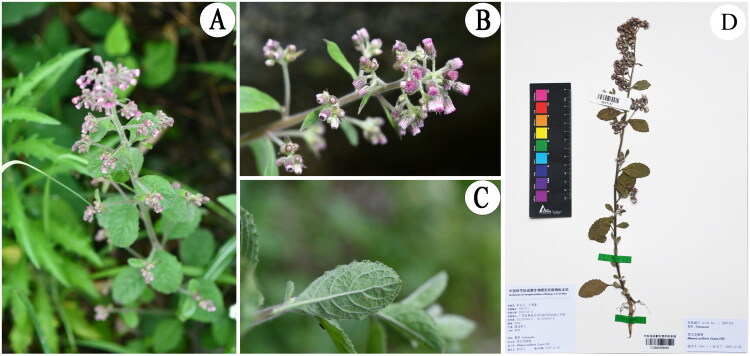 Figure 1
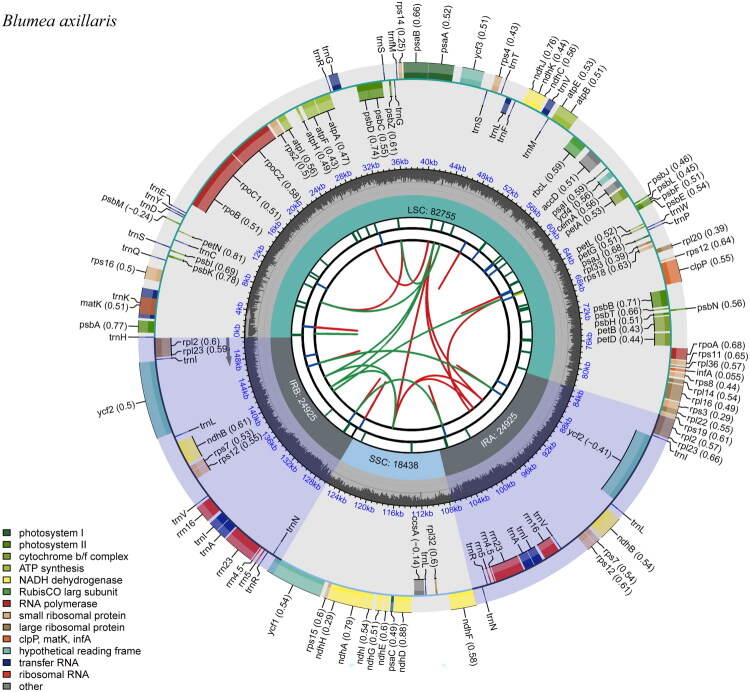 Figure 2
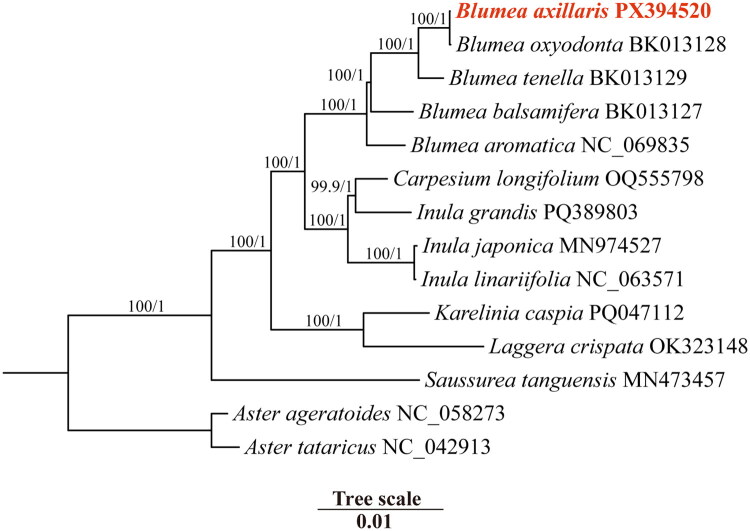 Figure 3
- —National Natural Science Foundation
- —Biodiversity Survey Project of the Jinsha, Lancang, and Nujiang Rivers
Peer Reviews
No public reviews on file for this paper yet. If you reviewed it on a platform where reviews are public (OpenReview, ICLR, NeurIPS, ICML), you can paste yours below so the community can read it here.
Videos
No videos yet. Explain this paper in a talk, walkthrough, or lecture? Add one.
Taxonomy
TopicsGenomics and Phylogenetic Studies · Sesquiterpenes and Asteraceae Studies · Photosynthetic Processes and Mechanisms
Introduction
Blumea axillaris (Lam.) DC. (1825) is a herbaceous plant belonging to the genus Blumea in the Asteraceae family. The plant grows in fields and open grasslands from sea level to 2100 m in altitude (Pornpongrungrueng et al. 2016). The whole plant is used for symptoms such as pneumonia and coughing with wheezing (Jiang and Jiang 2016); in traditional Miao practices in China, the stems and leaves are pounded to make wine starter for enhancing aroma (Zhao et al. 2014).
The chloroplast genomes of angiosperms are typically circular molecules of 120–160 kb that adopt a quadripartite structure, wherein a large single-copy (LSC) region and a small single-copy (SSC) region are separated by two inverted repeat (IR) regions, and which collectively contain 110–130 unique genes (Daniell et al. 2016). The chloroplast genome, characterized by single-copy regions and conserved features, has become an ideal molecular marker due to its structural variations (such as inversions) and sequence polymorphisms. It is widely applied in the resolution of phylogeny at the genus level and in species identification (Shaw et al. 2007; Parks et al. 2009).
Previous studies have conducted preliminary phylogenetic investigations of the genus Blumea based on a limited number of molecular markers, such as the nuclear gene ITS and the chloroplast gene fragment trnL-trnF (Pornpongrungrueng et al. 2007, 2009; Chung et al. 2022). These studies indicated that taxa of the genus Blumea were resolved into three major clades: the B. lacera clade, the B. densiflora clade, and the B. balsamifera clade. Within the B. lacera clade, the works of Zhang et al. (2019) and Chung et al. (2022) supported the recognition of three subclades and two individual species. Specifically, B. axillaris was placed within subclade II of the B. lacera clade and formed a sister-group relationship with B. oxyodonta. However, characterizations and phylogenetic analyses based on the complete chloroplast genome of B. axillaris are still lacking.
Therefore, this study sequences, assembles, and annotates the complete chloroplast genome of B. axillaris to further clarify its phylogenetic relationships and provide resources for DNA-based identification.
Materials and methods
Fresh leaves of B. axillaris (Figure 1) were collected from Fengshan County, Hechi City, Guangxi Zhuang Autonomous Region, China (106°56′42.03ʺ E, 24°18′13.51ʺ N, elevation ca. 560 m) on 15 April 2022. The plant was identified by Yu-Lan Peng based on morphological characteristics. The voucher specimen has been deposited at the Herbarium of the Chengdu Institute of Biology (CDBI), Chinese Academy of Sciences (contact person: Yu-Lan Peng, email: [email protected]) under the voucher number SE07151 (Figure 1(D)).
The photos of Blumea axillaris. (A) Whole plant, (B) flowering plant, (C) abaxial leaf surface, and (D) herbarium of Blumea axillaris. Photograph by Yulan Peng. Key morphological features: erect stems (20–80 cm) bear long pilose and sparse glandular hairs. Leaves are petiolate with elliptic-ovate, attenuate-based, pubescent-glandular blades. Flowers: purple to light red.
Total genomic DNA was extracted from silica gel-dried leaves using a Plant DNA Isolation Kit. Sequencing was performed on an Illumina platform (San Diego, CA), generating paired-end reads. Raw sequencing reads were quality-filtered and adapter-trimmed using fastp v0.23.2 (Chen et al. 2018). The chloroplast genome was assembled from these reads using GetOrganelle v1.7.7.1 (Jin et al. 2020) with default parameters. The assembled genome was annotated using Plastid Genome Annotator (PGA) (Qu et al. 2019) with B. aromatica (NC_069835) as the reference, and visualized with CPGview (Liu et al. 2023).
For phylogenetic analysis, the complete chloroplast genome of B. axillaris was aligned with those of 13 related species using MAFFT v7.475 (Katoh and Standley 2013), with Aster ageratoides (NC_058273) and Aster tataricus (NC_042913) designated as outgroups. Poorly aligned regions were removed with Gblocks v0.91b (Castresana 2000). The optimal substitution model (GTR + F + I + G4) was selected by ModelFinder (Kalyaanamoorthy et al. 2017). The maximum-likelihood (ML) phylogenetic tree was inferred using IQ-TREE v2.4.0 (Minh et al. 2020), with 1000 bootstrap replicates. Bayesian’s inference (BI) was performed using MrBayes v.3.2.7 (Ronquist et al. 2012) under the following parameters: two independent runs, each consisting of 100 million generations, with trees sampled every 1000 generations. The resulting tree topology was visualized using iTOL v7.2.2 (https://itol.embl.de) (Letunic and Bork 2024).
Results
The assembled genome had an average sequencing depth of 4118.86× (Figure S1). The complete chloroplast genome of B. axillaris exhibits a typical quadripartite structure with a total length of 151,043 bp (GenBank accession: PX394520; Figure 2). The overall GC content of the chloroplast genome was 37.49%. The genome consists of an LSC region (82,755 bp), an SSC region (18,438 bp), and two IR regions (24,925 bp each). Compared with the chloroplast genome of Barnadesia caryophylla (Barnadesioideae, Asteraceae; OM892817), a large 13 kb inversion containing a nested 4.9 kb small inversion was identified in the LSC region of B. axillaris (Figure S2). Annotation revealed 134 functional genes, including 90 protein-coding genes (CDS), 36 tRNA genes, and eight rRNA genes. Among these, 15 genes (atpF, ndhA, ndhB, petB, petD, rpl16, rpl2, rpoC1, rps16, trnA-UGC, trnG-UCC, trnI-GAU, trnK-UUU, trnL-UAA, and trnV-UAC) contained a single intron, while three genes (clpP1, pafI, and rps12) possessed two introns (Figure S3). Additionally, the trans-splicing gene rps12 was present in two copies, each containing three exons and one intron (Figure S4).
Schematic of the complete chloroplast genome features of Blumea axillaris. The species name is labeled at the top-left corner, with six default concentric tracks. From center outward: the innermost track shows dispersed repeats (direct (D) repeats in red arcs, palindromic (P) repeats in green arcs); the 2nd track, long tandem repeats (LTRs) as short blue bars; the 3rd track, short tandem repeats (STRs, microsatellites) as colored short bars for distinction. The 4th track marks key regions: small single-copy (SSC), inverted repeats (IRa, IRb), and large single-copy (LSC) regions. Between the fourth and fifth tracks, the base frequency at each genomic site is displayed; the 5th track shows genome-wide GC content distribution. The outermost track presents gene annotations, with genes on the inner ring transcribed clockwise and those on the outer ring transcribed anticlockwise. A gene functional classification legend is placed at the bottom-left corner.
The phylogenetic tree reconstructed from complete chloroplast genomes clearly illustrates the evolutionary relationships among B. axillaris and the 13 other Asteraceae species (Figure 3). The topology was well-supported, with all nodes unequivocally resolved (bootstrap values ≥95% for ML and posterior probabilities ≥0.95 for BI). Phylogenetic analysis revealed that B. axillaris is most closely related to B. oxyodonta. The complete chloroplast genome of B. axillaris will enhance our understanding of chloroplast genome evolution and provide evidence for the identification and utilization of Blumea species.
Phylogenetic trees were reconstructed using both maximum-likelihood (ML) and Bayesian inference methods, based on the complete chloroplast genome sequences of Blumea axillaris and 13 related taxa. Numbers above the lines represent ML bootstrap values and BI posterior probabilities. Red font indicates the plastome sequence assembled in the current investigation. The 13 species were Aster ageratoides (NC_058273, outgroup), Aster tataricus (NC_042913, outgroup), Blumea aromatica (NC_069835), Blumea balsamifera (BK013127) (Abdullah et al. 2021), Blumea oxyodonta (BK013128) (Abdullah et al. 2021), Blumea tenella (BK013129) (Abdullah et al. 2021), Carpesium longifolium (OQ555798) (Chen et al. 2025), Inula grandis (PQ389803), Inula japonica (MN974527), Inula linariifolia (NC_063571), Karelinia caspia (PQ047112) (Huang et al. 2025), Laggera crispata (OK323148) (Zhou et al. 2022), and Saussurea tanguensis (MN473457).
Discussion and conclusions
This study presents the first assembly and annotation of the complete chloroplast genome of B. axillaris. The genome is 151,043 bp in length, which is consistent with the sizes reported for other species in the genus Blumea. A total of 134 genes were annotated, a number that falls within the typical range for angiosperm chloroplast genomes (110–130 genes) and is slightly higher than that of closely related species such as B. oxyodonta (128 genes) (Abdullah et al. 2021). This discrepancy may result from the complete counting of multiple tRNA gene copies or differences in the annotation criteria for certain conserved open reading frames. Besides, structural analysis uncovered a rearrangement in the LSC region that includes one nested inversions, and the double inversion in B. axillaris is conserved among most major clades of Asteraceae, with the exception of Barnadesioideae (Asteraceae) (Pascual-Díaz et al. 2021).
Phylogenetic analysis based on the chloroplast genome sequence of B. axillaris revealed that B. axillaris clusters within a clade containing other species of the genus Blumea and related species from other genera. This finding further corroborates the sister-group relationship between B. axillaris and B. oxyodonta reported previously (Zhang et al. 2019; Chung et al. 2022), with a higher nodal support value. However, due to the limited availability of chloroplast genome data for other Blumea species (only four have been reported to date), we could not further confirm whether B. axillaris belongs to subbranch II of the B. lacera clade. To more fully resolve the taxonomic delimitation and evolutionary history of B. axillaris and its close relatives, future studies should integrate comprehensive analyses incorporating broader population sampling (including more species within the genus Blumea), nuclear genomic data, more extensive chloroplast genome data, and eco-morphological characteristics.
Supplementary Material
Supplemental Material
Supplemental Material
Supplemental Material
Supplemental Material
The reference list from the paper itself. Each links out to its DOI / PubMed record.
- 1Abdullah et al. 2021. Comparative plastome analysis of Blumea, with implications for genome evolution and phylogeny of Asteroideae. Ecol Evol. 11(12): 7810–7826. 10.1002/ece 3.761434188853 PMC 8216946 · doi ↗ · pubmed ↗
- 2Castresana J. 2000. Selection of conserved blocks from multiple alignments for their use in phylogenetic analysis. Mol Biol Evol. 17(4):540–552. 10.1093/oxfordjournals.molbev.a 02633410742046 · doi ↗ · pubmed ↗
- 3Chen H et al. 2025. Characterization and phylogenetic analysis of the complete chloroplast genome of Carpesium longifolium F. H. Chen & C. M. Hu (Asteraceae, Inuleae). Mitochondrial DNA B Resour. 10(1):32–36. 10.1080/23802359.2024.244459339776573 PMC 11703297 · doi ↗ · pubmed ↗
- 4Chen S, Zhou Y, Chen Y, Gu J. 2018. fastp: an ultra-fast all-in-one FASTQ preprocessor. Bioinformatics. 34(17):i 884–i 890. 10.1093/bioinformatics/bty 56030423086 PMC 6129281 · doi ↗ · pubmed ↗
- 5Chung SW, Huang WJ, Chen ZH, Liu SH. 2022. Blumea chishangensis sp. nov. (Asteraceae: Inuleae) from Taiwan and new insights into the phylogeny of Blumea. Bot Stud. 63(1):21. 10.1186/s 40529-022-00350-z 35821129 PMC 9276887 · doi ↗ · pubmed ↗
- 6Daniell H, Lin CS, Yu M, Chang WJ. 2016. Chloroplast genomes: diversity, evolution, and applications in genetic engineering. Genome Biol. 17(1):134. 10.1186/s 13059-016-1004-227339192 PMC 4918201 · doi ↗ · pubmed ↗
- 7Huang WJ et al. 2025. Complete chloroplast genome sequence of Karelinia caspia (Pall.) Less. (Compositae). Mitochondrial DNA B Resour. 10(1):52–56. 10.1080/23802359.2024.244459639776568 PMC 11703384 · doi ↗ · pubmed ↗
- 8Jiang GY, Jiang NG. 2016. Medicinal plants of Jinyun Mountain. Southwest China Normal University Press. p 494.