Synthon Substitution via C–I···π and C–I···N Halogen Bonds in Cocrystals of Anthracene-Based Organic Semiconductor Isosteres
Ivan Bondarenko, Shivani Ahuja, Brian O. Patrick, Gonzalo Campillo-Alvarado

TL;DR
Scientists used a new method to change how organic semiconductor molecules pack together, preserving their properties while allowing for design flexibility.
Contribution
A supramolecular synthon substitution approach is introduced to replace C–I···π interactions with C–I···N interactions in organic semiconductor cocrystals.
Findings
Cocrystals of DPA and DPyA with halogenated coformers were successfully synthesized.
Replacing [C–I···π] with [C–I···N] interactions preserved OSC photophysical properties and conformations.
The method offers a reliable way to modulate properties of organic semiconductors and their isosteres.
Abstract
Cocrystallization is a versatile supramolecular synthetic strategy for tuning the properties of organic semiconductors (OSCs) and related polycyclic aromatic hydrocarbons (PAHs) by controlling their packing and architectures with suitable coformers. In this study, we demonstrate a supramolecular synthon substitution approach to afford cocrystals of 9,10-diphenylanthracene (DPA) and its isostere 9,10-dipyridylanthracene (DPyA) with halogenated coformers 1,2-diiodotetrafluorobenzene (1,2-C 6 I 2 F 4), 1,4-diiodotetrafluorobenzene (1,4-C 6 I 2 F 4), and 1,3,5-triiodotrifluorobenzene (1,3,5-C 6 I 3 F 3). The strategy enables reliable replacement of [C–I···π] interactions in DPA cocrystals with [C–I···N] interactions in the corresponding DPyA cocrystals. Although coformers and substitutions alter the supramolecular architectures, the photophysical properties and molecular conformations of…
Genes, proteins, chemicals, diseases, species, mutations and cell lines named across the full text — each resolved to its canonical identifier and authoritative record.
Click any figure to enlarge with its caption.
 1
1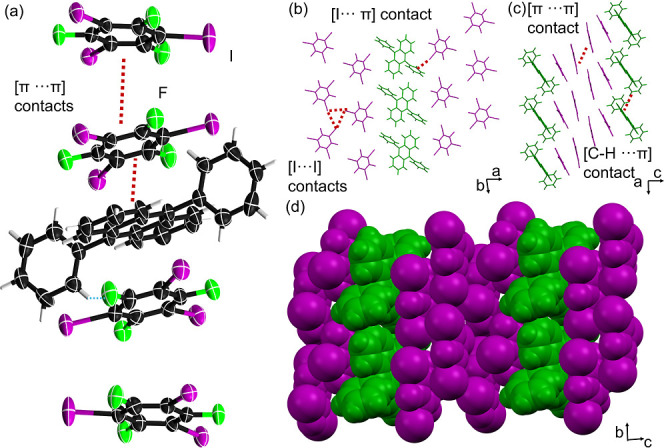 1
1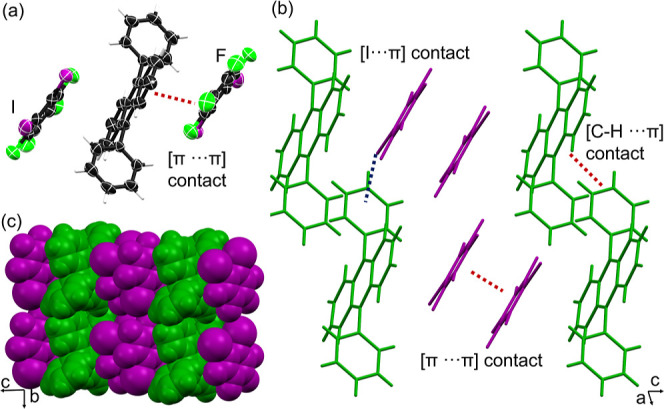 2
2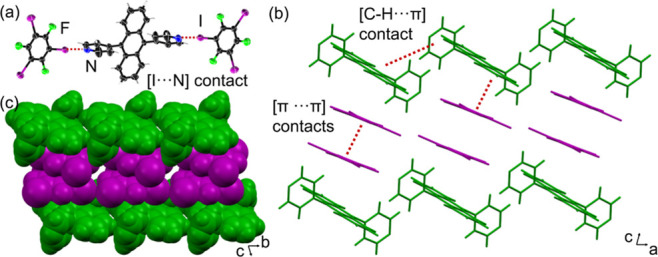 3
3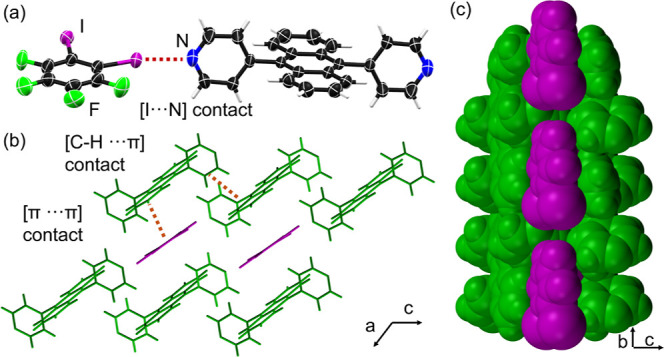 4
4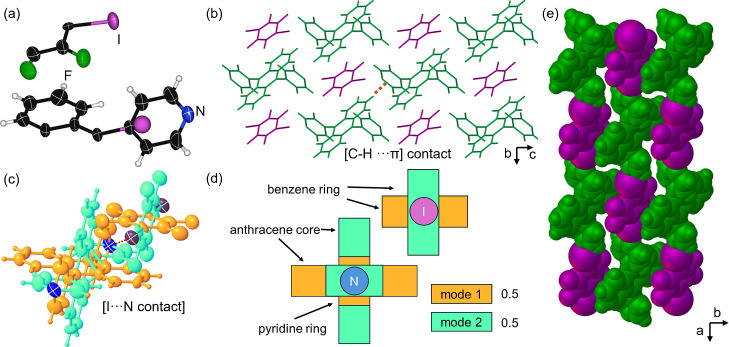 5
5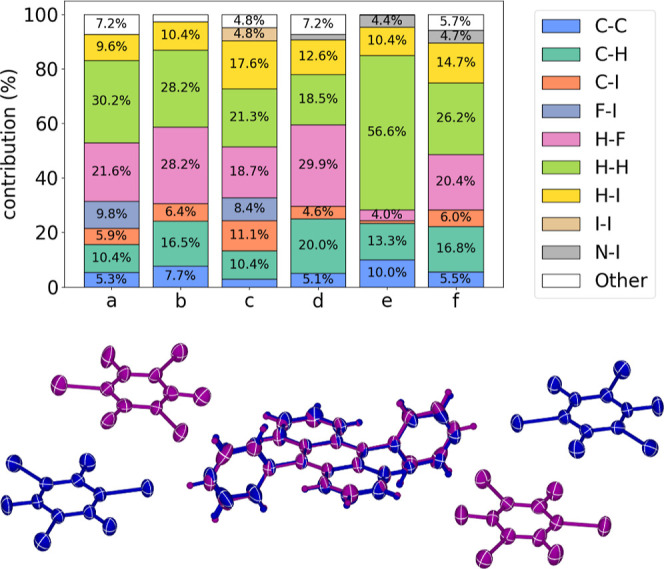 6
6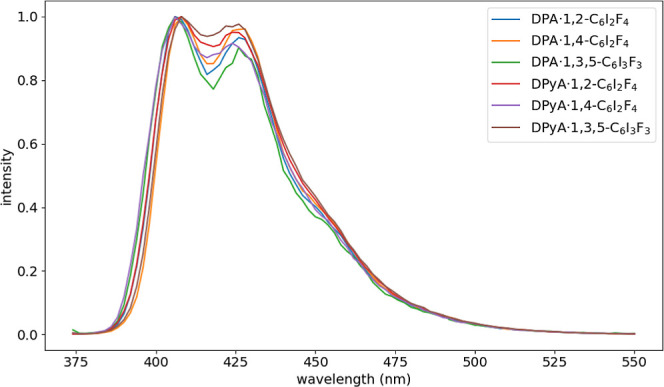 7
7| o-crystal |
| θ[πcent–N···I] (°) |
| θ[πcent–C···I] (°) | ϕ(Arcent–Antcent) (°) | Mixed stack |
|---|---|---|---|---|---|---|
| (DPA)·2(1,2-C6I2F4) | 3.745(2) | 85.3(2) | 8.8(2) | 1:2 | ||
| (DPA)·(1,4-C6I2F4) | 3.550(2) | 87.8(2) | 79.5(2) | 1:1 | ||
| (DPA)·4(1,3,5-C6I3F3) | 3.665(4) | 88.6(4) | 86.4(3)8 | 1:4 | ||
| (DPyA)·(1,2-C6I2F4) | 2.865(4) | 167.7(2) | 85.8(1) | 1:1 | ||
| (DPyA)·(1,4-C6I2F4) | 2.9(1) | 176.3(3) | 88.3(3) | 1:1 | ||
| (DPyA)·2(1,3,5-C6I3F3) | 2.852(4) | 174.4(2) | 89.4(2) | 1:2 |
- —Division of Chemistry10.13039/100000165
- —Division of Chemistry10.13039/100000165
- —M.J. Murdock Charitable Trust10.13039/100000937
- —M.J. Murdock Charitable Trust10.13039/100000937
- —Reed College10.13039/100009937
- —Greenberg Steinhauser President?s Discretionary FundNA
Peer Reviews
No public reviews on file for this paper yet. If you reviewed it on a platform where reviews are public (OpenReview, ICLR, NeurIPS, ICML), you can paste yours below so the community can read it here.
Videos
No videos yet. Explain this paper in a talk, walkthrough, or lecture? Add one.
Taxonomy
TopicsCrystallography and molecular interactions · Luminescence and Fluorescent Materials · Synthesis and Properties of Aromatic Compounds
Introduction
1
The development of next-generation organic field-effect transistors (OFETs), solar cells, and sensors based on organic semiconductors (OSCs) requires precise control of molecular self-assembly and crystallization. ?−? ? ? ? Among OSCs, anthracenes and related polycyclic aromatic hydrocarbons (PAHs) are widely employed due to their extended π-conjugation and strong intermolecular interactions (e.g., π-stacking), which confer unique optical and electronic properties and generally result in high charge-carried mobilities. ?−? ? ? Despite their promise, the development of new OSCs often relies on complex, energy-intensive, and costly synthetic protocols.?
An alternative approach involves using weak, noncovalent interactions between OSCs and molecular coformers to direct the crystal packing of PAHs (i.e., cocrystallization). The supramolecular strategy has accelerated the diversification of architectures and properties of established OSCs. ?−? ? ? ? ? ? ? ? For example, halogenated coformers have been used to modulate aggregation of 9,10-diphenylanthracene (DPA),? a chromophore widely employed in OFETs and light-emitting diode (LEDs) owing to its remarkable optical (e.g., highly fluorescent) and electronic properties. ?−? ? In the study, coformers organized DPA molecules through [C–X···π] contacts (X = Br, I), with pendant phenyl rings in DPA, resulting in cocrystals with tunable photoluminescence and electrochemiluminescence properties.?
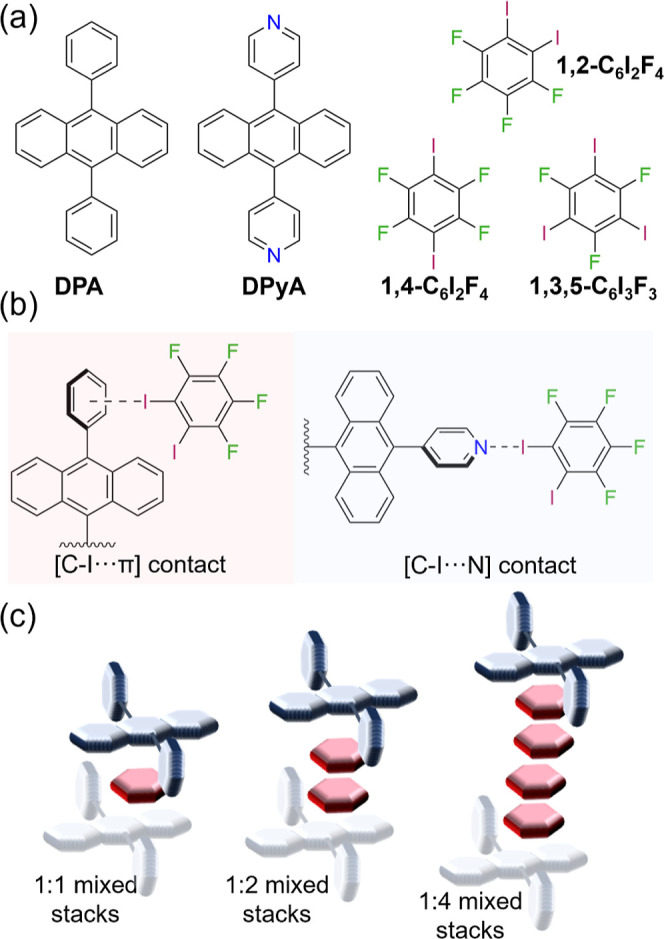
Inspired by this work, we sought to explore whether a supramolecular synthon substitution strategy could be used to modulate the crystal packing and photophysical properties (e.g., fluorescence)? of 9,10-dipyridylanthracene (DPyA), an isostere of DPA in which pyridyl rings replace the phenyl substituents on the anthracene core (Scheme), using a series of halobenzene coformers. Synthon substitution is a strategy in supramolecular synthesis ?−? ? that has recently been applied to generate nucleic acid base pairs by replacing hydrogen bonds with halogen bonds.? Although both [C–I···π] and [C–I···N] interactions are individually well-documented in crystal engineering, ?−? ? ? the purposeful exploitation of their interchangeability as a predictive synthon substitution strategy, particularly across multiple coformer systems and structurally related organic semiconductor isosteres, remains largely unexplored. We hypothesize [C–I···π] contacts in DPA cocrystals could be reliably substituted by [C–I···N] halogen bonds in the DPyA analogues with a series of halobenzenes, enabling the development of multicomponent solids of OSC isosteres based on 9,10-diarylanthracenes. The development of cocrystals of DPA and DPyA could modulate photophysical properties (e.g., spectral intensity distribution, fluorescence quenching), as observed with cocrystals of 9,10-bis((E)-2-(pyridin-4-yl)vinyl)anthracene. ?,? To the best of our knowledge, synthon substitution has not previously been deliberately employed as a design strategy for the cocrystal formation of anthracene-based OSC isosteres.
Supramolecular Synthon Substitution Strategy for Anthracene-Based Isosteres DPA and DPyA via Cocrystallization: (a) Molecular Building Blocks Used in This Study, (b) Supramolecular Synthons [C–I···π] and [C–I···N], and (c) Mixed-Stack Stoichiometries in Cocrystals
Here, we describe a solid-state ordering strategy for OSC isosteres using a supramolecular synthon substitution approach. Halobenzene coformers 1,2-diiodotetrafluorobenzene (1,2-C 6 I 2 F 4), 1,4-diiodotetrafluorobenzene (1,4-C 6 I 2 F 4), and 1,3,5-triiodotrifluorobenzene (1,3,5-C 6 I 3 F 3) form cocrystals with DPA and DPyA via distinct halogen-bonding motifs (Schemea). Cocrystals with DPA are primarily supported by [C–I···π] contacts with the pendant phenyl ring, whereas the DPyA isostere exhibits [C–I···N] halogen bonds (Schemeb). Notably, variations in coformer identity and synthon type result in mixed π-stacked assemblies with different stoichiometries (i.e., 1:1, 1:2, and 1:4 OSC/coformer ratios, Schemec). While changes in coformers and synthons influence supramolecular architectures, the molecular conformations of DPA and DPyA molecules remain preserved across all of the solids, leading to comparable photophysical properties. The observations are supported by single-crystal and powder X-ray diffraction (SCXRD, PXRD) and Hirshfeld surface analyses and model energies.
Experimental Section
2
Cocrystal Synthesis
2.1
Chloroform, methanol, and acetonitrile were purchased from Sigma-Aldrich. Compounds DPA, DPyA, 1,3,5-C 6 I 3 F 3, 1,2-C 6 I 2 F 4, and 1,4-C 6 I 2 F 4 were purchased from AmBeed. All chemicals were used as received without further purification. Cocrystals DPA·1,2-C 6 I 2 F 4, DPA·1,3,5-C 6 I 3 F 3, DPA·1,4-C 6 I 2 F 4, DPyA·1,3,5-C 6 I 3 F 3, and DPyA·1,2-C 6 I 2 F 4 were generated by heat- and sonication-assisted dissolution of the corresponding OSC isostere (0.045 mmol) and halobenzene (0.045, 0.09, or 0.18 mmol) in chloroform (2 mL) and acetonitrile (1 mL). The DPyA·1,4-C 6 I 2 F 4 cocrystals were obtained via solvent diffusion by adding 1,4-C 6 I 2 F 4 (0.09 mmol) dissolved in methanol (1 mL) into DPyA dissolved in chloroform (1.5 mL). Suitable single crystals for all samples formed via slow evaporation at room temperature, ca. 7 days after preparation. Phase purity was determined by the analysis of powder X-ray diffraction (PXRD) data.
X-ray Crystallography
2.2
SCXRD diffraction experiments were performed on a Rigaku XtaLAB Mini II diffractometer with a CCD area detector (λMoKα = 0.71073 Å, graphite monochromator). Standard data reduction and background correction were performed using the integrated CrysAlisPro package. Structural refinement and solution were performed with Olex2, SHELXL, and SHELXT. ?−? ? Crystallographic data and selected metrics for cocrystal structures are summarized in Tables S1–S5 (see the Supporting Information). PXRD data were collected on a Scintag XDS-2000 diffractometer using CuKα1 radiation (λ = 1.5418 Å). The samples were mounted and collected on glass slides typically in the range of 5**–**40° two-theta (scan type: step size: 0.02°, rate: 3 deg/min, continuous scan mode). The equipment was operated at 40 kV and 30 mA, and the data were collected at room temperature.
Results and Discussion
3
To evaluate the reliability of the synthon substitution approach for forming multicomponent solids of 9,10-diarylanthracene isosteres with halogenated coformers and to assess the resulting supramolecular architectures, we cocrystallized DPA and DPyA with 1,3,5-C 6 I 3 F 3, 1,2-C 6 I 2 F 4, and 1,4-C 6 I 2 F 4. SCXRD revealed the formation of cocrystals to be primarily supported by either [C–I···π] or [C–I···N] interactions (Table).
1: Selected Metrics for Cocrystals with DPA and DPyA Isosteres
DPA-Based Cocrystals
3.1
Cocrystal DPA·1,3,5-C 6 I 3 F 3 crystallizes in the triclinic space group P-1 with an asymmetric unit that comprises one-half of DPA molecule and two 1,3,5-C 6 I 3 F 3 molecules. The DPA molecule exhibits a nearly orthogonal (86.4°) dihedral angle (ϕ) between the anthracenyl and phenyl rings, which is significantly more twisted than that of single-component DPA (65.3°).? DPA molecules aggregate into layers along the b-axis via [C–H···π] contacts between the phenyl ring and the anthracene core, resembling the aggregation behavior reported in adamantane-based cocrystals with pyridines.? In the DPA·1,3,5–C 6 I 3 F 3 cocrystal, outer layers of 1,3,5-C 6 I 3 F 3 molecules (i.e., adjacent to DPA aggregates) are primarily supported by nearly orthogonal [C–I···π] contacts (86.6°) between the phenyl rings of DPA and aromatic rings of 1,3,5-C 6 I 3 F 3, as well as by [π···π] contacts (i.e., face-to-face π-stacking) with lateral anthracene (Figurea). Similar [C–I···π] contacts have been exploited for the construction of phosphorescent and pleochroic cocrystal solids. ?,?,? Additional inner layers of 1,3,5-C 6 I 3 F 3 units are supported by [I···I] halogen bonds, which assemble into trimers via a type II I_3_ synthon (Figureb).? The extended packing reveals nontypical 1:4 mixed-stacks (DPA:1,3,5-C 6 I 3 F 3) in the ac-plane (Figurec). ?,? A space-fill view of the extended packing shows DPA·1,3,5-C 6 I 3 F 3 to arrange in close-packed, corrugated sheets in the bc-plane (Figured).
X-ray structure of DPA·1,3,5–C 6 I 3 F 3: (a) 1:4 mixed-stack assembly, (b) [C–I···π] contacts and [I···I] contacts via a type II I3 synthon in the ab-plane, (c) mixed-stacks in the ac plane supported by [π···π] contacts, and (d) space-filling view of close-packed corrugated sheets in the bc-plane.
The components in DPA·1,2-C 6 I 2 F 4 also crystallize in the triclinic space group P-1 with an asymmetric unit containing one-half of a DPA molecule and one 1,2-C 6 I 2 F 4 molecule. The DPA molecule displays a nearly orthogonal dihedral angle (88.8°) between the anthracenyl and phenyl rings, similar to that in DPA·1,3,5-C 6 I 3 F 3 (Figurea). DPA units aggregate into zigzag-shaped layers along the a-axis via [C–H···π] contacts between a phenyl ring and a neighboring anthracene core. The 1,2-C 6 I 2 F 4 molecules engage in [π···π] contacts with anthracenyl rings and nearly orthogonal [C–I···π] contacts (87.8°) with phenyl rings, forming 1:2 mixed stacks in the ac-plane (Figureb), akin to donor–acceptor architectures in OSC materials. ?−? ? The 1,2-C 6 I 2 F 4 units adopt a head-to-tail geometry, as observed in cocrystals with pyrene.? The overall structure forms close-packed, corrugated sheets parallel to the bc-plane (Figurec), contrasting the 1:4 mixed stacks observed in the DPA·1,3,5–C 6 I 3 F 3 cocrystal.
X-ray structure of DPA·1,2-C 6 I 2 F 4: (a) three-component assembly, (b) 2:1 mixed stacks supported by [π···π] contacts and [C–I···π] contacts, and (c) space-filling view of corrugated sheets along the b-axis.
The components in the DPA·1,4-C 6 I 2 F 4 cocrystal? crystallize in the triclinic space group P-1 with an asymmetric unit comprising one DPA molecule and one 1,4-C 6 I 2 F 4 molecule. The DPA molecule is less twisted (79.5°) than in the DPA·1,3,5-C 6 I 3 F 3 and DPA·1,2-C 6 I 2 F 4 cocrystals. In the solid, DPA molecules form layers connected by [C–H···π] contacts and generate 1:1 mixed stacks with intercalated 1,4-C 6 I 2 F 4 units through [π···π] contacts, further stabilized by nearly orthogonal [C–I···π] contacts (88.6°) with phenyl rings (Figure S1). Cocrystals of 1,4-C 6 I 2 F 4 with other PAHs (e.g., phenanthrene, chrysene, pyrene) have shown the prevalence of [C–I···π] contacts to support the formation of multicomponent solids.?
DPyA-Based Cocrystals
3.2
To demonstrate the use of [C–I···N] halogen bonds as reliable supramolecular synthon substitutes for [C–I···π] interactions in a molecular isostere of DPA, the pyridyl-containing derivative DPyA was cocrystallized with the same series of halogenated coformers.
The components in DPyA·1,3,5-C 6 I 3 F 3 crystallize in the triclinic space group P-1 with an asymmetric unit containing one-half of DPyA molecule and one 1,3,5-C 6 I 3 F 3 molecule interacting through a [C–I···N] halogen bond. The halogen bond distance (2.852 Å) is comparable to those observed in pyridine cocrystals and nearly linear (174.4°), which is in agreement with a directional σ-hole interaction (Figurea). ?,? The DPyA molecule exhibits a dihedral angle of 89.4° between the anthracenyl and pyridyl rings, which is the most twisted conformation among the series and significantly larger than that of single-component DPyA (71.9°).? DPyA molecules arrange into zigzag-shaped layers along the a-axis via [C–H···π] contacts. The layers sandwich two 1,3,5-C 6 I 3 F 3 molecules through [π···π] contacts in the ac-plane (Figureb). Additional type II [I···I] halogen bonds further support the aggregation of 1,3,5-C 6 I 3 F 3 molecules. ?−? ? The extended packing forms close-packed corrugated sheets in the bc-plane (Figurec). Notably, [C–I···π] contacts are absent in the DPyA·1,3,5-C 6 I 3 F 3 cocrystal, which can be rationalized by the more localized electron density at the pyridyl nitrogen atoms in DPyA relative to the more diffuse π systems of DPA. This localization favors the formation of directional [C–I···N] halogen bonds over competing [C–I···π] interactions, consistent with electrostatic potential (ESP) maps (Figure S3).?
X-ray structure of DPyA·1,3,5-C 6 I 3 F 3: (a) three-component assembly supported by [C–I···N] contacts, (b) 1:2 mixed stacks supported by [π···π] contacts in the ac plane, and (c) space-filling view of corrugated sheets along the b-axis.
The components in the DPyA·1,2-C 6 I 2 F 4 cocrystal crystallize in the monoclinic space group C2/c with an asymmetric unit that contains one-half of a DPyA molecule and one-half of a 1,2-C 6 I 2 F 4 unit. The components interact via a [C–I···N] halogen bond (2.865 Å), comparable to that of DPyA·1,3,5-C 6 I 3 F 3 (Figurea). When grown by symmetry, alternating DPyA and 1,2-C 6 I 2 F 4 molecules assemble into zigzag chains sustained by [C–I···N] interactions, reminiscent of the supramolecular structure reported for a cocrystal with 1,2-C 6 I 2 F 4 and 1,4-diazabicyclo[2.2.2]octane.? Aggregates of DPyA molecules supported by [C–H···π] contacts sandwich a single layer of 1,2-C 6 I 2 F 4 units in the ac-plane. The interaction between DPyA and coformer molecules occurs via [π···π] contacts (Figureb). No [C–I···π] contacts are observed in DPyA·1,2-C 6 I 2 F 4. A space-filling view shows the components in DPyA·1,2-C 6 I 2 F 4 to arrange in a close-packed architecture in the bc-plane (Figurec).
X-ray structure of DPyA·1,2-C 6 I 2 F 4: (a) three-component assembly supported by [C–I···N] contacts, (b) 1:1 mixed stacks supported by [π···π] contacts in the ac plane, and (c) space-filling view of corrugated sheets along the b-axis.
Cocrystal DPyA·1,4C 6 I 2 F 4 crystallizes in the monoclinic space group C2/m with an asymmetric unit comprising one-half of a DPyA molecule and one-half of a 1,4-C 6 I 2 F 4 molecule interacting via [C–I···N] halogen bonds (Figurea). DPyA·1,4-C 6 I 2 F 4 forms linear chains of alternating DPyA and 1,4-C 6 I 2 F 4 units sustained by directional [C–I···N] contacts, similar to those observed in cocrystals of 4,4′-azopyridine and 1,2-bis(4-pyridyl)ethene with 1,4-C 6 I 2 F 4.? Within the chains, the components show two disordered positions of the anthracene core, pyridine, and 1,4-C 6 I 2 F 4 rings, maintaining near-orthogonal dihedral angles (88.3°). DPyA chains further organize into layers sustained by [C–H···π] and van der Waals [H···H] contacts that sandwich single layers of 1,4-C 6 I 2 F 4 in the bc-plane, forming 1:1 mixed stacks (Figureb–d). The overall structure is close-packed and without voids (Figuree). The versatility of 1,4-C 6 I 2 F 4 as a coformer with various halogen-bond acceptors is well-established.? We note the identification of an iodine atom next to the ipso-carbon of the pyridine ring is attributed to trace (4% occupancy) 9,10-diiodoanthracene impurity, generating a mixed cocrystal.?
X-ray structure of DPyA·1,4-C 6 I 2 F 4: (a) asymmetric unit containing one-half-molecule of 1,4-C 6 I 2 F 4 and a half of a DPyA unit that includes a trace iodine atom from 9,10-diiodoanthracene. We note the C–H and C–I bonds connected to the ipso-carbon of the anthracene closely overlap. (b) [C–H···π] contacts between DPyA units facilitate the inclusion of layers of 1,4-C 6 I 2 F 4 in the bc-plane. (c) Pseudodirectional chains via [I···N] contacts along the a-axis. (d) Schematics of the observed disordered. (e) Space-filling view of the DPyA·1,4-C 6 I 2 F 4 assembly.
Rationale toward Supramolecular Synthon Substitution
3.3
Hirshfeld surface analyses were performed using CrystalExplorer17? to gain deeper insight into the intermolecular interactions governing the synthesized cocrystals (Figure). For each pair of isosteric cocrystals (i.e., DPA·1,2-C 6 I 2 F 4 vs DPyA·1,2-C 6 I 2 F 4, DPA·1,4-C 6 I 2 F 4 vs DPyA·1,4-C 6 I 2 F 4, and DPA·1,3,5-C 6 I 3 F 3 vs DPyA·1,3,5-C 6 I 3 F 3), the N → C replacement in the aryl handle leads to an increased contribution of [C···I] contacts, corresponding to the replacement of N···I interactions. In DPA-based systems exhibiting mixed 1:2 and 1:4 stacks (i.e., DPA·1,2-C 6 I 2 F 4 and DPA·1,3,5-C 6 I 3 F 3), additional [F···I] contacts are observed, which is consistent with the higher inclusion of halobenzene coformers. Variations in the proportions of [C···H] contacts across the isosteric pairs reflect differences in molecular aggregation and proximity between neighboring DPA–DPA and DPyA–DPyA molecules mediated by [C–H···π] contacts. The largest difference occurs between structures DPA·1,2-C 6 I 2 F 4 and DPyA·1,2-C 6 I 2 F 4, corresponding to a ca. 0.4 Å difference between the aryl hydrogen atom and the centroid of the anthracene side ring. Notably, the aggregation of three 1,3,5-C 6 I 3 F 3 units via the type II I_3_ synthon in DPA·1,3,5-C 6 I 3 F 3 contributes 4.8% of I···I contacts, which is not significant in other cocrystals, and accounts for the highest coformer inclusion ratio (1:4) in the series. Another relevant difference is the higher contribution of [H···H] contacts in DPyA·1,4-C 6 I 2 F 4 than that of DPA·1,4-C 6 I 2 F 4, which could be attributed to the close-packed interactions between chains of DPyA units. The chains of DPyA molecules in DPyA·1,4-C 6 I 2 F 4 are disordered in over two positions, generating increased [H···H] contacts with four adjacent chains (Figurec). This motif is absent in DPA·1,4-C 6 I 2 F 4 (Figure S1).
(Top) Hirshfeld surface analyses for (a) DPA·1,2-C 6 I 2 F 4, (b) DPA·1,4-C 6 I 2 F 4 (c) DPA·1,3,5-C 6 I 3 F 3, (d) DPyA·1,2-C 6 I 2 F 4, (e) DPyA·1,4-C 6 I 2 F 4, and (f) DPyA·1,3,5-C 6 I 3 F 3. (Bottom) Overlay of crystal structures of DPA·1,3,5-C 6 I 3 F 3 and DPyA·1,3,5-C 6 I 3 F 3 cocrystals, showing the preservation of the molecular conformation and positioning variability of coformers.
Interaction energy analysis obtained from CrystalExplorer calculations (Table S1) supports the results. In the DPA cocrystals, the most stabilizing molecular pairs are associated with arrangements that feature diffuse [C–I···π] contacts (ca. – 14 to – 20 kJ mol^–1^), supplemented by additional coformer–coformer interactions enabled by [π···π], [π···F], and [I···I] contacts. In contrast, the DPyA analogues are driven by DPyA–coformer molecular pairs of comparable interaction strength (ca. – 19 kJ mol^–1^), which are associated with localized and highly directional [C–I···N] halogen bonds. These interactions efficiently stabilize the lattice, lock in the supramolecular architecture, and favor lower coformer inclusion. ESP maps provide further support for this observation, showing the minima (i.e., most electron-rich) to be localized at the pyridyl nitrogen atoms in DPyA, whereas more spatially diffused minima are distributed over the π-systems of DPA (Figure S3). The localization of electron density at the nitrogen atom provides a rationale for the preferential formation of [C–I···N] halogen bonds and the reduced prevalence of competing [C–I···π] contacts.
Despite these differences, the molecular conformations of both isosteres remain preserved across all cocrystals. Geometry-optimized structures indicate that, while the anthracene cores are rigid, the pendant phenyl and pyridyl rings retain limited but meaningful rotational freedom, adopting larger dihedral angles in the gas-phase optimized structures (ca. 90°) compared to the solid-state conformations of single component DPA and DPyA (ca. 67–72°), ?,? enabling interaction with coformers in cocrystals (ca. 80–90°) without perturbing the chromophore core (Figure S2). In DPyA solids, coformers adopt near-linear arrangements enforced by [C–I···N] halogen bonds, whereas in DPA analogues, they engage in less constrained [C–I···π] contacts. Collectively, these results demonstrate that supramolecular synthon substitution provides a reliable and predictive strategy for the assembly of cocrystals of similar OSC isosteres.
Photophysical Properties
3.4
The preservation of the molecular conformations of the OSCs prompted us to investigate the photophysical properties of the synthesized cocrystals. Fluorescence spectra of suspensions of single crystals in heptane were recorded on a PTI QuantaMaster 400 fluorometer for the three pairs of isosteric cocrystals (Figure). The emission profiles of all DPA- and DPyA-based cocrystals closely resemble those of the parent compounds, indicating the intrinsic excited-state characteristics of the anthracene core are largely retained (Figure S5). ?,? The spectral consistency is attributed to the preservation of the twisted geometry between the anthracene core and the aryl substituents (phenyl or pyridyl), as well as the presence of [C–H···π] contacts across all six cocrystal structures.? The excitation spectra match those of pure DPA and DPyA within the 300–400 nm region, exhibiting only minor deviations in the near-UV region. The subtle differences are likely associated with distinct halogen–π and halogen–nitrogen interaction geometries in the cocrystals, which may slightly modulate the relative oscillator strengths of high-energy transitions through the iodine-induced heavy-atom effect. ?,? Overall, the results demonstrate that supramolecular synthon substitution enables the formation of isosteric cocrystals that maintain the photophysical integrity of the parent OSC chromophore while introducing controlled structural diversity through noncovalent interactions.
Emission spectra for cocrystal systems (λex = 372 nm for DPyA·1,4-C 6 I 2 F 4 and λex = 370 nm for the rest of the systems).
Conclusion
4
In summary, our study has demonstrated supramolecular synthon substitution to be a reliable tool for the design of multicomponent solids of 9,10-diarylanthracene isosteres with halogenated coformers 1,3,5-C 6 I 3 F 3, 1,2-C 6 I 2 F 4, and 1,4-C 6 I 2 F 4. Specifically, cocrystals of DPA and DPyA exhibit a consistent replacement of [C–I···π] contacts in DPA solids by [C–I···N] halogen bonds in DPyA isosteric analogues. Changes in coformer geometry and synthon type result in mixed π-stacked assemblies with variable stoichiometries (i.e., 1:1, 1:2, and 1:4 OSC/coformer ratios), showing the versatility of halogen bond contacts in directing solid-state architectures. These stoichiometric variations can be rationalized by differences in synthon efficiency, with localized [C–I···N] halogen bonds stabilizing DPyA-based cocrystals with fewer coformer molecules, whereas more diffuse [C–I···π] interactions in DPA analogues are complemented by additional coformer–coformer contacts. Notably, despite structural differences, the molecular conformations and photophysical properties of DPA and DPyA remain largely preserved across all of the solids. The results demonstrate the potential of synthon substitution as a predictive design element in crystal engineering and provide a platform for the diversification of properties and supramolecular architectures of well-established OSCs and related PAHs.
Supplementary Material
The reference list from the paper itself. Each links out to its DOI / PubMed record.
- 1Allard S.Forster M.Souharce B.Thiem H.Scherf U.Organic Semiconductors for Solution-Processable Field-Effect Transistors (OFE Ts)Angew. Chem., Int. Ed.2008474070409810.1002/anie.20070192018357603 · doi ↗ · pubmed ↗
- 2Khasbaatar A.Xu Z.Lee J.-H.Campillo-Alvarado G.Hwang C.Onusaitis B. N.Diao Y.From Solution to Thin Film: Molecular Assembly of π-Conjugated Systems and Impact on (Opto)electronic Properties Chem. Rev.20231238395848710.1021/acs.chemrev.2c 0090537273196 · doi ↗ · pubmed ↗
- 3Wei C.Li L.Zheng Y.Wang L.Ma J.Xu M.Lin J.Xie L.Naumov P.Ding X.Feng Q.Huang W.Flexible Molecular Crystals for Optoelectronic Applications Chem. Soc. Rev.2024533687371310.1039/D 3CS 00116 D 38411997 · doi ↗ · pubmed ↗
- 4Karothu D. P.Dushaq G.Ahmed E.Catalano L.Rasras M.Naumov P.Multifunctional Deformable Organic Semiconductor Single Crystals Angew. Chem., Int. Ed.202160261512615710.1002/anie.20211067634570413 · doi ↗ · pubmed ↗
- 5Jiang H.Hu W.Towards High-Performance Organic Field-Effect Transistors: Influence of Molecular Packing of Organic Semiconductors Angew. Chem., Int. Ed.2020591408142810.1002/anie.201814439 · doi ↗
- 6Zhang X.Dong H.Hu W.Organic Semiconductor Single Crystals for Electronics and Photonics Adv. Mater.201830180104810.1002/adma.20180104830039629 · doi ↗ · pubmed ↗
- 7Jiang L.Dong H.Hu W.Organic Single Crystal Field-Effect Transistors: Advances and Perspectives J. Mater. Chem.2010204994500710.1039/b 925875 b · doi ↗
- 8Reese C.Bao Z.Organic Single-Crystal Field-Effect Transistors Mater. Today 200710202710.1016/S 1369-7021(07)70016-0 · doi ↗