Intrapopulation changes in Puccinia hordei induced by two-component fungicides from different chemical classes
M.S. Gvozdeva, O.A. Kudinova, V.D. Rudenko, G.V. Volkova

TL;DR
This study shows how fungicides affect the virulence and aggressiveness of a barley rust pathogen in Russia.
Contribution
The paper provides the first analysis of fungicide effects on Puccinia hordei population dynamics in Russia.
Findings
Higher fungicide application rates reduced virulence to specific Rph genes and increased virulence to Rph14.
Fungicide-treated populations showed lower average virulence, longer latent periods, and reduced spore production.
Increased fungicide use led to decreased viability of P. hordei isolates.
Abstract
Fungicide resistance is a global problem that reduces the effectiveness and duration of action of these compounds due to changes in the racial composition and virulence of phytopathogen populations. Currently, resistance to 100 active substances has been registered in more than 230 fungal plant pathogens. Leaf rust of barley (Puccinia hordei Otth.) is one of the most widespread and harmful pathogens in the barley pathocomplex; it is recorded in southern Russia every year. There are very few studies on the effect of fungicides on the characteristics of rust fungi populations, and none have been carried out on P. hordei in Russia. This research aimed to analyze the effect of fungicides belonging to the chemical classes of triazoles and strobilurins on intrapopulation changes in P. hordei in terms of pathogenicity (virulence and aggressiveness) under the conditions of the North Caucasus…
Genes, proteins, chemicals, diseases, species, mutations and cell lines named across the full text — each resolved to its canonical identifier and authoritative record.
Click any figure to enlarge with its caption.
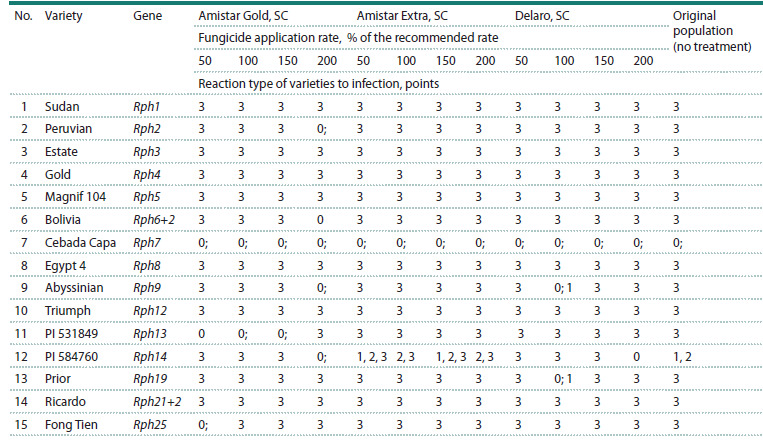 Table 1
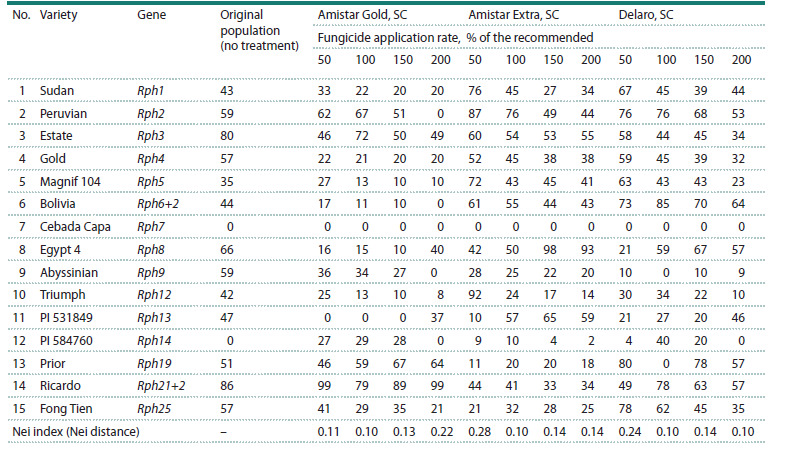 Table 2
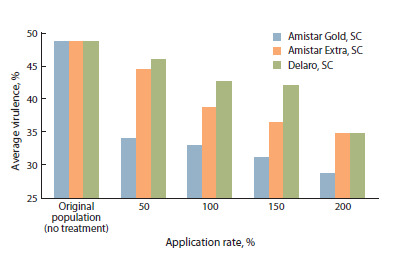 Fig. 1
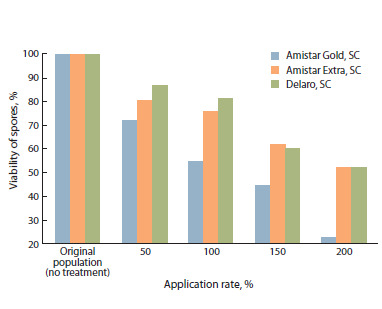 Fig. 2
Peer Reviews
No public reviews on file for this paper yet. If you reviewed it on a platform where reviews are public (OpenReview, ICLR, NeurIPS, ICML), you can paste yours below so the community can read it here.
Videos
No videos yet. Explain this paper in a talk, walkthrough, or lecture? Add one.
Taxonomy
TopicsWheat and Barley Genetics and Pathology · Fungal Plant Pathogen Control · Agricultural Productivity and Crop Improvement
Introduction
Southern Russia is the leader in terms of winter grain crops area. According to the Federal State Statistics Service (https:// rosstat.gov.ru/storage/mediabank/posev-4сх_2024.xlsx), in 2024 their share in total crops was 51.3 %. Winter barley is a promising crop, valuable for livestock farming, capable of producing a consistently high yield even in the extremely dry conditions of southern Russia (Ereshko et al., 2012). In 2024, the Krasnodar Region was the leader in barley harvesting: 1,159.5 thousand tons were harvested, which is 7 % of the total amount in the country (https://graininfo.ru/news/yachmenploshchadi- sbory-i-urozhaynost-v-rossii-v-2024-godu/).
Barley crops are affected by various pathogens that cause yield failure and loss of grain quality (Abbas, 2022). The leaf rust of barley pathogen, the biotrophic basidiomycete Puccina hordei Otth., is one of the widespread and harmful pathogens in the barley pathocomplex (Sapkota et al., 2023). In the North Caucasus region of Russia, leaf rust on barley crops is recorded annually, and epiphytoties occur once or twice every 10 years (Volkova et al., 2018). Ensuring high yields is impossible without chemical protection. In addition to the high pesticide load on agrobiocenosis, a serious problem is the emergence of pathogen forms resistant to the active substances of fungicides (Shcherbakova, 2019).
Fungicide resistance has become a major global problem, reducing the efficacy and shelf-life of some promising fungicides (Brent, Hollomon, 1995; Thind, 2021). Currently, resistance to 100 active substances has been reported in more than 230 fungal plant pathogens in various crops and geographic regions (FRAC, 2020). According to P.E. Russell (2003), rust fungi are pathogens with a low risk of emerging resistance, but their rapid life cycle, airborne dispersal of spores, and mixed mode of reproduction can cause intrapopulation changes (Ji et al., 2023) due to the rapid spread and accumulation of resistant forms, which will lead to decreased sensitivity to fungicides.
Traditionally, fungicides of the triazole and strobilurin classes are used to control rust diseases of wheat and barley (Walters et al., 2012). Triazoles belong to the largest class of fungicides with the demethylation inhibitor (DMI) group, suppressing the biosynthesis of ergosterol, a key component of the plasma membrane of fungal cells (Lass-Flörl, 2011). According to FRAC (2020), there is a moderate risk of emerging resistance to such fungicides. At the same time, a number of studies have noted changes in the population structure of biotrophic pathogens. For example, G. Zhan et al. (2022), studying the susceptibility to triademiphon in 446 isolates of Puccinia graminis, found that fungicide-resistant isolates showed strong adaptive traits in terms of urediniospore germination rate, latent period, sporulation intensity and lesion spread rate.
Strobilurins are an equally large class of fungicides that accumulate in the waxy layer of the leaf cuticle after plant treatment (Krupen’ko, 2023). Globally, strobilurins account for 20–25 % of total fungicide sales, a third of which is attributed to azoxystrobin, the best-selling fungicide in the world (Leadbeater, 2012). The first strobilurin-resistant isolates were detected in 1998 in Blumeria graminis [DC.] in Germany two years after their use, and strobilurin resistance has now been reported among both biotrophic (Dodhia et al., 2021) and hemibiotrophic (Ölmez et al., 2023) pathogens worldwide.
There is also a risk of emerging fungicide resistance for barley leaf rust (Walters et al., 2012). Like all rust fungi, P. hordei is a rapidly evolving phytopathogen (Çelik Oğuz, Karakaya, 2021). There are very few studies on the effect of fungicides on the characteristics of the rust fungi population. For the first time in Russia, such work was carried out at the Federal State Budgetary Scientific Institution “Federal Research Center of Biological Plant Protection” (FSBSI FRCBPP) for the “wheat–yellow rust pathogen” pathosystem (Volkova, 2007). The effect of a triadimefon-based fungicide on the virulence and aggressiveness of P. striiformis was studied, the rate of emergence of resistant forms of the pathogen was calculated, and an anti-resistant strategy for the use of fungicides with this active substance on wheat crops was developed and proposed. Further studies were carried out on the wheat leaf rust pathogen (Gvozdeva, Volkova, 2022). It was found that the population of P. triticina treated with a chemical fungicide based on tebuconazole is characterized by a change in the structure of aggressiveness and virulence and a decrease in sensitivity to the toxicant. Similar studies on barley leaf rust have not been carried out either in the world or in Russia. Given the high virulence and variability of the North Caucasian population of the pathogen (Danilova, Volkova, 2022), and the need to develop an anti-resistant strategy for each pathogen and cenosis (Corkley et al., 2021), research on this issue is extremely relevant
This research is aimed at analyzing the effect of fungicides of the chemical classes of triazoles and strobilurins on intrapopulation changes in P. hordei in terms of pathogenicity (virulence and aggressiveness) under the conditions of the North Caucasus region of Russia
Materials and methods
The studies were carried out in the laboratory and greenhouse of the FSBSI FRCBPP on the winter barley variety Vivat, susceptible to leaf rust. Originator of the variety is FSBSI “Donskoy Agrarian Scientific Center”; it is recommended for growing in the North Caucasus region and resistant to lodging and frost.
To obtain spore material of the North Caucasian population of the barley leaf rust pathogen (further in the text – fungal urediniospores, or population), infected leaves were collected during a route survey of industrial barley crops in the Krasnodar Region, Stavropol Region, Rostov Region and the Republic of Adygea. Then, the susceptible Vivat variety was inoculated with a mixture of herbarium samples (Fungal Pathogens of Grain Ear Crops…, 2024). The spore material collected in the required quantity was stored at a temperature of +4 °C.
Two-component fungicides approved for use in the Rus- sian Federation were selected for the study: Delaro, SC (175 g/l prothioconazole + 150 g/l trifloxystrobin); Amistar Extra, SC (200 g/l azoxystrobin + 80 g/l cyproconazole); Amistar Gold, SC (125 g/l azoxystrobin + 125 g/l difenoconazole).
Inoculation of winter barley plants with a spore suspension of the pathogen was carried out in the seedling phase. The infected plants were kept in a humid chamber for 18 hours, then they were grown under controlled conditions at a temperature of +20–22 °C, air humidity of 70–80 %, and light intensity of 10–15 thousand lux with a day and night cycle (16/8 hours) (Fungal Pathogens of Grain Ear Crops…, 2024). When the first signs of the disease appeared, spraying was carried out using several application rates of the preparations: 50, 100, 150 and 200 % (the recommended application rate was determined to be 100 %).
Urediniospores of P. hordei, collected from barley plants treated with fungicides at various application rates, were transferred to intact plants for reproduction and determination of aggressiveness indices (spore viability, latent period duration, sporulating capacity, sporulation duration). Aggressiveness indices were determined for the mixed pathogen populations obtained as described above
The viability of barley leaf rust spores was tested in a humid chamber under a microscope by counting the total number of fungal spores and germinated spores (Sanin et al., 1975). The duration of the latent period was counted from the moment of inoculation until the first signs of the disease appeared (Pyzhikova, 1972). The sporulating capacity was determined by calculating the ratio of the number of pustules to the mass of the collected biomaterial. The duration of sporulation was determined from the beginning of the pustules opening until the end of sporulation (Sanin et al., 1975).
The virulence of the P. hordei populations treated with fungicides at different application rates was determined by the reaction of 15 barley differentiators from the International and Australian sets containing known genes of resistance to the pathogen: Sudan (Rph1), Peruvian (Rph2), Estate (Rph3), Gold (Rph4), Magnif 104 (Rph5), Bolivia (Rph6+2), Cebada Capa (Rph7), Egypt 4 (Rph8), Abyssinian (Rph9), Triumph (Rph12), PI 531849 (Rph13), PI 584760 (Rph14), Prior (Rph19), Ricardo (Rph21+2), Fong Tien (Rph25). The infection types were recorded 10–12 days after inoculation using the Levin and Cherevik scale in points (Volkova et al., 2018). The frequencies of virulence genes were calculated using the probabilistic method (Wolfe, Schwarzbach, 1975) based on the ratio of the number of pustules with infection type of 3–4 points on the lines with known resistance genes to the number of pustules on the susceptible variety Vivat. To evenly distribute P. hordei spores on barley leaves, inoculation was carried out in a precipitation tower using lycopodium, which was mixed with fungal spores in a ratio of 400:1 (Parlevliet, 1980).
Based on the results of differentiation, the average virulence was calculated (Mihajlova et al., 2003). Differences between the original population (without treatment) and populations treated with different application rates of the preparation in terms of virulence gene frequencies were determined using the Nei index (Nei, 1972). The statistical reliability of the aggressiveness indicators was assessed using the Fisher criterion (α = 0.05) using STATISTICA 10.0 software.
The research used the material and technical base of the Unique Scientific Installation (USI) “Phytotron for Isolation, Identification, Study and Maintenance of Races, Strains, Phenotypes of Pathogens” (https://fncbzr.ru/brk-i-unu/uniqueinstallation- 2/) and objects of the bioresource collection of the Federal State Budgetary Scientific Institution FNCBZR “State Collection of Entomoacariphages and Microorganisms” (https://fncbzr.ru/brk-i-unu/unique-installation-1/).
Results
When treating winter barley plants with fungicides at different application rates, intrapopulation changes in the structure of P. hordei by virulence were revealed (Table 1)
Infectious type of differentiating varieties in response to inoculation with P. hordei population under the influence of various fungicide application rates (greenhouse of the FRCBPP, 2024)
In the option with the Amistar Gold, SC preparation, with an increase in the rate to 200 % of the recommended one, a decrease in the virulence of the pathogen was observed on varieties containing the resistance genes Rph2, Rph6+2, Rph9, Rph14. On the line with the Rph13 and Rph25 genes, when treating the barley plants with the preparations at an application rate of 50 % of the recommended one, no damage was observed. With an increase in the rate to 200 %, the type of reaction to infection increased to 3 points
Treatment of the barley plants with the fungicide Amistar Extra, SC affected the fungus population towards increasing virulence to the Rph14 gene, while a heterogeneous infection type was observed, pustules of different sizes, areas of dead and chlorotic tissue were present on the leaf.
In the option with the fungicide Delaro, SC, a decrease in the virulence of the P. hordei population to the Rph14 gene was noted. The reaction type decreased from 3 (application rate 50 % of the recommended one) to 0 points (application rate 50 % of the recommended one), for the original population this indicator was 1 and 2 points. When using the recommended application rate of the preparation (100 %), the infection type of the varieties containing the resistance genes Rph19 and Rph9 was 0;, 1 point; for the original population this indicator was 3 points.The type of damage to the varieties containing the resistance genes Rph1, Rph3, Rph4, Rph5, Rph7, Rph8, Rph12, Rph21+2, in all options with the fungicides, regardless of the application rate, corresponded to the type of the original population (no treatment) and amounted up to 3 points.
This research studied the effect of the fungicides on the virulence of the population of the barley leaf rust pathogen (Table 2).
Virulence (%) of the P. hordei population treated with the fungicides at different application rates to lines carrying Rph genes (greenhouse of the FSBSI FRCBPP, 2024)
In all experimental options with an increase in the rate of fungicide application, there was a decrease in the virulence of the fungal population to Rph4, Rph5, Rph6+2, Rph12; in the option with Amistar Extra, SC and Delaro, SC – to Rph2; Amistar Gold, SC and Amistar Extra, SC – to Rph9. The use of the studied fungicides at a rate of 50–150 % of the recommended one contributed to an increase in the virulence of the population to Rph14. Under the influence of fungicides Amistar Gold, SC and Delaro, SC with an application rate of 150 % of the recommended one, an increase in the virulence of the population to Rph19 was noted. Treatment of plants with Amistar Extra, SC and Delaro, SC with an increase in the application rate to 150 % of the recommended one contributed to a decrease in the virulence of the population to Rph1, and an increase in the occurrence of isolates virulent to Rph8.
According to the Nei index, the maximum differences in the frequency of isolates virulent to lines with Rph genes were obtained between the original population (no treatment) and the population treated with Amistar Extra, SC and Delaro, SC with an application rate of 50 % of the recommended one (N = 0.28; N = 0.24, respectively). At the same time, in the option with the fungicide Amistar Gold, SC, the maximum differences were obtained when using an application rate of 200 % of the recommended one (N = 0.22).
The average virulence of the original P. hordei population (no treatment) was 48.4 % (Fig. 1). In all experimental options, with an increase in the rate of fungicide application, a change in the average virulence was noted.
Average virulence of the population of the barley leaf rust pathogen under the influence of different rates of fungicide application (%) (laboratory and greenhouse of the FSBSI FRCBPP, 2024).
Treatment of the plants with Delaro, SC contributed to a decrease in this indicator from 45.9 % (application rate 50 % of the recommended one) to 34.7 % (application rate 200 %), with Amistar Extra, SC – from 44.3 % (application rate 50 % of the recommended one) to 34.7 % (application rate 200 %), with Amistar Gold, SC – from 33.8 % (application rate 50 % of the recommended one) to 28.5 % (application rate 200 %).
The results of the influence of different fungicide application rates on the aggressiveness indices of barley leaf rust were obtained. An increase in the duration of the latent period of the disease under the influence of high application rates of preparations was noted. For the original population (no treatment), this indicator was 168 hours, which corresponded to the values obtained when treating barley plants with the studied fungicides at a reduced application rate (50 % of the recommended one). In the option with the fungicides Delaro, SC and Amistar Gold, SC, at an application rate of 200 % of the recommended one, the duration of the latent period increased to 216 hours, with Amistar Extra, SC, up to 192 hours.
A decrease in the sporulating capacity of the P. hordei population treated with fungicides was found. In the options with the preparations Delaro, SC and Amistar Gold, SC, with an increase in the application rate, the spore mass from one pustule decreased from 0.007 (application rate 50 % of the recommended one) to 0.002 mg (application rate 200 %). In the option with the fungicide Amistar Extra, SC, this indicator changed from 0.006 (application rate 50 % of the recommended one) to 0.005 mg (application rate 200 %). For the original population (no treatment), the sporulating capacity was 0.013 mg from one pustule.
A change in the viability of P. hordei spores was noted to be influenced by the fungicides. Thus, for the original population (no treatment), the value of this indicator was determined as 100 % (Fig. 2). In the option with the fungicide Delaro, SC, the viability of spores decreased from 86.7 (application rate 50 % of the recommended one) to 51.7 % (application rate 200 %); in the option with the preparation Amistar Extra, SC, from 80.0 (application rate 50 % of the recommended one) to 51.7 % (application rate 200 %); with Amistar Gold, SC, from 71.7 (application rate 50 % of the recommended one) to 22.5(application rate 200 %).
Influence of different application rates of the fungicides on the viability of barley leaf rust spores (laboratory and greenhouse of the FSBSI FRCBPP, 2024).
Discussion
The results obtained during the research are consistent with the studies of other scientists. Thus, C. Zhao et al. managed to obtain two flutolanil-resistant isolates of Rhizoctonia spp., which were characterized by a lower mycelial growth rate and reduced virulence towards sugar beet sprouts compared to the original isolate (Zhao et al., 2019).
An inhibitory effect on the sporulating ability of the Phytophthora infestans fungus was noted with an increase in the application rate of the fungicides with difenoconazole and fludioxonil as active ingredients (Myca, 2015).
Under the influence of an aqueous solution of benzimidazole (40 mg/l), a decrease in the sporulating capacity and the number of pustules of the rye leaf rust pathogen P. dispers was determined in comparison with the control, and the avirulence of the fungus was also noted (Tyryshkin, 2017).
G.V. Volkova’s studies (2007) have proven that the acquisition of resistance to a fungicide from the triazole class was accompanied by a decrease in sporulating capacity by 4.8 times, the rate of diffuse spread of the pathogen mycelium in the tissues of the host plant, by 4 times. The incubation period was extended by 3 days, the period of pustule formation, by 8–12 days.
Previously, data were obtained on the effect of a tebuconazole- based fungicide on the aggressiveness of the population of the wheat leaf rust pathogen. With an increase in the application rate of the preparation, the viability of spores decreased to 21.5 %, the sporulating capacity, to 0.02 mg of spores, and the duration of sporulation, to 8 days (application rate 0.7 l/ha). At the same time, the duration of the latent period increased to 233 hours (Gvozdeva, Volkova, 2022).Changes in the population structure under the influence of triazole fungicides have been recorded. Thus, X. Wu et al. (2020) described the sensitivity of 89 P. graminis isolates to triademifon, a triazole fungicide. It was found that isolates with resistance to triademifon may have cross-resistance to carbendazim. Resistant isolates to azole fungicides have also been recorded in P. striiformis (Tian et al., 2019), B. graminis (Cao et al., 2008). For the P. triticina population from Brazil, a decrease in sensitivity to triazoles was noted for the five most common races of the pathogen (Ardium et al., 2012). We studied the change in the P. triticina population structure under the influence of a tebuconazole-based fungicide (Gvozdeva, Volkova, 2022). According to the data obtained, the maximum of the studied changes in the genetic structure of the population (according to Nei, N) were noted at reduced rates of fungicide application. The average virulence of the pathogen population decreased with an increase in the rate of fungicide application
Under the influence of the studied fungicides, a decrease in the virulence of the fungal population to Rph4, Rph5, Rph6+2, Rph12 was found, which have been ineffective for the North Caucasian population for more than 10 years (Volkova et al., 2019; Danilova, Volkova, 2023). At the same time, virulence to Rph14 increased compared to the original population. In 2021, the frequency of fungal isolates to this line was low (Danilova, Volkova, 2023). This may indicate a decrease in the efficacy of the Rph14 gene under the influence of fungicides.
The development of resistance for pathogens often resembles the effect of vertical resistance: in the first years of fungicide use, complete suppression of infection is observed; over time, the emergence of individual tolerant strains and their accumulation in the population is observed; and, finally, there is a complete loss of fungicide efficacy (Dyakov, 1998). One of the factors reducing the sensitivity of phytopathogens to the active substances of preparations is a change in their intrapopulation structure (Tyuterev, 2001). Mutations that cause resistance of phytopathogen isolates to fungicides can lead to a decrease in their adaptability and virulence (Hawkins, Fraaije, 2018), but later, an increase in the aggressiveness of the pathogen may be observed (Dyakov, 1998). In our studies for the North Caucasian population of the barley leaf rust pathogen under the influence of two-component preparations of the class of triazoles and strobilurins, changes in the intrapopulation structure in terms of aggressiveness and virulence were noted, which justifies the need for constant study of this issue to control the accumulation of resistant forms of P. hordei in the fungal population
Conclusion
A comparative assessment of pathogenicity indicators under the influence of fungicides of the chemical classes of triazoles and strobilurins revealed a decrease in the aggressiveness and virulence of the North Caucasian population of the barley leaf rust pathogen. So, in all options with an increase in the rate of fungicide application, a change in the intrapopulation structure and average virulence of populations was noted. In all options with an increase in the rate of fungicide application, there was a decrease in the virulence of the fungal population to Rph4, Rph5, Rph6+2, Rph12; in the option with Amistar Extra, SC and Delaro, SC, to Rph2; with Amistar Gold, SC and Amistar Extra, SC, to Rph9.
The use of the studied fungicides at a rate of 50–150 % of the recommended one contributed to an increase in the virulence of the population to Rph14. The line with the Rph7 gene showed no signs of infection both in the original population and in the experimental options. The average virulence of the fungal populations treated with the fungicides in all experimental options was lower compared to the original population (no treatment) (48.5 %). Significant changes in this indicator were noted under the influence of the fungicide Amistar Gold, SC, the average virulence decreased from 33.8 to 28.5 %.
In comparison with the original population (no treatment), an increase in the duration of the latent period of the disease was noted under the influence of high application rates of the preparations. In the Delaro, SC and Amistar Gold, SC options at an application rate of 200 % of the recommended one, the value of this indicator varied from 168 to 216 hours, with Amistar Extra, SC, from 168 to 192 hours.
A decrease in the sporulating capacity of the P. hordei population treated with the fungicides was determined. In the options with the Delaro, SC and Amistar Gold, SC preparations with an increase in the application rate, the spore mass from one pustule decreased from 0.013 (original population (no treatment)) to 0.002 mg (application rate 200 %), in the Amistar Extra, SC option, to 0.005 mg (application rate 200 %). A significant decrease in the viability of P. hordei spores in comparison with the original population (no treatment) was noted under the influence of the fungicide Amistar Gold, SC. With an application rate of the preparation of 200 % of the recommended one, this indicator decreased from 100 to 22.5 %
Thus, our studies allow us to identify changes in the population structure by virulence and aggressiveness of the P. hordei population under the influence of the studied fungicides, which will make it possible to promptly adjust the winter barley protection system and, in the future, can contribute to the development of an anti-resistant strategy to control P. hordei.
Conflict of interest
The authors declare no conflict of interest.
References
Abbas H.S. Barley diseases: introduction, etiology, epidemiology, and their management. In: Abd-Elsalam K.A., Mohamed H.I. (Eds) Cereal Diseases: Nanobiotechnological Approaches for Diagnosis and Management. Singapore: Springer, 2022;97-117. doi 10.1007/978- 981-19-3120-8_6
Arduim G.D.S., Reis E.M., Barcellos A.L., Turra C. In vivo sensitivity reduction of Puccinia triticina races, causal agent of wheat leaf rust, to DMI and QoI fungicides. Summa Phytopathol. 2012;38(4):306- 311. doi 10.1590/S0100-54052012000400006
Bai Q., Liu T., Wan A., Wang M., See D.R., Chen X. Changes of barley stripe rust populations in the United States from 1993 to 2017. Phytopathology. 2022;112(11):2391-2402. doi 10.1094/PHYTO-04-22- 0135-R
Brent K.J., Hollomon D.W. Fungicide Resistance in Crop Pathogens: How Can it Be Managed? Bristol, UK: Fungicide Resistance Action Committee, 2007
Cao X.R., Zhao W.J., Zhou Y.L. Monitoring of resistance of Blumeria graminis f. sp. tritici isolates to triadimefon in 2007. Plant Protection. 2008;34:74-77
Corkley I., Fraaije B., Hawkins N. Fungicide resistance management: maximizing the effective life of plant protection products. Plant Pathology. 2021;71(1):150-169. doi 10.1111/ppa.13467
Çelik Oğuz A., Karakaya A. Genetic diversity of barley foliar fungal pathogens. Agronomy. 2021;11(3):434. doi 10.3390/agronomy 11030434
Danilova A.V., Volkova G.V. Virulence of barley leaf rust in the South of Russia in 2017–2019. Span J Agric Res. 2022;20(1):e10SC01. doi 10.5424/sjar/2022201-18337
Danilova A., Volkova G. Efficiency of Rph genes against Puccinia hordei in Southern Russia in 2019–2021. Agronomy. 2023;13(4):1046. doi 10.3390/agronomy13041046
Dodhia K.N., Cox B.A., Oliver R.P., Lopez-Ruiz F.J. Rapid in situ quantification of the strobilurin resistance mutation G143A in the wheat pathogen Blumeria graminis f. sp. tritici. Sci Rep. 2021; 11(1):4526. doi 10.1038/s41598-021-83981-9
Dyakov Y.T. Population Biology of Phytopathogenic Fungi. Мoscow, 1998 (in Russian)
Ereshko A.S., Hronyuk V.B., Repko N.V. State and prospects of barley production in the Russian Federation. Vestnik Agrarnoj Nauki Dona = Don Agrarian Bulletin. 2012;3(19):57 (in Russian)
FRAC. List of first confirmed cases of plant pathogenic organisms resistant to disease control agents. CropLife International. Brussels, 2020. Available at: https://www.frac.info/media/3oils1zl/list-offirst- confirmed-cases-of-plant-pathogenic-organisms-resistant-todisease- control-agents_05_2020.pdf
Gvozdeva M.S., Volkova G.V. Influence of the Kolosal fungicide on the population structure of the wheat leaf rust pathogen by signs of pathogenicity and sensitivity. Mikologiya i Fitopatologiya = Mycology and Phytopathology. 2022;56(1):52-63. doi 10.31857/ S0026364822010044 (in Russian)
Fungal Pathogens of Grain Ear Crops: Biology, Distribution, Harmfulness, Methods of Detection, Collection and Storage of Biomaterial. Creation of Artificial Infectious Backgrounds: Scientific and Practical Recommendations. Krasnodar, 2024 (in Russian)
Hawkins N.J., Fraaije B.A. Fitness penalties in the evolution of fungicide resistance. Annu Rev Phytopathol. 2018;56:339-360. doi 10.1146/annurev-phyto-080417-050012
Ji F., Zhou A., Liu B., Liu Y., Feng Y., Wang X., Huang L., Kang Z., Zhan G. Sensitivity of Puccinia triticina f. sp. tritici from China to triadimefon and resistance risk assessment. Plant Dis. 2023; 107(12):3877-3885. doi 10.1094/PDIS-02-23-0277-RE
Krupen’ko N.A. Classification and mode of action of chemical fungicides applied for cereal crops protection in Belarus. Vestnik Zashchity Rastenij = Plant Protection News. 2023;106(2):84-92. doi 10.31993/2308-6459-2023-106-2-15690 (in Russian)
Lass-Flörl C. Triazole antifungal agents in invasive fungal infections: a comparative review. Drugs. 2011;71(18):2405-2419. doi 10.2165/ 11596540-000000000-00000
Leadbeater A. Resistance risk to QoI fungicides and anti-resistance strategies. In: Thind T.S. (Ed.) Fungicide Resistance in Crop Protection: Risk and Management. CABI, 2012;144-154. doi 10.1079/ 9781845939052.0141
Mihajlova L.A., Gul’tyaeva E.I., Mironenko N.V. Methods of studying the Population Structure of the Wheat Leaf Rust Pathogen Puccinia recondita Rob. ex Desm. f. sp. tritici. Immunogenetic Methods of Creation of Varieties Resistant to Pests: Methodical Recommendations. Saint Petersburg, 2003 (in Russian)
Myca E.D. Effect of some pesticides on fungal pathogens of potato (Solanum tuberosum L.) and tomato (Lycopersicon esculentum Mill.): Cand. Sci. Biol. Dissertation. Moscow, 2015 (in Russian)
Nei M. Genetic distance between populations. Am Nat. 1972;106:283- 292. doi 10.1086/282771
Ölmez F., Turgay E.B., Mustafa Z., Büyük O., Kaymak S. Screening the Zymoseptoria tritici population in Turkey for resistance to azole and strobilurin fungicides. J Plant Dis Prot. 2023;130(5):991-998. doi 10.1007/s41348-023-00761-5
Parlevliet J.E. Variation for latent period one of the component of partial resistance in barley to yellow rust by Puccinia striiformis. Cereal Rust Bull. 1980;8:2-17
Pyzhikova G.V. Effect of temperature on infection and severity of leaf rust of wheat. Mikologiya i Fitopatologiya = Mycology and Phytopathology. 1972;6(3):51-53 (in Russian)
Russell P.E. Sensitivity baselines in fungicide resistance research and management. FRAC Monograph No. 3. CropLife International, 2003. Available at: https://www.frac.info/media/cj3hvben/ monograph-3.pdf
Sanin S.S., Shinkarev V.P., Kaydash A.S. Methods for determining the number of spores produced by rust and other phytopathogenic fungi. Mikologiya i Fitopatologiya = Mycology and Phytopathology. 1975;9(3):443-445 (in Russian)
Sapkota R., Jørgensen L.N., Boeglin L., Nicolaisen M. Fungal communities of spring barley from seedling emergence to harvest during a severe Puccinia hordei epidemic. Microb Ecol. 2023;85(2):617-627. doi 10.1007/s00248-022-01985-y
Shcherbakova L.A. Fungicide resistance of plant pathogenic fungi and their chemosensitization as a tool to increase anti-disease effects of triazoles and strobilurines. Agric Biol. 2019;54(5):875-891. doi 10.15389/agrobiology.2019.5.875eng
Thind T.S. Changing trends in discovery of new fungicides: a perspective. Indian Phytopathol. 2021;74:875-883. doi 10.1007/s42360- 021-00411-6
Tian Y., Meng Y., Zhao X., Chen X., Ma H., Xu S., Zhan G. Trade-off between triadimefon sensitivity and pathogenicity in a selfed sexual population of Puccinia striiformis f. sp. tritici. Front Microbiol. 2019;10:2729. doi 10.3389/fmicb.2019.02729
Tyryshkin L.G., Sidorov A.V. The Changing virulence and aggressiveness of the pathogen of leaf rust of rye under the influence of abiotic factors and the possibility of its practical application. Izvestiya Saint- Petersburg State Agrarian University. 2017;46:58-63 (in Russian)
Tyuterev S.L. Problems of phytopathogen resistance to new fungicides. Vestnik Zashchity Rastenij = Plant Protection News. 2001;1:38-53 (in Russian)
Volkova G.V. An antiresistant strategy for the triadimefon-based fungicides application against the leaf-rust pathogen on wheat in North Caucasus. Nauka Kubani = Science of Kuban. 2007;2:39-43 (in Russian)
Volkova G.V., Kudinova O.A., Gladkova E.V., Vaganova O.F., Danilova A.V., Matveeva I.P. Virulence of Populations of Cereal Rust Pathogens of Grain Ear Crops. Krasnodar, 2018 (in Russian)
Volkova G.V., Danilova A.V., Kudinova O.A. The virulence of the barley leaf rust pathogen in the North Caucasus in 2014-2017. Agric Biol. 2019;54(3):589-596. doi 10.15389/agrobiology.2019.3.589eng
Walters D.R., Avrova A., Bingham I.J., Burnett F.J., Fountaine J., Havis N.D., Hoad S.P., Hughes G., Looseley M., Oxley S.J.P., Renwick A., Topp C.F.E., Newton A.C. Control of foliar diseases in barley: towards an integrated approach. Eur J Plant Pathol. 2012; 133:33-73. doi 10.1007/s10658-012-9948-x
Wolfe M.S., Schwarzbach E. The use of virulence analysis in cereal mildews. J Phytopathol. 1975;82(4):297-307. doi 10.1111/j.1439- 0434.1975.tb03495.x
Wu X., Bian Q., Lin Q., Sun Q., Ni X., Xu X., Qiu Y., Xuan Y., Cao Y., Li T. Sensitivity of Puccinia graminis f. sp. tritici isolates from China to triadimefon and cross-resistance against diverse fungicides. Plant Dis. 2020;104(8):2082-2085. doi 10.1094/PDIS-01-20-0009-RE
Zhan G., Ji F., Zhao J., Liu Y., Zhou A., Xia M., Zhang J., Huang L., Guo J., Kang Z. Sensitivity and resistance risk assessment of Puccinia striiformis f. sp. tritici to triadimefon in China. Plant Dis. 2022;106(6):1690-1699. doi 10.1094/PDIS-10-21-2168-RE
Zhao C., Zhang X., Hua H., Han C., Wu X. Sensitivity of Rhizoctonia spp. to flutolanil and characterization of the point mutation in succinate dehydrogenase conferring fungicide resistance. Eur J Plant Pathol. 2019;155:13-23. doi 10.1007/ s10658-019-01739-6