Antegrade bile duct stone removal with double guidewire deployment using a novel double-lumen dilator
Takeshi Ogura, Kimi Bessho, Junichi Nakamura, Nga Nguyen Trong, Hiroki Nishikawa

Abstract
Genes, proteins, chemicals, diseases, species, mutations and cell lines named across the full text — each resolved to its canonical identifier and authoritative record.
Click any figure to enlarge with its caption.
 Fig. 1
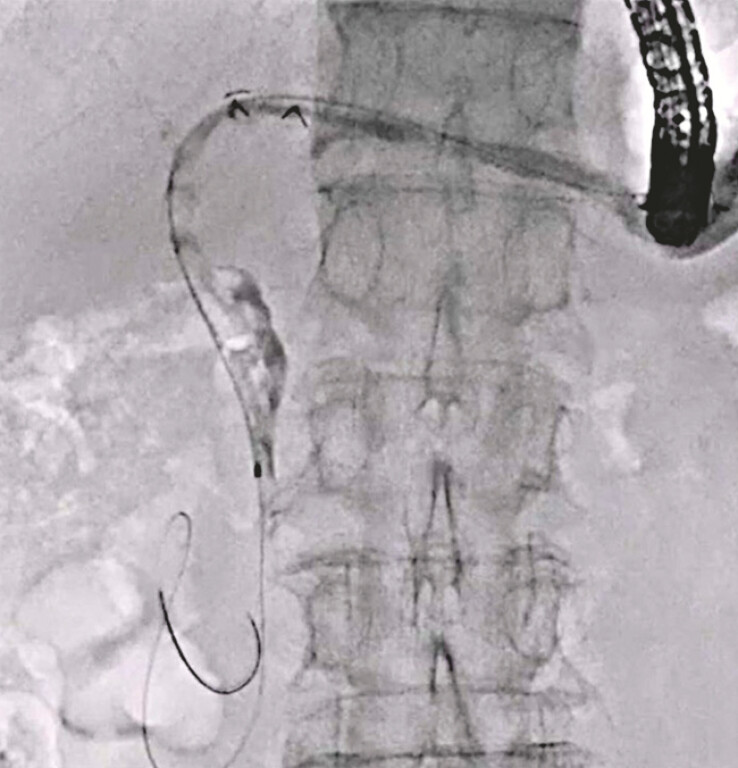 Fig. 2
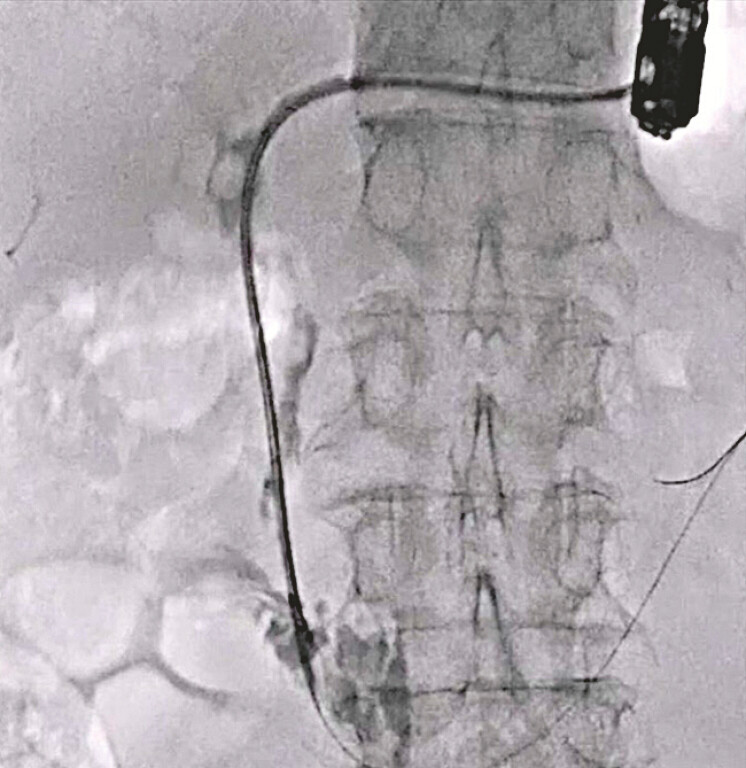 Fig. 3
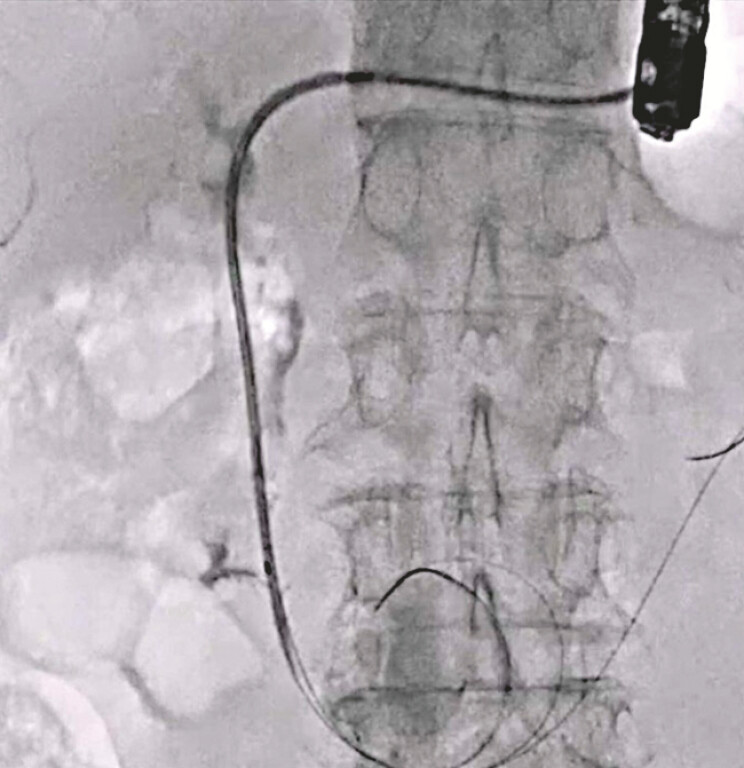 Fig. 4
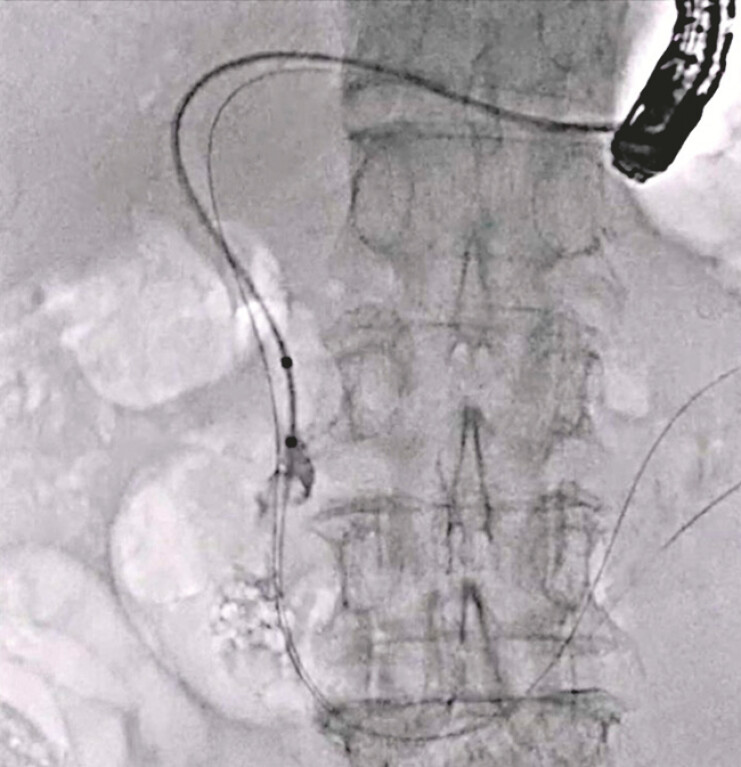 Fig. 5
Peer Reviews
No public reviews on file for this paper yet. If you reviewed it on a platform where reviews are public (OpenReview, ICLR, NeurIPS, ICML), you can paste yours below so the community can read it here.
Videos
No videos yet. Explain this paper in a talk, walkthrough, or lecture? Add one.
Taxonomy
TopicsGallbladder and Bile Duct Disorders · Landfill Environmental Impact Studies · Pediatric Hepatobiliary Diseases and Treatments
Antegrade stone removal via endoscopic ultrasound-guided hepaticogastrostomy (EUS-HGS) has been reported as an alternative technique after failed endoscopic retrograde cholangiopancreatography (ERCP 1 2 3 ). During antegrade stone removal, the pushing force exerted by the balloon catheter across the papilla into the intestine is important because, compared with transpapillary stone removal, this force may be insufficient. In addition, if the common bile duct is angulated, the pushing force can deviate from the correct axis needed to advance the balloon catheter. To overcome this issue, double guidewire deployment might be helpful because the combined stiffness of the guidewires provides better support. A novel double-lumen dilator (Meissa, Japan Lifeline, Tokyo, Japan) has recently been developed ( Fig. 1 ). The device has a 2.3-Fr tip and a maximum diameter of 7.4 Fr. An additional 0.025-inch guidewire can be inserted through a side hole located 2 cm from the tip. We herein describe technical tips for antegrade stone removal using double guidewire deployment with a double-lumen dilator.
The novel double-lumen dilator (Meissa, Japan Lifeline, Tokyo, Japan).
A 77-year-old man was admitted to our hospital for the treatment of a common bile duct stone. He had previously undergone distal gastrectomy with Roux-en Y reconstruction for distal gastric cancer. Because enteroscopic-guided ERCP was unsuccessful, EUS-HGS was performed using a metal stent, with antegrade stone removal attempted 10 days later. First, an ERCP catheter was inserted into the common bile duct through the mesh of the EUS-HGS stent, and a 0.025-inch guidewire was deployed across the papilla ( Fig. 2 ). After removal of the metal stent using a forceps biopsy device through the working channel of the endoscope, the double-lumen dilator was inserted to dilate the papilla ( Fig. 3 ). Subsequently, an additional 0.025-inch guidewire was deployed through the side hole of the dilator ( Fig. 4 ). The pushing force is effectively transmitted owing to the increased stiffness provided by the double guidewires, and the common bile duct is straightened by double guidewires, and dilator was removed. And then, antegrade stone extraction using a balloon catheter was then easily and successfully performed ( Fig. 5 , Video 1 ). Finally, a plastic stent was placed without any adverse events.
Guidewire deployment is attempted across the papilla.
The ampulla of Vater is dilated using the novel double-lumen dilator.
Additional guidewire deployment is performed.
Stone extraction is easily performed using the double guidewire technique.
Antegrade stone extraction is performed under the double guidewire technique using the novel double-lumen dilator.Video 1
In conclusion, this novel dilator facilitates both the double guidewire technique and dilation of the papilla.
Endoscopy_UCTN_Code_CCL_1AF_2AF_3AB Endoscopy_UCTN_Code_TTT_1AR_2AH Endoscopy_UCTN_Code_TTT_1AS_2AH
The reference list from the paper itself. Each links out to its DOI / PubMed record.
- 1Sato T Nakai Y Kogure HERCP using balloon-assisted endoscopes versus EUS-guided treatment for common bile duct stones in Roux-en-Y gastrectomy Gastrointest Endosc 20249919320310.1016/j.gie.2023.09.00137709151 · doi ↗ · pubmed ↗
- 2Nagai K Mukai S Abe M Long-term outcomes after EUS-guided antegrade intervention for benign bilioenteric anastomotic stricture Gastrointest Endosc 202499506010.1016/j.gie.2023.07.05237562548 · doi ↗ · pubmed ↗
- 3Ogura T Kawai J Nishiguchi K Transluminal intrahepatic bile duct stone removal using a novel spiral basket catheter via the endoscopic ultrasound-guided hepaticogastrostomy route (with video)Dig Endosc 20223423423734459031 10.1111/den.14121 · doi ↗ · pubmed ↗