Assessing the accuracy of 3D assistive technologies for surgical guidance of osteosarcoma resections: a comparative laboratory study of mixed reality, patient-specific instruments and freehand approaches
Jose Caceres-Alban, Dieter M. Lindskog, Johannes M. Sieberer, Alyssa Glennon, Steven M. Tommasini

TL;DR
This study compares the accuracy of mixed reality, patient-specific instruments, and freehand techniques for osteosarcoma resection in 3D-printed models to determine which method allows for the narrowest surgical margins.
Contribution
The study introduces a non-clinical comparison of mixed reality and patient-specific instrumentation for osteosarcoma resection accuracy.
Findings
Freehand resection had significantly higher cutting inaccuracy compared to mixed reality and patient-specific instruments.
Mixed reality and patient-specific instruments showed similar accuracy and required smaller surgical margins than freehand techniques.
Estimated margins for 99% tumor-free cuts were 15.9 mm (freehand), 6.2 mm (patient-specific), and 8.6 mm (mixed reality).
Abstract
The survival rate after surgical osteosarcoma resection is low, particularly when the sarcoma is not fully removed. Therefore, wide surgical margins are used in surgery, limiting how much bone can be salvaged. Patient-specific instrumentation (PSI) enables smaller margins, but utilization is low. Mixed reality-based techniques (MR) might be easier to implement. The purpose of this study was to compare the cutting accuracy of MR, PSI, and freehand techniques in 3D-printed osteosarcoma models and determine the corresponding technique-related minimal surgical margins. CT-scans of patients with extremity osteosarcoma were acquired, segmented, and the bones 3D-printed three times. Scans were excluded if they had low resolution or metal artifacts. Pre-surgical planning for full resection was conducted, and corresponding PSI and MR plans were created. Tumor resections were separately done via…
Genes, proteins, chemicals, diseases, species, mutations and cell lines named across the full text — each resolved to its canonical identifier and authoritative record.
Click any figure to enlarge with its caption.
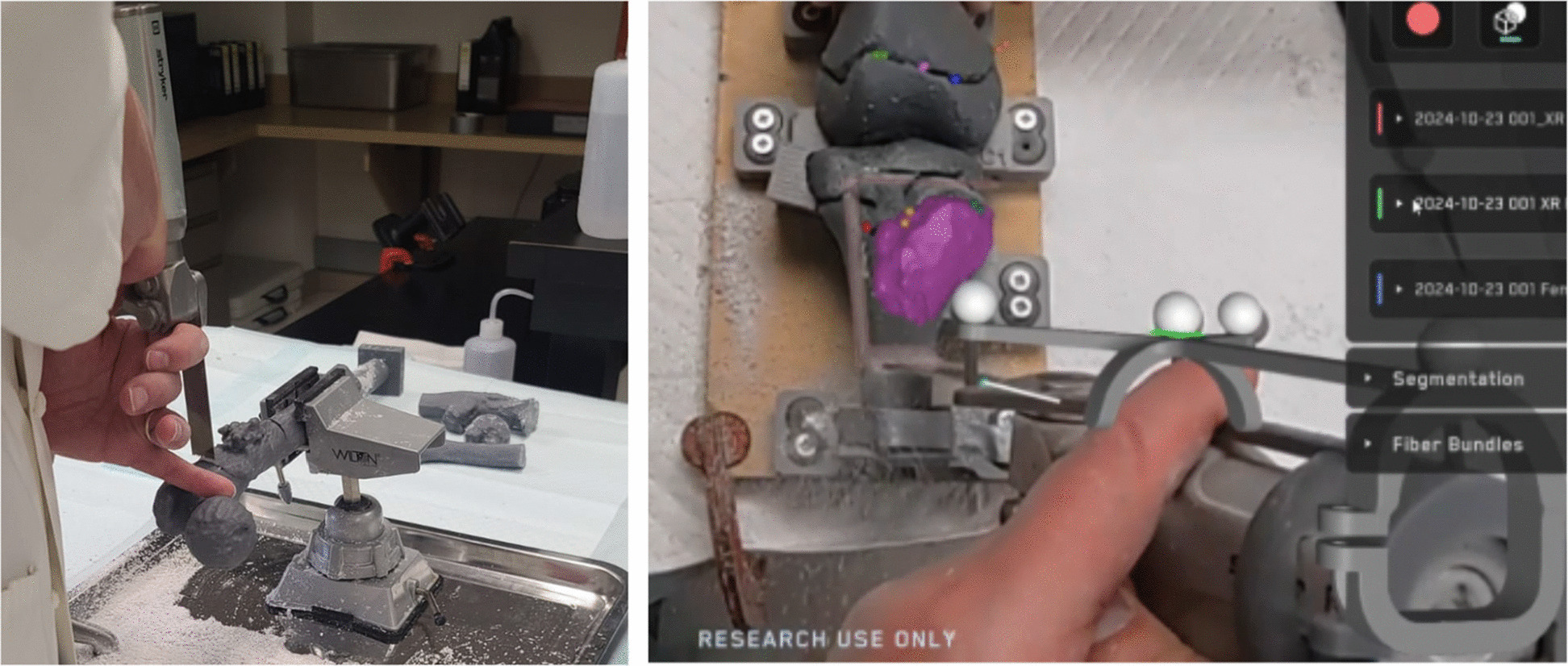 Figure 1
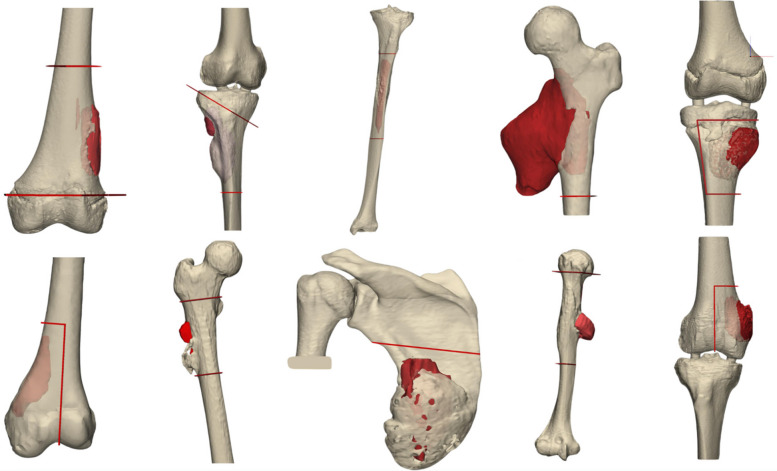 Figure 2
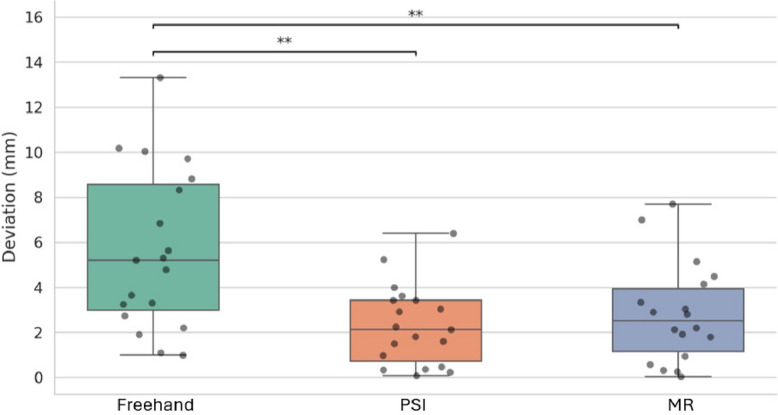 Figure 3
Peer Reviews
No public reviews on file for this paper yet. If you reviewed it on a platform where reviews are public (OpenReview, ICLR, NeurIPS, ICML), you can paste yours below so the community can read it here.
Videos
No videos yet. Explain this paper in a talk, walkthrough, or lecture? Add one.
Taxonomy
TopicsSurgical Simulation and Training · Sarcoma Diagnosis and Treatment · Anatomy and Medical Technology