Comparative effect of vortioxetine and sertraline on clinical and inflammatory profile in Parkinson’s disease with comorbid depression
Marika Alborghetti, Camilla Moliterni, Edoardo Bianchini, Domiziana Rinaldi, Daniela Caissutti, Antonella Capozzi, Fabiana Giada Radicati, Antonella Moschillo, Martina Marino, Isabella Berardelli, Marco Salvetti, Ferdinando Nicoletti, Roberta Misasi, Francesco Ernesto Pontieri

TL;DR
This study compares vortioxetine and sertraline in Parkinson’s disease patients with depression, finding vortioxetine more effective in improving symptoms and immune function.
Contribution
First evaluation of immunomodulatory effects of vortioxetine and sertraline in PD with comorbid depression.
Findings
Vortioxetine showed greater improvement in cognitive function, anxiety, anhedonia, and apathy compared to sertraline.
Vortioxetine had a restorative effect on CD40- and CD54-expressing dendritic cells, unlike sertraline.
Both drugs reduced myeloid dendritic cells, but only vortioxetine improved their function.
Abstract
Preclinical and clinical studies suggest that the multimodal antidepressant vortioxetine may offer a valuable therapeutic option in the treatment of depression associated with neurological disorders, including Parkinson’s disease (PD). To compare the effect of vortioxetine and the SSRI sertraline in the treatment of PD and comorbid depression, placing emphasis on peripheral inflammation markers. This is an observational longitudinal study. We have recruited 33 patients affected by PD with comorbid depression, evaluated for motor and non-motor symptoms, depression, and peripheral and soluble markers of inflammation at baseline and at the end of antidepressant treatment. Patients were divided into two groups treated with either vortioxetine (10–20 mg/day) or sertraline (50 mg/day) for 4 months. A group of 12 healthy controls was also used for comparative purposes. At baseline PD…
Genes, proteins, chemicals, diseases, species, mutations and cell lines named across the full text — each resolved to its canonical identifier and authoritative record.
Click any figure to enlarge with its caption.
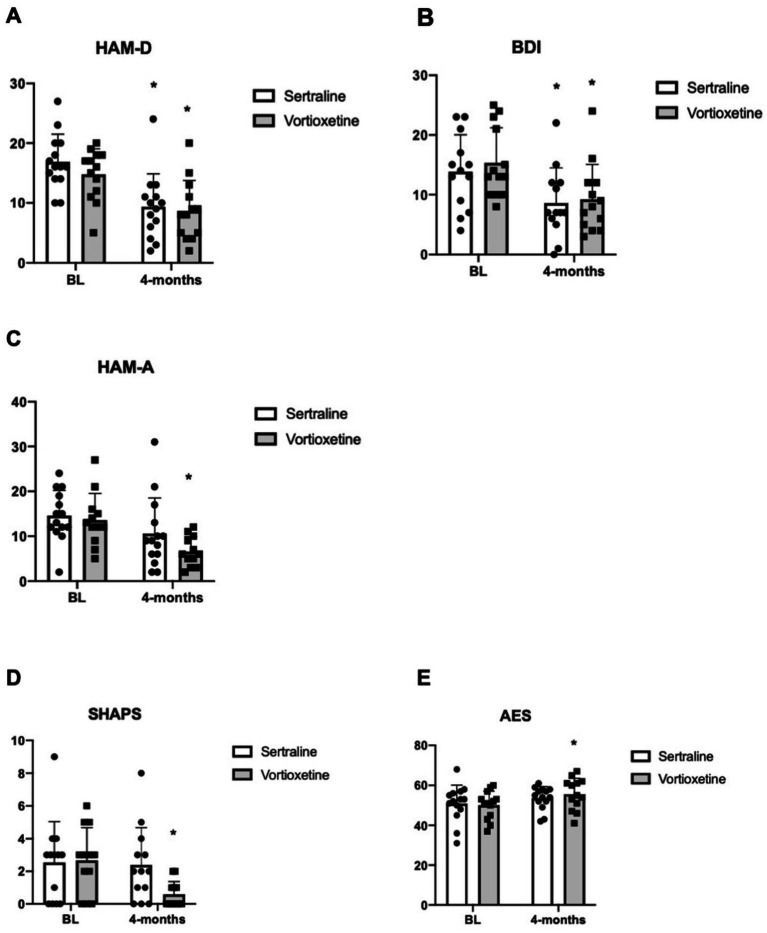 Figure 1
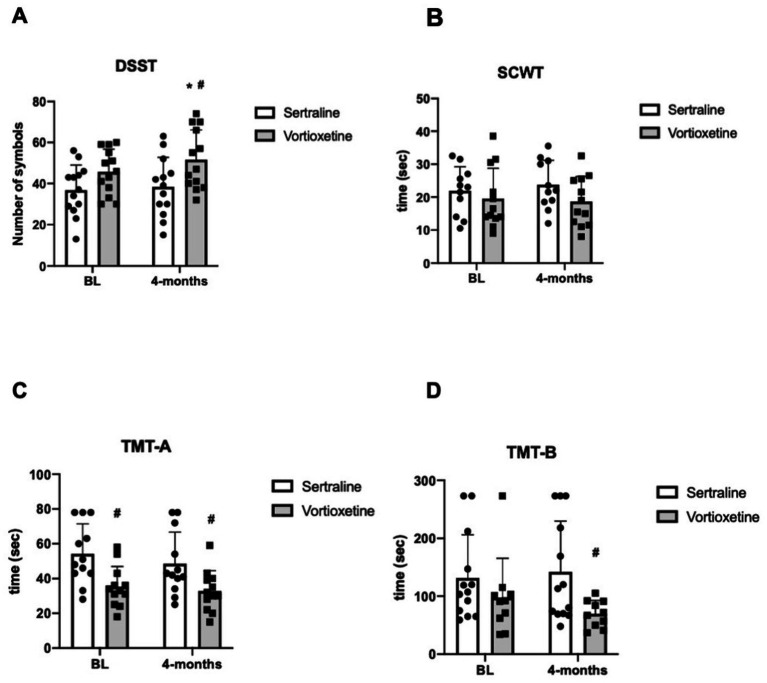 Figure 2
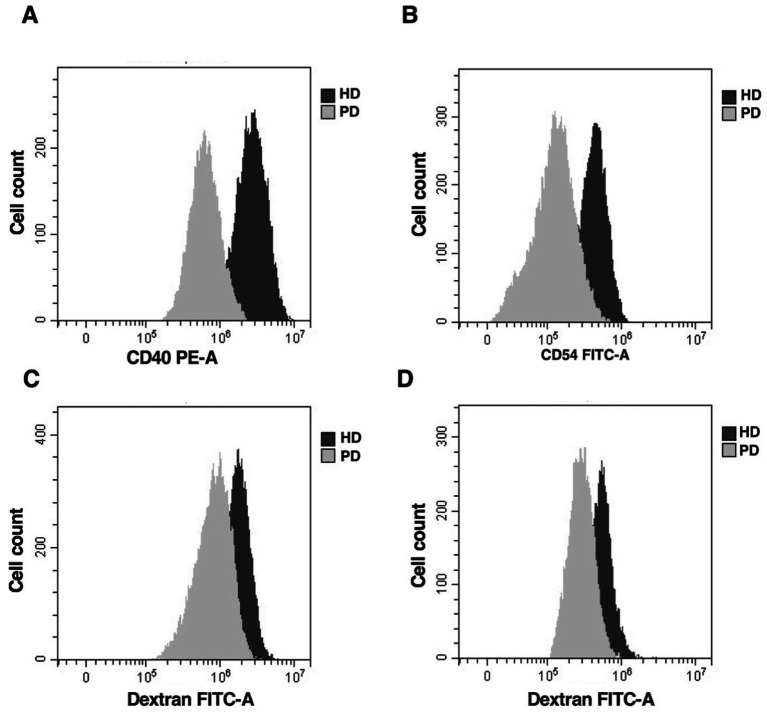 Figure 3
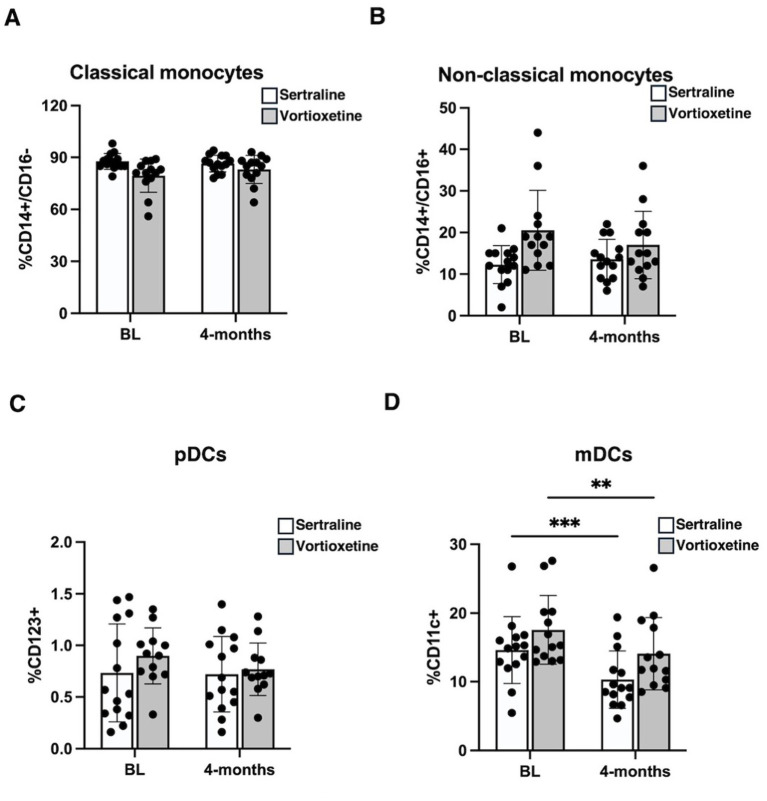 Figure 4
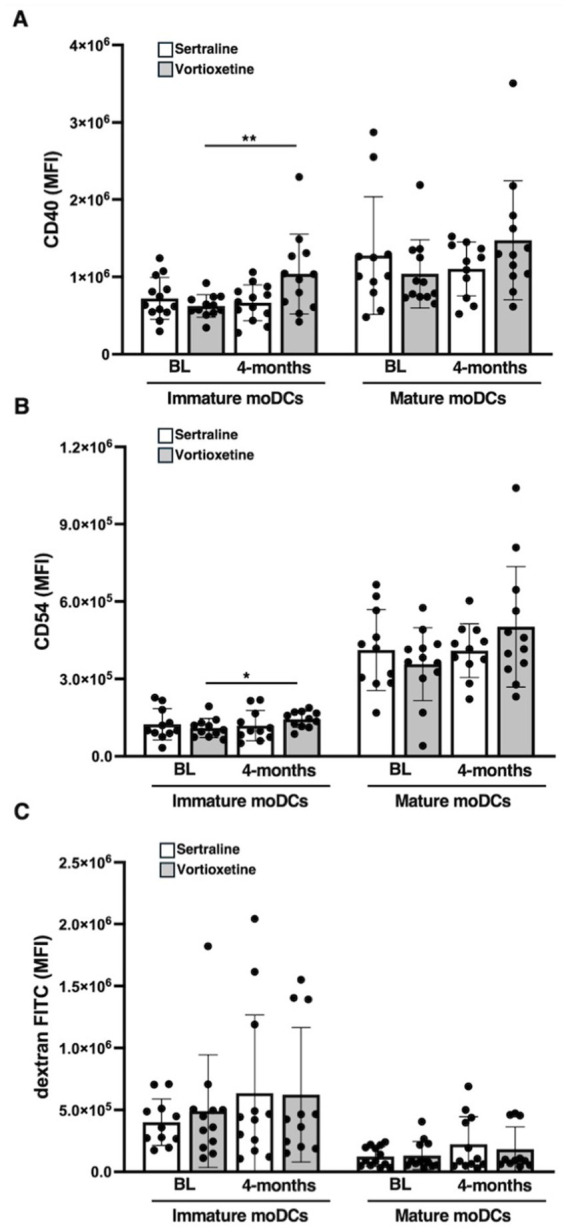 Figure 5
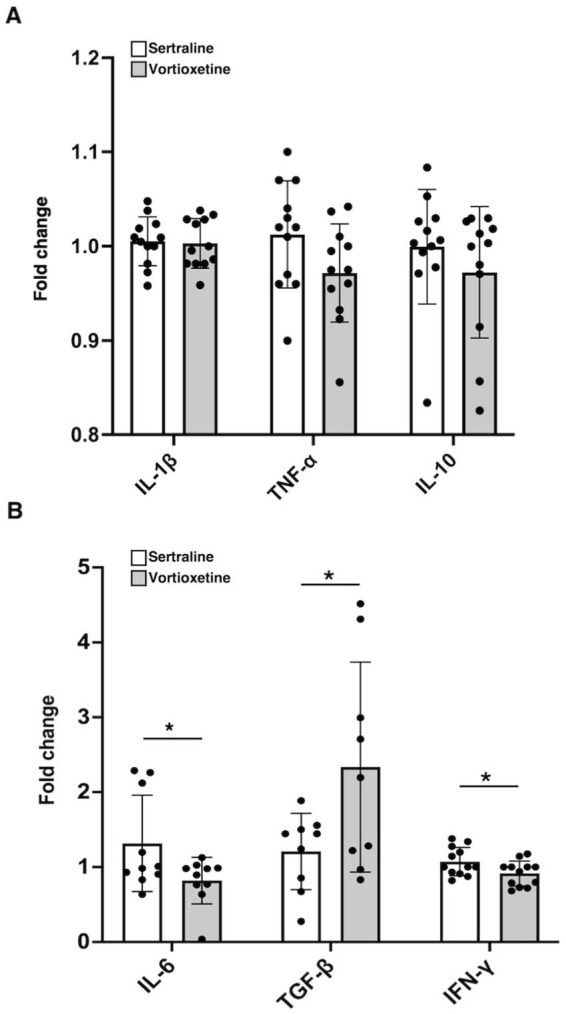 Figure 6
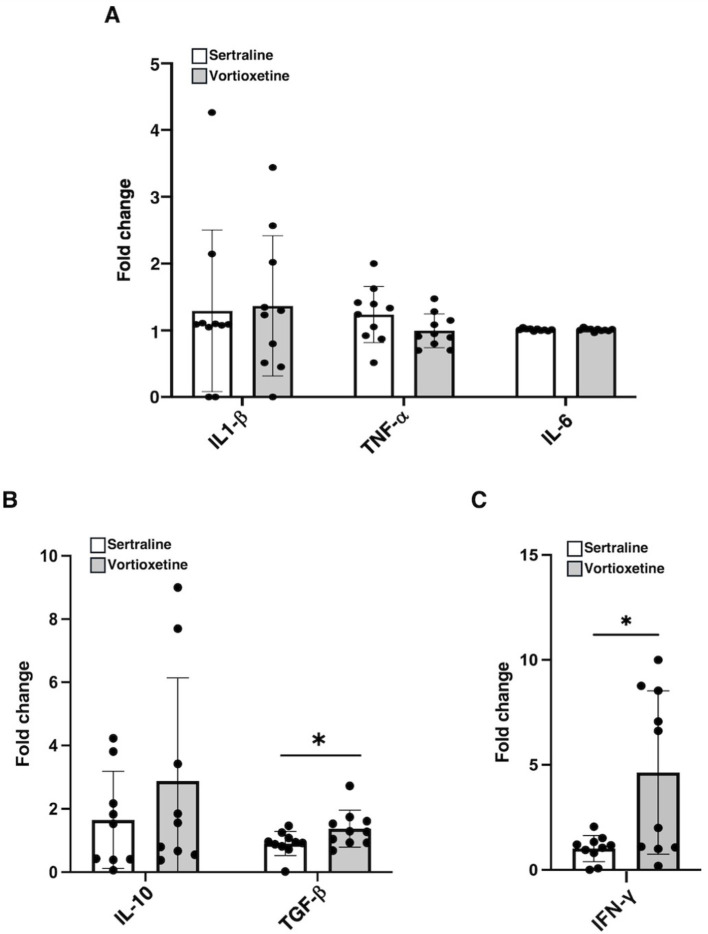 Figure 7
Peer Reviews
No public reviews on file for this paper yet. If you reviewed it on a platform where reviews are public (OpenReview, ICLR, NeurIPS, ICML), you can paste yours below so the community can read it here.
Videos
No videos yet. Explain this paper in a talk, walkthrough, or lecture? Add one.
Taxonomy
TopicsTryptophan and brain disorders · Treatment of Major Depression · Immune cells in cancer