Renal clearance of endogenous lithium as a marker of proximal tubule function in sepsis and sepsis-associated acute kidney injury: A prospective single-centre study
Kjellbjørn Jakobsen, Hendrik Backmann, Njål Gunnar Nicolaysen, Rasmus Zahn, Sandra Huber, Vegard Skogen, Anders Benjamin Kildal, Lars Marius Ytrebø

TL;DR
This study shows that measuring lithium clearance in urine can reveal early kidney dysfunction in sepsis patients.
Contribution
The study introduces endogenous lithium clearance as a novel biomarker for proximal tubule function in sepsis-associated acute kidney injury.
Findings
Fractional excretion of lithium was significantly higher in SA-AKI patients compared to sepsis-only patients.
Lithium clearance indicates impaired proximal tubule sodium reabsorption in SA-AKI.
Results were consistent even when excluding patients receiving diuretics.
Abstract
Critically ill patients are at high risk of developing acute kidney injury (AKI). Precise functional biomarkers may be useful for monitoring renal tubular function in patients at risk of sepsis-associated AKI (SA-AKI) and to study its pathophysiology in vivo in humans. Lithium is passively reabsorbed in parallel with, and in proportion to, the reabsorption of sodium and water in the proximal tubule. The unreabsorbed fraction is almost entirely excreted in urine, and the fractional excretion of lithium thus provides a semiquantitative estimate of proximal sodium reabsorption. We hypothesized that endogenous lithium reabsorption is impaired in the early stages of SA-AKI. The aim of study was to measure renal clearance of endogenous lithium in patients with SA-AKI and in patients with sepsis without AKI. Ten patients with SA-AKI and eight patients with non-AKI sepsis were studied, all…
Genes, proteins, chemicals, diseases, species, mutations and cell lines named across the full text — each resolved to its canonical identifier and authoritative record.
Click any figure to enlarge with its caption.
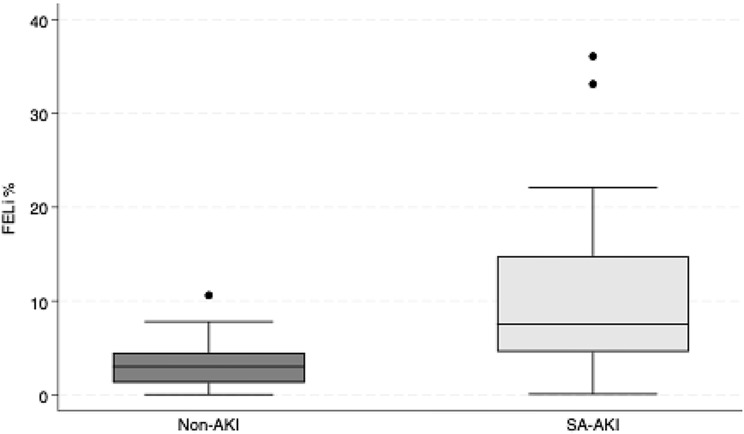 Figure 1
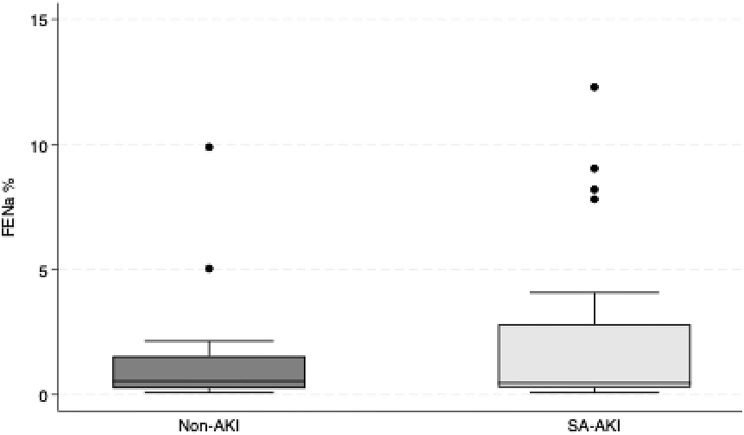 Figure 2
 Figure 3
Peer Reviews
No public reviews on file for this paper yet. If you reviewed it on a platform where reviews are public (OpenReview, ICLR, NeurIPS, ICML), you can paste yours below so the community can read it here.
Videos
No videos yet. Explain this paper in a talk, walkthrough, or lecture? Add one.
Taxonomy
TopicsAcute Kidney Injury Research · Dialysis and Renal Disease Management · Electrolyte and hormonal disorders