Epidemiological characteristics and public health responses against measles in the Ottoman empire and the early Turkish Republic
Ayşe Erkmen, N. Tüzün, O Erkmen

TL;DR
This paper examines the spread and public health responses to measles in the Ottoman Empire and early Turkish Republic, revealing high child mortality and early disease control measures.
Contribution
The study provides the first detailed historical analysis of measles epidemiology and public health interventions in the Ottoman Empire and early Turkish Republic.
Findings
Measles had high child mortality rates in both the Ottoman Empire and early Turkish Republic.
Public health measures like quarantine and isolation were used in these periods, similar to modern practices.
Under-reporting was common due to administrative disruptions and warfare in the Ottoman period.
Abstract
Measles is an infectious disease that affects mostly children. It is caused by the measles morbillivirus, which can be spread through inhalation and direct contact with the patient. There are insufficient literary documents on the prevalence of measles in the Ottoman Empire; its seasonal variation, the public health responses and epidemiological changes it caused. This study reviews archival documents from the Ottoman Empire and the Turkish Republic Archives, alongside relevant literature, to investigate measles cases, mortality patterns, seasonal distribution and public health interventions between the 18th century and 1938. The analysis focuses on quantifiable epidemiological data and recorded official measures such as quarantine, school closures, disinfection practices, and isolation protocols. A total of 2716 people had measles in the Ottoman Empire, 462 (17.0%) of whom died.…
Genes, proteins, chemicals, diseases, species, mutations and cell lines named across the full text — each resolved to its canonical identifier and authoritative record.
Click any figure to enlarge with its caption.
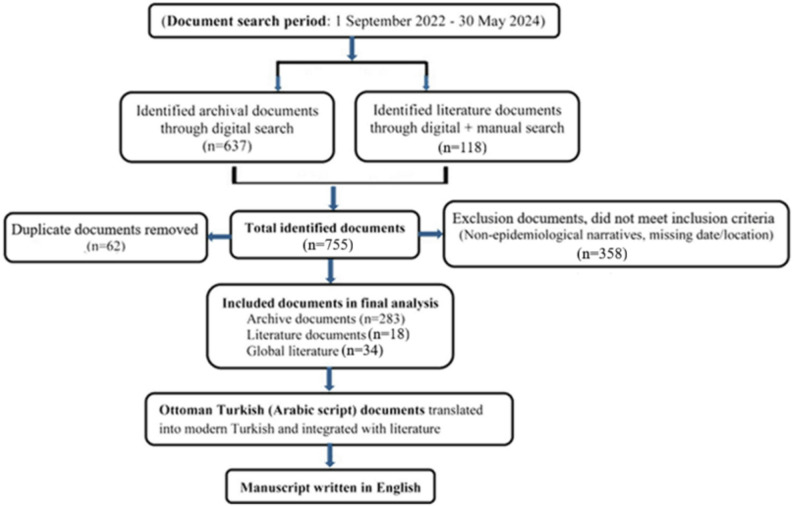 Figure 1
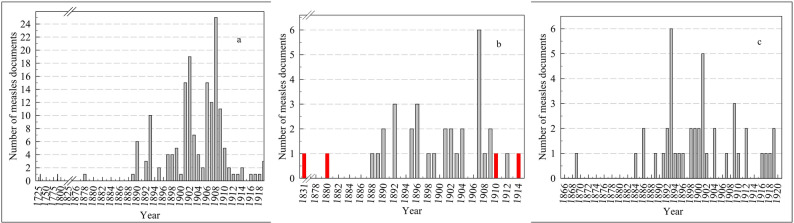 Figure 2
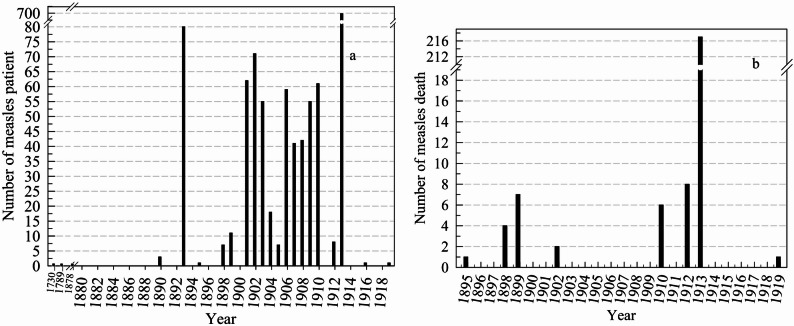 Figure 3
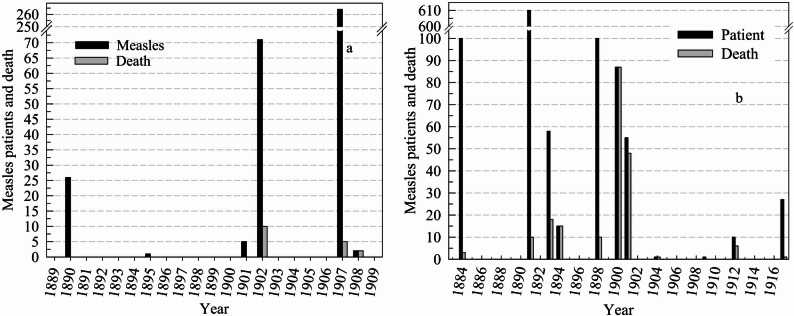 Figure 4
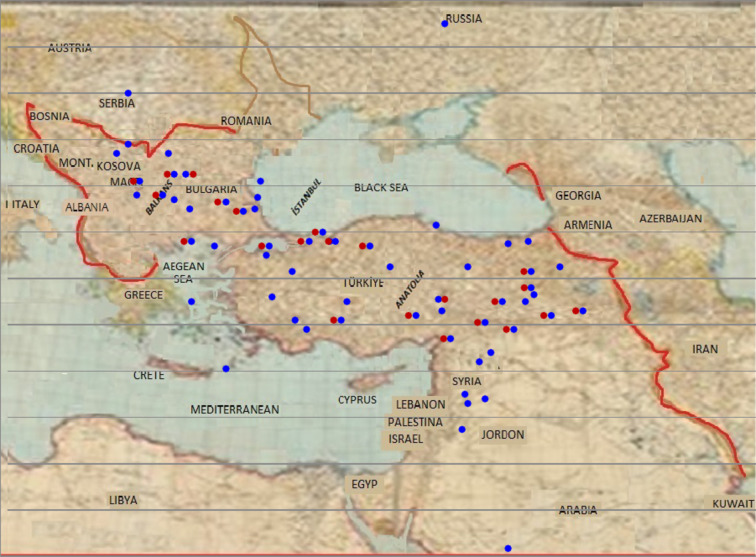 Figure 5
Peer Reviews
No public reviews on file for this paper yet. If you reviewed it on a platform where reviews are public (OpenReview, ICLR, NeurIPS, ICML), you can paste yours below so the community can read it here.
Videos
No videos yet. Explain this paper in a talk, walkthrough, or lecture? Add one.
Taxonomy
TopicsOttoman and Turkish Studies · Yersinia bacterium, plague, ectoparasites research · Zoonotic diseases and public health