Encoding of odor information and reward anticipation in anterior cortical amygdaloid nucleus
Kazuki Shiotani, Yuta Tanisumi, Junya Hirokawa, Yoshio Sakurai, Hiroyuki Manabe

TL;DR
This study explores how the anterior cortical amygdaloid nucleus processes odor information and reward anticipation during a task involving water reward.
Contribution
The paper identifies two types of neurons in the ACo with distinct reward anticipation patterns and their role in behavioral learning.
Findings
ACo neurons show go cue-preferred activity during late-phase nose-poking.
Two types of ACo neurons exhibit either gradual or phasic reward anticipation.
Phasic-type neurons also respond to go cues, linking odor information with reward anticipation.
Abstract
Olfactory information directly reaches the amygdala through the olfactory cortex, without the involvement of thalamic areas, unlike other sensory systems. The anterior cortical amygdaloid nucleus (ACo) is one of the olfactory cortices that receives olfactory sensory input and is part of the olfactory cortical amygdala, which relays olfactory information to the amygdala. To examine its electrophysiological features, we recorded individual ACo neurons during the odor-guided go/no-go task to obtain a water reward. Many ACo neurons exhibited odor-evoked go cue-preferred activity during the late phase of nose-poking supporting the population dynamics that differentiate go/no-go responses before executing the odor-evoked behaviors. We observed two types of neurons with different anticipation signals: one neuron type exhibited gradual increases of activity toward reward delivery, while another…
Genes, proteins, chemicals, diseases, species, mutations and cell lines named across the full text — each resolved to its canonical identifier and authoritative record.
Click any figure to enlarge with its caption.
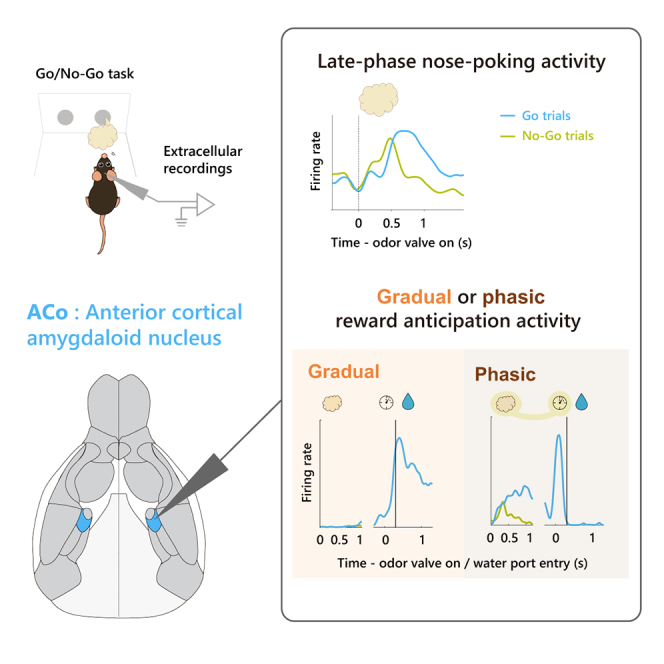 Figure 1
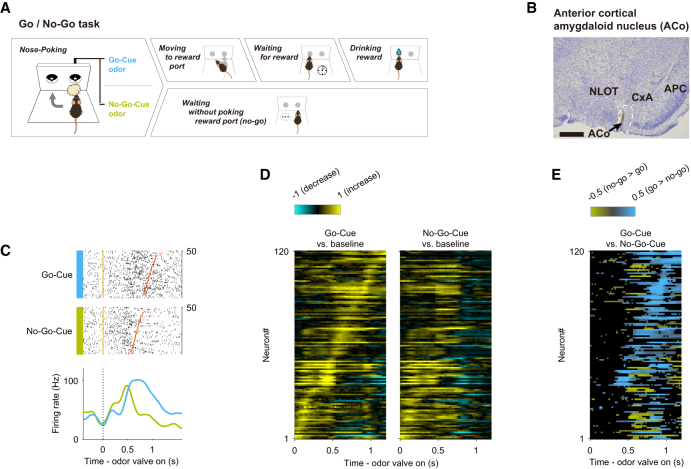 Figure 2
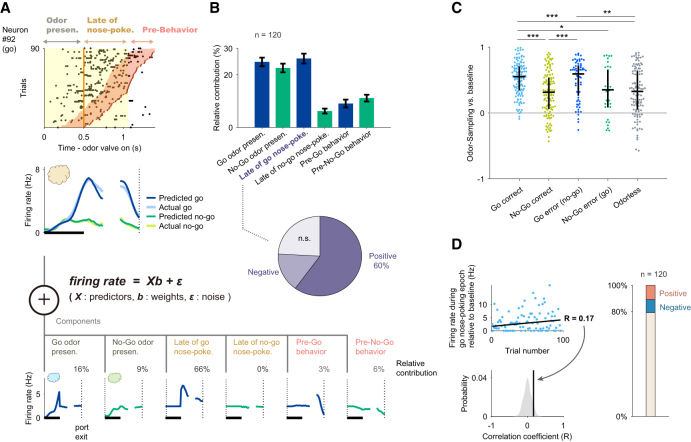 Figure 3
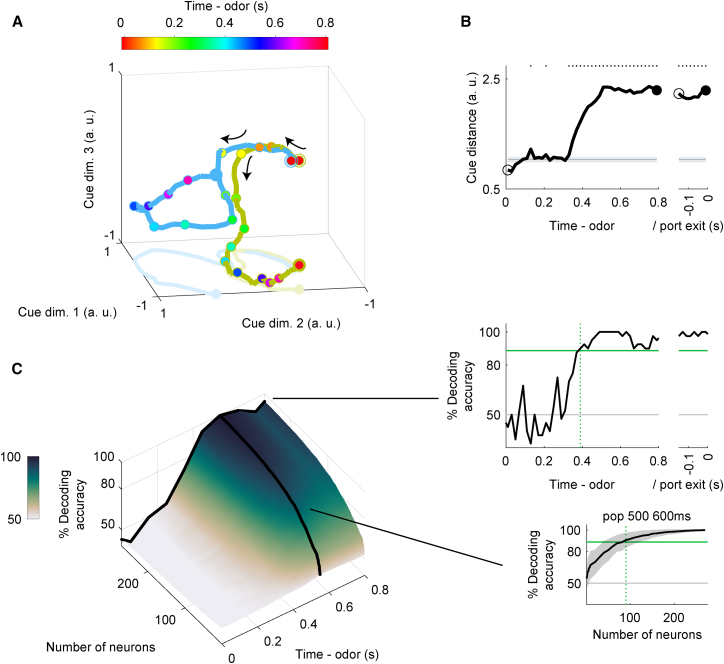 Figure 4
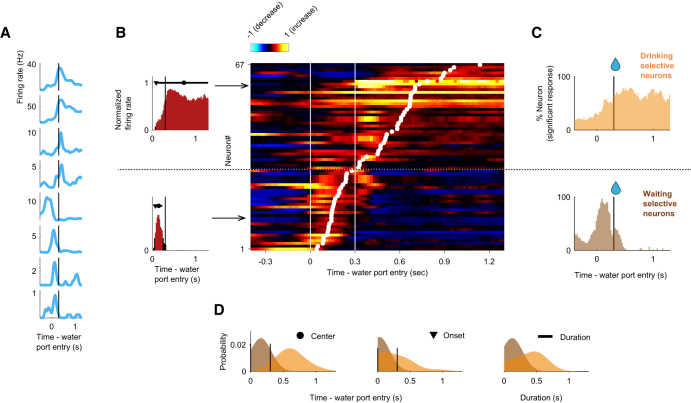 Figure 5
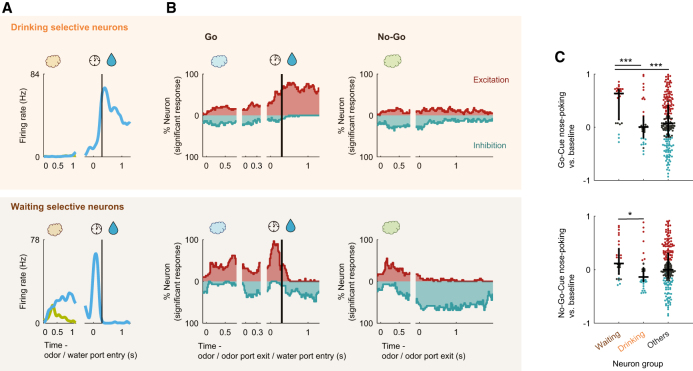 Figure 6
Peer Reviews
No public reviews on file for this paper yet. If you reviewed it on a platform where reviews are public (OpenReview, ICLR, NeurIPS, ICML), you can paste yours below so the community can read it here.
Videos
No videos yet. Explain this paper in a talk, walkthrough, or lecture? Add one.
Taxonomy
TopicsOlfactory and Sensory Function Studies · Neurobiology and Insect Physiology Research · Memory and Neural Mechanisms