Prevalence of abnormal uterine bleeding and quality of life after venous thromboembolism by oral anticoagulant use: the GENB-OAC Study
Gabrielle Sarlon-Bartoli, Barbara Leclercq, Nathalie Trillot, Isabelle Mahé, Marie Daoud-Elias, Andrea Buchmuller, Geraldine Poenou, Antoine Elias, Jean Noel Poggi, Francis Couturaud, Noemie Resseguier, Martin Postzich, Lylia Hammoudi, Yasmine Benredouane, Florence Bretelle

TL;DR
This study finds that oral anticoagulants increase abnormal uterine bleeding and reduce quality of life in women of reproductive age, with apixaban causing less bleeding than other anticoagulants.
Contribution
The study compares the impact of different oral anticoagulants on abnormal uterine bleeding and quality of life in reproductive-age women.
Findings
Oral anticoagulants significantly increase abnormal uterine bleeding compared to controls.
Apixaban is associated with less abnormal uterine bleeding than rivaroxaban or vitamin K antagonists.
Quality of life is lower in women using oral anticoagulants compared to controls.
Abstract
Anticoagulants cause abnormal uterine bleeding (AUB) in women of reproductive age with venous thromboembolism, but the safety profiles of oral anticoagulants (OACs) in this setting are unclear. To analyze and compare the prevalence of AUB and quality of life (QoL) in 4 groups (rivaroxaban, apixaban, vitamin K antagonists [VKAs], and controls). The GENital Bleeding Oral AntiCoagulant (GENB-OAC) study was a national, multicenter, observational, cross-sectional study conducted in 10 French hospitals from 2018 to 2022. The primary outcome was the proportion of women with major genital bleeding and/or clinically relevant non-major genital bleeding and/or pictorial blood loss assessment chart score >100. Overall, 445 women were included: 122 on apixaban, 123 on rivaroxaban, 81 taking VKAs, and 119 healthy controls. The primary genital bleeding endpoint was significantly higher in OAC vs…
Genes, proteins, chemicals, diseases, species, mutations and cell lines named across the full text — each resolved to its canonical identifier and authoritative record.
Click any figure to enlarge with its caption.
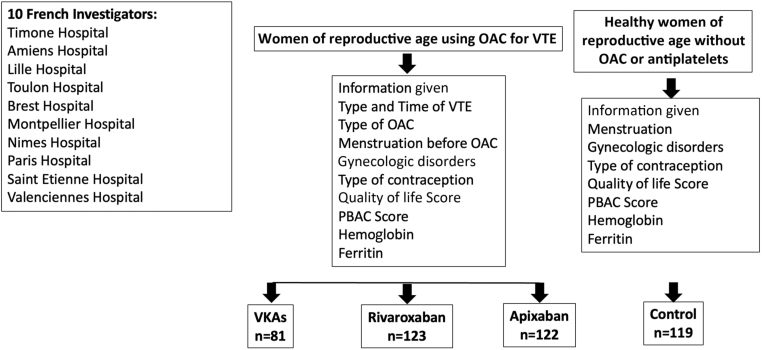 Figure 1
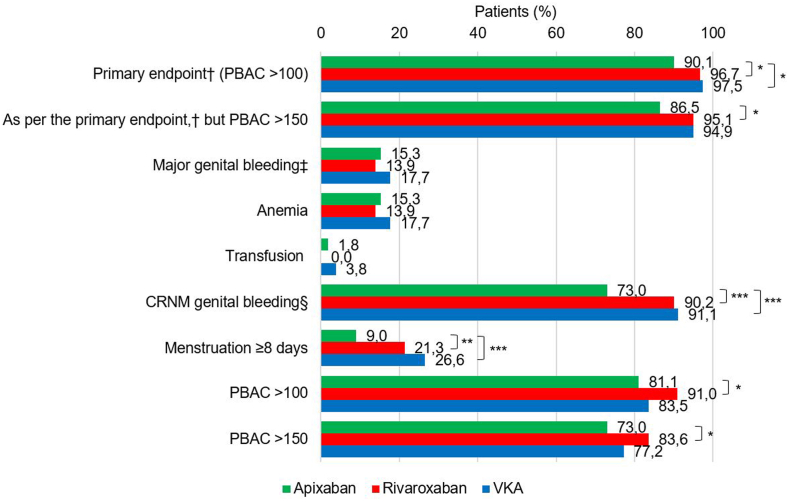 Figure 2
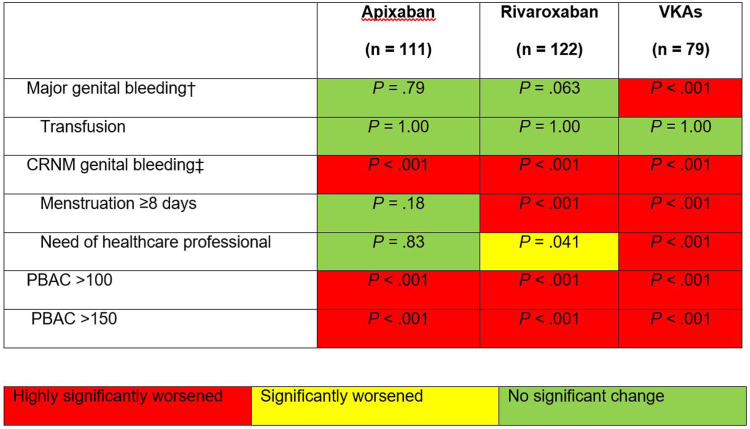 Figure 3
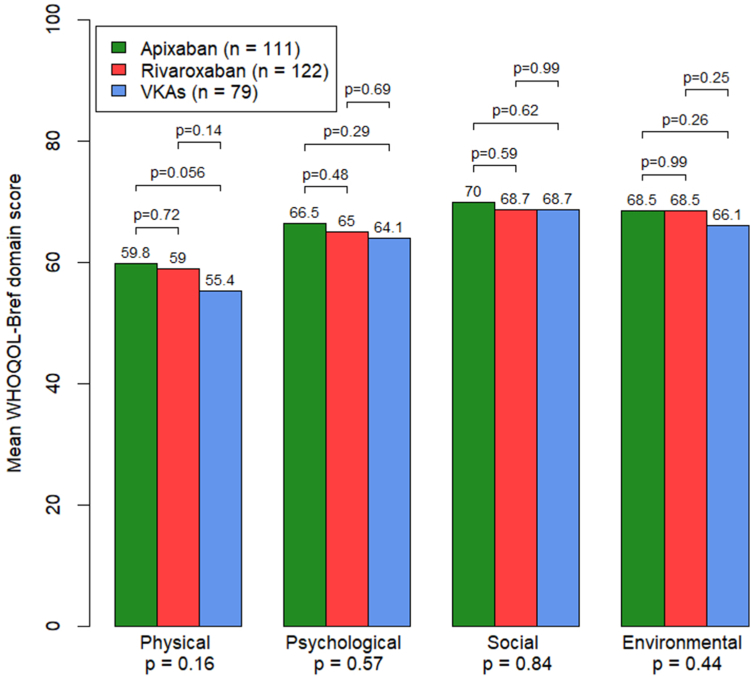 Figure 4
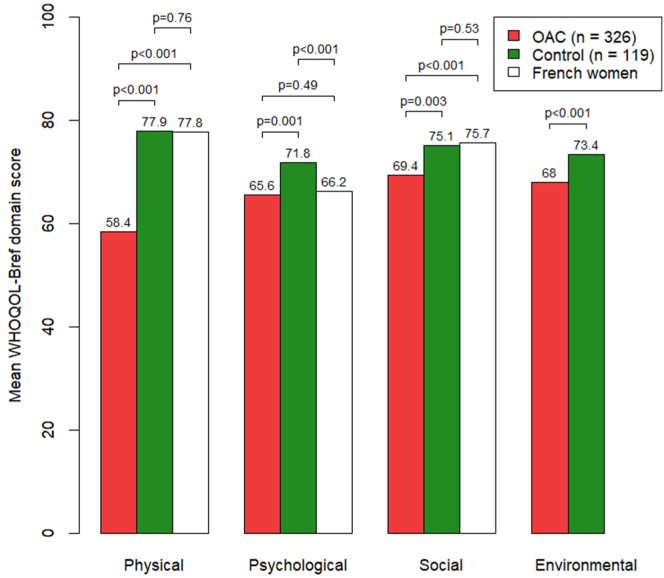 Figure 5
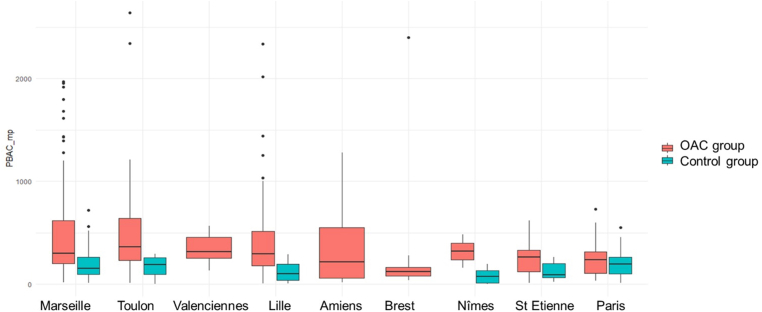 Figure 6
Peer Reviews
No public reviews on file for this paper yet. If you reviewed it on a platform where reviews are public (OpenReview, ICLR, NeurIPS, ICML), you can paste yours below so the community can read it here.
Videos
No videos yet. Explain this paper in a talk, walkthrough, or lecture? Add one.
Taxonomy
TopicsBlood Coagulation and Thrombosis Mechanisms · Maternal and fetal healthcare · Venous Thromboembolism Diagnosis and Management