Role of Side-Chain Length and Counterion Mediation on Dimerization of Rigid Sphere-Rod Amphiphiles: A Molecular Dynamics Investigation
Farzad Toiserkani, Yifan Zhou, Abdol Hadi Mokarizadeh, Javad Tamnanloo, Tianbo Liu, Mesfin Tsige

TL;DR
This paper uses molecular dynamics to study how side-chain length and counterions affect the dimerization of rigid sphere-rod amphiphiles in mixed solvents.
Contribution
The study reveals how hydrophobic interactions and counterion mediation stabilize dimerization despite electrostatic repulsion.
Findings
Longer side chains enhance hydrophobic rod/side-chain interactions, strengthening dimer stability.
TBA+ counterions screen electrostatic repulsion between Keggins, enabling stable dimer formation.
Solvent reorganizes cooperatively, with water depletion in rod gaps and THF accumulation on hydrophobic surfaces.
Abstract
Rigid sphere-rod amphiphiles (RSRAs) comprising a Keggin polyoxometalate (POM) headgroup and an oligofluorene rod with different side chain lengths (C2, C6, C10, C16, are the number of carbon atoms per side chain) were probed by all-atom molecular dynamics in THF/water mixtures (15 and 33 vol % THF) with tetrabutylammonium (TBA+) counterions to elucidate the molecular origins of dimerization. Despite strong Keggin-Keggin electrostatic repulsion, stable dimers form through a synergy of (i) hydrophobic rod/side-chain interaction that strengthens with side-chain length and (ii) counterion-mediated attraction by TBA+, which localizes near the Keggins to screen electrostatic repulsion. Packing evolves from near-parallel rods for short chains to interdigitated, tilted arrangements for long chains, while solvent reorganizes cooperatively. Water is depleted from the inter-rod gap, while…
Genes, proteins, chemicals, diseases, species, mutations and cell lines named across the full text — each resolved to its canonical identifier and authoritative record.
Click any figure to enlarge with its caption.
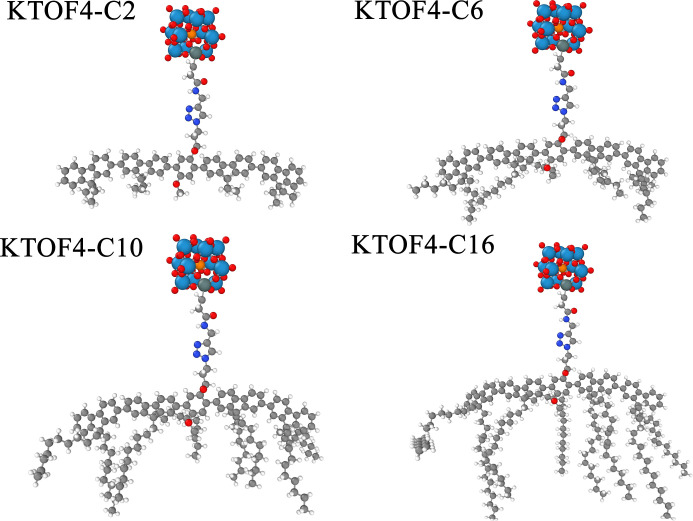 Figure 1
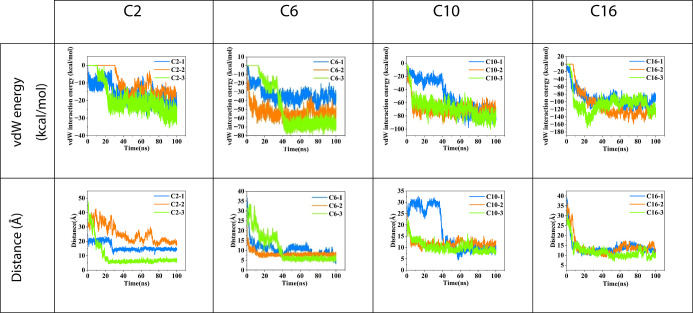 Figure 2
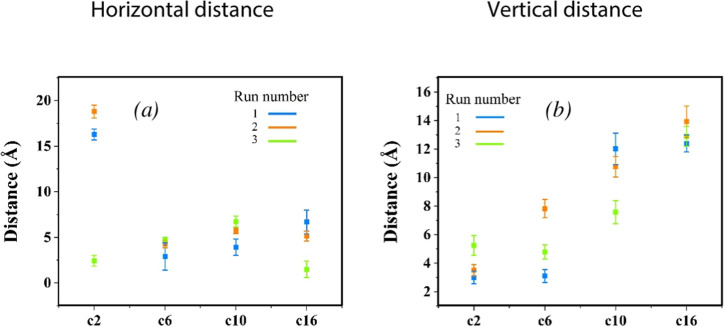 Figure 3
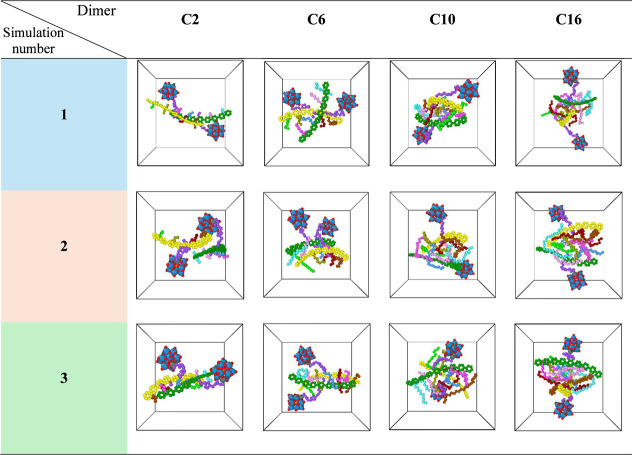 Figure 4
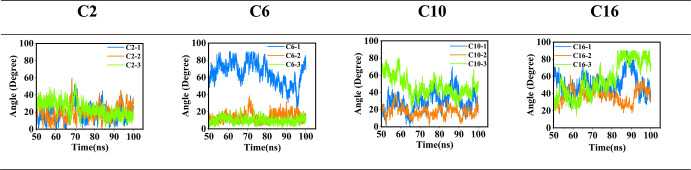 Figure 5
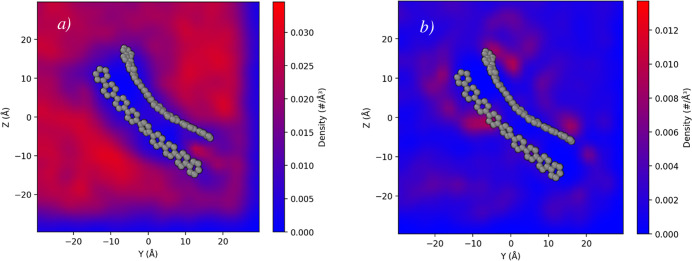 Figure 6
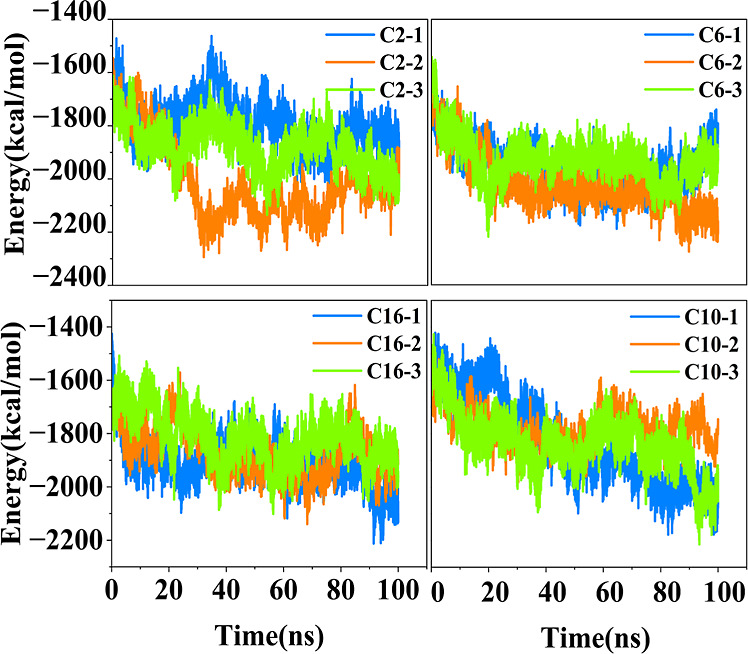 Figure 7
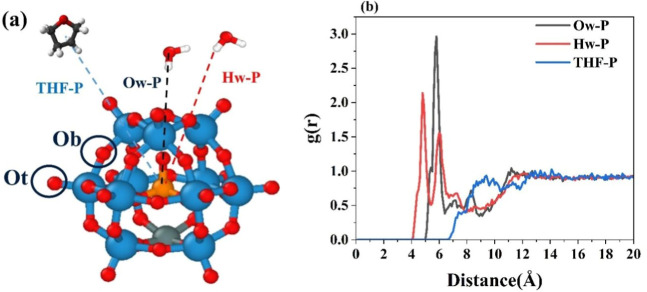 Figure 8
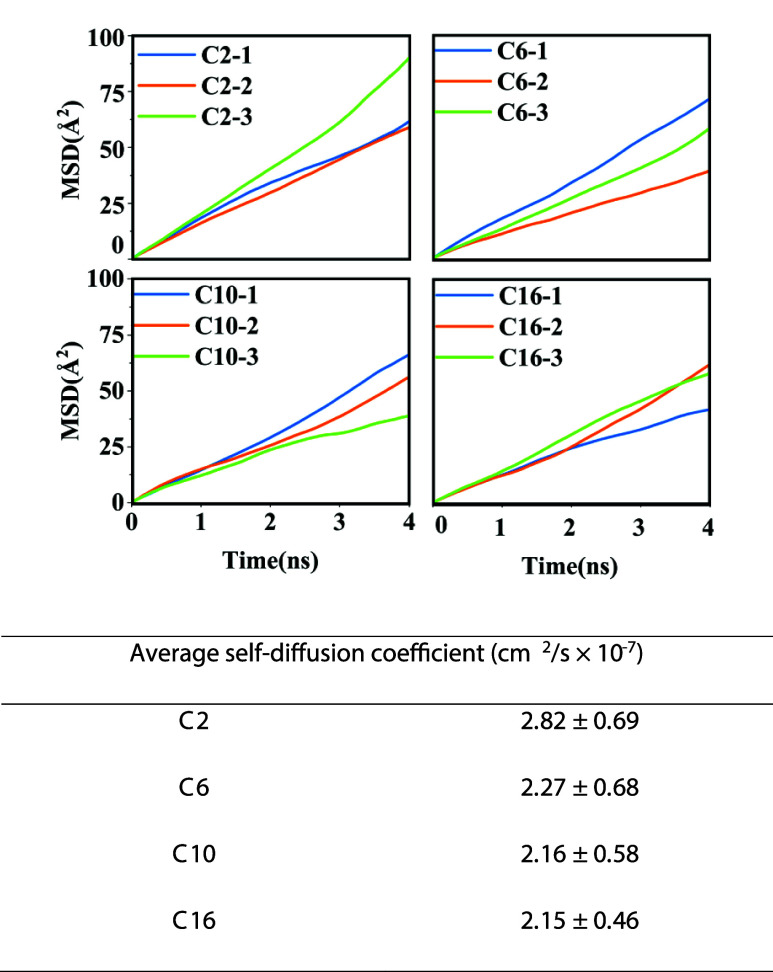 Figure 9
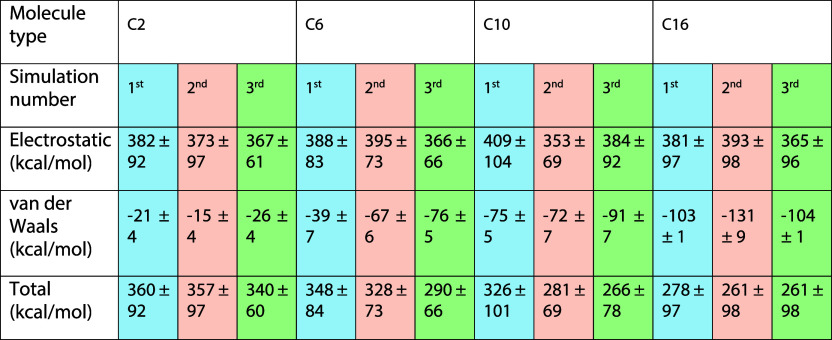 Figure 10
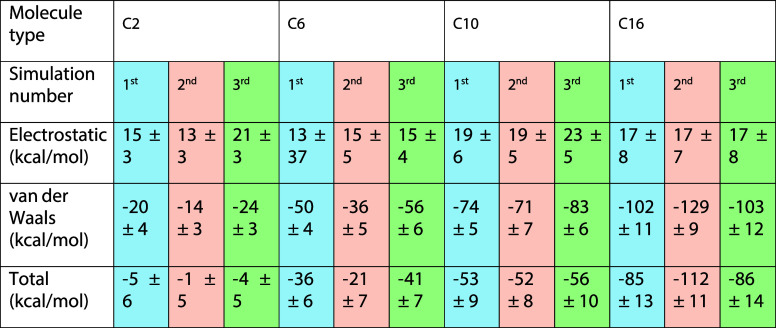 Figure 11
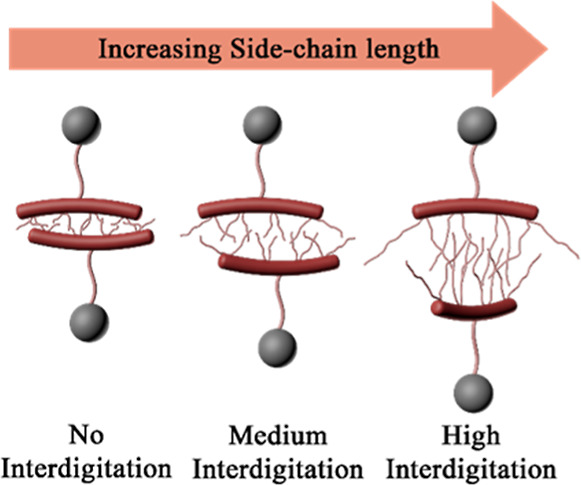 Figure 12
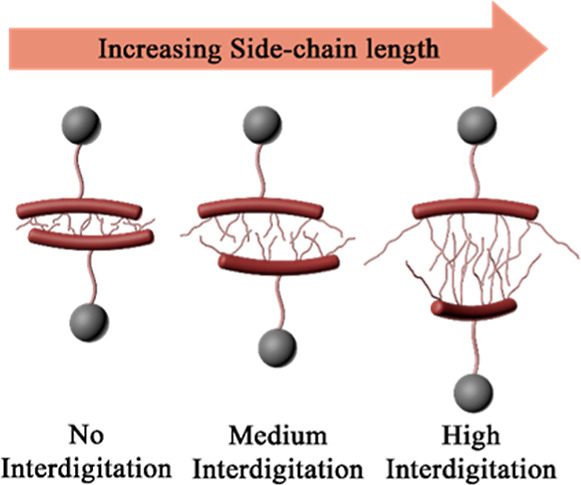 Figure 13
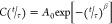 Figure 14
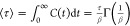 Figure 15
Peer Reviews
No public reviews on file for this paper yet. If you reviewed it on a platform where reviews are public (OpenReview, ICLR, NeurIPS, ICML), you can paste yours below so the community can read it here.
Videos
No videos yet. Explain this paper in a talk, walkthrough, or lecture? Add one.
Taxonomy
TopicsPolyoxometalates: Synthesis and Applications · Pickering emulsions and particle stabilization · Surfactants and Colloidal Systems