Associations between Water Supply Interruptions and Water Use, Drinking Water Quality, Child Health, and Caregiver Stress in Peri-Urban Malawi
Caitlin G. Niven, Benjamin Clark, Emily Floess, Blessings Chirwa, Monica Matekenya, Emma Budden, Stella Cadono, John Chavula, Victor Chisamanga, Aubrey Dzinkambani, Chisomo Kaponda, Neema Ngondo, Norah Patterson, Sheena Symon, Brighton A. Chunga, Rochelle H. Holm

TL;DR
This study explores how water supply interruptions in Malawi affect water use, water quality, child health, and caregiver stress, finding significant associations with diarrhea, respiratory infections, and antibiotic use.
Contribution
The study quantifies previously unmeasured health risks (like respiratory infections and antibiotic use) linked to water supply interruptions in a low-resource setting.
Findings
Households with water interruptions were 3−5 times more likely to be water-insecure and skip hygiene practices.
Children under 5 in households with interruptions had higher rates of caregiver-reported diarrhea and respiratory infections.
Water interruption frequency and duration were linked to distinct health outcomes, including increased antibiotic use and stress.
Abstract
Interrupted water supplies contribute to water insecurity, water quality risks, diarrhea, and stress; other risks (acute respiratory infections (ARIs), antibiotic use, antimicrobial resistance) remain unquantified. We assessed associations between water interruptions and various outcomes. Among 237 households in Malawi, we conducted a cross-sectional questionnaire and tested drinking water for generic and cefotaxime-resistant Escherichia coli (CREC). Water interruptions in the past month were reported by 32.5% of households; interruptions were unpredictable and more common in piped supplies. Households with interruptions were 3−5 times more likely to be water-insecure, skip laundry and handwashing after handling animal feces (p-values < 0.05). Most water samples came from storage, and 65.7% harbored E. coli and 8.4% harbored CREC; households with vs without interruptions had similar…
Genes, proteins, chemicals, diseases, species, mutations and cell lines named across the full text — each resolved to its canonical identifier and authoritative record.
Click any figure to enlarge with its caption.
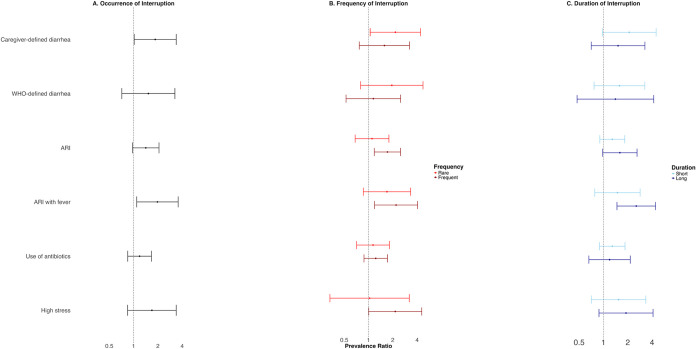 Figure 1
 Figure 2
 Figure 3
Peer Reviews
No public reviews on file for this paper yet. If you reviewed it on a platform where reviews are public (OpenReview, ICLR, NeurIPS, ICML), you can paste yours below so the community can read it here.
Videos
No videos yet. Explain this paper in a talk, walkthrough, or lecture? Add one.
Taxonomy
TopicsChild Nutrition and Water Access · Fecal contamination and water quality · Water Treatment and Disinfection