Seasonal Shift in Exposure and Accumulation of PFAS and Heavy Metals in High Arctic Reindeer
Malin Andersson Stavridis, Tove Petersson, Görkem Deniz Kendir, Shannen Sait, Øyvind Mikkelsen, Vebjørn Veiberg, Tomasz Maciej Ciesielski, Bjørn Munro Jenssen

TL;DR
This study finds that reindeer in the Arctic have higher levels of certain pollutants in autumn, likely due to seasonal foraging and long-range transport of contaminants.
Contribution
The study provides new insights into seasonal variations of PFAS and heavy metals in Arctic reindeer, linking them to long-range transport and environmental change.
Findings
Higher concentrations of THg, Cd, and PFAS were observed in October compared to August.
PFAS profiles suggest exposure to long-range transported contaminants rather than local sources.
PFAS concentrations have increased over the past decade, while Cd and Pb have decreased.
Abstract
Seasonal fluctuations in contaminant concentrations are an important, yet often overlooked, aspect of Arctic wildlife monitoring, particularly in species like the Svalbard reindeer (Rangifer tarandus platyrhynchus), which exhibit annual fattening and fasting cycles. While seasonal variation in metal concentrations has been observed in this species, little is known about how other contaminant groups, such as per- and poly-fluoroalkyl substances (PFAS), vary with season. In the present study, we report concentrations of total mercury (THg), cadmium (Cd), lead (Pb), and 13 PFAS in the liver and muscle of Svalbard reindeer culled in August 2022 and October 2023. Seasonal differences were observed, with higher concentrations of THg, Cd, and several PFAS in October, likely reflecting an extended foraging time following the winter fasting. The PFAS profiles, dominated by PFOS and long-chain…
Genes, proteins, chemicals, diseases, species, mutations and cell lines named across the full text — each resolved to its canonical identifier and authoritative record.
Click any figure to enlarge with its caption.
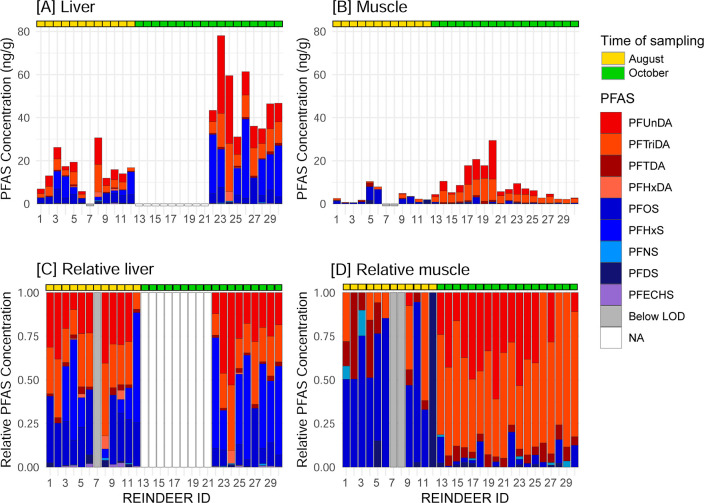 Figure 1
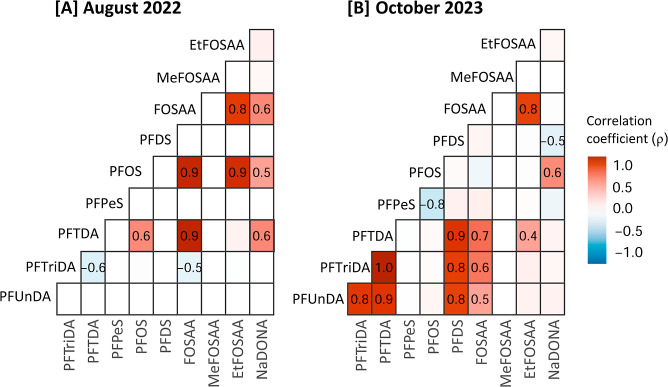 Figure 2
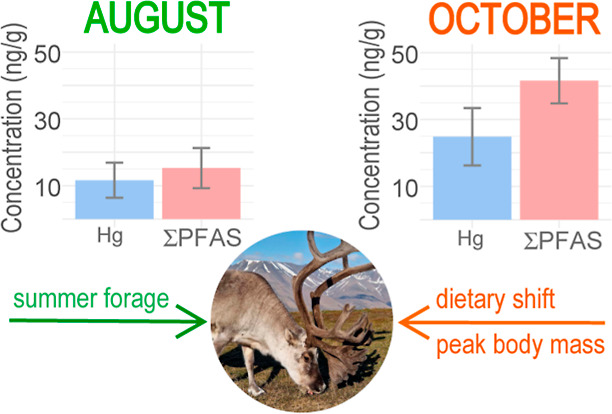 Figure 3
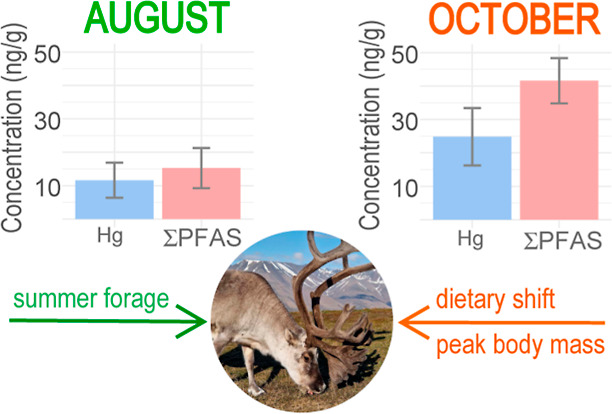 Figure 4
Peer Reviews
No public reviews on file for this paper yet. If you reviewed it on a platform where reviews are public (OpenReview, ICLR, NeurIPS, ICML), you can paste yours below so the community can read it here.
Videos
No videos yet. Explain this paper in a talk, walkthrough, or lecture? Add one.
Taxonomy
TopicsPer- and polyfluoroalkyl substances research · Mercury impact and mitigation studies · Toxic Organic Pollutants Impact