Nitrogen Fixation Associated with Microcystis Colonies Promotes Harmful Cyanobacterial Blooms across North American Lakes
Christopher J. Gobler, Ann Marie E. Famularo-Pecora, Benjamin J. Kramer, Jennifer G. Jankowiak, Jennifer A. Goleski, Ronojoy Hem, Kendra A. Turk-Kubo, Jonathan P. Zehr

TL;DR
This study shows that nitrogen fixation by Microcystis colonies helps fuel harmful algal blooms in lakes, even in low-nitrogen environments.
Contribution
The study reveals that Microcystis colonies fix nitrogen more efficiently than free-living plankton, contributing to bloom formation.
Findings
Microcystis colonies showed higher nitrogen fixation rates than free-living plankton in five of six lakes.
Ammonium reduced nitrogen fixation in colonies by 50–85% in experiments.
Colony-associated plankton preferentially used 14N2, indicated by lower δ15N in colonies.
Abstract
Microcystis forms harmful cyanobacterial algal blooms around the world, including regions with low inorganic nitrogen (N) concentrations. Here, we measured the N2 fixation rates of isolated Microcystis colonies, free-living plankton, and the whole plankton community during dense Microcystis blooms over a three year period in six diverse lakes across eastern North America including Lake Erie. For five of six lakes, rates within the colony fraction were greater than the rates measured for free-living plankton (p < 0.05). N2 fixation rates were inversely correlated with the rates of ammonium uptake by the colony fraction (p < 0.05), and in experiments, ammonium significantly reduced N2 fixation rates within the colony fraction by 50–85% (p < 0.001). In several lakes, the δ15N of isolated colonies was lower (p < 0.05) than that of free-living plankton presumably due to the preferential use…
Genes, proteins, chemicals, diseases, species, mutations and cell lines named across the full text — each resolved to its canonical identifier and authoritative record.
Click any figure to enlarge with its caption.
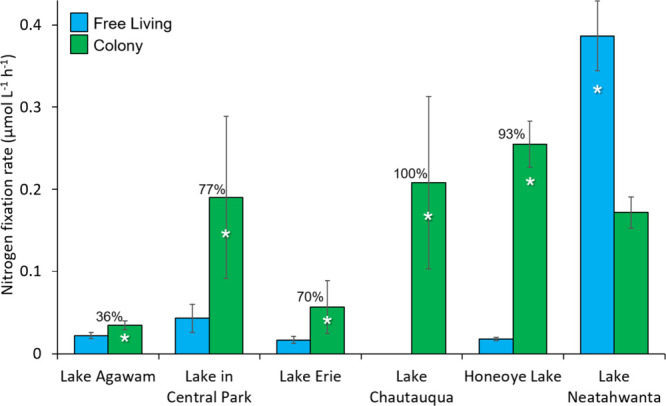 Figure 1
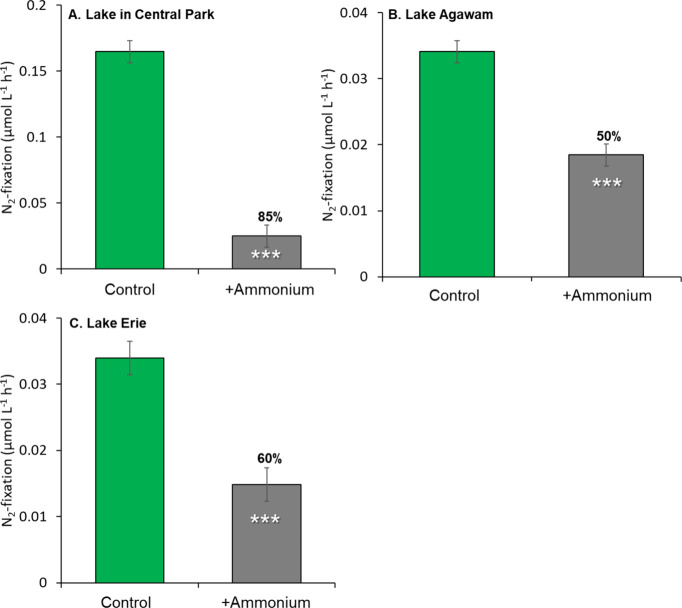 Figure 2
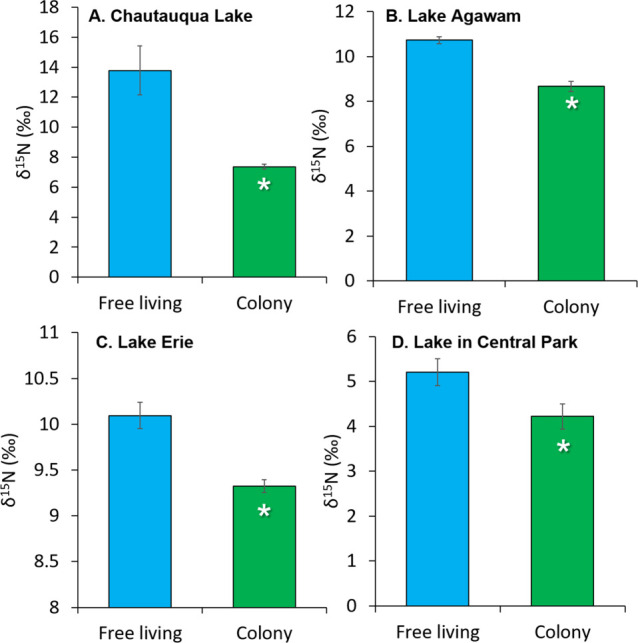 Figure 3
 Figure 4
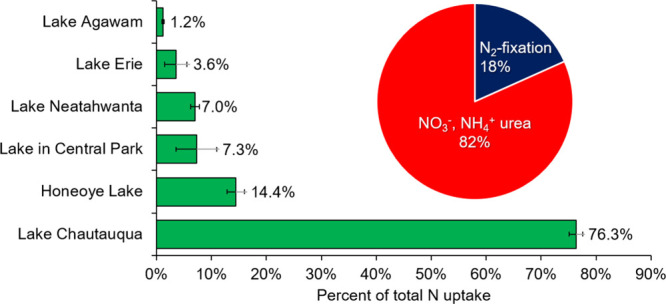 Figure 5
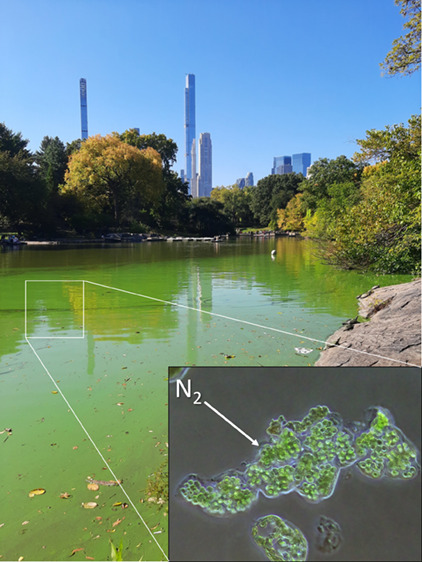 Figure 6
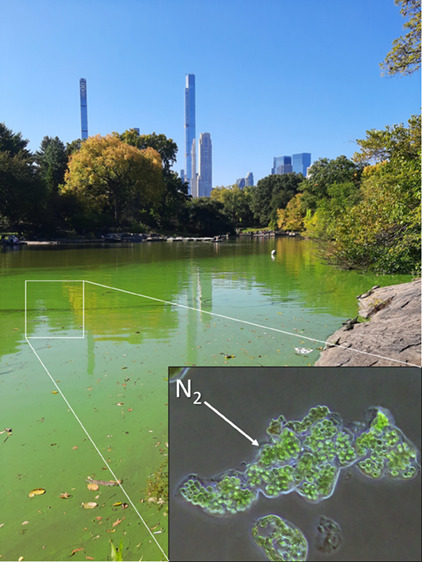 Figure 7
Peer Reviews
No public reviews on file for this paper yet. If you reviewed it on a platform where reviews are public (OpenReview, ICLR, NeurIPS, ICML), you can paste yours below so the community can read it here.
Videos
No videos yet. Explain this paper in a talk, walkthrough, or lecture? Add one.
Taxonomy
TopicsAquatic Ecosystems and Phytoplankton Dynamics · Microbial Community Ecology and Physiology · Constructed Wetlands for Wastewater Treatment