Genomic and Effector‐Based Insights Into Austropuccinia psidii–Host Interactions Informing RNAi and Resistance Development
Jovarn V. Sullivan, Sophie E. Eccersall, Grant R. Smith, Renwick C. J. Dobson, Claudia‐Nicole Meisrimler

TL;DR
This paper explores the genome and effectors of the myrtle rust pathogen to develop RNAi treatments and improve resistance in host plants.
Contribution
The study provides insights into the large A. psidii genome and its effectors, offering new targets for RNAi and resistance strategies.
Findings
The A. psidii genome is one of the largest fungal genomes, with a haploid size of 1 gigabase.
Early-expressed effectors in A. psidii are potential targets for RNAi-based disease control.
RNAi targeting effectors has shown promise in laboratory and greenhouse experiments.
Abstract
Austropuccinia psidii is a biotrophic basidiomycete and the causal pathogen of myrtle rust. The pandemic biotype infects over 480 Myrtaceae species and has caused functional extinction of myrtaceous species on the east coast of Australia, threatening numerous others worldwide. In planta resistance has been extensively explored, and resistant phenotypes are used in breeding programmes. At a molecular level, loci conferring resistance and secondary metabolite pathways activated during infection are being defined. A key component necessary to investigate this plant–pathogen interaction is an assembled and annotated pathogen genome. The A. psidii genome, determined to be one of the largest fungal genomes assembled to date, has a haploid size of 1 gigabase. Many putative effector sequences are present in the A. psidii genome: effectors are relatively small proteins that have been shown in…
Genes, proteins, chemicals, diseases, species, mutations and cell lines named across the full text — each resolved to its canonical identifier and authoritative record.
Click any figure to enlarge with its caption.
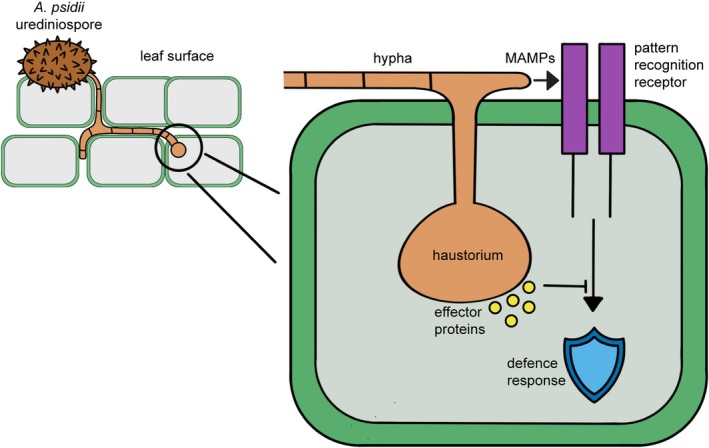 Figure 1
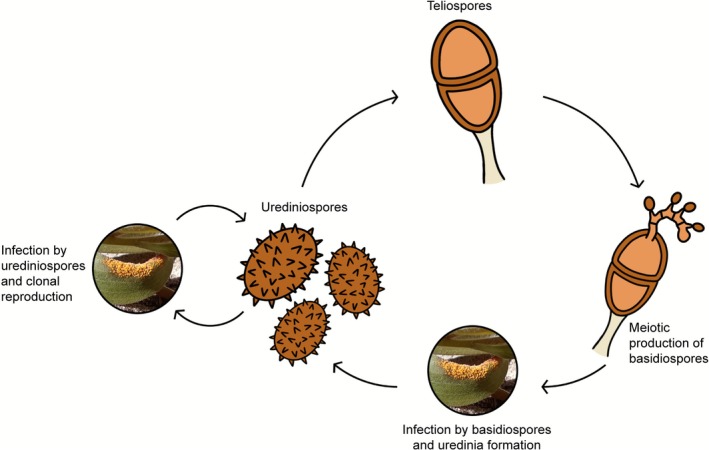 Figure 2
 Figure 3
Peer Reviews
No public reviews on file for this paper yet. If you reviewed it on a platform where reviews are public (OpenReview, ICLR, NeurIPS, ICML), you can paste yours below so the community can read it here.
Videos
No videos yet. Explain this paper in a talk, walkthrough, or lecture? Add one.
Taxonomy
TopicsYeasts and Rust Fungi Studies · Plant Pathogens and Resistance · Fungal and yeast genetics research