The Drosophila Him gene is essential for adult muscle function and muscle stem cell maintenance
Robert Mitchell-Gee, Robert Hoff, Kumar Vishal, Daniel Hancock, Sam McKitrick, Cristina V. Newnes-Querejeta, Antonio Aguayo, David Liotta, Jennifer A. Waters, TyAnna L. Lovato, Richard M. Cripps, Michael V. Taylor

TL;DR
The Him gene is important for maintaining muscle stem cells and muscle function in adult fruit flies, and its absence leads to muscle defects and reduced flight ability.
Contribution
Him is the first gene shown to be essential for maintaining muscle stem cells and flight ability in aging Drosophila.
Findings
Him is the second marker identified for Drosophila adult flight muscle stem cells.
Him mutants show disrupted jump muscle organization and impaired jumping ability.
Him mutants experience age-related loss of muscle stem cells and reduced flight performance.
Abstract
Muscle stem cells (MuSCs), or “satellite cells,” are vital for vertebrate muscle growth, homeostasis, and repair. The discovery of analogous cells in Drosophila opens experimental opportunities in this genetically tractable model. Here, we show that the myogenic inhibitor gene Him, as well as being expressed in the myoblasts that form the flight and jump muscles, is expressed in flight muscle MuSCs. This makes Him only the second marker of these insect adult MuSCs. Furthermore, Him mutants exhibit disrupted jump muscle organization, impaired jumping ability, and a reduced pool of flight muscle myoblasts. In the flight muscles themselves, Him mutants show an age-dependent decrease in MuSC number, indicating Him is required for MuSC maintenance. This decrease coincides with reduced flight performance. Thus, Him is a new marker of Drosophila adult MuSCs and is the first gene shown to be…
Genes, proteins, chemicals, diseases, species, mutations and cell lines named across the full text — each resolved to its canonical identifier and authoritative record.
Click any figure to enlarge with its caption.
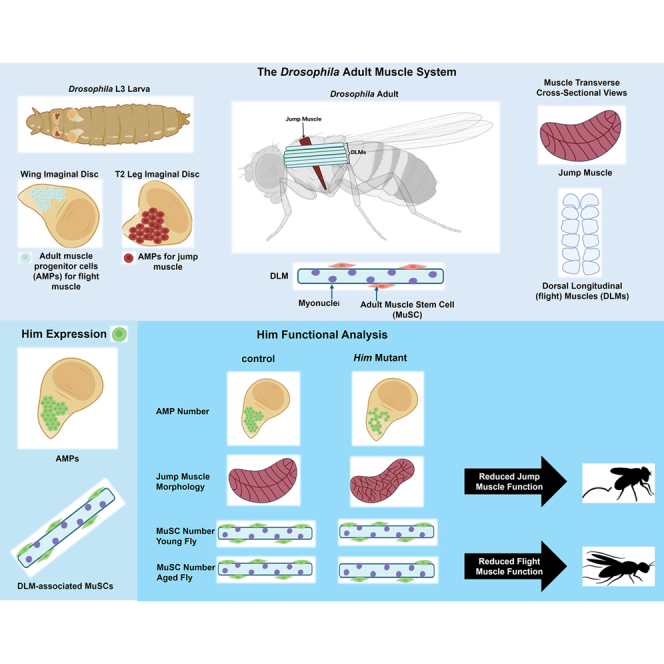 Figure 1
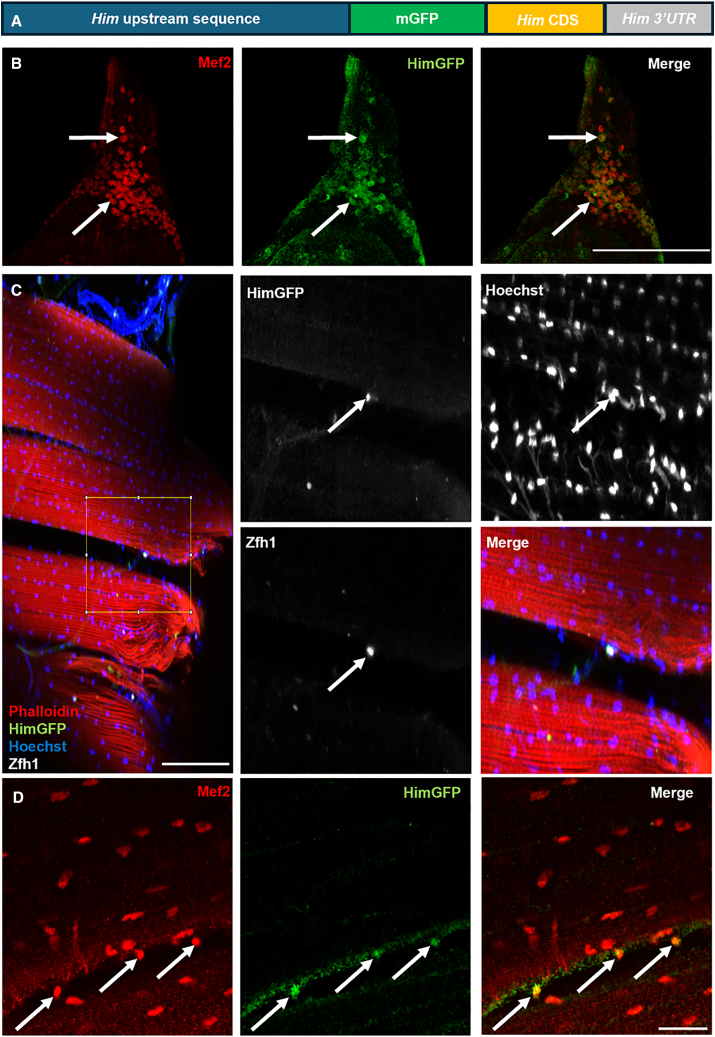 Figure 2
 Figure 3
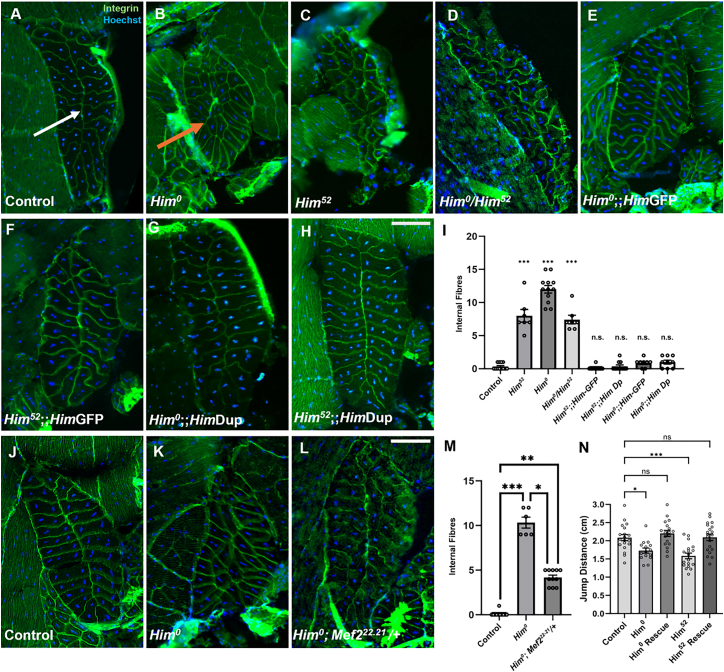 Figure 4
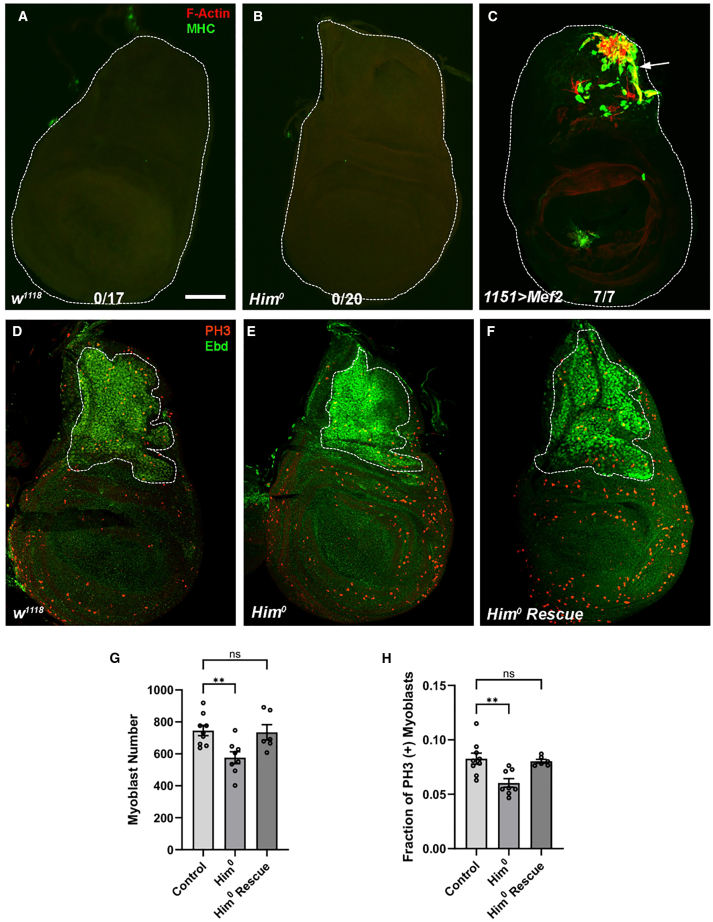 Figure 5
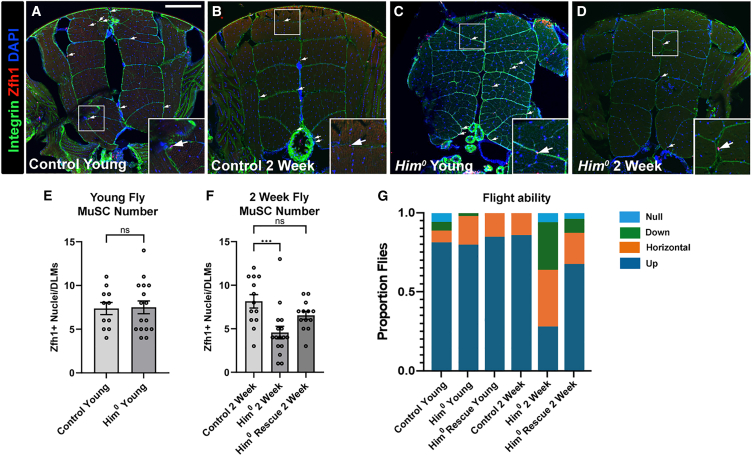 Figure 6
Peer Reviews
No public reviews on file for this paper yet. If you reviewed it on a platform where reviews are public (OpenReview, ICLR, NeurIPS, ICML), you can paste yours below so the community can read it here.
Videos
No videos yet. Explain this paper in a talk, walkthrough, or lecture? Add one.
Taxonomy
TopicsMuscle Physiology and Disorders · Developmental Biology and Gene Regulation · Neurobiology and Insect Physiology Research