A Bioinspired Mastoparan Exhibits Concentration-Dependent Anti-Bacterial Activity via Membrane Disruption
Gisele R. Rodrigues, Marco Fornasier, Lucrezia Caselli, Martin Malmsten, Emma Sparr, Peter Jönsson, Octavio L. Franco

TL;DR
A wasp venom-inspired peptide disrupts bacterial membranes in a concentration-dependent way, showing quick and strong antibacterial effects.
Contribution
The study reveals the physicochemical mechanism of a bioinspired mastoparan's membrane-disrupting activity and its antimicrobial effects.
Findings
Mast-MO disrupts lipid membranes through surface activity in a concentration-dependent manner.
Changes in ionic strength and pH reduce mast-MO adsorption to membranes.
Mast-MO shows rapid and potent antibacterial activity against E. coli within 15 minutes.
Abstract
Antimicrobial peptides are widely investigated in the literature, but their mechanism of action and effects on lipid membranes are not completely understood from a physicochemical perspective. In this study, we employed a bioinspired mastoparan from wasp venom, mast-MO, and characterized its interactions with model lipid membranes, either as a supported lipid bilayer or as free-standing vesicles in solution. An array of complementary physicochemical characterization techniques was employed to study the surface activity of the peptide alone and how its adsorption affects lipid membrane properties in terms of lateral organization and integrity. We found that peptide action is related to its intrinsic surface activity, resulting in disrupted lipid packing of supported membranes and vesicles via a concentration-dependent mechanism. Changing solution conditions, e.g., ionic strength and pH,…
Genes, proteins, chemicals, diseases, species, mutations and cell lines named across the full text — each resolved to its canonical identifier and authoritative record.
Click any figure to enlarge with its caption.
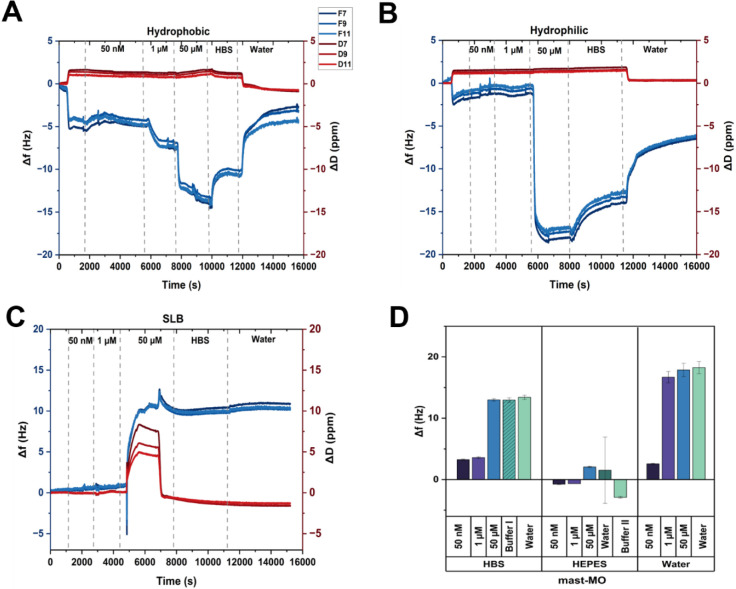 Figure 1
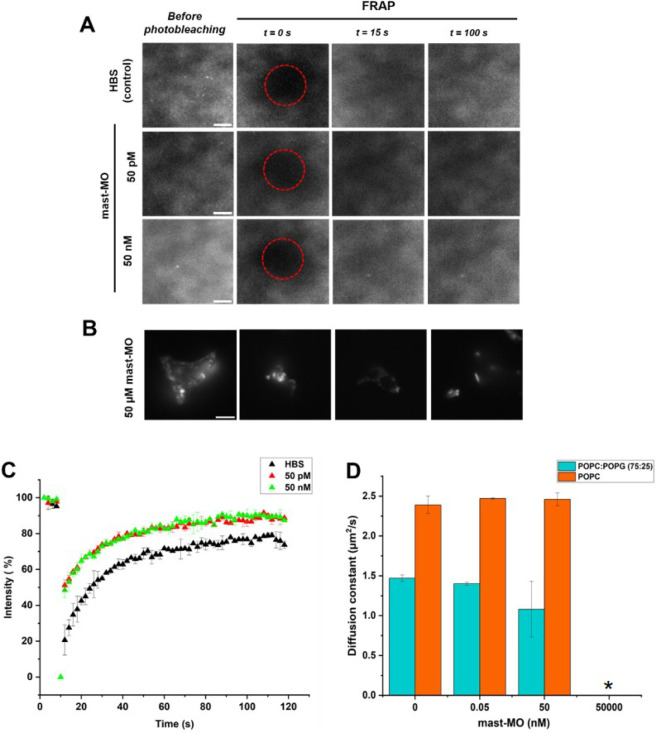 Figure 2
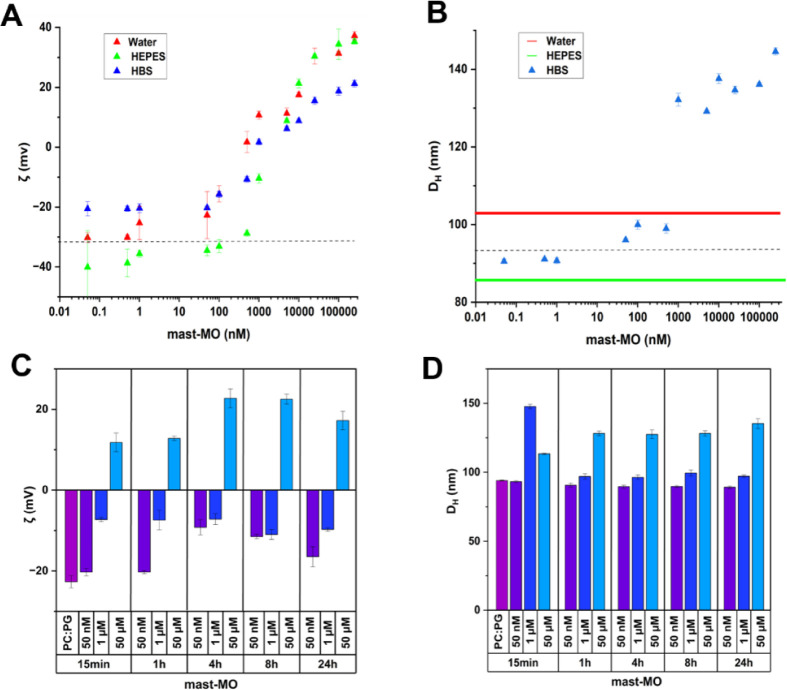 Figure 3
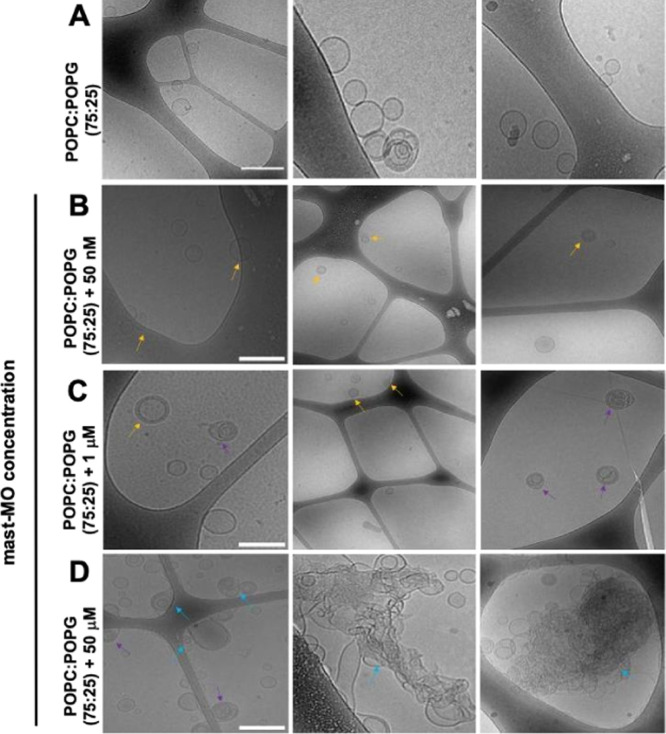 Figure 4
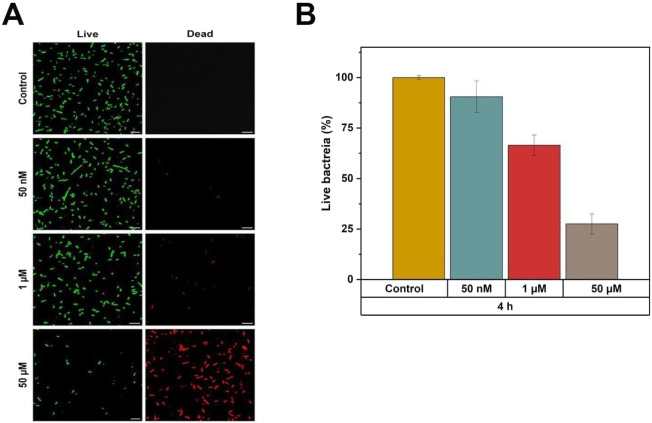 Figure 5
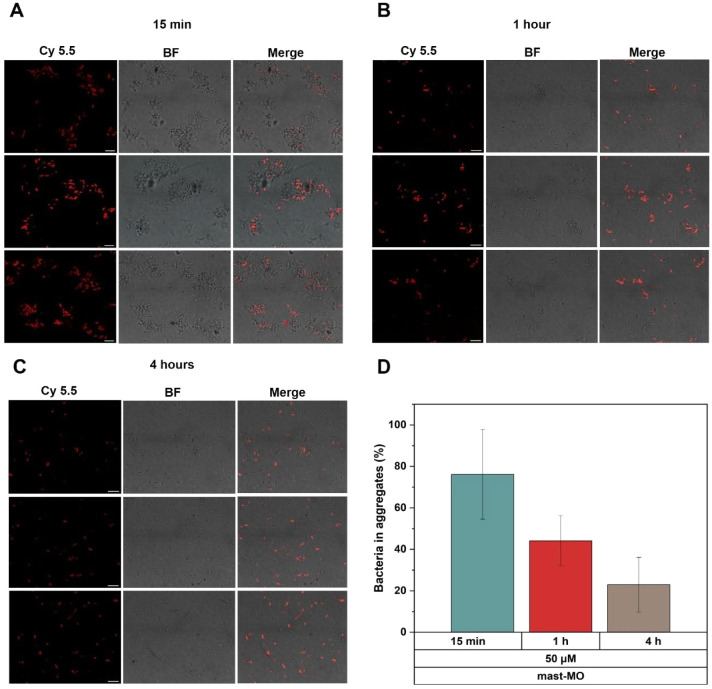 Figure 6
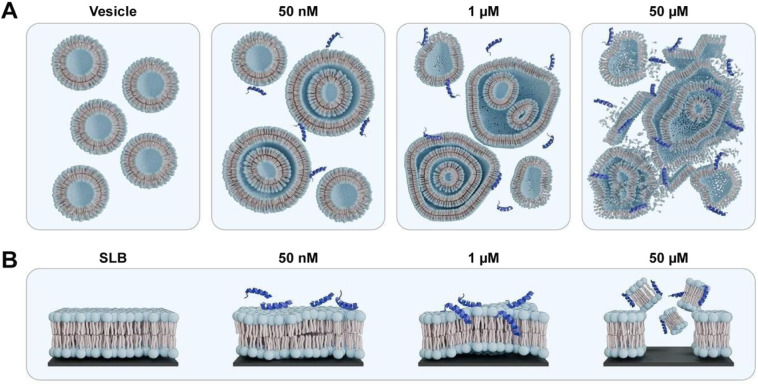 Figure 7
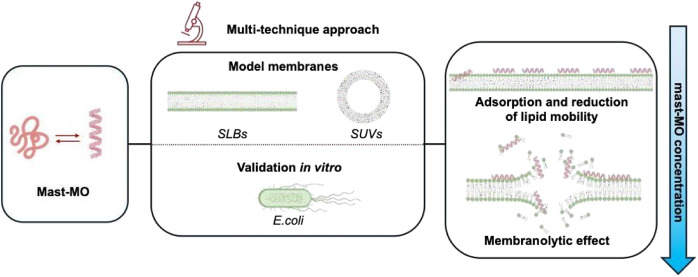 Figure 8
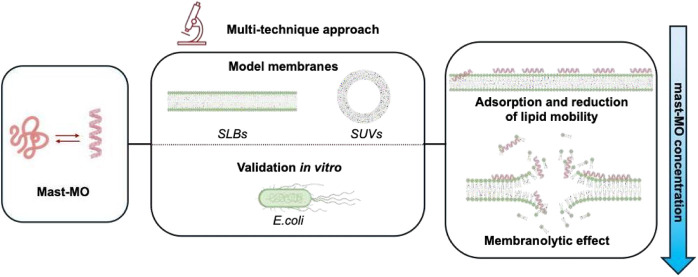 Figure 9
 Figure 10
Peer Reviews
No public reviews on file for this paper yet. If you reviewed it on a platform where reviews are public (OpenReview, ICLR, NeurIPS, ICML), you can paste yours below so the community can read it here.
Videos
No videos yet. Explain this paper in a talk, walkthrough, or lecture? Add one.
Taxonomy
TopicsAntimicrobial Peptides and Activities · Venomous Animal Envenomation and Studies · Healthcare and Venom Research