Metabolic engineering of endogenous MEP pathway for enhanced lycopene production in Escherichia coli
Xian Xu, Hongyu Xing, Hui Zhi, Chen Qin, Yuyue Deng, Wanqi Wei, Chunyan Huang

TL;DR
Scientists improved lycopene production in E. coli by engineering its metabolic pathway using genes from a different bacteria and optimizing fermentation conditions.
Contribution
The study introduces a novel chassis strain and demonstrates a 33.88-fold increase in lycopene titer through MEP pathway optimization.
Findings
Sodium pyruvate significantly enhanced lycopene production and cell growth in E. coli.
Co-expression of dxs from E. coli and idi from D. wulumuqiensis maximized lycopene titer.
The optimized strain achieved a lycopene titer of 293.70 mg/L, a significant improvement over the initial strain.
Abstract
Microbial cell factories represent the primary approach for heterologous lycopene synthesis, where gene source selection and pathway regulation have been demonstrated to have a significant impact on lycopene titer. In this study, key lycopene biosynthesis genes (crtE, crtB and crtI) derived from the extremophile Deinococcus wulumuqiensis R12 were introduced into Escherichia coli, generating the chassis strain H0. Fermentation optimization revealed sodium pyruvate significantly enhanced lycopene production and cell growth. Quantitative polymerase chain reaction (qPCR) analysis revealed that sodium pyruvate upregulated the expression of dxr, ispA, crtE, crtB and crtI genes, while downregulating the expression of dxs and idi genes. Consequently, different sources of dxs, dxr, idi and ispA genes were screened and co-expressed to reinforce the 2-C-methyl-d-erythritol 4-phosphate (MEP)…
Genes, proteins, chemicals, diseases, species, mutations and cell lines named across the full text — each resolved to its canonical identifier and authoritative record.
Click any figure to enlarge with its caption.
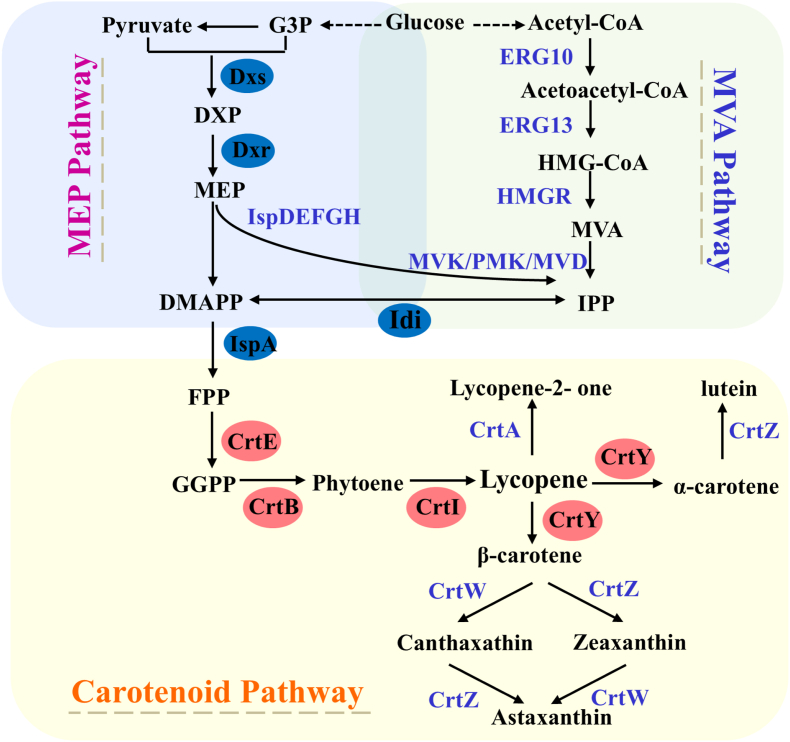 Figure 1
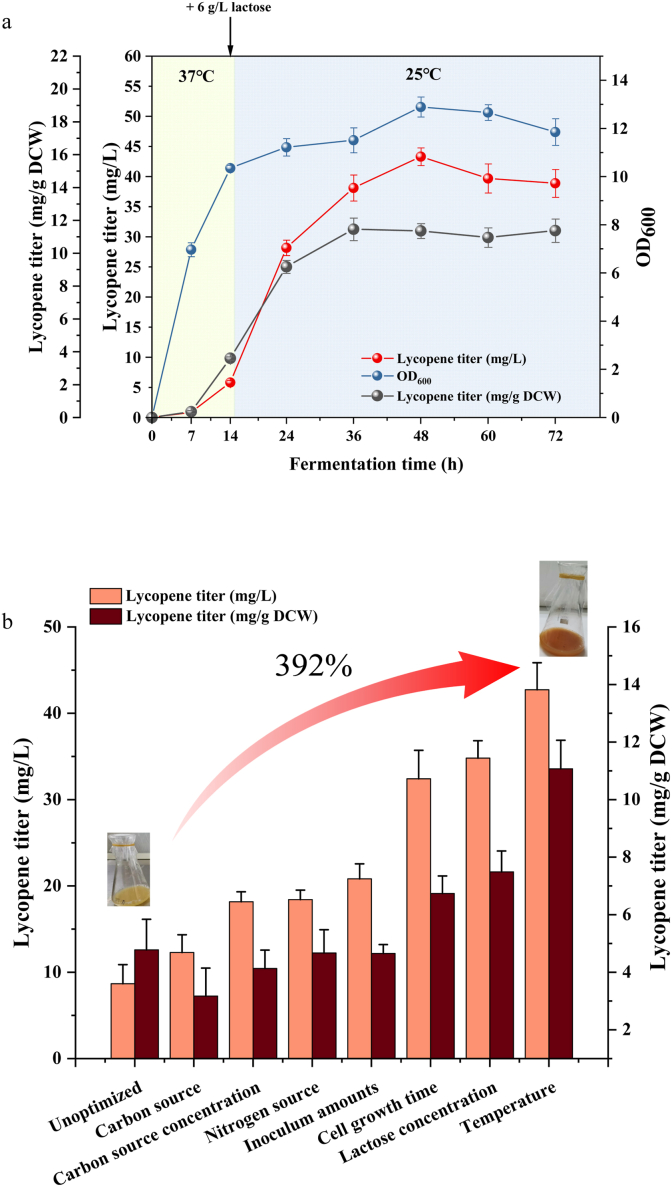 Figure 2
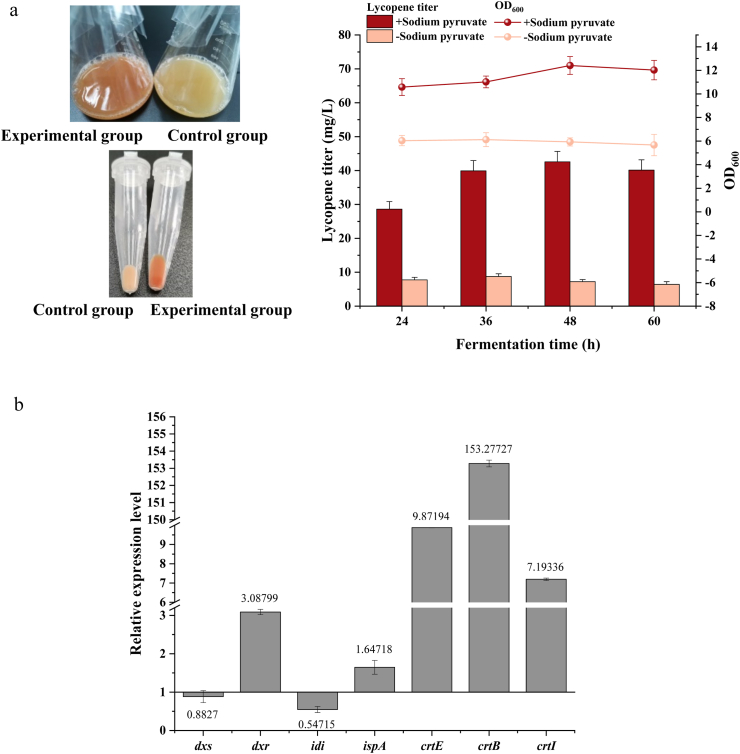 Figure 3
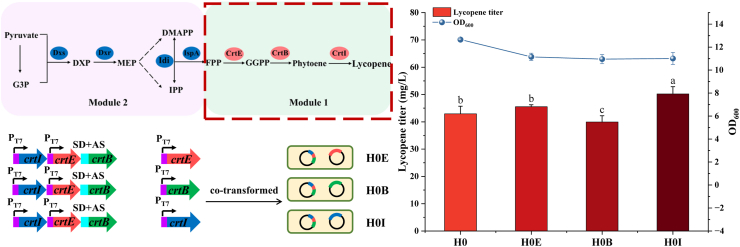 Figure 4
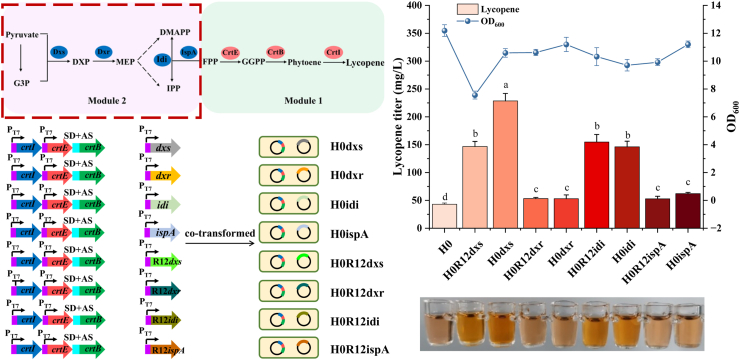 Figure 5
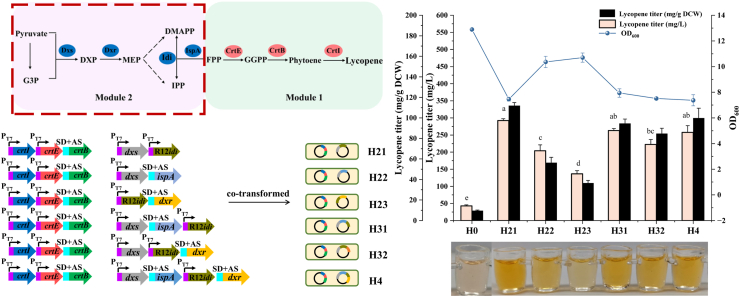 Figure 6
Peer Reviews
No public reviews on file for this paper yet. If you reviewed it on a platform where reviews are public (OpenReview, ICLR, NeurIPS, ICML), you can paste yours below so the community can read it here.
Videos
No videos yet. Explain this paper in a talk, walkthrough, or lecture? Add one.
Taxonomy
TopicsPlant biochemistry and biosynthesis · Antioxidant Activity and Oxidative Stress · Microbial Metabolic Engineering and Bioproduction