The sensitivity of patient-reported outcome measures in surgical and non-surgical care: a systematic review and meta-epidemiological evaluation of randomised controlled trials
Mikko Uimonen, Matias Vaajala, Antti Saarinen, Rasmus Liukkonen, Oskari Pakarinen, Juho Laaksonen, Ville Ponkilainen, Ilari Kuitunen, Valtteri Panula

TL;DR
This study finds that patient-reported outcome measures often fail to detect meaningful differences between surgical and non-surgical treatments due to ceiling effects in their scoring scales.
Contribution
The study introduces a meta-epidemiological evaluation of PROM sensitivity in RCTs, revealing how score distribution biases impact detection of clinical differences.
Findings
The mean likelihood of detecting a 10-point difference between surgical and non-surgical groups was 19%.
Detection likelihood peaked at 35% for a mean PROM score of 70 and declined at scale extremes.
Significant observed differences had a 54% detection likelihood, compared to 17% for non-significant comparisons.
Abstract
Accumulation of score distribution towards the high end of the measurement scale is an important source of bias related patient-reported outcome measures (PROM). The aim was to evaluate how PROM score distributions, scale boundaries, and sampling variability influence the likelihood of detecting a minimal clinically important difference (MCID) of 10 points between surgical and non-surgical groups in randomised controlled trials (RCTs) of musculoskeletal disorders. We did a systematic review and meta-epidemiological analysis of 129 RCT studies comparing surgical and non-surgical interventions in patients with musculoskeletal complaints using a PROM as an outcome measure (1771 group-level PROM measurements) from PubMed and Scopus published until February 26, 2025. Simulations assessed each comparison's likelihood of detecting a difference of 10 points or more. The mean difference…
Genes, proteins, chemicals, diseases, species, mutations and cell lines named across the full text — each resolved to its canonical identifier and authoritative record.
Click any figure to enlarge with its caption.
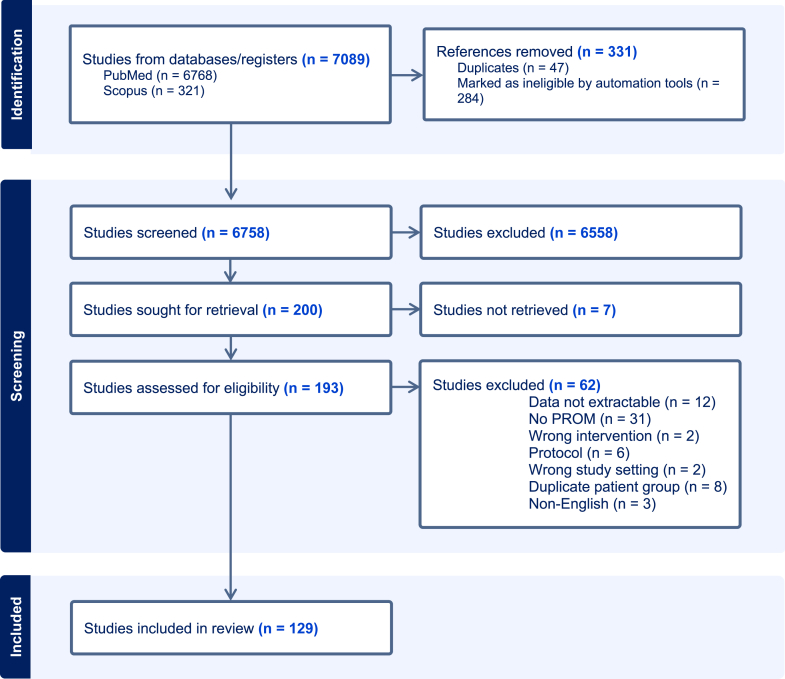 Figure 1
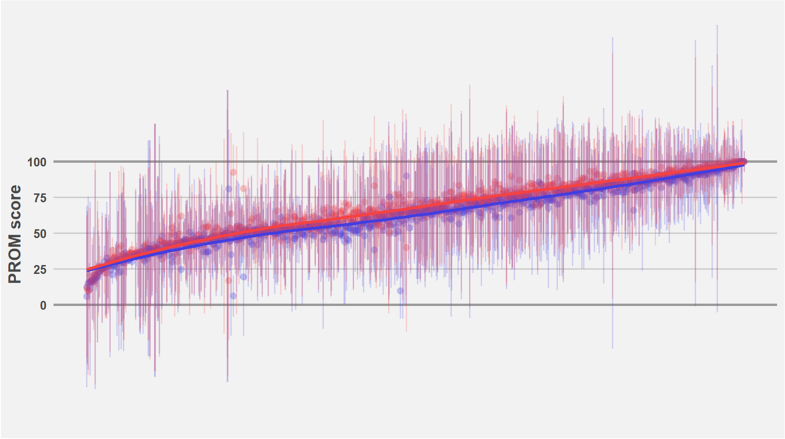 Figure 2
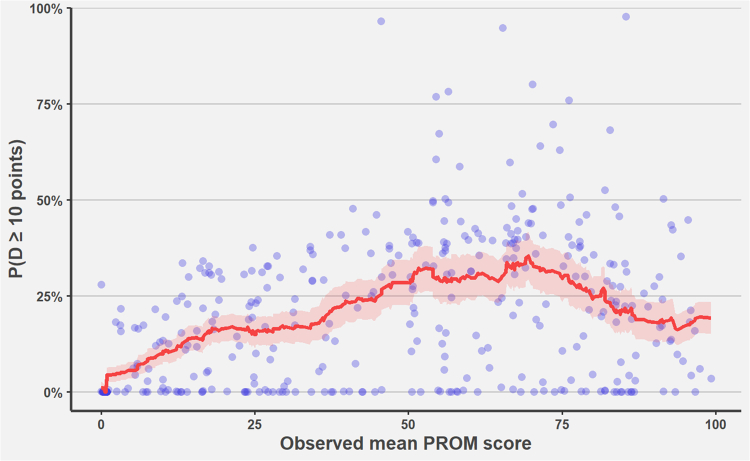 Figure 3
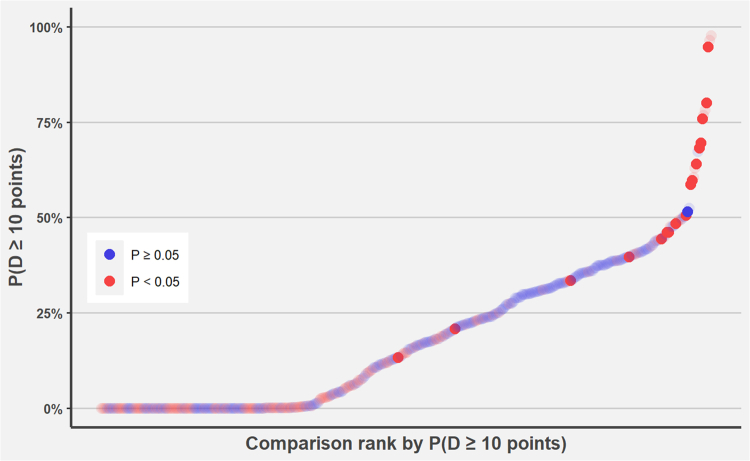 Figure 4
Peer Reviews
No public reviews on file for this paper yet. If you reviewed it on a platform where reviews are public (OpenReview, ICLR, NeurIPS, ICML), you can paste yours below so the community can read it here.
Videos
No videos yet. Explain this paper in a talk, walkthrough, or lecture? Add one.
Taxonomy
TopicsCardiac, Anesthesia and Surgical Outcomes · Enhanced Recovery After Surgery · Nausea and vomiting management