Quantitative discometry: Low-dose concordant pain onset identifies sensitized annular nociceptors under pressure–volume–controlled provocation
Richard Derby, Yakov Vorobeychik

TL;DR
This study shows that abnormal discs produce pain at low pressure, suggesting sensitized nerve endings in the disc's outer layer, while normal discs tolerate higher pressure.
Contribution
The study introduces a quantitative method to distinguish pain mechanisms in discs using pressure and work thresholds, supporting a low-dose pain phenotype in structurally abnormal discs.
Findings
Structurally abnormal discs showed concordant pain at low ΔP_event and W_event with high pain intensity.
Discs that never declared pain tolerated significantly higher ΔP_event and W_event, especially normal discs.
Pain onset in abnormal discs occurred mostly by 1.7–2.2 mL of injected volume under slow injection.
Abstract
Provocative discography is controversial because it couples mechanically induced disc stimulation to a subjective pain report and is often interpreted as a simple yes/no test of “discogenic pain.” Pressure–volume–controlled discography (“discometry”) allows disc provocation to be treated as a dose–response experiment using static pressure above opening (ΔP) and cumulative mechanical work (W), rather than pressure alone. To determine whether discs that reproduce a patient's concordant pain under pressure–volume control exhibit a distinct low-dose onset phenotype compared with discs that never declare, and to interpret these patterns in the context of annular versus vertebrogenic pain mechanisms. We retrospectively analyzed pressure–volume–controlled lumbar discography from a single outpatient spine practice. Discs were injected in fixed volume increments with static plateau pressures…
Genes, proteins, chemicals, diseases, species, mutations and cell lines named across the full text — each resolved to its canonical identifier and authoritative record.
Click any figure to enlarge with its caption.
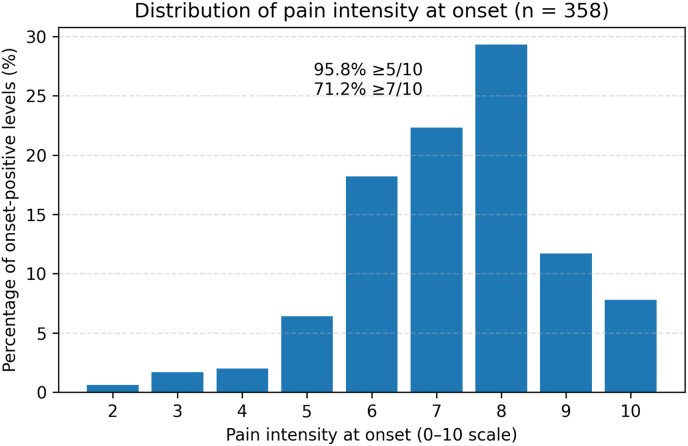 Figure 1
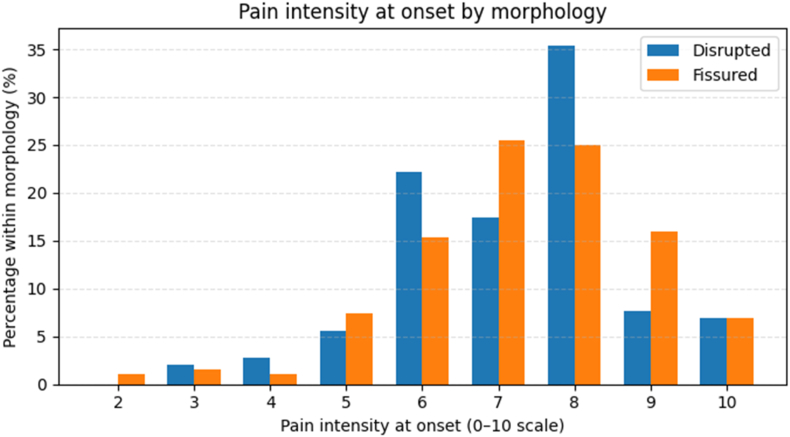 Figure 2
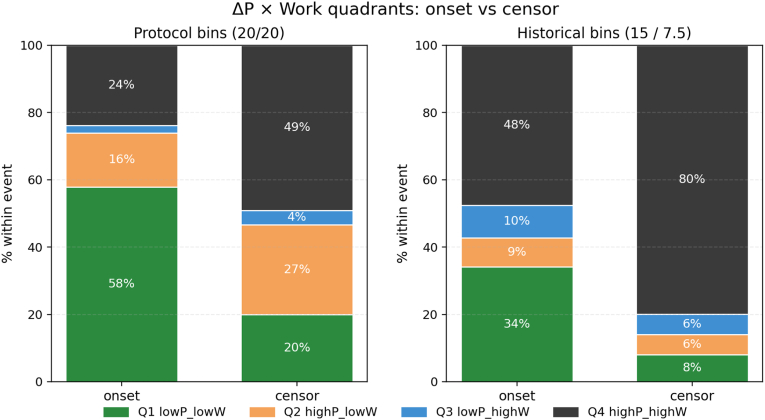 Figure 3
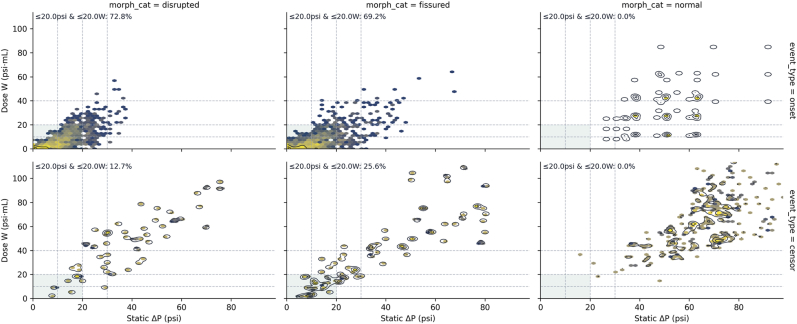 Figure 4
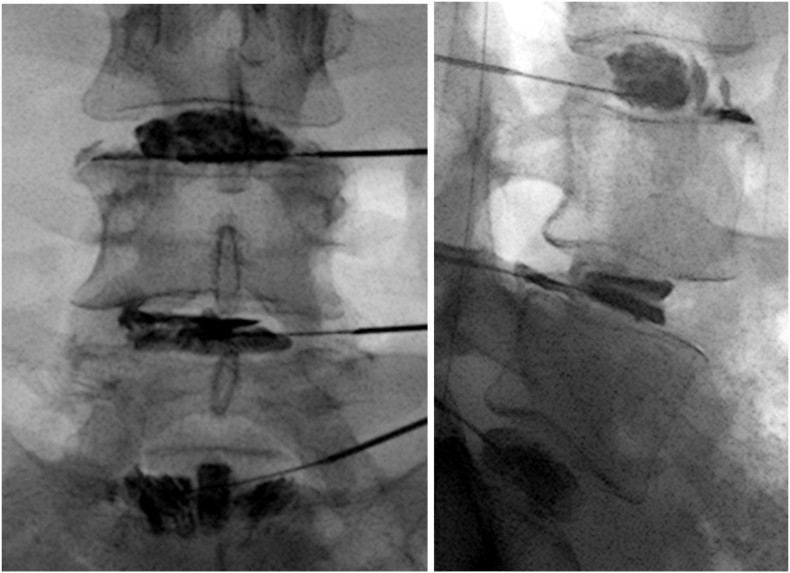 Figure 5
Peer Reviews
No public reviews on file for this paper yet. If you reviewed it on a platform where reviews are public (OpenReview, ICLR, NeurIPS, ICML), you can paste yours below so the community can read it here.
Videos
No videos yet. Explain this paper in a talk, walkthrough, or lecture? Add one.
Taxonomy
TopicsPain Mechanisms and Treatments · Pain Management and Treatment · Migraine and Headache Studies