Solvent-Assisted Modification of Laser-Induced Graphene for Surface-Enhanced Electrochemical Response
Nélio I. G. Inoque, Raquel G. Rocha, Gilvana P. Siqueira, Ana Clara Maia Oliveira, Michele V. C. O. Da Silva, Robert D. Crapnell, Craig E. Banks, Edson Nossol, Eduardo Mathias Richter, Rodrigo A. A. Muñoz

TL;DR
This paper shows that treating laser-induced graphene with DMSO improves its electrochemical performance, making it more effective for sensing applications.
Contribution
The study demonstrates that solvent treatment, specifically with DMSO, can significantly enhance the electrochemical properties of laser-induced graphene.
Findings
DMSO treatment increases the electrochemical activity of LIG electrodes by modifying surface properties.
The treatment improves wettability and reduces structural defects in LIG, enhancing π–π stacking.
DMSO-treated LIG successfully detected sulfanilamide in synthetic urine and water with high sensitivity.
Abstract
The fabrication and application of laser-induced graphene (LIG) have received significant interest across various research fields, particularly in sensing technologies. Herein, we investigated the surface modification of LIG electrodes with different solvents and demonstrated that dimethyl sulfoxide (DMSO) enhances their electrochemical activity. Importantly, our findings reveal that solvent treatments themselves can induce significant modifications on the electrode surface (e.g., changes in functional groups, wettability, and morphology), which must be carefully considered in sensor design and optimization. The application of a microliter aliquot of DMSO to the LIG surface significantly altered its wettability, promoting a transition to hydrophilic behavior, which was verified by contact-angle measurements. AFM and XRD results indicate that DMSO treatment promotes the rearrangement of…
Genes, proteins, chemicals, diseases, species, mutations and cell lines named across the full text — each resolved to its canonical identifier and authoritative record.
Click any figure to enlarge with its caption.
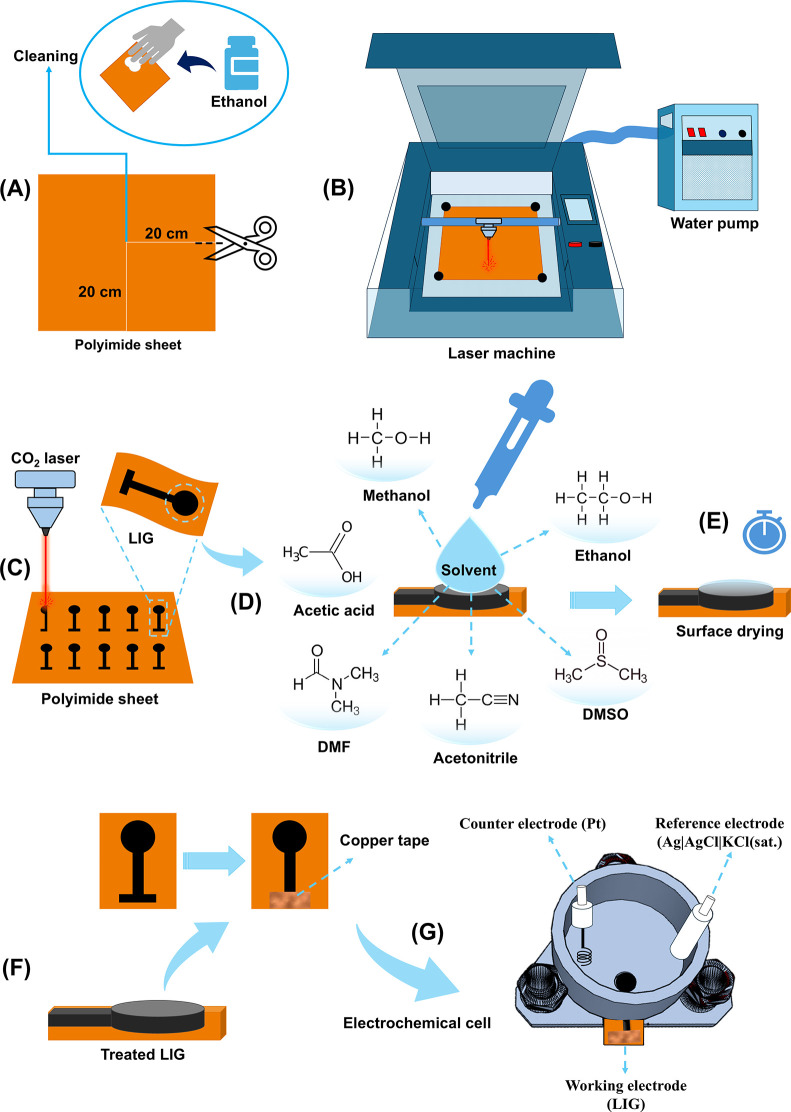 Figure 1
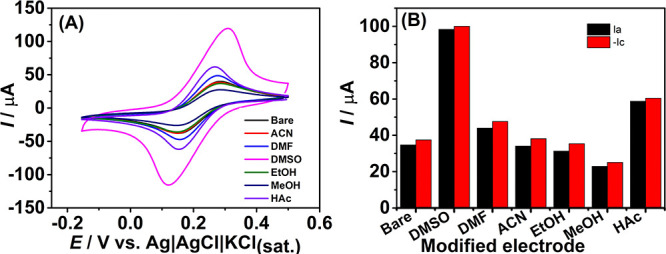 Figure 2
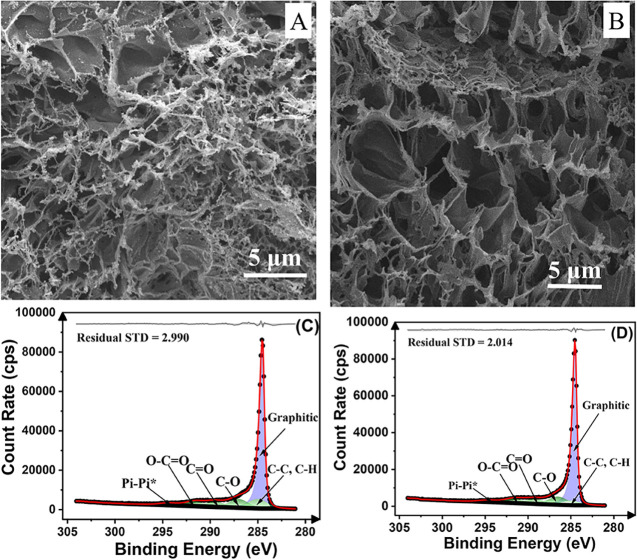 Figure 3
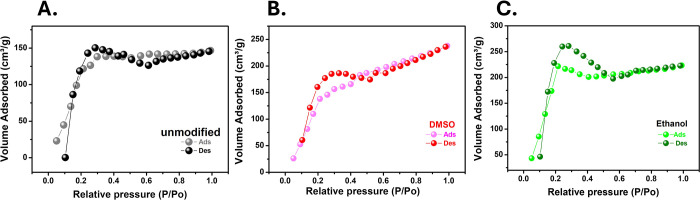 Figure 4
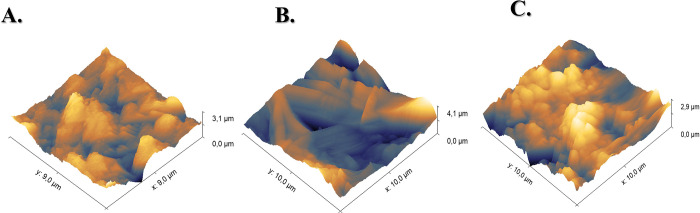 Figure 5
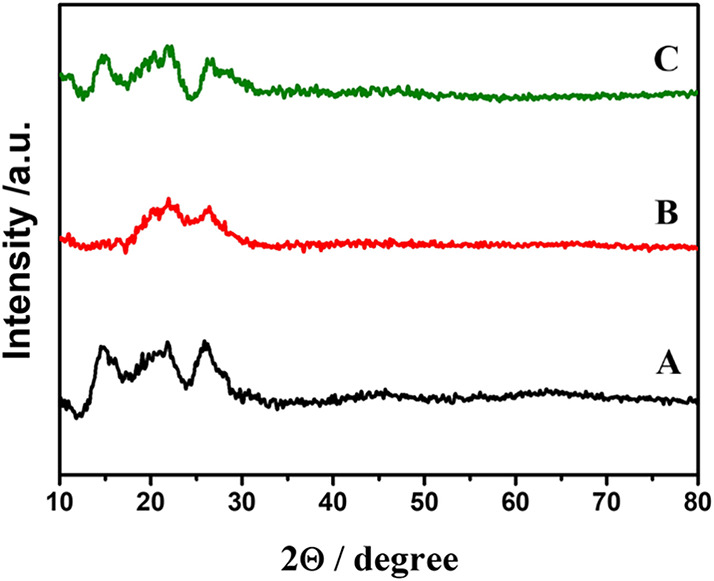 Figure 6
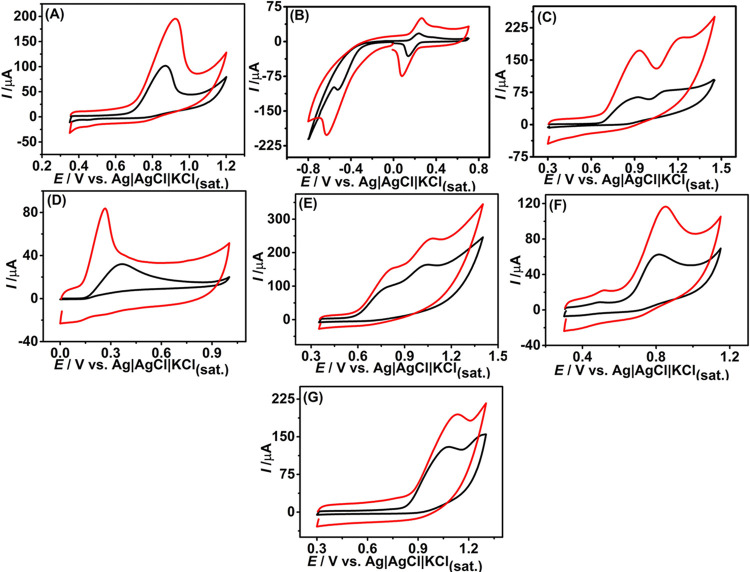 Figure 7
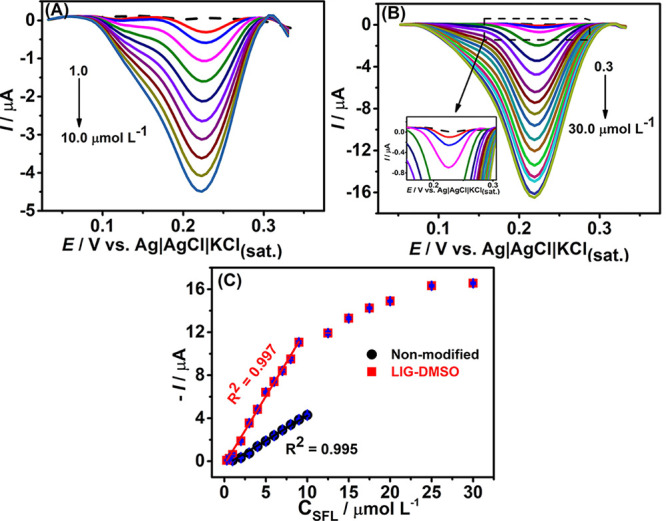 Figure 8
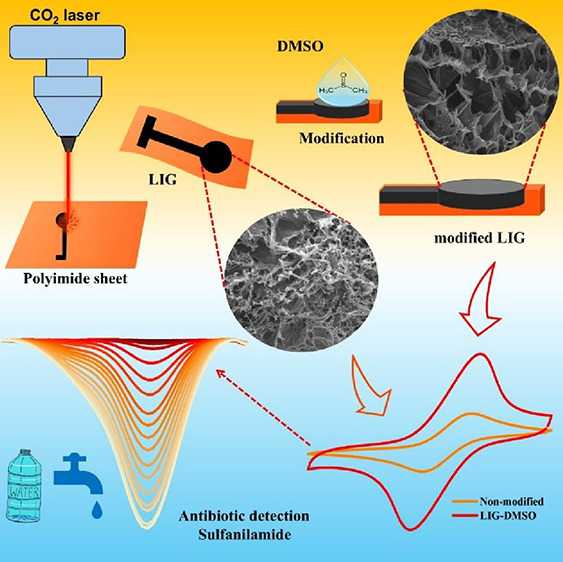 Figure 9
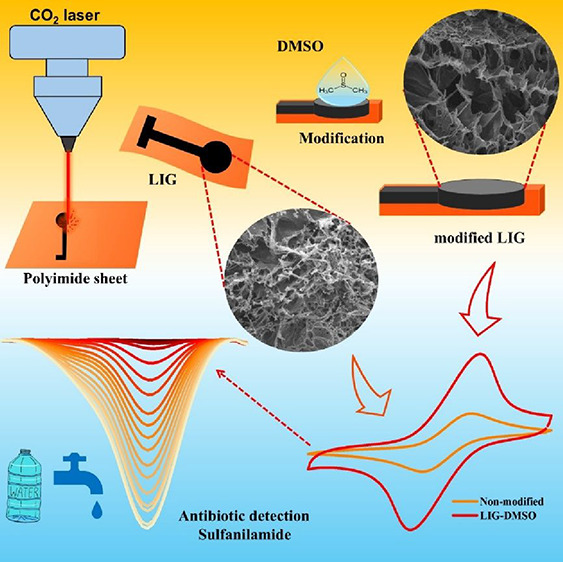 Figure 10
 Figure 11
Peer Reviews
No public reviews on file for this paper yet. If you reviewed it on a platform where reviews are public (OpenReview, ICLR, NeurIPS, ICML), you can paste yours below so the community can read it here.
Videos
No videos yet. Explain this paper in a talk, walkthrough, or lecture? Add one.
Taxonomy
TopicsGraphene research and applications · Electrochemical sensors and biosensors · Laser-Ablation Synthesis of Nanoparticles