Cell-Driven Encapsulation of Chlorophyllin-Based Carbon Dots within Exosomes for Enhanced Photodynamic Therapy: miRNA Profiling Reveals Mechanistic Insights
Omur Besbinar, Recep Uyar, Emel Kirbas Cilingir, Ana Martín-Pardillos, Jose L. Hueso, Ahmet Ceylan, Ozge Ozgenc, Okan Ekim, Mehmet Altay Unal, Fikret Ari, Roger M. Leblanc, Jesus Santamaria, Acelya Yilmazer

TL;DR
This study shows how exosomes from stem cells can deliver light-sensitive carbon dots for better cancer treatment, using miRNA to understand how it works.
Contribution
A cell-driven method to encapsulate chlorophyllin-based carbon dots in exosomes, enhancing photodynamic therapy with reduced nanomaterial dosage.
Findings
CD@EXOMSC achieved 40 times higher photodynamic therapy efficacy compared to free Chl-CDs.
miRNA profiling revealed regulation of efflux transporters, oxidative stress, and endocytosis pathways as key mechanisms.
EXOMSC's tumor-targeting ability and miRNA content improve therapeutic delivery and retention.
Abstract
Exosomes, nanoscale extracellular vesicles, have emerged as promising carriers in drug delivery due to their ability to bypass biological barriers, low toxicity, high stability, and intrinsic targeting capabilities. Mesenchymal stem-cell-derived exosomes (EXOMSC), with their natural tropism toward the tumor microenvironment, offer an ideal platform for enhancing therapeutic cargo delivery. In this study, we demonstrate an approach where red-emission chlorophyll-based carbon dots (Chl-CDs) were encapsulated within EXOMSC through a cell-driven uptake mechanism, creating CD@EXOMSC. These exosomes achieved superior photodynamic therapy (PDT) efficacy, requiring 40 times less nanomaterial compared to freestanding Chl-CDs. Mechanistic insights from glioblastoma cell miRNA profiling revealed that the enhanced efficacy was mediated by the regulation of efflux transporter genes, oxidative stress…
Genes, proteins, chemicals, diseases, species, mutations and cell lines named across the full text — each resolved to its canonical identifier and authoritative record.
Click any figure to enlarge with its caption.
 Figure 1
 Figure 2
 Figure 3
 Figure 4
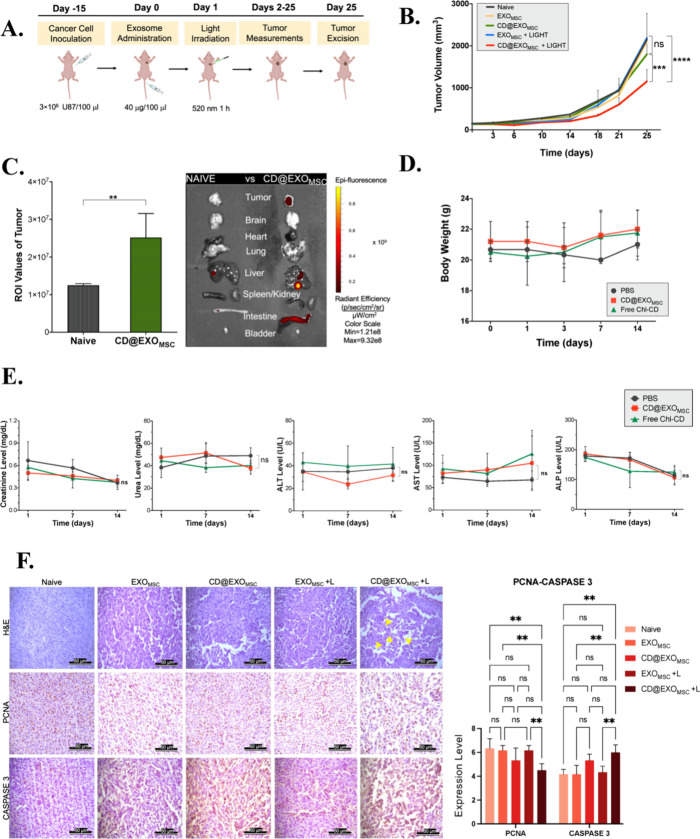 Figure 5
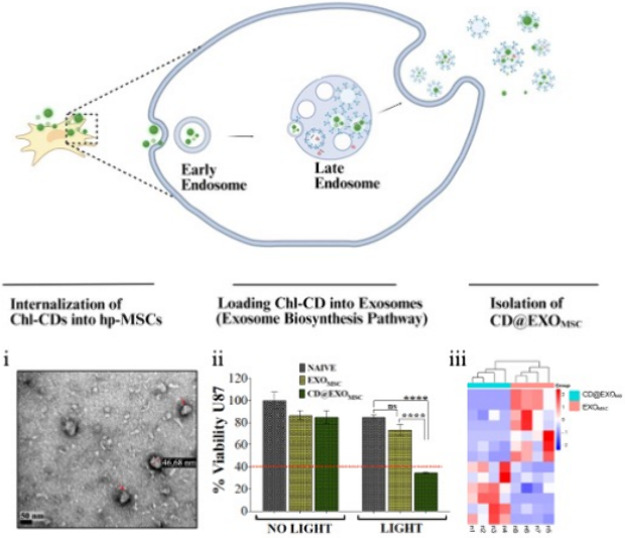 Figure 6
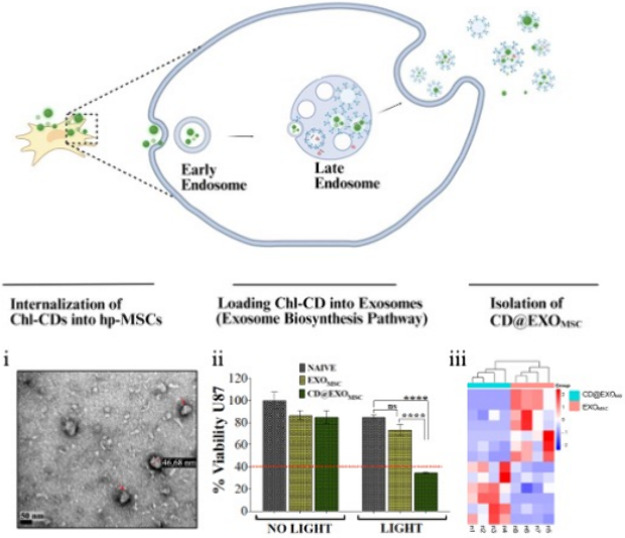 Figure 7
Peer Reviews
No public reviews on file for this paper yet. If you reviewed it on a platform where reviews are public (OpenReview, ICLR, NeurIPS, ICML), you can paste yours below so the community can read it here.
Videos
No videos yet. Explain this paper in a talk, walkthrough, or lecture? Add one.
Taxonomy
TopicsExtracellular vesicles in disease · Nanoplatforms for cancer theranostics · Carbon and Quantum Dots Applications