Reconsidering the Enzyme Kinetics of [FeFe]-Hydrogenases: Improved Turnover Rates and New Insights into pH and Potential Dependence with Eu(II)-Based Solution Assays
Eda Sönmez, Nikolaos Kostopoulos, Mira Gamache, Mun Hon Cheah, Ping Huang, Andrew J. Bagnall, Dawit T. Filmon, Ivan Voloshyn, Thomas Happe, Moritz Senger, Nicolas Plumeré, Alina Sekretareva, Gustav Berggren

TL;DR
This paper introduces a new method using Eu(II) to study hydrogenase enzyme kinetics, revealing higher activity and clearer pH dependence than traditional methods.
Contribution
A novel Eu(II)-based assay method is introduced, offering improved turnover rates and resolving pH-related discrepancies in hydrogenase studies.
Findings
Eu(II) provides a larger potential window and higher turnover frequencies than sodium dithionite.
Hydrogenase activity peaks at pH 5–6 with Eu(II), aligning better with electrochemical data.
A 180 mV potential change increases catalytic rate by 35-fold, surpassing prior reports.
Abstract
Metal-dependent redox enzymes are central for microbial processing of gases, as exemplified by hydrogenase, nitrogenase, and carbon monoxide dehydrogenase. Due to their remarkable efficiencies and high biotechnological relevance, such gas-processing enzymes are intensively studied. Nevertheless, many of their mechanistic details remain opaque. We herein report a new method for solution assays under reducing conditions based on europium(II) as a terminal reductant and show how it can be employed to gain new insight into hydrogenase kinetics. Compared with the commonly used reductant sodium dithionite, this work shows that Eu(II) can serve as a robust and relatively easy-to-handle alternative electron donor, also providing a larger potential window for catalytic studies. Further, this work clarifies previous discrepancies in the literature regarding the influence of pH on hydrogenase…
Genes, proteins, chemicals, diseases, species, mutations and cell lines named across the full text — each resolved to its canonical identifier and authoritative record.
Click any figure to enlarge with its caption.
 Figure 1
 Figure 2
 Figure 3
 Figure 4
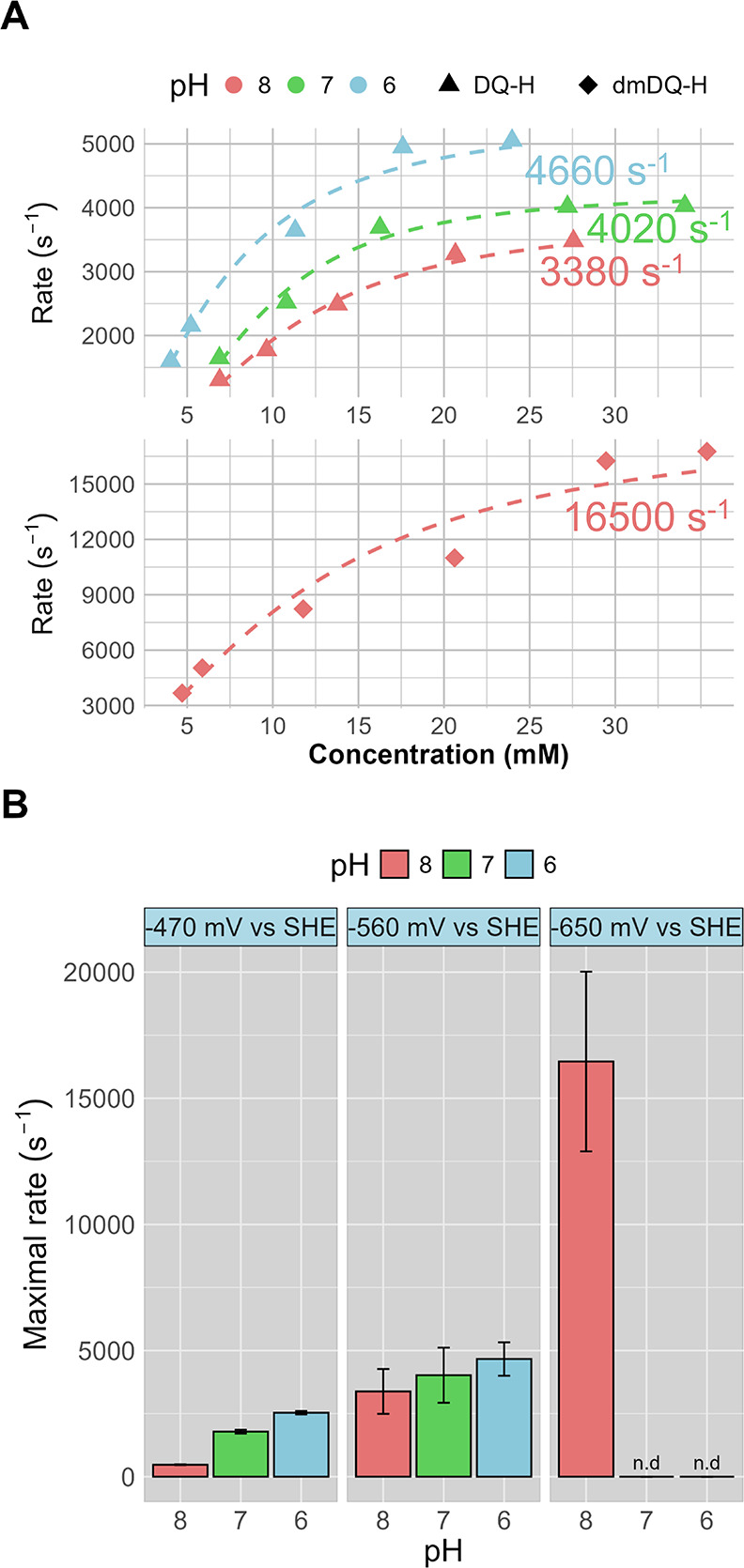 Figure 5
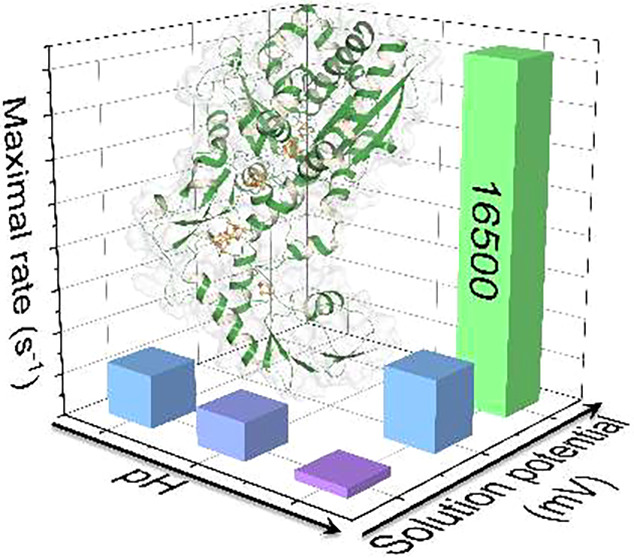 Figure 6
 Figure 7
 Figure 8
Peer Reviews
No public reviews on file for this paper yet. If you reviewed it on a platform where reviews are public (OpenReview, ICLR, NeurIPS, ICML), you can paste yours below so the community can read it here.
Videos
No videos yet. Explain this paper in a talk, walkthrough, or lecture? Add one.
Taxonomy
TopicsMetalloenzymes and iron-sulfur proteins · Metal-Catalyzed Oxygenation Mechanisms · Microbial Fuel Cells and Bioremediation