An LSPR-Based Kinetic Framework for Polyelectrolyte Molecular Weight Determination: A Proof-of-Concept Study
Ryan M. Mooney, Charles Brainin, Malkiat S. Johal

TL;DR
This paper introduces a new method using LSPR to determine the molecular weight of polyelectrolytes without traditional techniques.
Contribution
A novel, calibration-free LSPR-based kinetic framework for determining polyelectrolyte molecular weight is introduced.
Findings
The molecular weight of PAZO was calculated as 257,400 g mol–1 using the LSPR method.
LSPR-based kinetics offer a surface-sensitive alternative to traditional methods like SEC.
The method assumes symmetry in association rate constants, supported by electrostatic interaction reciprocity.
Abstract
Determining the molecular weight of polyelectrolytes remains a persistent challenge because conventional techniques such as size-exclusion chromatography (SEC) often require added salt, calibration against neutral polymers, and complex optimization to overcome chain–column interactions. Here we introduce a kinetics-based method that employs Localized Surface Plasmon Resonance (LSPR) to measure the real-time electrostatic complexation of poly(ethylenimine) (PEI) and poly[1-[4-(3-carboxy-4-hydroxyphenylazo)benzenesulfonamido]-1,2-ethanediyl, sodium salt] (PAZO). By extracting association and dissociation rate constants from concentration-dependent binding transients, we establish a calibration-free approach to determining the number-average molecular weight (M n ) of polyelectrolytes under dilute, salt-free conditions. Using the known M n of PEI, the M n of PAZO was calculated as…
Genes, proteins, chemicals, diseases, species, mutations and cell lines named across the full text — each resolved to its canonical identifier and authoritative record.
Click any figure to enlarge with its caption.
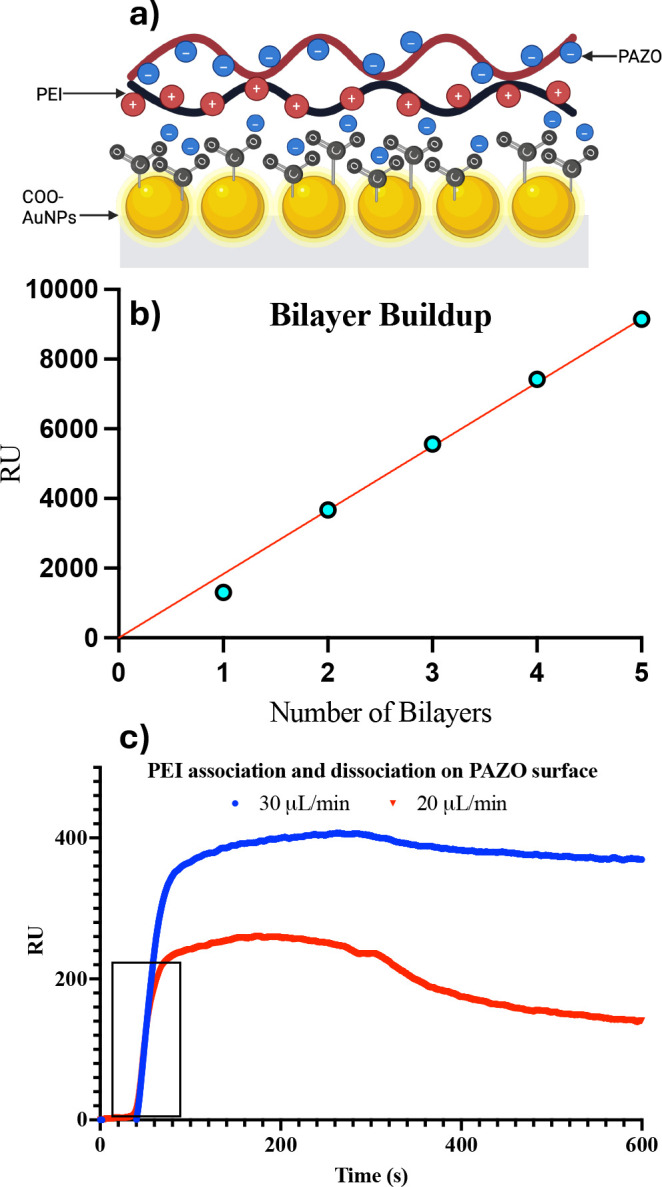 Figure 1
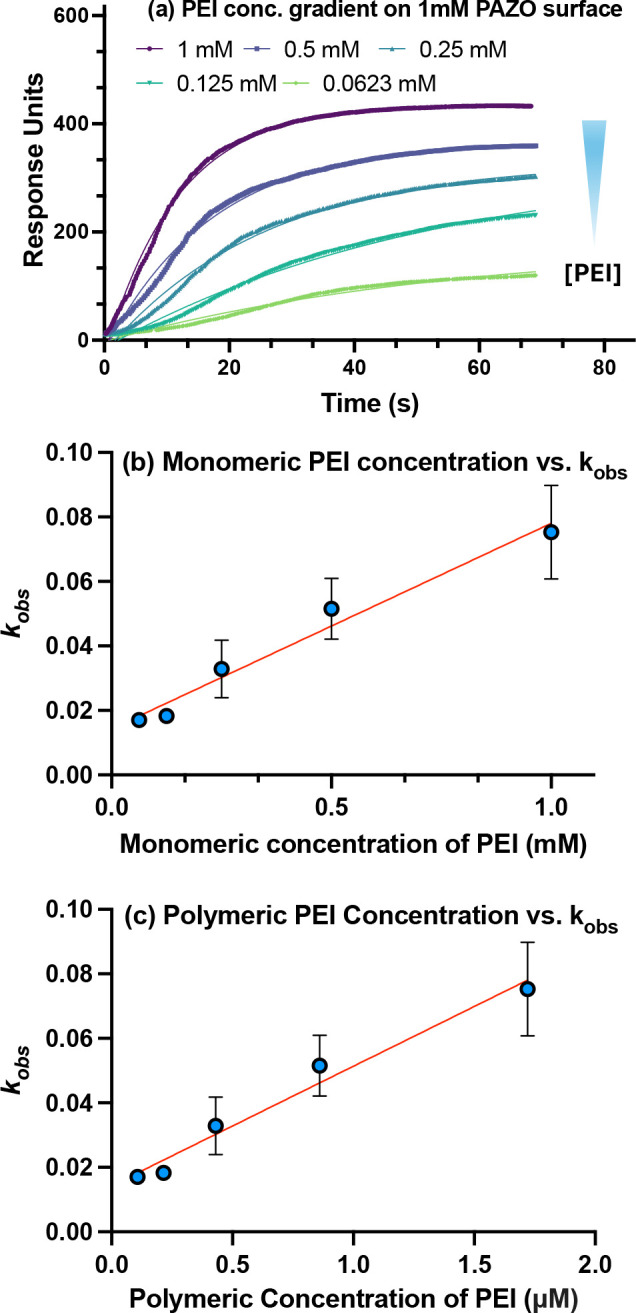 Figure 2
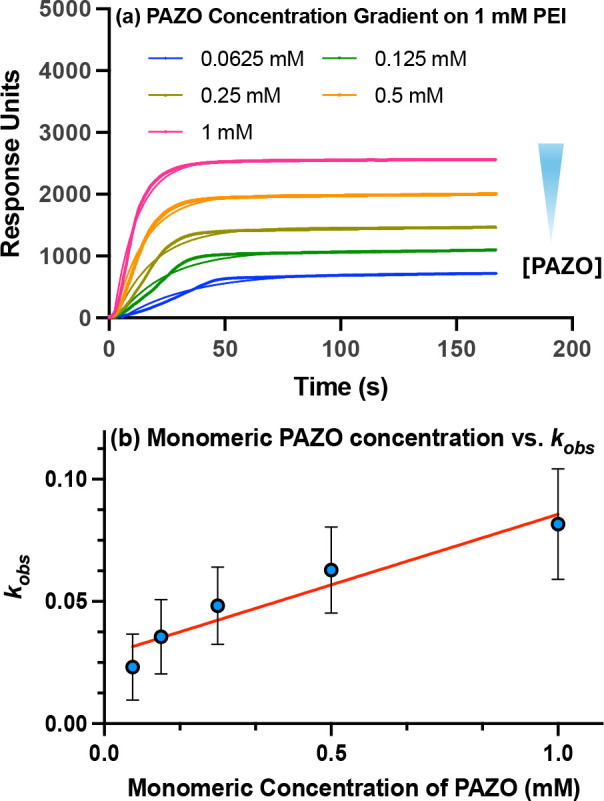 Figure 3
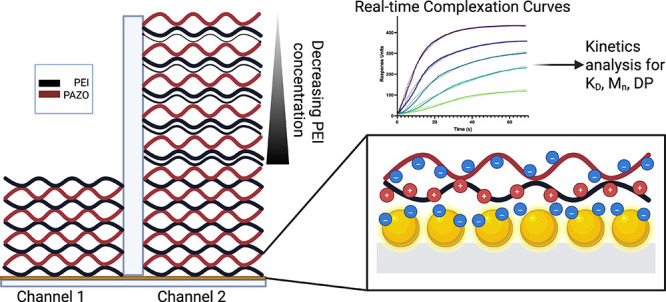 Figure 4
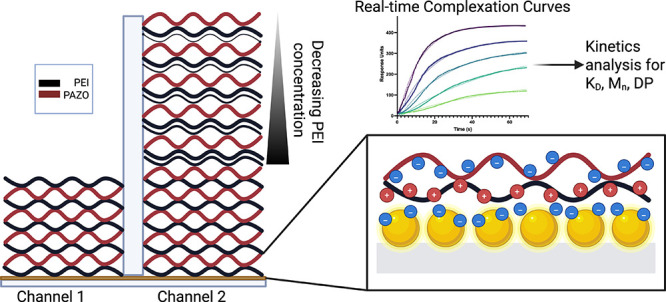 Figure 5
 Figure 6
 Figure 7
 Figure 8
 Figure 9
 Figure 10
 Figure 11
 Figure 12
 Figure 13
 Figure 14
 Figure 15
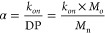 Figure 16
Peer Reviews
No public reviews on file for this paper yet. If you reviewed it on a platform where reviews are public (OpenReview, ICLR, NeurIPS, ICML), you can paste yours below so the community can read it here.
Videos
No videos yet. Explain this paper in a talk, walkthrough, or lecture? Add one.
Taxonomy
TopicsPolymer Surface Interaction Studies · Advanced Polymer Synthesis and Characterization · Microplastics and Plastic Pollution