Investigating local negative feedback of Rac activity by mathematical models and cell-motility simulations
Jupiter Algorta, Jason P. Town, Orion D. Weiner, Leah Edelstein-Keshet

TL;DR
This paper uses mathematical models and simulations to show how Rac and its inhibitor help cells maintain polarization and respond to directional cues.
Contribution
The study introduces a minimal Rac-inhibitor-PIP3 circuit model that explains optogenetic data and improves gradient sensing in dynamic conditions.
Findings
The Rac-inhibitor-PIP3 circuit explains optogenetic data and exotic cell trajectories.
The model is minimal and improves gradient sensing under noisy or dynamic conditions.
Simulations reveal how signaling components influence cell responses to stimuli.
Abstract
How do cells maintain robust, yet flexible polarization for directed motion? Recent optogenetic experiments by Town and Weiner on neutrophil-like HL-60 cells strongly point to the essential role of a Rac-inhibitor (downstream of the small GTPase Rac) in shaping requisite negative feedback that allows cells to respond to rapidly changing directional cues. Here we adapt a previous mathematical model for cell polarity to model interactions of Rac, its putative inhibitor, and upstream PIP3 (a product of the optogenetically stimulated PI3K). We fit parameters in our partial differential equation (PDE) model to temporal and spatial experimental data. Cell shapes, motility, and stimulus responses are modeled in 2D simulations, with PDEs solved along the cell edge. We show that the Rac-inhibitor-PIP3 circuit accounts for the optogenetic data (including exotic cell trajectories), that it is the…
Genes, proteins, chemicals, diseases, species, mutations and cell lines named across the full text — each resolved to its canonical identifier and authoritative record.
Click any figure to enlarge with its caption.
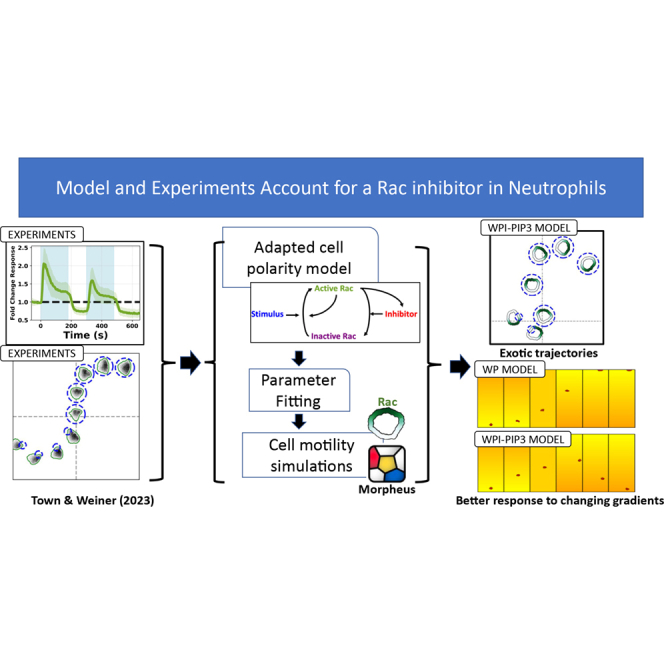 Figure 1
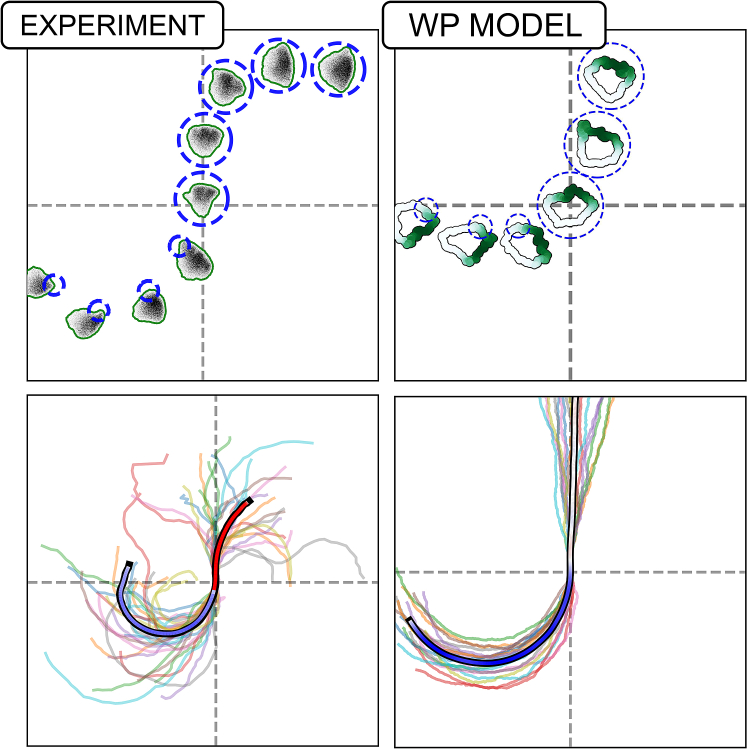 Figure 2
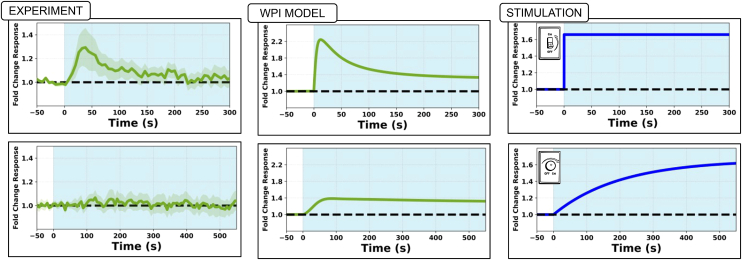 Figure 3
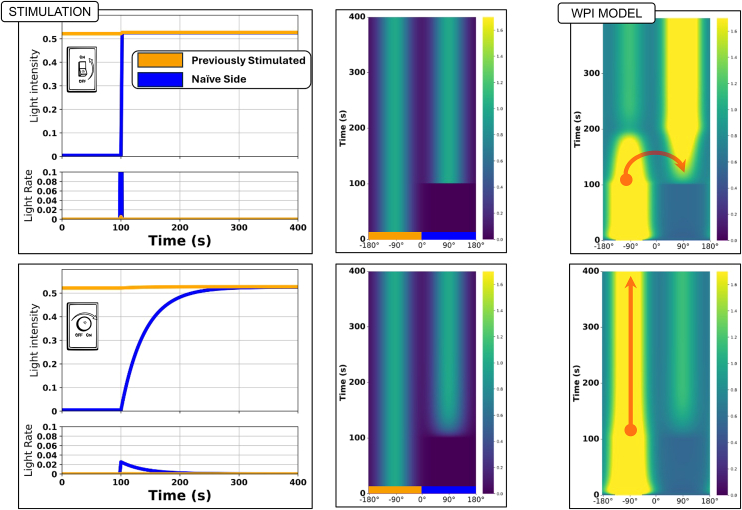 Figure 4
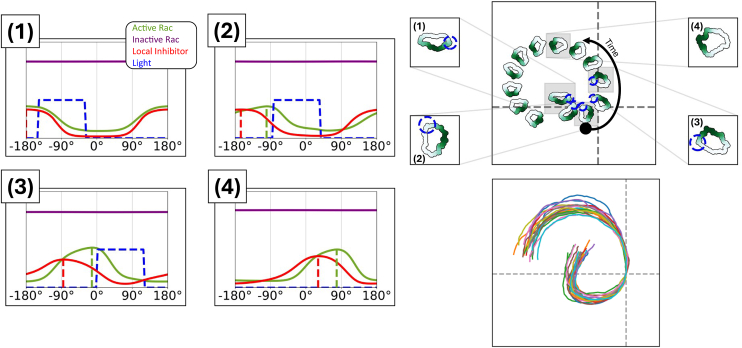 Figure 5
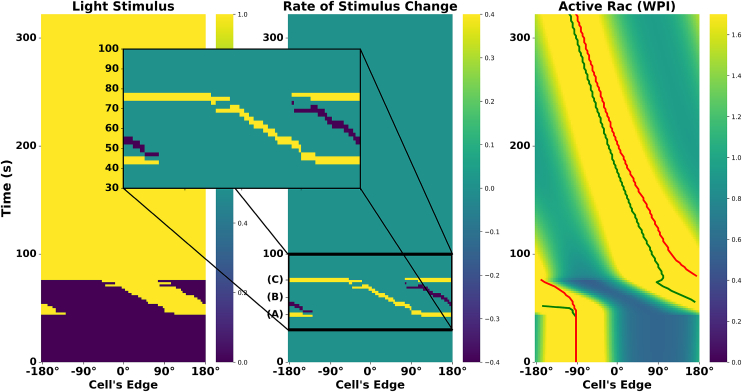 Figure 6
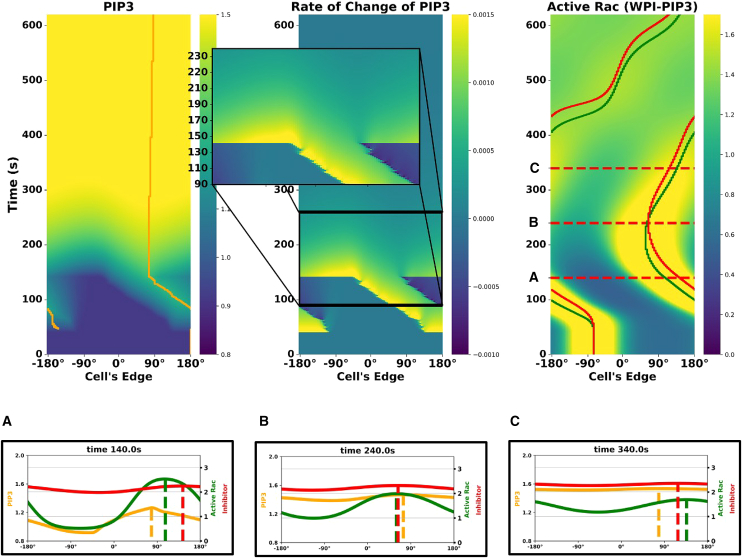 Figure 7
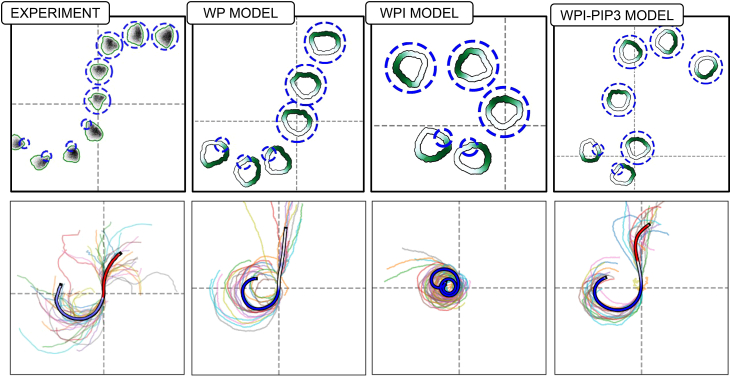 Figure 8
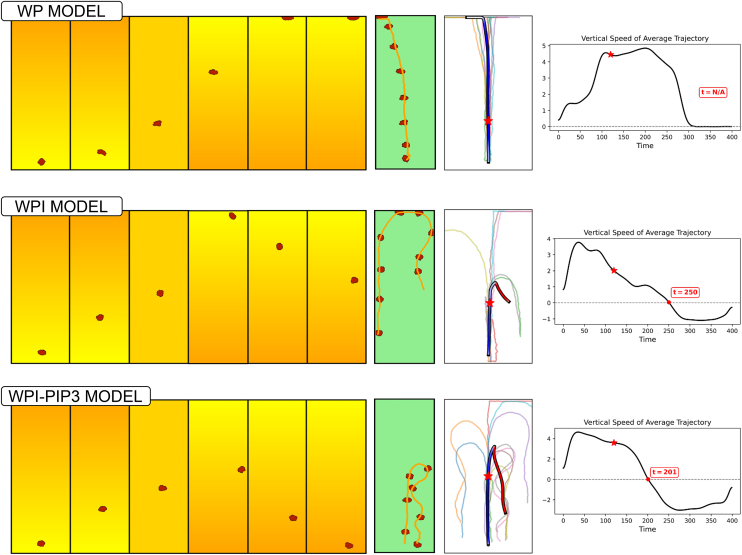 Figure 9
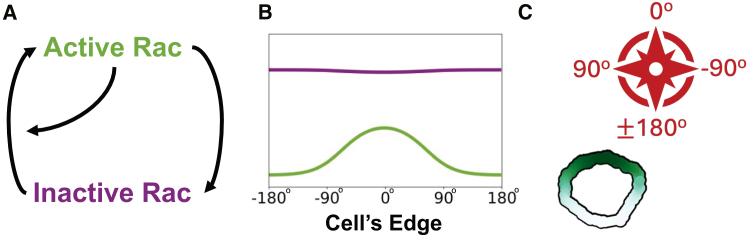 Figure 10
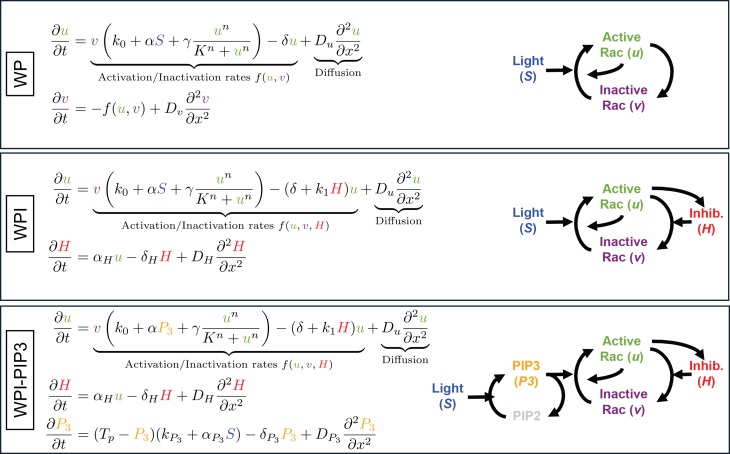 Figure 11
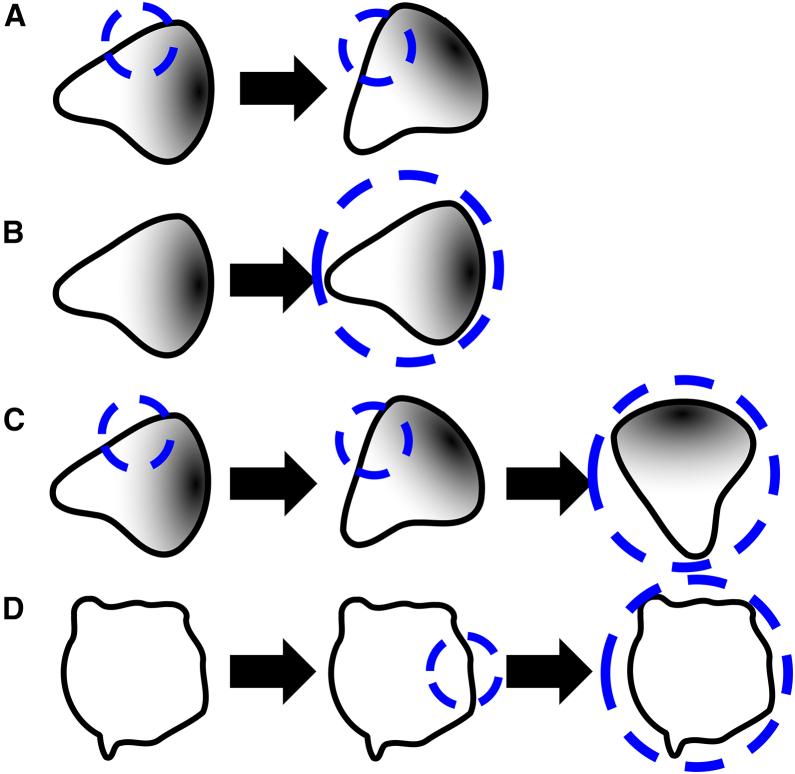 Figure 12
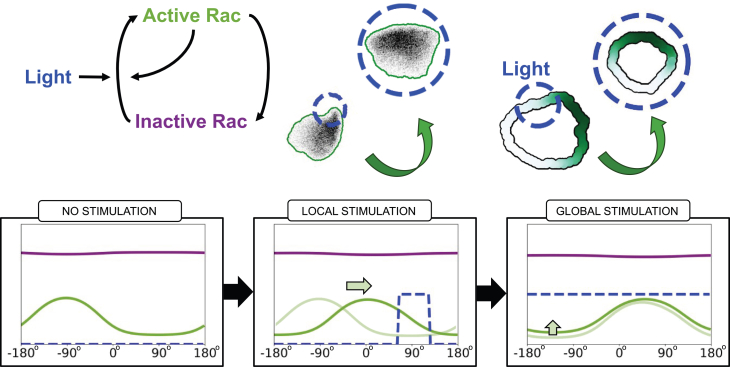 Figure 13
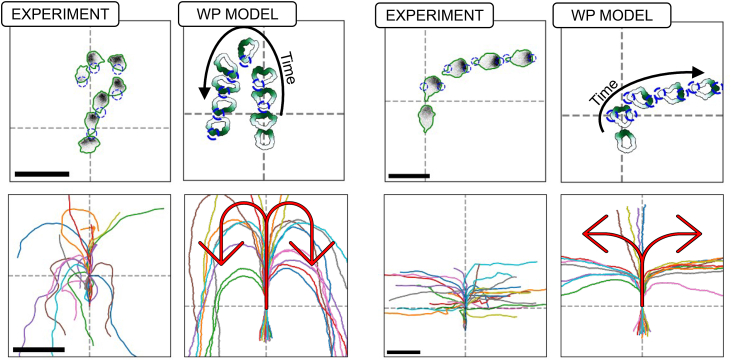 Figure 14
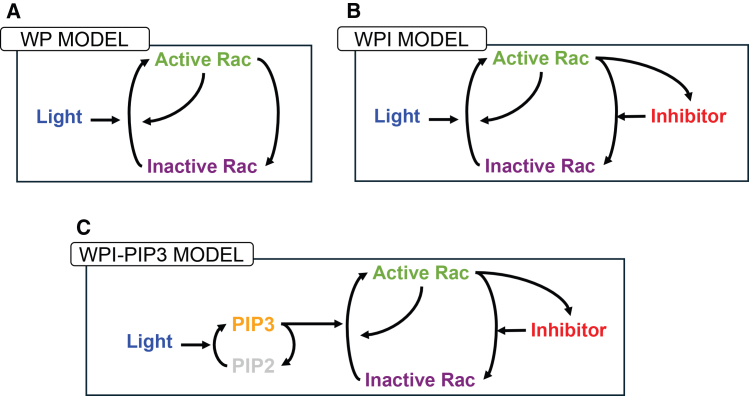 Figure 15
 Figure 16
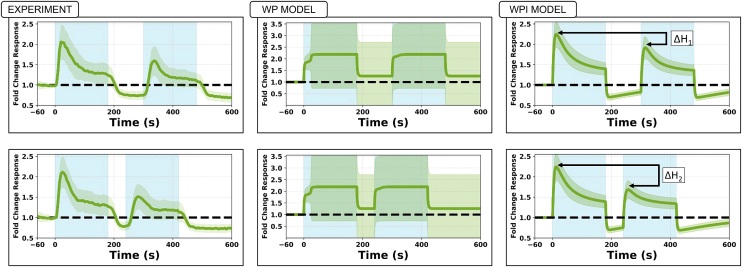 Figure 17
Peer Reviews
No public reviews on file for this paper yet. If you reviewed it on a platform where reviews are public (OpenReview, ICLR, NeurIPS, ICML), you can paste yours below so the community can read it here.
Videos
No videos yet. Explain this paper in a talk, walkthrough, or lecture? Add one.
Taxonomy
TopicsGene Regulatory Network Analysis · Cellular Mechanics and Interactions · Microtubule and mitosis dynamics