Associations between volatile fatty acid profiles, methane emissions, and rumen microbiota in sheep fed Ethiopian forage
Wondimagegne Bekele, Lovely Mahawar, Mohammad Ramin, Addis Simachew, Benedicte Riber Albrectsen, Abiy Zegeye

TL;DR
This study explores how different diets affect methane emissions and the rumen microbiome in Ethiopian sheep, revealing complex interactions between feed, microbes, and fermentation products.
Contribution
The study provides new insights into the associations between diet, rumen microbiota, and methane emissions in sheep using local forage.
Findings
CH4 abatement diets reduced Methanobrevibacter abundance and increased Methanosphaera presence.
Acacia increased acetate, while BSG increased propionate, with strong correlations among volatile fatty acids.
Methanomicrobium was most strongly associated with CH4 intensity, while Methanobrevibacter and Methanosphaera were negatively correlated.
Abstract
This study was part of an in vivo investigation of methane (CH4) abatement feed on local Menz breed sheep in Ethiopia, conducted over 90 days period using a randomized complete block design. Sheep were subjected to four dietary treatments: Control, Acacia (Acacia nilotica), BSG (Brewer's Spent Grain), and Ziziphus (Ziziphus spina-christi). The aim of the study was to investigate the rumen microbial community composition, diversity, and their relationships with CH4 intensity. Rumen fluid was collected on days 0 (SD_0), 45 (SD_45), and 90 (SD_90), using an esophageal tube. The dynamics of the bacterial and archaeal domains were assessed by 16S rRNA gene sequencing. The sequencing results showed that 92.9% of ASVs were Bacteria, and 0.05% Archaea. At the genus level, Rikenellaceae RC9 gut group (18%), Prevotella (17%), and Candidatus Saccharimonas (8.9%) were the most abundant Bacteria,…
Genes, proteins, chemicals, diseases, species, mutations and cell lines named across the full text — each resolved to its canonical identifier and authoritative record.
Click any figure to enlarge with its caption.
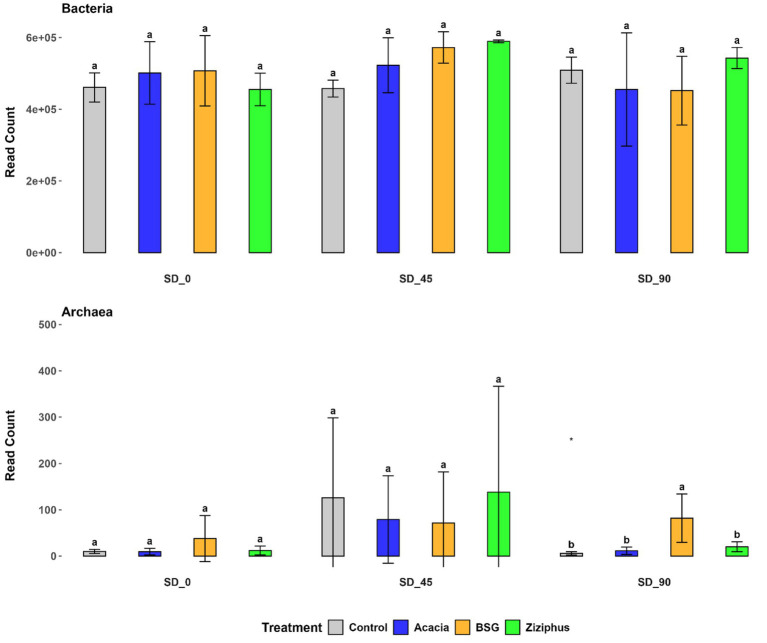 Figure 1
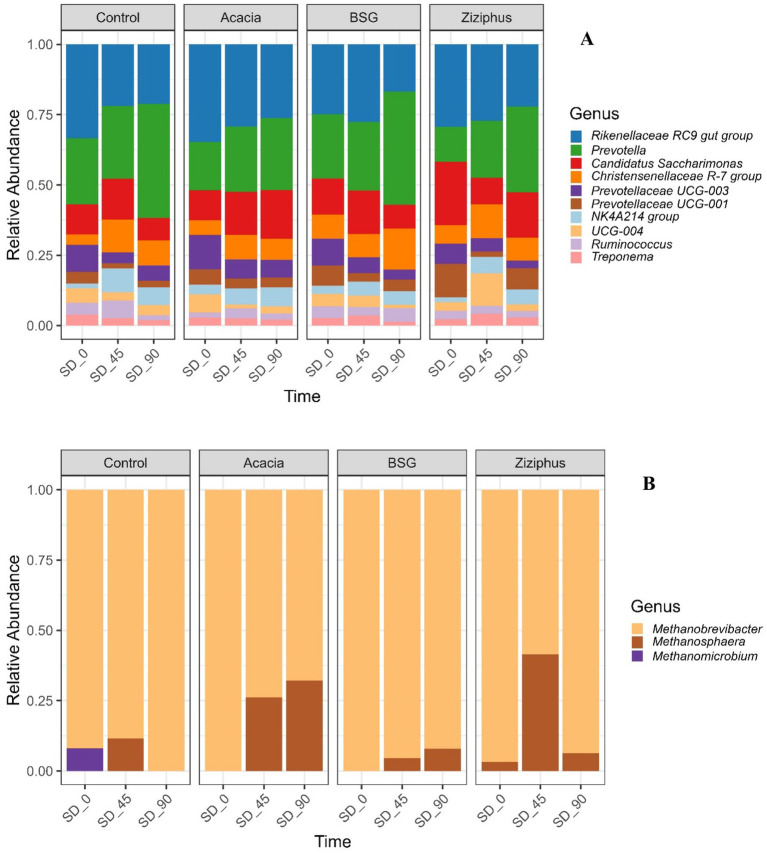 Figure 2
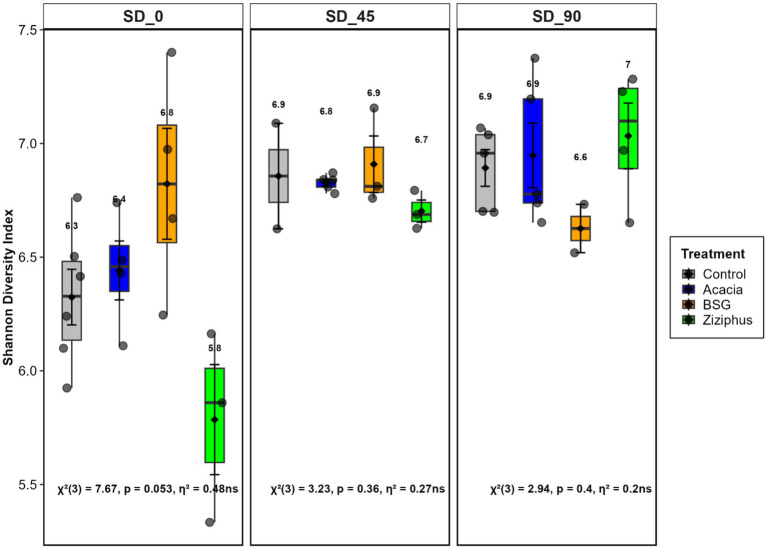 Figure 3
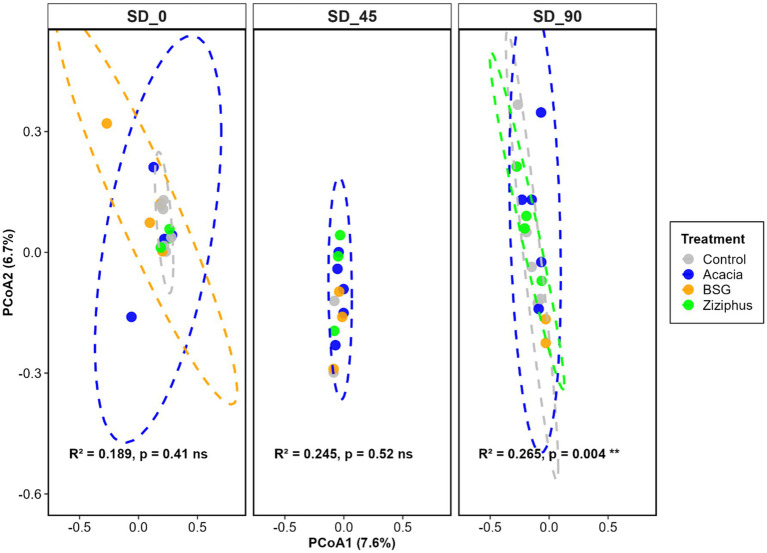 Figure 4
Peer Reviews
No public reviews on file for this paper yet. If you reviewed it on a platform where reviews are public (OpenReview, ICLR, NeurIPS, ICML), you can paste yours below so the community can read it here.
Videos
No videos yet. Explain this paper in a talk, walkthrough, or lecture? Add one.
Taxonomy
TopicsRuminant Nutrition and Digestive Physiology · Odor and Emission Control Technologies · Gut microbiota and health