Acid ceramidase expression and biomarker potential in patients with locally advanced rectal cancer
Jasna Bjelanovic, Katarina Zeljic, Marko Miladinov, Goran Barisic, Sandra Dragicevic

TL;DR
This study investigates acid ceramidase in rectal cancer patients, finding a link between serum levels and tumor cell death markers.
Contribution
The study reveals a novel inverse relationship between serum acid ceramidase levels and pro-apoptotic tumor status in rectal cancer.
Findings
ASAH1 expression is significantly reduced in tumor tissue compared to non-tumor tissue in rectal cancer patients.
Serum acid ceramidase levels negatively correlate with the BAX/BCL2 ratio in tumor tissue.
ASAH1 expression and serum AC levels do not correlate with survival or treatment response in rectal cancer patients.
Abstract
Acid ceramidase (AC), a pivotal enzyme in sphingolipid metabolism, has been associated with various cancers; however, its specific role in rectal cancer remains poorly understood. This study aimed to explore the clinical significance of AC gene and protein expression in rectal cancer. We analyzed the expression of ASAH1, BAX, and BCL2 through quantitative Real-Time PCR in paired tumor and non-tumor tissue samples obtained from patients with locally advanced rectal cancer (LARC) prior to neoadjuvant chemoradiotherapy. Additionally, serum AC levels and standard biochemical parameters were assessed. We further evaluated ASAH1 expression using RNA-seq data from publicly available TCGA-READ datasets accessed via the UCSC Xena Browser. Two approaches indicated a significant reduction in ASAH1 expression in tumor tissue (P ═ 0.004 and P < 0.001, respectively). Receiver operating characteristic…
Genes, proteins, chemicals, diseases, species, mutations and cell lines named across the full text — each resolved to its canonical identifier and authoritative record.
Click any figure to enlarge with its caption.
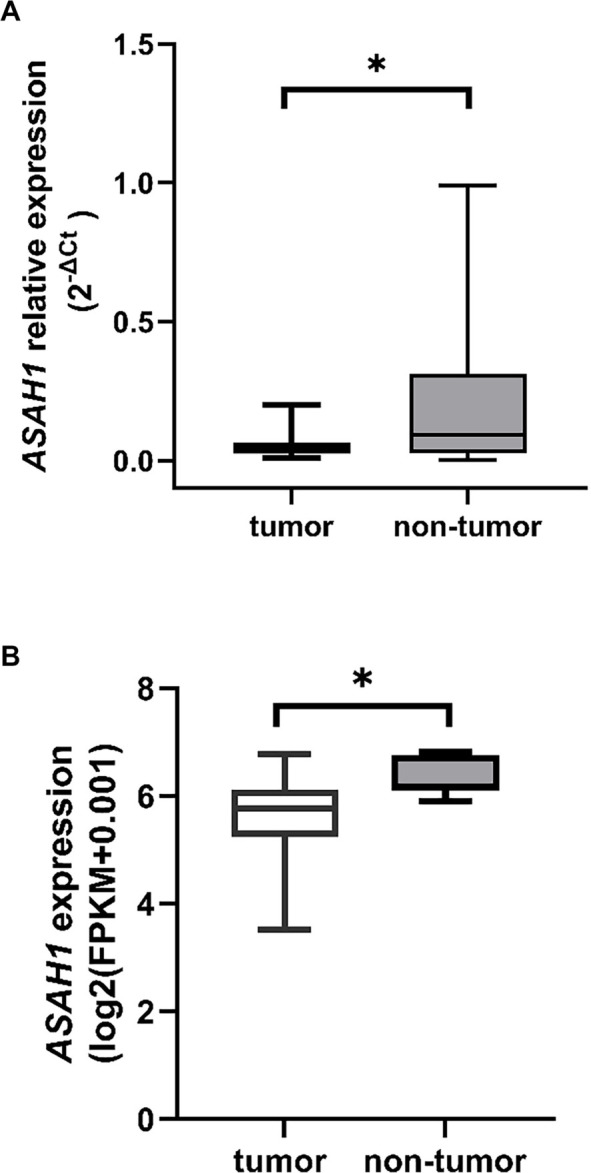 Figure 1
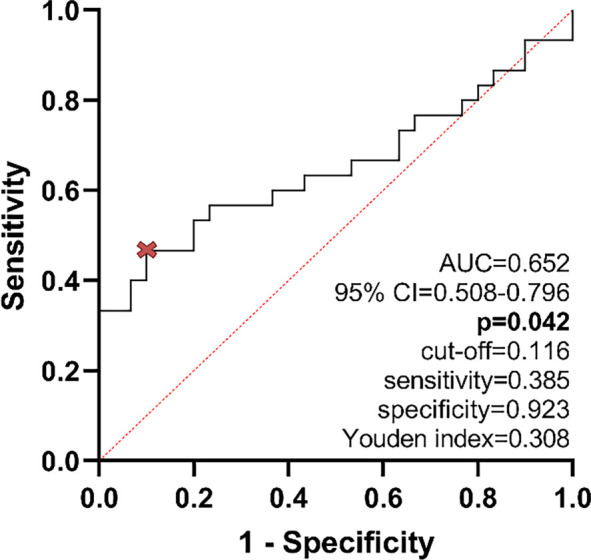 Figure 2
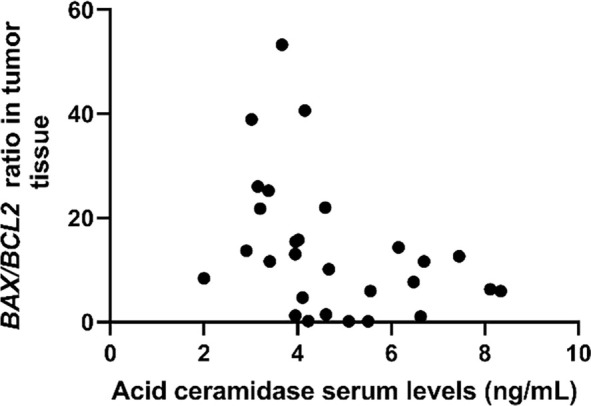 Figure 3
Peer Reviews
No public reviews on file for this paper yet. If you reviewed it on a platform where reviews are public (OpenReview, ICLR, NeurIPS, ICML), you can paste yours below so the community can read it here.
Videos
No videos yet. Explain this paper in a talk, walkthrough, or lecture? Add one.
Taxonomy
TopicsSphingolipid Metabolism and Signaling · Amyloidosis: Diagnosis, Treatment, Outcomes · Enzyme function and inhibition