Set targets, assess response, intervene early to achieve minimal disease activity in atopic dermatitis (STRIVE AD): A modified Delphi consensus project to optimize management of atopic dermatitis in the United Kingdom
Maria Angeliki Gkini, Helen Alexander, Maria Barfoot, Alberto Barea, Paula E. Beattie, Firas C. Kreeshan, Deborah Moffitt, Padma Mohandas, Andrew E. Pink, Andrew Proctor, Ann Sergeant, Laura J. Savage

TL;DR
Experts in the UK developed consensus guidelines to better manage atopic dermatitis by focusing on patient needs, early intervention, and consistent severity assessments.
Contribution
A UK-specific consensus project using a modified Delphi method to optimize atopic dermatitis management through practical clinical recommendations.
Findings
Strong consensus (≥90%) was achieved for 24 out of 27 statements across five topics.
Recommendations emphasize patient-centric care, early intervention, and consistent severity assessment.
The consensus aimed to be practical for everyday clinical use in the UK.
Abstract
Guidelines for the management and treatment of atopic dermatitis have been extensively published in Europe and globally, however these are not always relevant to the United Kingdom (UK) clinical setting. To develop consensus statements for the optimized management of adults and children with atopic dermatitis in the UK. Consensus statements were developed by an expert advisory panel following a targeted literature review, based on 5 topics (patient centric approach, assessing severity consistently, setting treatment targets, early intervention, and optimizing treatment). Consensus statements were voted on using a 5-point Likert scale in a Delphi over 3 rounds by 12 multidisciplinary, geographically spread participants. Consensus was reached if ≥75% of the voting participants rated the statement as 4 or 5. Strong consensus (≥90%) was achieved for 24 out of 27 statements. The level of…
Genes, proteins, chemicals, diseases, species, mutations and cell lines named across the full text — each resolved to its canonical identifier and authoritative record.
Click any figure to enlarge with its caption.
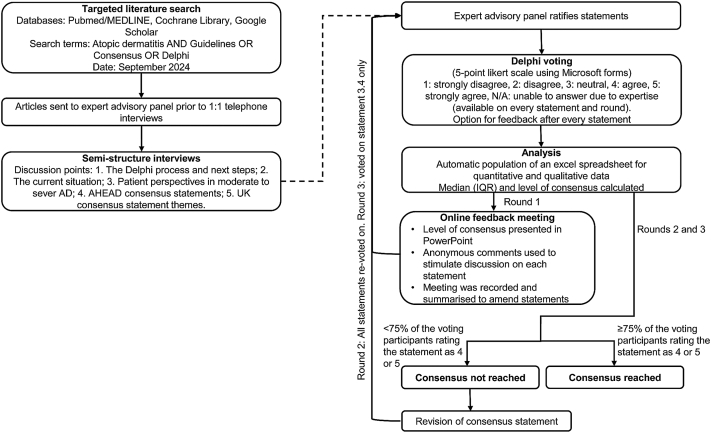 Figure 1
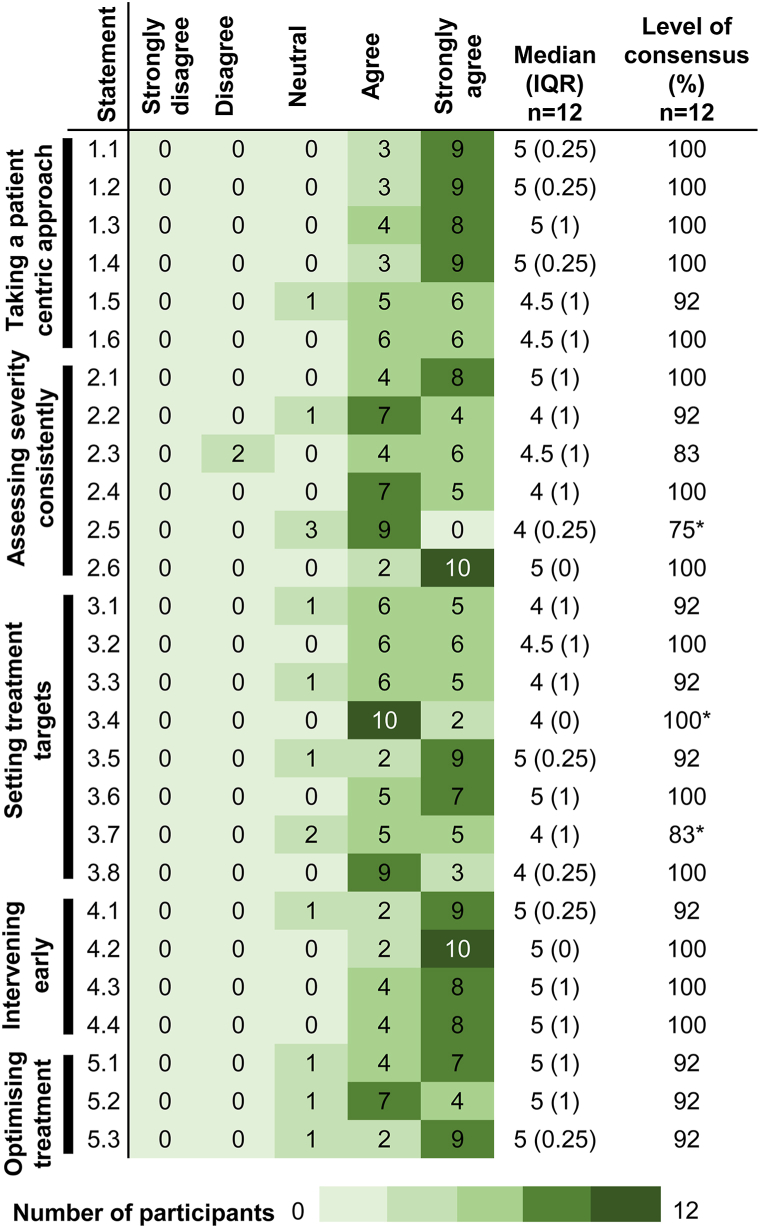 Figure 2
Peer Reviews
No public reviews on file for this paper yet. If you reviewed it on a platform where reviews are public (OpenReview, ICLR, NeurIPS, ICML), you can paste yours below so the community can read it here.
Videos
No videos yet. Explain this paper in a talk, walkthrough, or lecture? Add one.
Taxonomy
TopicsDermatology and Skin Diseases · Delphi Technique in Research · Asthma and respiratory diseases