A new case of Echinococcus ortleppi infection diagnosed by next-generation sequencing in China
Xishuai Jia, Junhua Tian, Ming Huang, Xuwei Zhou, Jing Liu, Hai Jiang, Kun Li

TL;DR
A rare human infection by Echinococcus ortleppi was identified in China using next-generation sequencing, highlighting a possible hidden transmission route.
Contribution
This is the third reported E. ortleppi infection case in China, identified through next-generation sequencing.
Findings
The patient was infected with Echinococcus ortleppi, a rare cause of cystic echinococcosis.
The parasite's mitochondrion sequence showed 99.92% identity to E. ortleppi from cattle in Japan.
The infection source remains unclear, suggesting a hidden transmission route in China.
Abstract
Cystic echinococcosis is an important parasitic zoonosis infecting numerous humans with high morbidity and mortality. As one of the etiologic agents, Echinococcus ortleppi infection in humans has been very rare. In this study, a 27-year-old man was diagnosed with cystic echinococcosis in Wuhan City of China, a non-endemic area. Next-generation sequencing identified that the etiologic agent was E. ortleppi. Its complete mitochondrion sequence (13,600 bp) has 99.92% identity to E. ortleppi from cattle in Japan. This is the third reported E. ortleppi infection case in China. Although extensive epidemiological investigations were performed, the infection source of this patient is still unclear. It is possible that there exists some hidden or unrecognized route of E. ortleppi transmission in China. Further investigation is needed to figure out and eliminate the risk factors.
Genes, proteins, chemicals, diseases, species, mutations and cell lines named across the full text — each resolved to its canonical identifier and authoritative record.
Click any figure to enlarge with its caption.
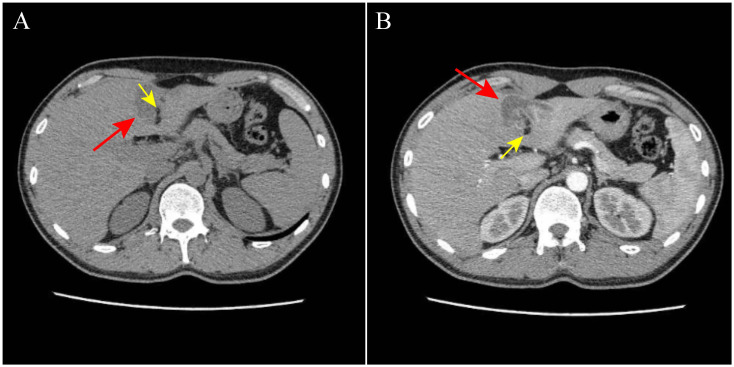 Figure 1
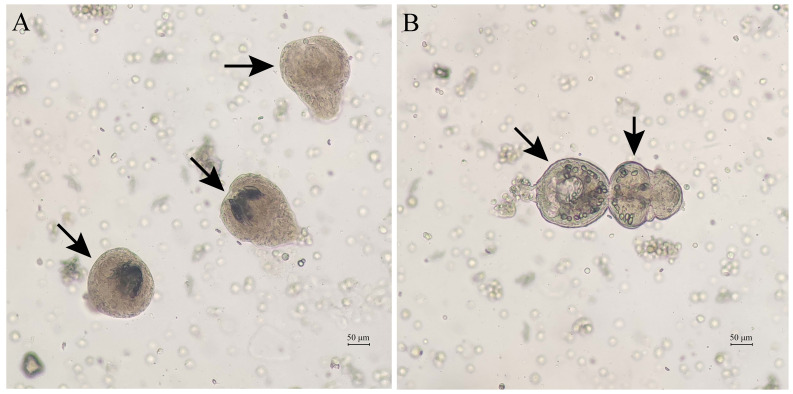 Figure 2
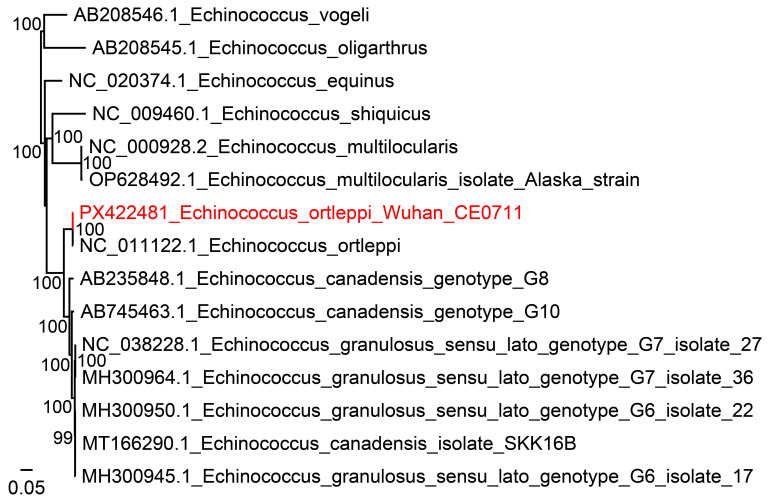 Figure 3
Peer Reviews
No public reviews on file for this paper yet. If you reviewed it on a platform where reviews are public (OpenReview, ICLR, NeurIPS, ICML), you can paste yours below so the community can read it here.
Videos
No videos yet. Explain this paper in a talk, walkthrough, or lecture? Add one.
Taxonomy
TopicsParasitic infections in humans and animals · Echinoderm biology and ecology · Amoebic Infections and Treatments