Loss of SETDB1-mediated H3K9me3 in human neural progenitor cells leads to transcriptional activation of L1 retrotransposons
Ofelia Karlsson, Ninoslav Pandiloski, Vivien Horvath, Anita Adami, Raquel Garza, Pia A Johansson, Jenny G Johansson, Christopher H Douse, Johan Jakobsson

TL;DR
Removing a specific histone mark in human brain cells activates ancient genetic elements called L1 retrotransposons.
Contribution
This study reveals that SETDB1-mediated H3K9me3 is essential for silencing young L1 retrotransposons in human neural progenitor cells.
Findings
Silencing SETDB1 leads to loss of H3K9me3 and reorganization of heterochromatin domains.
Loss of H3K9me3 results in transcriptional activation of young L1 retrotransposons.
Derepression of L1s correlates with loss of CpG DNA methylation at their promoters.
Abstract
Heterochromatin is characterized by an inaccessibility to the transcriptional machinery and is associated with the histone mark H3K9me3. However, studying the functional consequences of heterochromatin loss in human cells has been challenging. Here, we used CRISPRi-mediated silencing of the histone methyltransferase SETDB1 to remove H3K9me3 heterochromatin in human neural progenitor cells. Despite a major loss of H3K9me3 peaks resulting in genome-wide reorganization of heterochromatin domains, silencing of SETDB1 had a limited effect on cell viability. Cells remained proliferative and expressed appropriate marker genes. We found that a key event following the loss of SETDB1-mediated H3K9me3 was the expression of evolutionarily young L1 retrotransposons. Derepression of L1s was associated with a loss of CpG DNA methylation at their promoters, suggesting that deposition of H3K9me3 at the…
Genes, proteins, chemicals, diseases, species, mutations and cell lines named across the full text — each resolved to its canonical identifier and authoritative record.
Click any figure to enlarge with its caption.
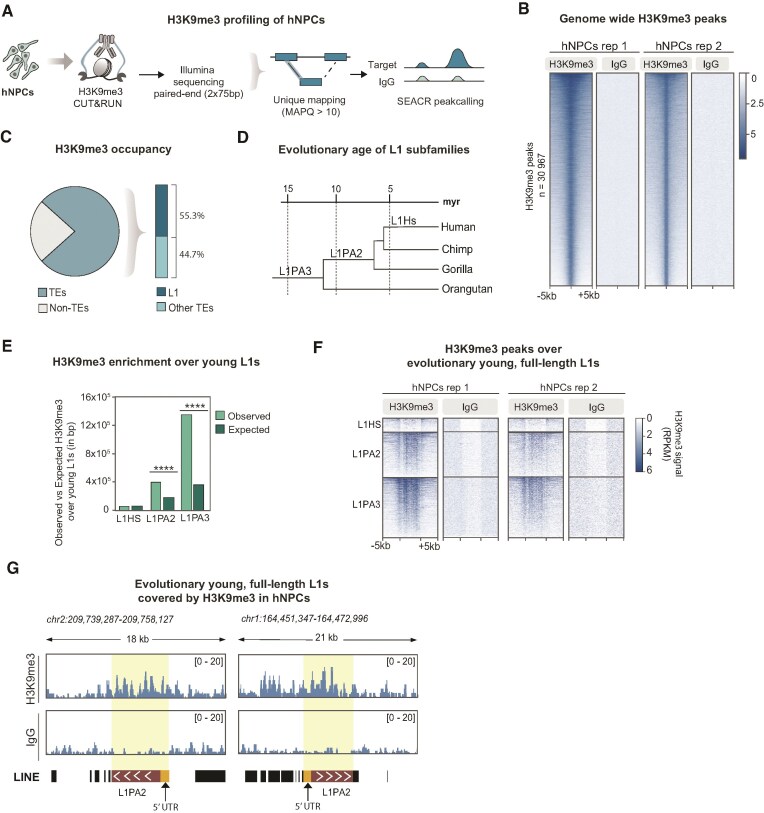 Figure 1
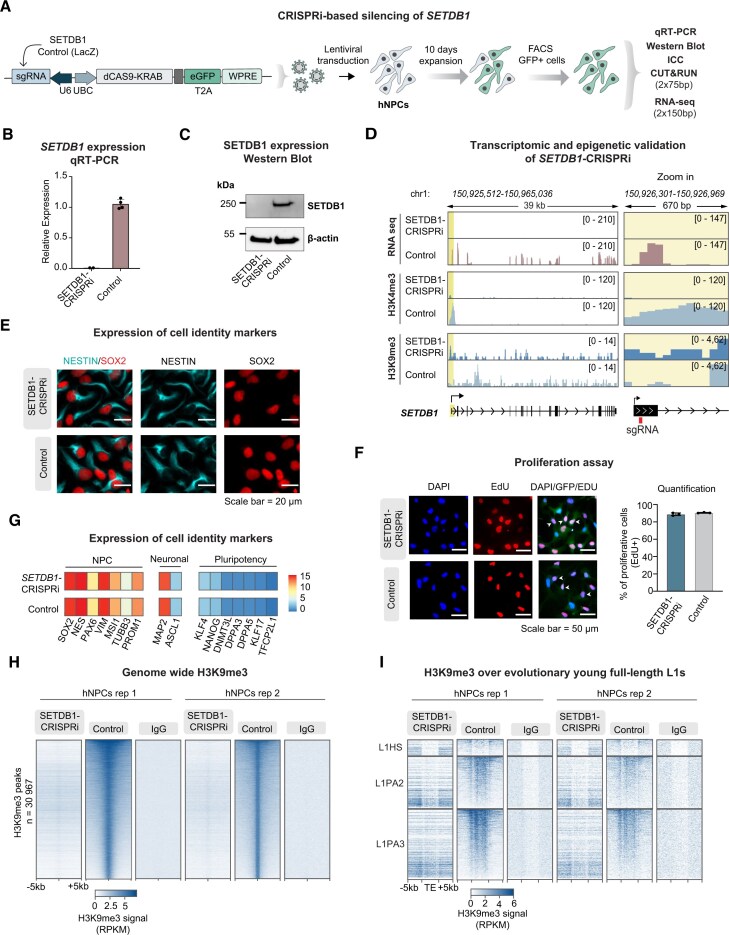 Figure 2
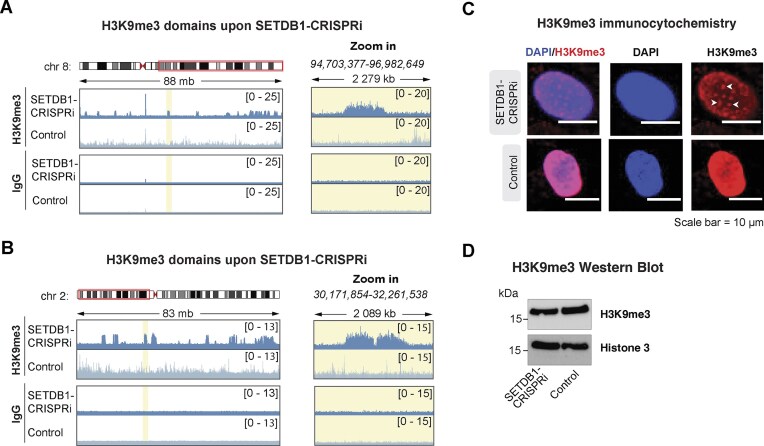 Figure 3
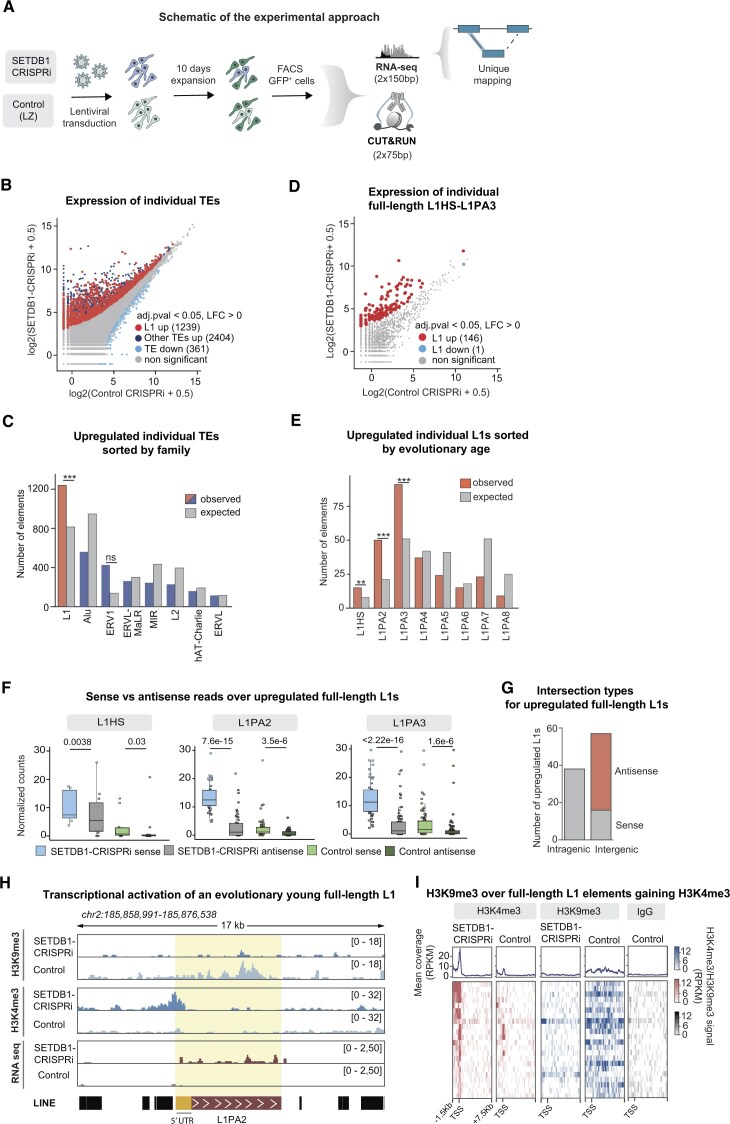 Figure 4
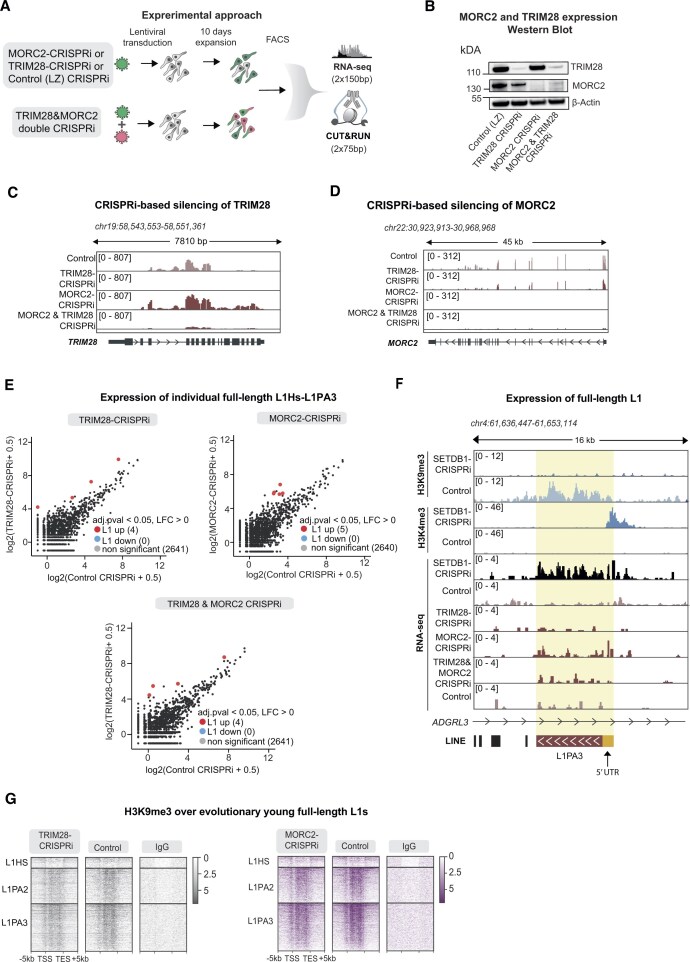 Figure 5
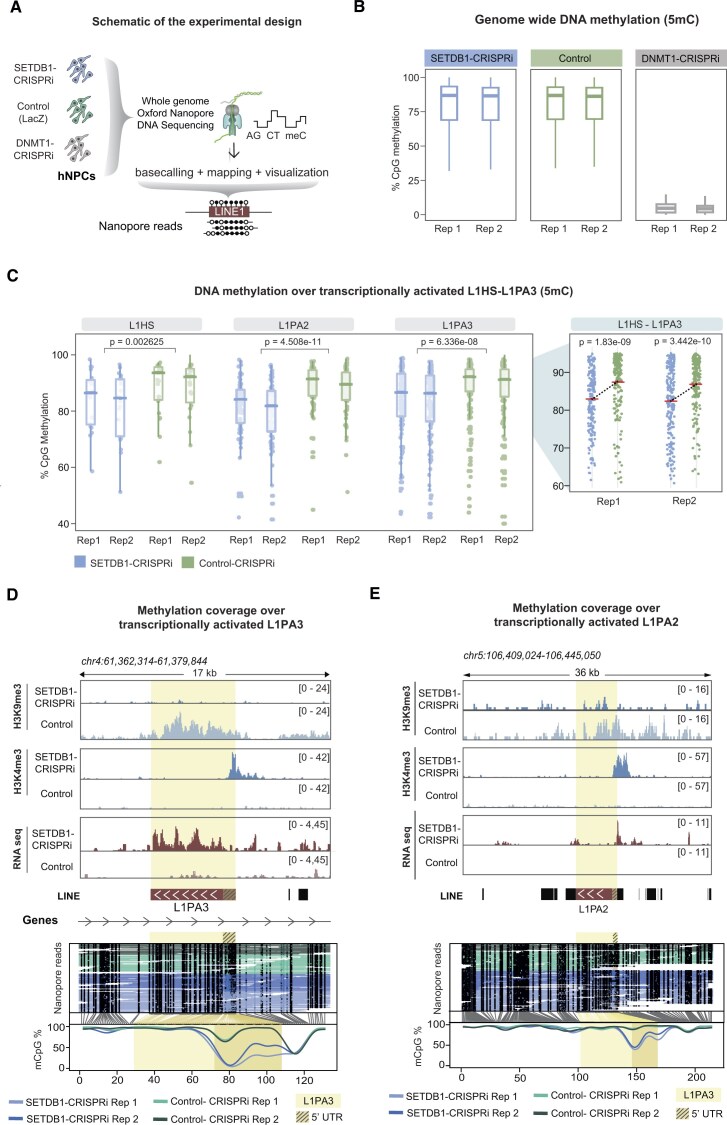 Figure 6
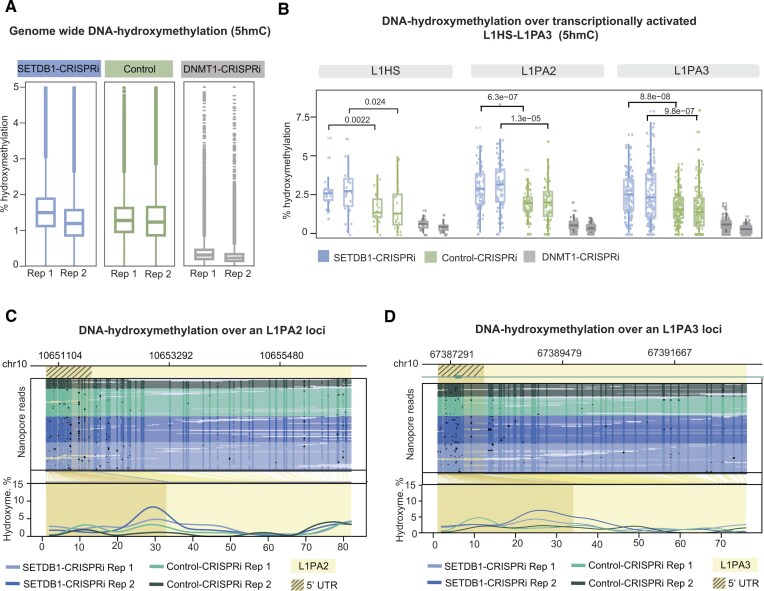 Figure 7
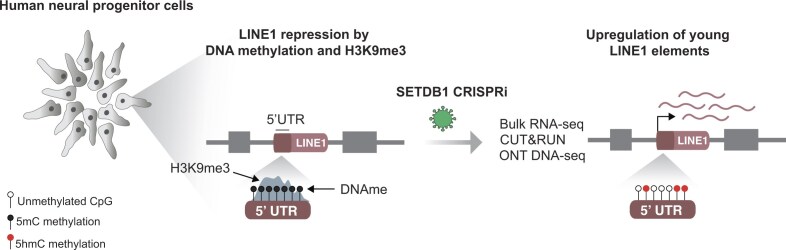 Figure 8
Peer Reviews
No public reviews on file for this paper yet. If you reviewed it on a platform where reviews are public (OpenReview, ICLR, NeurIPS, ICML), you can paste yours below so the community can read it here.
Videos
No videos yet. Explain this paper in a talk, walkthrough, or lecture? Add one.
Taxonomy
TopicsChromosomal and Genetic Variations · Epigenetics and DNA Methylation · Genomics and Chromatin Dynamics