Archaeal G-quadruplexes: a novel model for understanding unusual DNA/RNA structures across the tree of life
Zackie Aktary, Kate Sorg, Anne Cucchiarini, Guglielmo Vesco, Dorian Noury, Rongxin Zhang, Thomas Jourdain, Daniela Verga, Pierre Mahou, Nicolas Olivier, Natália Bohálová, Otília Porubiaková, Václav Brázda, Marie Bouvier, Marta Kwapisz, Béatrice Clouet-d’Orval, Thorsten Allers

TL;DR
This study explores G-quadruplex structures in archaea, revealing their presence and potential roles in DNA and RNA regulation.
Contribution
The study introduces Haloferax volcanii as a novel model organism for investigating G-quadruplex biology in archaea.
Findings
Over 5800 potential G4-forming sequences were identified in Haloferax volcanii's genome.
G4 structures were confirmed in vitro and visualized in vivo in both DNA and RNA.
Candidate enzymes for G4 resolution were identified using helicase-deficient strains.
Abstract
Archaea, a domain of microorganisms found in diverse environments, including the human microbiome, represent the closest known prokaryotic relatives of eukaryotes. This phylogenetic proximity positions them as a relevant model for investigating the evolutionary origins of nucleic acid secondary structures such as G-quadruplexes (G4s) which play regulatory roles in transcription and replication. Although G4s have been extensively studied in eukaryotes, their presence and function in archaea remain poorly characterized. In this study, a genome-wide analysis of the halophilic archaeon Haloferax volcanii identified over 5800 potential G4-forming sequences. Biophysical validation confirmed that many of these sequences adopt stable G4 conformations in vitro. Using G4-specific detection tools and super-resolution microscopy, G4 structures were visualized in vivo in both DNA and RNA across…
Genes, proteins, chemicals, diseases, species, mutations and cell lines named across the full text — each resolved to its canonical identifier and authoritative record.
Click any figure to enlarge with its caption.
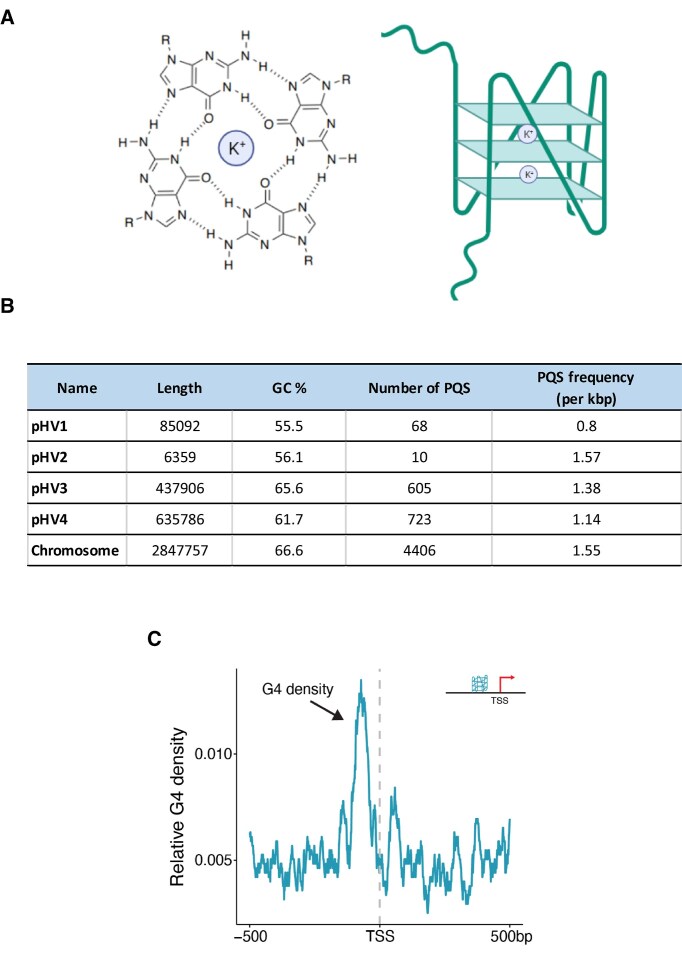 Figure 1
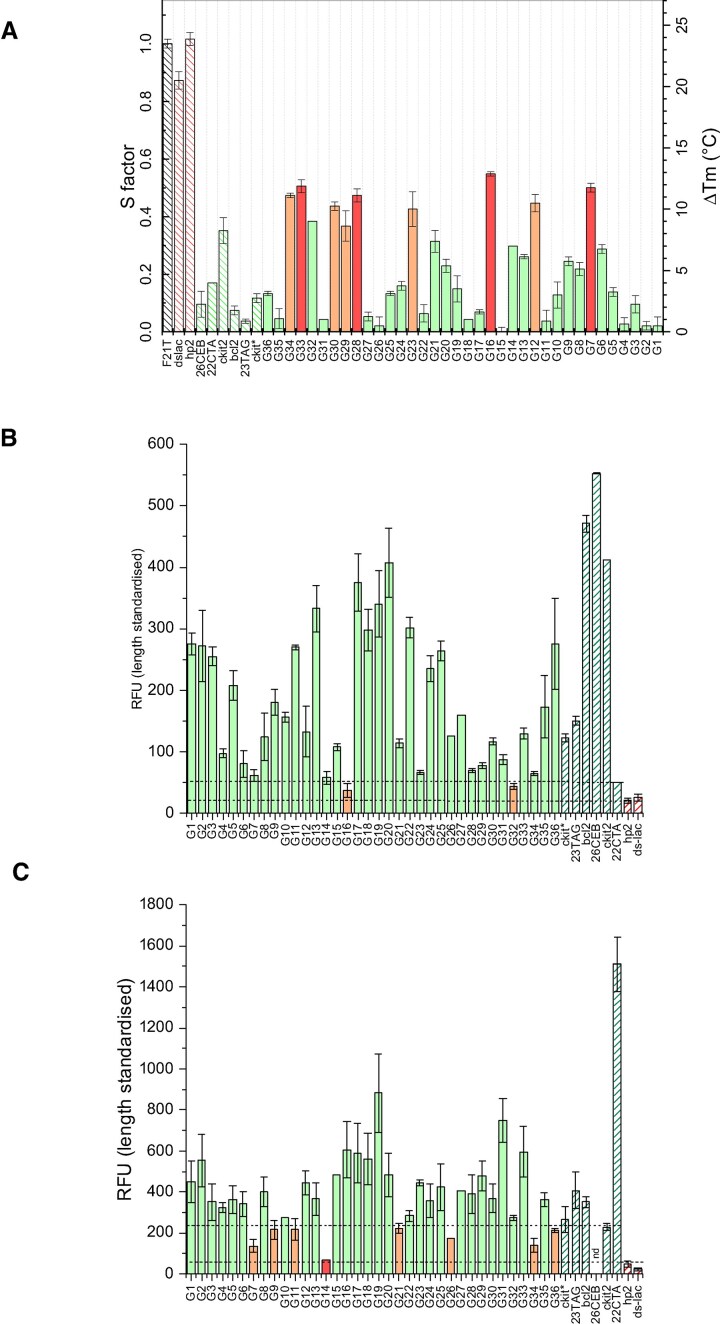 Figure 2
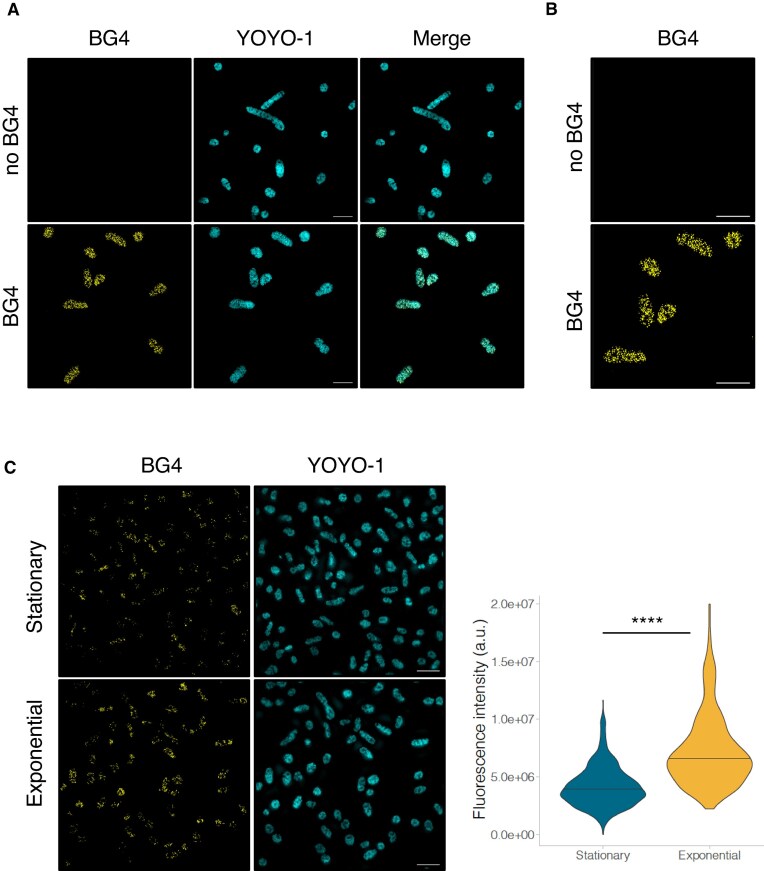 Figure 3
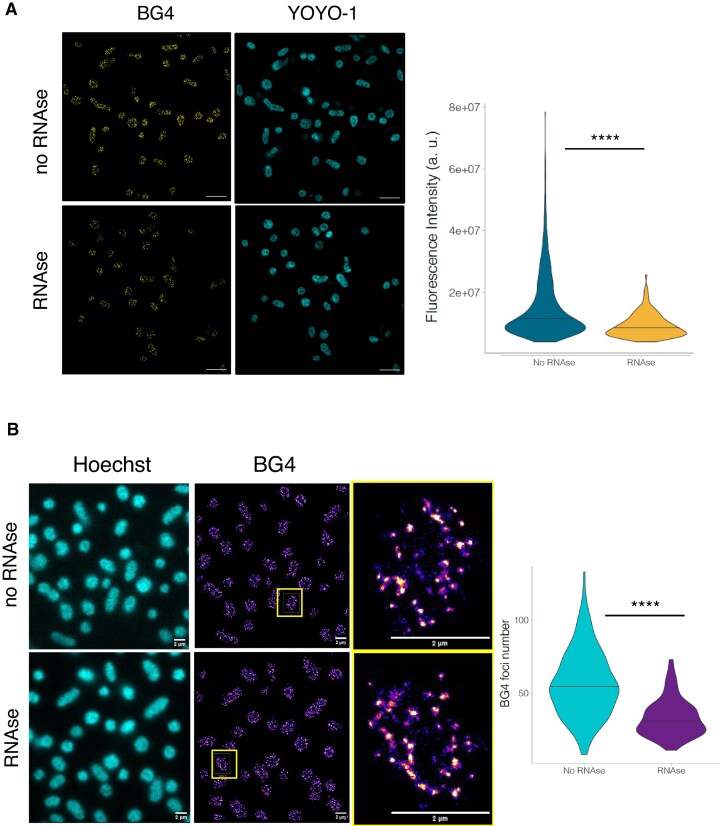 Figure 4
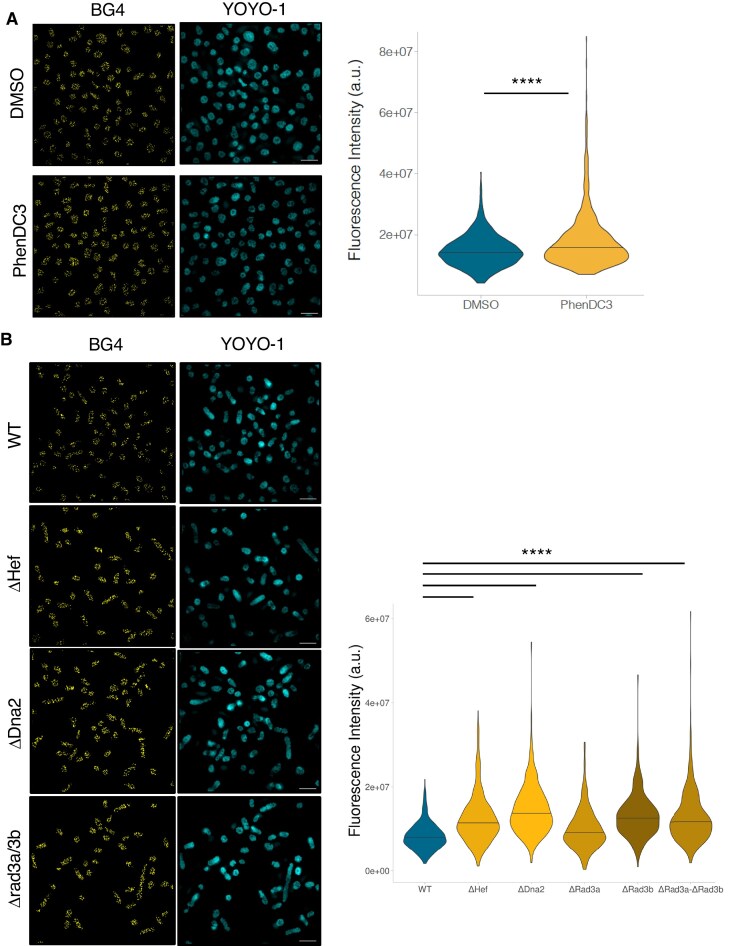 Figure 5
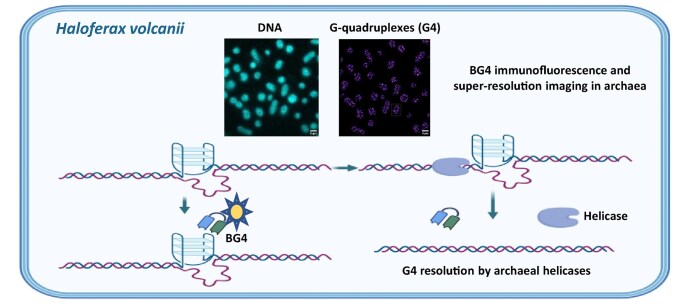 Figure 6
Peer Reviews
No public reviews on file for this paper yet. If you reviewed it on a platform where reviews are public (OpenReview, ICLR, NeurIPS, ICML), you can paste yours below so the community can read it here.
Videos
No videos yet. Explain this paper in a talk, walkthrough, or lecture? Add one.
Taxonomy
TopicsDNA and Nucleic Acid Chemistry · Origins and Evolution of Life · Cancer therapeutics and mechanisms