Dual-single-guide RNA strategy improves CRISPR-mediated homology-directed repair in Aspergillus
Mingxin Fu, Jing Wang, Jingyi Li, Yao Zhou, Xiaofei Huang, Zehan Jia, Yiqing Luo, Xinyu Tan, Yan Gao, Bingzi Yu, Yuting Duan, Qianyun Bu, Xiaoying Li, Yifan Wang, Naoki Takaya, Shengmin Zhou

TL;DR
This paper introduces a new CRISPR strategy to improve gene editing efficiency in fungi by aligning donor DNA with the target site.
Contribution
A dual-single-guide RNA design that enhances homology-directed repair by creating a geometry-matched strand-invasion window.
Findings
Integration efficiency drops when insertion sites are misaligned with the strand-invasion path.
The dual-single-guide RNA design significantly improves knock-in outcomes across various editing tasks.
The strategy generalizes across multiple fungal species and supports precise genome engineering.
Abstract
CRISPR–Cas9 knock-in efficiency is often limited by geometric misalignment between donor DNA and the endogenous strand-invasion path. In Aspergillus nidulans, we found that integration drops sharply when the insertion site is offset from the invasion entry point, producing premature annealing or unsupported 3′ ends that stall DNA synthesis. Chromatin immunoprecipitation-based profiling shows directional loading of the RAD51 homolog UvsC around Cas9-induced double-strand breaks, thereby defining the spatial origin of strand invasion. Guided by this insight, we introduce a dual-single-guide RNA design that places two cuts flanking the insertion site to create a geometry-matched strand-invasion window. This alignment consistently and markedly increases homology-directed-repair-mediated integration across insert sizes and editing tasks—including C-terminal tagging, bidirectional promoter…
Genes, proteins, chemicals, diseases, species, mutations and cell lines named across the full text — each resolved to its canonical identifier and authoritative record.
Click any figure to enlarge with its caption.
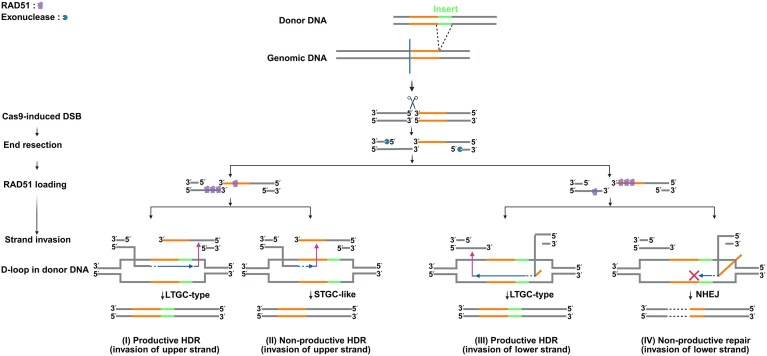 Figure 1
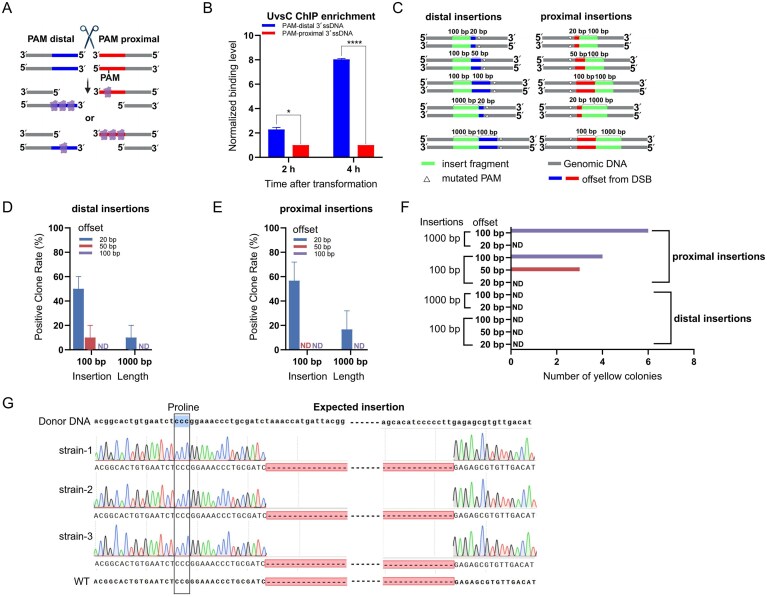 Figure 2
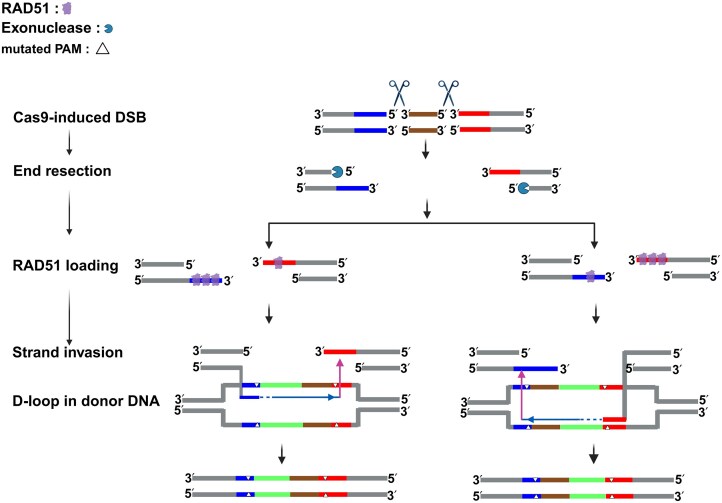 Figure 3
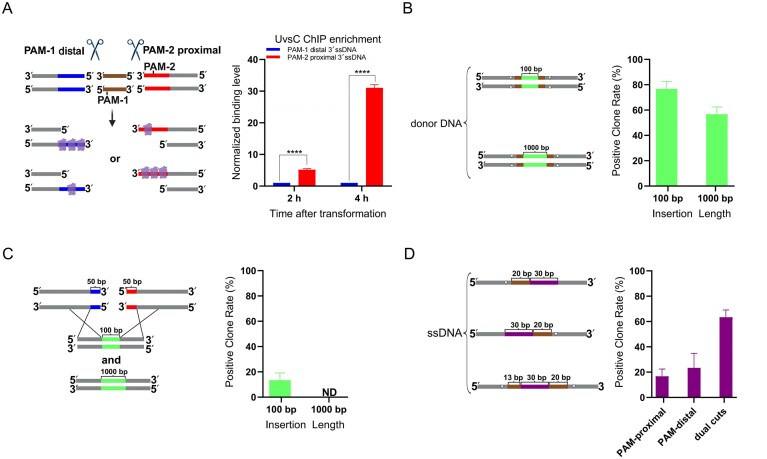 Figure 4
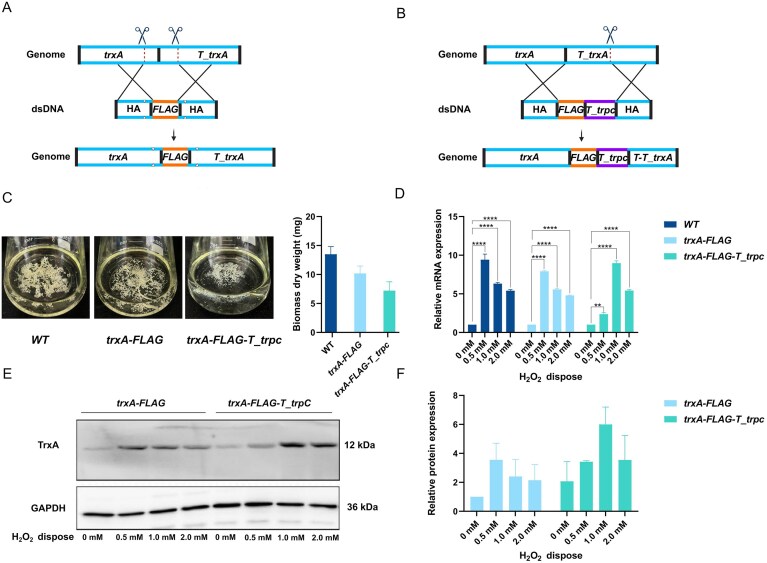 Figure 5
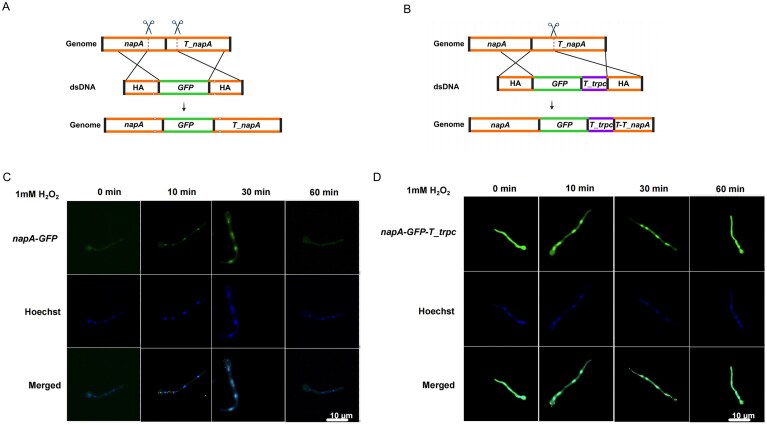 Figure 6
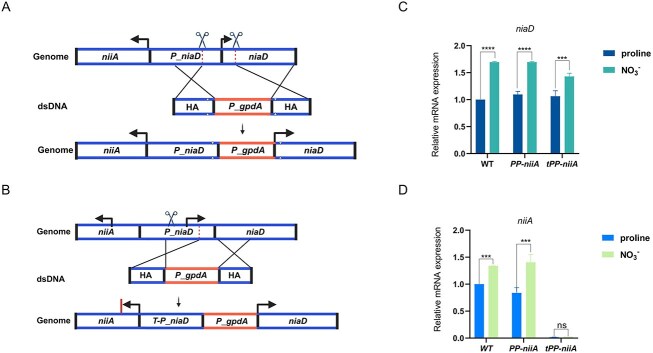 Figure 7
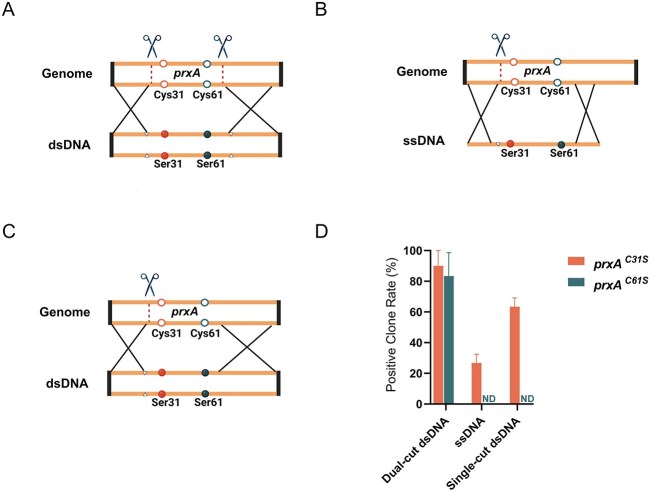 Figure 8
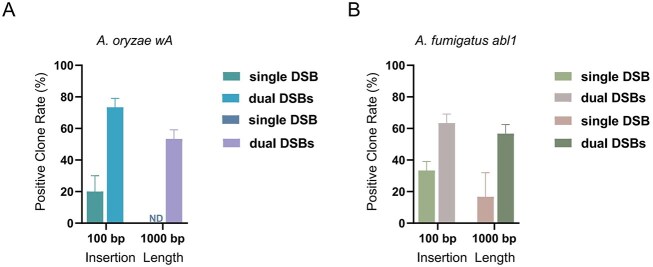 Figure 9
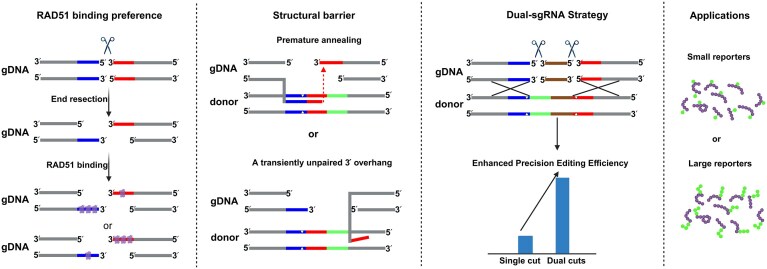 Figure 10
Peer Reviews
No public reviews on file for this paper yet. If you reviewed it on a platform where reviews are public (OpenReview, ICLR, NeurIPS, ICML), you can paste yours below so the community can read it here.
Videos
No videos yet. Explain this paper in a talk, walkthrough, or lecture? Add one.
Taxonomy
TopicsCRISPR and Genetic Engineering · Fungal and yeast genetics research · Bacterial Genetics and Biotechnology