Effect of the implementation of a Birthing on Country service at a rural site, Waminda, compared to standard care for First Nations Australians: a prospective, non-randomised, interventional trial
Yu Gao, Sue Kildea, Rebecca Coddington, Melanie Briggs, Cleone Wellington, Faye Worner, Donna Hartz, Juanita Sherwood, Yvette Roe

TL;DR
A Birthing on Country service in a rural area improved normal births and breastfeeding rates for First Nations Australian women compared to standard care.
Contribution
First evidence of successful implementation of Birthing on Country service and wrap-around care in a rural setting for Aboriginal families.
Findings
Birthing on Country service was associated with more normal births (32.8% vs 21.7%) and higher exclusive breastfeeding rates (75.6% vs 63.3%).
Over 90% of women accessing the service received at least one wrap-around support.
Fewer women in the service had ≥5 antenatal visits compared to standard care (80.6% vs 94.4%).
Abstract
Clinical and cost-effectiveness of a Birthing on Country service has been demonstrated in a metropolitan centre. We sought to evaluate feasibility, clinical effectiveness and wrap-around supports in the rural setting by evaluating Waminda's Birthing on Country service. This prospective, non-randomised, interventional study was conducted in Nowra, Australia (ANZCTR: 12620000874910, study completed). Pre-defined primary outcomes were first assessment with health service in 1st trimester, ≥5 antenatal visits, normal birth, preterm birth, healthy baby and exclusive breastfeeding at discharge. Propensity score matching balanced confounders to calculate treatment effect. Waminda's wrap-around services and their interactions are represented using a network analysis. Relative to standard care, the Birthing on Country service was associated with significantly less women having ≥5 antenatal…
Genes, proteins, chemicals, diseases, species, mutations and cell lines named across the full text — each resolved to its canonical identifier and authoritative record.
Click any figure to enlarge with its caption.
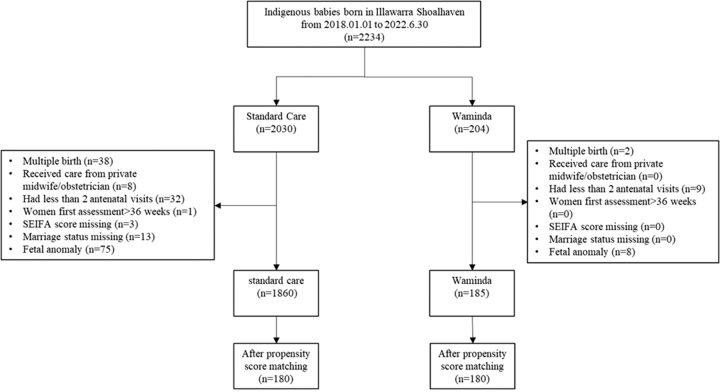 Figure 1
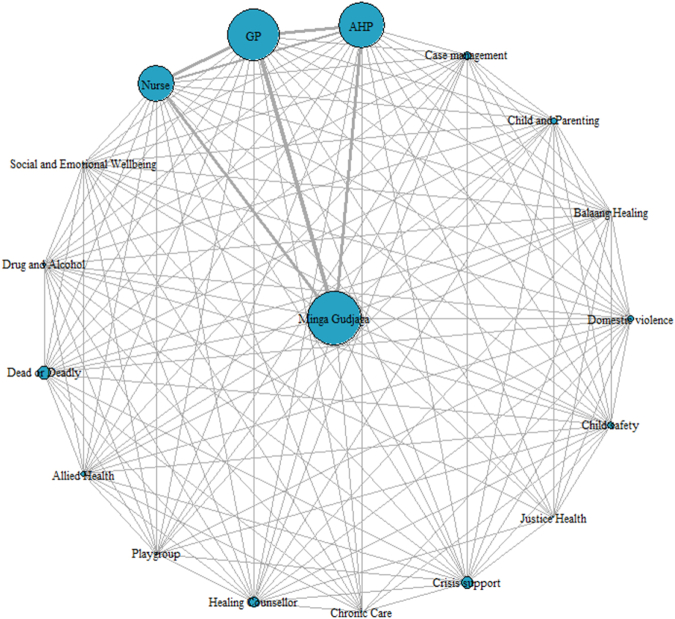 Figure 2
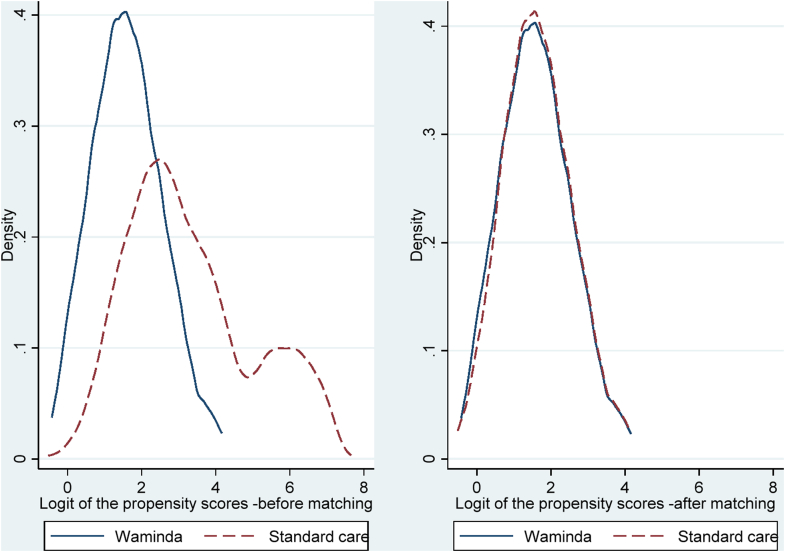 Figure 3
Peer Reviews
No public reviews on file for this paper yet. If you reviewed it on a platform where reviews are public (OpenReview, ICLR, NeurIPS, ICML), you can paste yours below so the community can read it here.
Videos
No videos yet. Explain this paper in a talk, walkthrough, or lecture? Add one.
Taxonomy
TopicsIndigenous Health, Education, and Rights · Australian Indigenous Culture and History · Maternal and Perinatal Health Interventions