Deep Neural Network With a Smooth Monotonic Output Layer for Dynamic Risk Prediction
Zhiyang Zhou, Yu Deng, Lei Liu, Hongmei Jiang, Yifan Peng, Xiaoyun Yang, Yun Zhao, Hongyan Ning, Norrina B. Allen, John T. Wilkins, Kiang Liu, Donald M. Lloyd‐Jones, Lihui Zhao

TL;DR
This paper introduces a new deep learning model for predicting risk over time, avoiding assumptions and discretization to improve accuracy in fields like medicine.
Contribution
The novel Smooth Monotonic Output Layer (SMOL) enables nonparametric estimation of survival functions without discretization or parametric assumptions.
Findings
SMOL achieves state-of-the-art accuracy in predicting individual-level risk for atherosclerotic cardiovascular disease.
The model avoids discretization and parametric assumptions, reducing potential bias in risk predictions.
Experiments were conducted using harmonized data from multiple longitudinal cardiovascular disease studies.
Abstract
Risk prediction is a key component of survival analysis across various fields, including medicine, public health, economics, engineering, and others. The fundamental concern of risk prediction lies in the joint distribution of risk factors and the time to event. The recent success of survival analysis has already been extended to dynamic risk prediction, which incorporates multiple longitudinal observations into predictive models. However, existing methods often rely on parametric model assumptions or discretely approximate survival functions, potentially introducing more bias in predictions. To address these limitations, we introduce a deep neural network featuring a novel output layer termed the Smooth Monotonic Output Layer (SMOL). This model avoids discretization as well as parametric model assumptions. At its core, SMOL takes a general vector as the input and constructs a…
Genes, proteins, chemicals, diseases, species, mutations and cell lines named across the full text — each resolved to its canonical identifier and authoritative record.
Click any figure to enlarge with its caption.
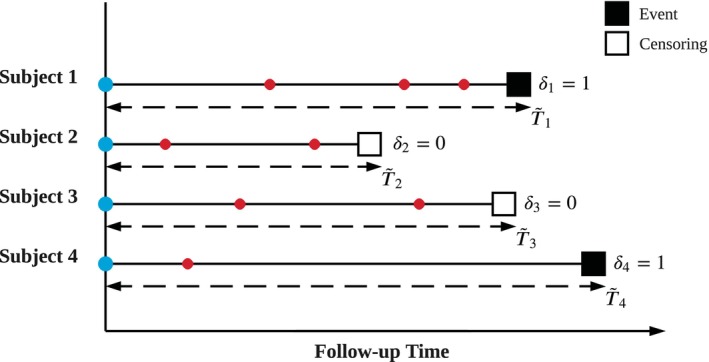 Figure 1
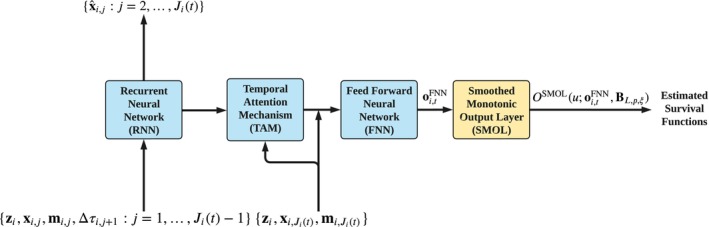 Figure 2
Peer Reviews
No public reviews on file for this paper yet. If you reviewed it on a platform where reviews are public (OpenReview, ICLR, NeurIPS, ICML), you can paste yours below so the community can read it here.
Videos
No videos yet. Explain this paper in a talk, walkthrough, or lecture? Add one.
Taxonomy
TopicsMachine Learning in Healthcare · Artificial Intelligence in Healthcare · Statistical Methods and Inference