Comparative genomics of Pantoea allii lineages and distribution of ecologically relevant traits
Gi Yoon Shin, Stefanie De Armas, Guillermo A. Galván, María I. Siri, Mariah Rojas, Boris A. Vinatzer, Jo Ann E. Asselin, Paul Stodghill, Mei Zhao, Bhabesh Dutta, James Tambong, Brian H. Kvitko

TL;DR
This study explores the genetic diversity of Pantoea allii and how different lineages are associated with onion pathogenicity and ecological niches.
Contribution
The study identifies lineage-specific genomic features linked to onion pathogenicity and ecological adaptation in Pantoea allii.
Findings
Three genetically distinct lineages of Pantoea allii were identified through comparative genomics and phylogenetic analysis.
Lineage-specific distributions of phosphonate biosynthetic gene clusters correlate with onion pathogenicity traits.
Virulence genes like Halophos, HiVir, and alt are localized differently in the genome, reflecting evolutionary plasticity.
Abstract
Pantoea allii, one of four Pantoea species known to cause onion centre rot, is infrequently isolated from onion compared to its closely related onion-pathogenic species in the same genus. To better understand the genomic diversity and genetic determinants of pathogenicity in this species, we analysed a collection of 38 P. allii strains isolated from 2 primary ecological niches, plants and rainwater, across North and South American and African continents using comparative genomics and phylogenetic approaches. Core-genome phylogeny, average nucleotide identity and gene presence–absence analyses revealed three genetically distinct lineages. All strains harboured conserved biosynthetic gene clusters (BGCs) for quorum sensing, carotenoid production, siderophores and thiopeptides. In contrast, two phosphonate BGCs, key determinants of onion pathogenicity, exhibited lineage-specific…
Genes, proteins, chemicals, diseases, species, mutations and cell lines named across the full text — each resolved to its canonical identifier and authoritative record.
Click any figure to enlarge with its caption.
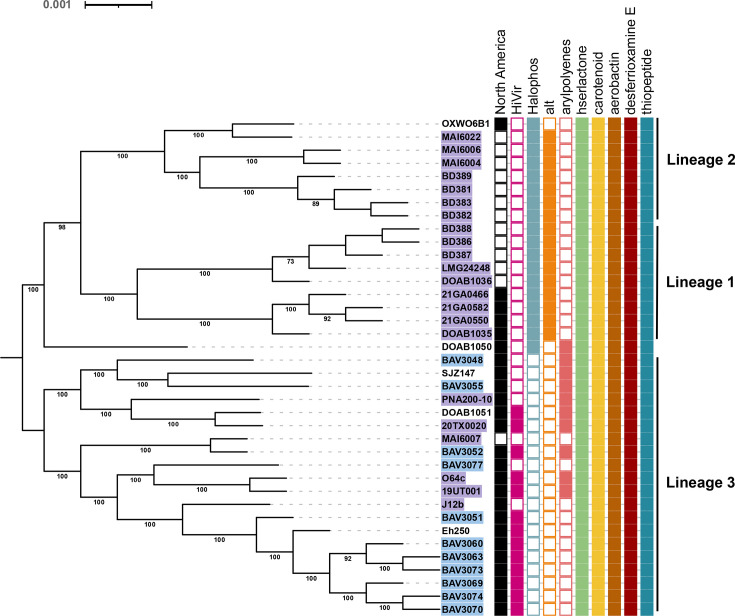 Figure 1
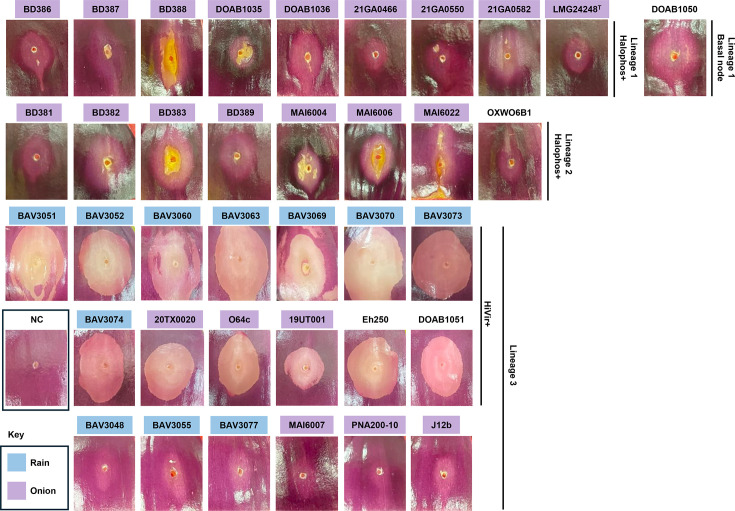 Figure 2
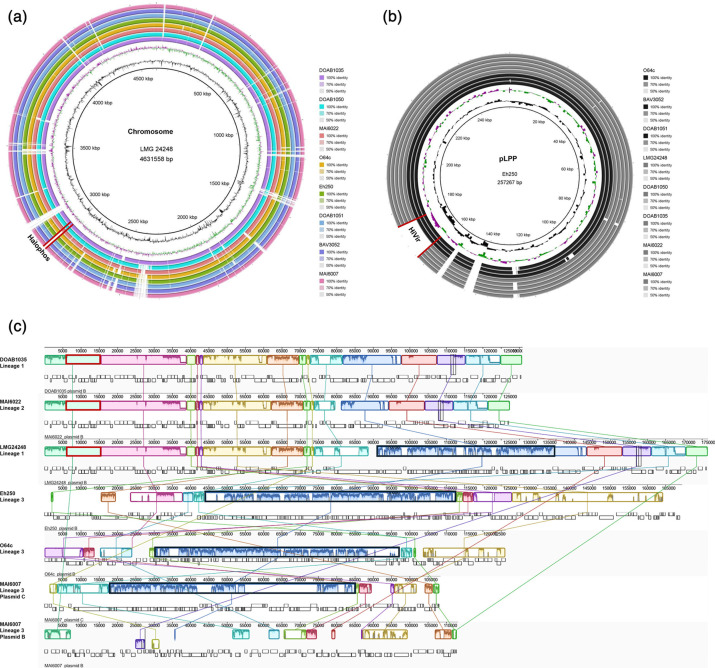 Figure 3
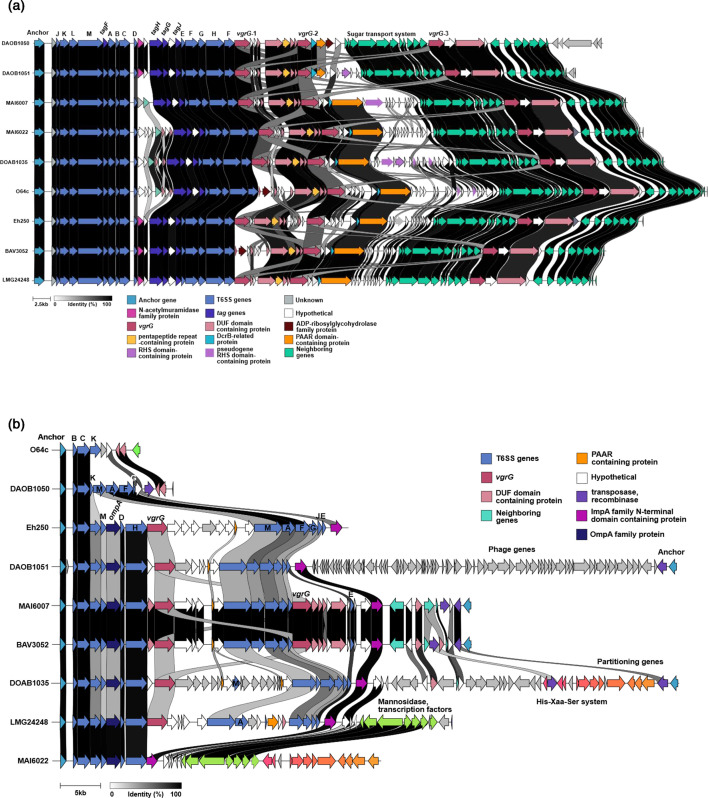 Figure 4
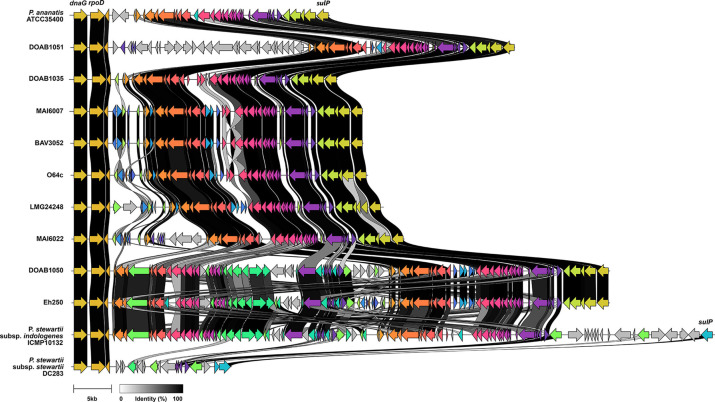 Figure 5
Peer Reviews
No public reviews on file for this paper yet. If you reviewed it on a platform where reviews are public (OpenReview, ICLR, NeurIPS, ICML), you can paste yours below so the community can read it here.
Videos
No videos yet. Explain this paper in a talk, walkthrough, or lecture? Add one.
Taxonomy
TopicsPlant Pathogenic Bacteria Studies · Plant-Microbe Interactions and Immunity · Infections and bacterial resistance