A Volatile Cue From a Specialist Herbivore Primes Gene Expression Against Biotic Stress in Tall Goldenrod (Solidago altissima L.)
Robert J. Witkowski, Lily A. Sudol, Eric C. Yip, John F. Tooker, Tanya Renner

TL;DR
Plants exposed to insect threat cues boost their defenses against unrelated herbivores, showing a lasting primed response.
Contribution
This study reveals that plant defenses primed by a specialist herbivore's volatile cue enhance resistance to unrelated generalist herbivores.
Findings
Primed plants showed increased expression of defense-related genes during herbivory by an unrelated insect.
Hundreds of defense-related genes exhibited a rise and fall in expression in primed plants over 48 hours.
The priming effect suggests that plants can mount stronger, short-term defenses against diverse herbivores.
Abstract
Insect‐derived molecular cues can prime plant defences against herbivore attack. The genes that are sensitive to priming, and how their expression changes on the scale of days, have not been fully resolved. Moreover, priming may affect interactions with insects that are not the source of the priming cue. We primed tall goldenrod (Solidago altissima) plants by exposure to the volatile emission of a specialist herbivore, the goldenrod gall fly (Eurosta solidaginis) then subjected the plants to 48 h of herbivory from an unrelated generalist, corn earworm (Helicoverpa zea). Using RNA sequencing, we identified transcriptome‐wide gene expression patterns between exposed and unexposed plants. We identified biotic stress‐associated genes that were more abundant during herbivory in primed plants, including defence‐related transcription factors, thaumatin‐like receptors and chitinases. We…
Genes, proteins, chemicals, diseases, species, mutations and cell lines named across the full text — each resolved to its canonical identifier and authoritative record.
Click any figure to enlarge with its caption.
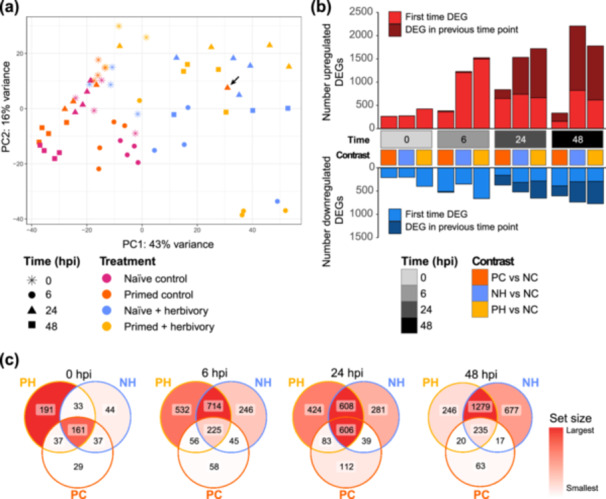 Figure 1
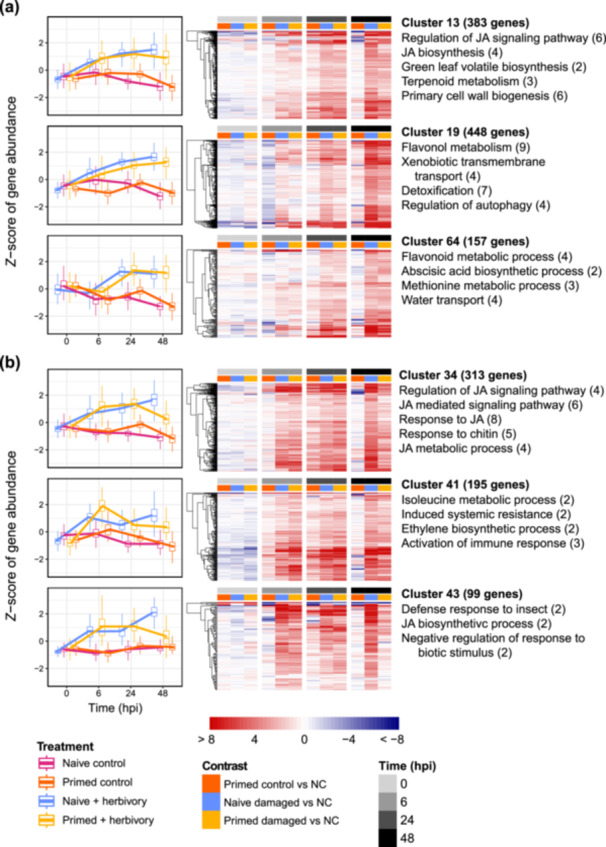 Figure 2
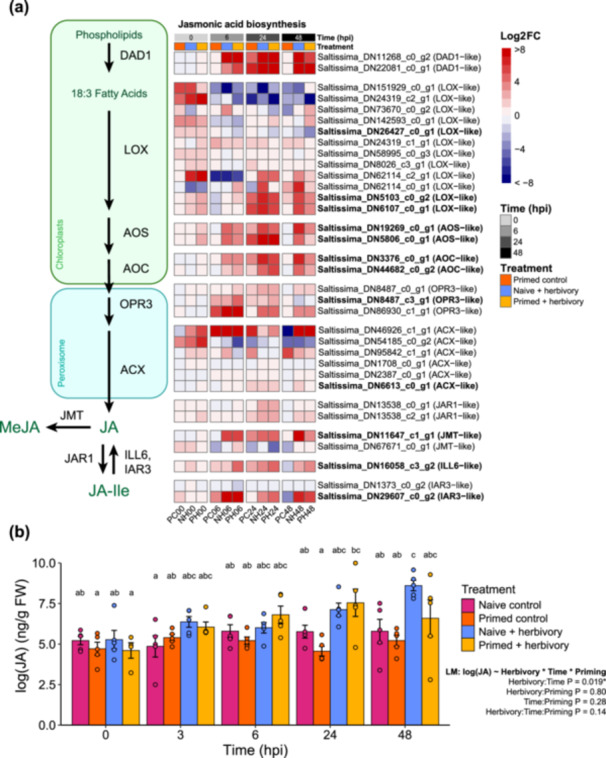 Figure 3
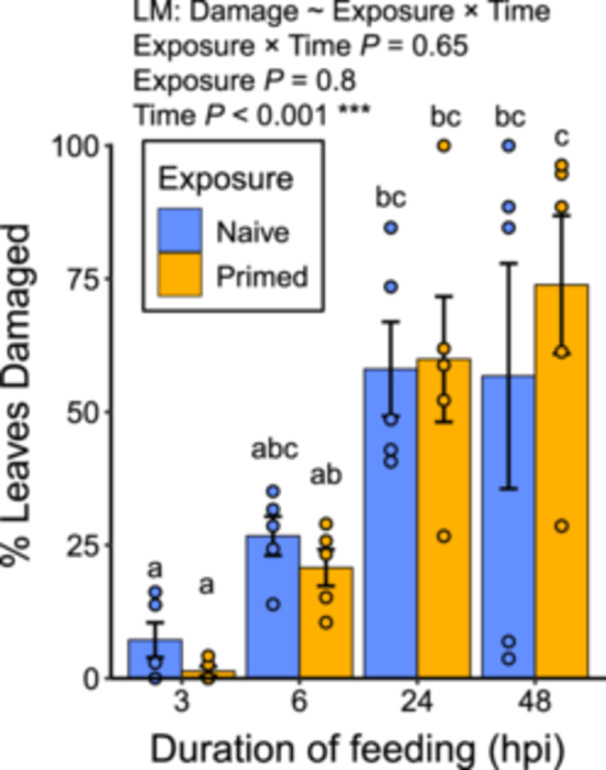 Figure 4
Peer Reviews
No public reviews on file for this paper yet. If you reviewed it on a platform where reviews are public (OpenReview, ICLR, NeurIPS, ICML), you can paste yours below so the community can read it here.
Videos
No videos yet. Explain this paper in a talk, walkthrough, or lecture? Add one.
Taxonomy
TopicsInsect-Plant Interactions and Control · Neurobiology and Insect Physiology Research · Invertebrate Immune Response Mechanisms