The power of ionic movements in plants
Rainer Hedrich, Ines Kreuzer

TL;DR
The paper explores how ionic movements and new optogenetic tools help study electrical signals in plants, particularly in the Venus flytrap.
Contribution
The paper introduces new optogenetic tools for noninvasive control of plant membrane potential and ionic signals.
Findings
Optogenetic tools allow remote control of membrane potential and ionic messengers in plants.
These tools can help study local and long-distance information management in plant signaling.
Abstract
The movement of ion‐driven electrogenic events known as plant action potentials in the Venus flytrap Dionaea muscipula has first been recognized in Darwin's time. Besides electrophysiological techniques making use of current‐ and voltage‐recording electrodes, today an ever‐growing spectrum of tools has become available, that report online changes in membrane potential and ion concentration. This represents a big step forward, particularly in comparison to the ‘dark’ times when calcium‐signaling studies could not take advantage of Ca2+ reporters. Very recently, the first tools from a potpourri of light‐gated ion channels routinely used in neurobiology took the plant signaling field to a new level. This kind of genetically encoded, noninvasive opto‐tools can be activated by light and provide for remote controlling the membrane potential and ionic second messengers such as Ca2+ and H+. In…
Genes, proteins, chemicals, diseases, species, mutations and cell lines named across the full text — each resolved to its canonical identifier and authoritative record.
Click any figure to enlarge with its caption.
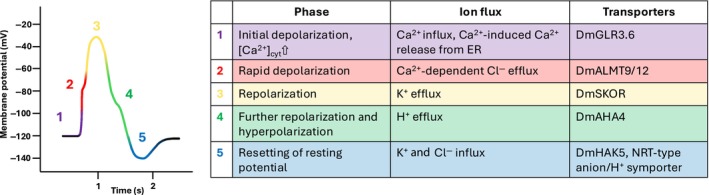 Figure 1
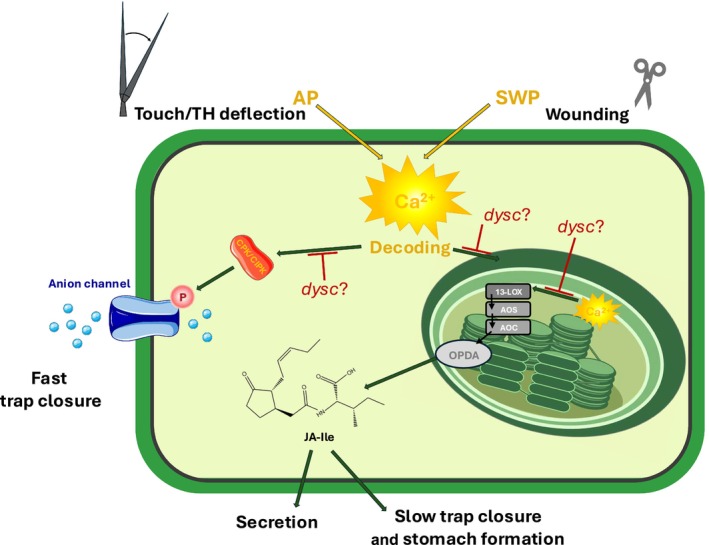 Figure 2
Peer Reviews
No public reviews on file for this paper yet. If you reviewed it on a platform where reviews are public (OpenReview, ICLR, NeurIPS, ICML), you can paste yours below so the community can read it here.
Videos
No videos yet. Explain this paper in a talk, walkthrough, or lecture? Add one.
Taxonomy
TopicsPlant and Biological Electrophysiology Studies · Plant Molecular Biology Research · Light effects on plants