Presentation and Outcomes of CNS Tumors Associated With Phakomatoses Syndromes From a Specialized Neuro‐Oncology Practice in India
Anuradha Krishnan, Yamini Baviskar, Abhishek Chatterjee, Archya Dasgupta, Sridhar Epari, Arpita Sahu, Girish Chinnaswamy, Nandini Menon, Aliasgar Moiyadi, Tejpal Gupta, Jayant Sastri‐Goda

TL;DR
This study examines the outcomes of brain tumors linked to phakomatoses syndromes in India, showing that combined treatments lead to encouraging survival rates.
Contribution
The paper provides detailed survival data and treatment outcomes for CNS tumors associated with phakomatoses syndromes in a specialized Indian neuro-oncology setting.
Findings
Patients with NF1 had 3-year progression-free survival of 76.4% and overall survival of 87.7%.
NF2 patients showed 5-year progression-free survival of 37.3% with all surviving at 5 years.
Multimodal treatment improves outcomes for phakomatoses-associated CNS tumors.
Abstract
Phakomatoses‐associated primary central nervous system (CNS) tumors are therapeutically challenging due to young age of onset, multiple tumors, and prolonged morbidity from long‐term survival. This study evaluated demographics, survival, and prognostic factors of patients with phakomatoses‐associated CNS tumors treated at a specialized neuro‐oncology service in India. Consecutive patients diagnosed and managed between 2000 and 2022 were included in this retrospective study. Data were retrieved from electronic medical records. Treatment decisions were multidisciplinary and included maximal safe resection, radiation (RT), and systemic therapy as indicated. Kaplan–Meier survival analysis evaluated overall survival (OS) and progression‐free survival (PFS). Univariate analyses used the log‐rank test, and multivariate analyses the restricted mean survival time. A total of 121 patients were…
Genes, proteins, chemicals, diseases, species, mutations and cell lines named across the full text — each resolved to its canonical identifier and authoritative record.
Click any figure to enlarge with its caption.
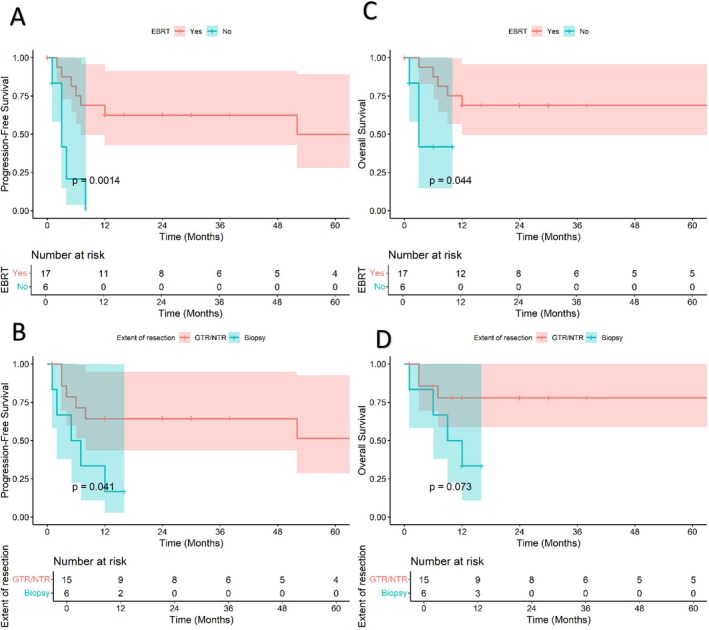 Figure 1
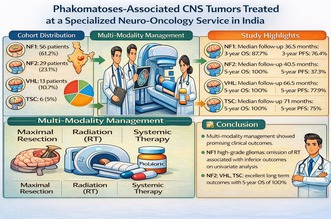 Figure 2
Peer Reviews
No public reviews on file for this paper yet. If you reviewed it on a platform where reviews are public (OpenReview, ICLR, NeurIPS, ICML), you can paste yours below so the community can read it here.
Videos
No videos yet. Explain this paper in a talk, walkthrough, or lecture? Add one.
Taxonomy
TopicsNeurofibromatosis and Schwannoma Cases · Vascular Malformations Diagnosis and Treatment · Spinal Hematomas and Complications