Saliva as a Reliable and Non-invasive Sample for Detecting Influenza A in Severe Acute Respiratory Infection Cases
Junko S Takeuchi, Nobuaki Matsunaga, Ai Tsukada, Noriko Iwamoto, Noriko Fuwa, Takahiro Ichikawa, Yasuyuki Kato, Yuka Tomita, Hiroki Kitagawa, Masaya Yamato, Tetsuji Aoyagi, Hideharu Hagiya, Ryota Hase, Shuji Hatakeyama, Tohru Inaba, Koichi Izumikawa, Yoshio Takesue, Moto Kimura

TL;DR
Saliva is a reliable, non-invasive alternative to nasal swabs for detecting influenza in severe respiratory cases, especially within the first week of symptoms.
Contribution
This study demonstrates saliva's superior sensitivity over nasal vestibular swabs and validates the GenPad® rapid test with saliva for influenza detection.
Findings
Saliva samples showed 87.5% sensitivity compared to 31.3% for nasal vestibular swabs in RT-qPCR.
GenPad® achieved 92.9% performance using saliva samples compared to RT-qPCR.
Saliva consistently tested positive within seven days of symptom onset, with 100% agreement.
Abstract
Background Nasopharyngeal swab sampling remains the gold standard for influenza diagnosis; however, it has several limitations, including dependence on medical staff, invasiveness, potential for nosocomial transmission, and occupational exposure risk. Non-invasive alternatives, such as saliva and nasal vestibular swabs, may improve patient comfort and participation in clinical studies. In addition, diagnosis with reverse transcription real-time quantitative polymerase chain reaction (RT-qPCR) is often delayed because it requires trained laboratory technicians and facilities with appropriate laboratory settings. Although rapid diagnostic devices such as the GenPad® offer potential alternatives to RT-qPCR, their performance with non-invasive samples remains insufficiently explored. This study addresses the two key questions for influenza detection in severe acute respiratory infection…
Genes, proteins, chemicals, diseases, species, mutations and cell lines named across the full text — each resolved to its canonical identifier and authoritative record.
Click any figure to enlarge with its caption.
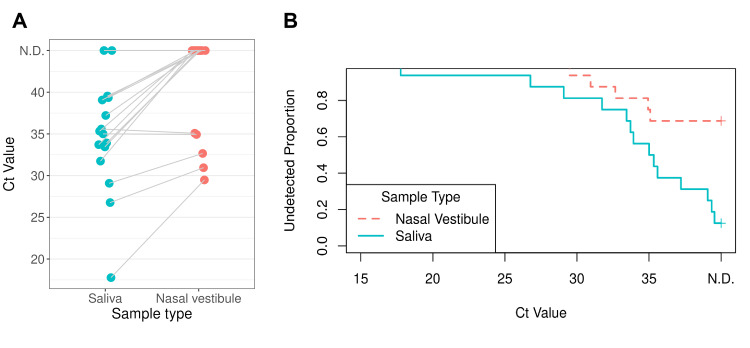 Figure 1
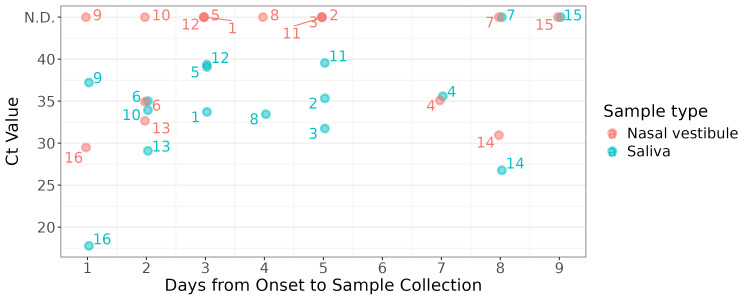 Figure 2
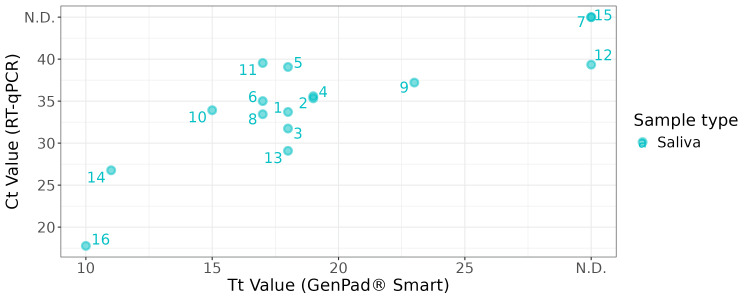 Figure 3
Peer Reviews
No public reviews on file for this paper yet. If you reviewed it on a platform where reviews are public (OpenReview, ICLR, NeurIPS, ICML), you can paste yours below so the community can read it here.
Videos
No videos yet. Explain this paper in a talk, walkthrough, or lecture? Add one.
Taxonomy
TopicsSARS-CoV-2 detection and testing · Influenza Virus Research Studies · Biosensors and Analytical Detection