Kinematic Alignment Versus Mechanical Alignment in Total Knee Arthroplasty: A Systematic Review of Mid-term Functional Outcomes
Amr H Ahmed, Shajee-ud Din, Kayden Chahal, Charlotte Rowe, Mohamed Shakshak

TL;DR
This study compares two surgical techniques for knee replacement and finds similar mid-term results, with some small improvements in patient-reported outcomes for one method.
Contribution
A systematic review comparing mid-term functional outcomes of kinematic versus mechanical alignment in total knee arthroplasty.
Findings
Kinematic alignment showed statistically significant improvements in patient-reported outcome measures compared to mechanical alignment.
Radiographic analyses confirmed alignment patterns consistent with kinematic alignment without adverse clinical effects at mid-term follow-up.
Revision rates were low in both groups, but long-term durability and risks like aseptic loosening remain understudied.
Abstract
Total knee arthroplasty (TKA) is frequently performed for advanced knee osteoarthritis. Mechanical alignment (MA) targets restoration of a neutral limb axis, whereas kinematic alignment (KA) aims to reproduce an individual’s native pre-arthritic knee alignment. This systematic review evaluates comparative mid-term outcomes (≥2 years) following KA and MA in primary TKA. Electronic searches of MEDLINE (PubMed), Embase, and Cochrane CENTRAL were undertaken, with additional screening of Google Scholar. Following duplicate removal and eligibility assessment, 16 primary comparative studies were included. Evaluated outcomes comprised patient-reported outcome measures (PROMs), range of motion (ROM), radiographic alignment, gait parameters, postoperative complications, and implant survivorship. At the mid-term follow-up, ROM was comparable between KA and MA (mean difference = +2.8 degrees, 95%…
Genes, proteins, chemicals, diseases, species, mutations and cell lines named across the full text — each resolved to its canonical identifier and authoritative record.
Click any figure to enlarge with its caption.
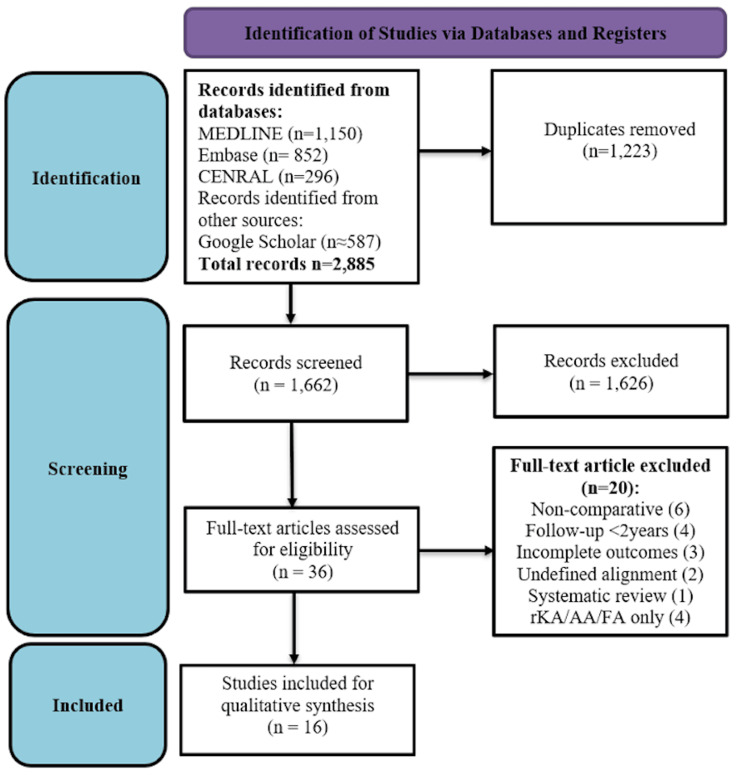 Figure 1
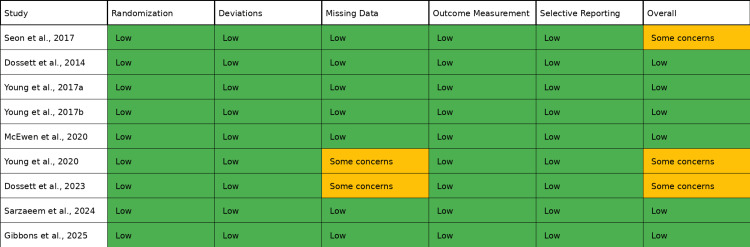 Figure 2
Peer Reviews
No public reviews on file for this paper yet. If you reviewed it on a platform where reviews are public (OpenReview, ICLR, NeurIPS, ICML), you can paste yours below so the community can read it here.
Videos
No videos yet. Explain this paper in a talk, walkthrough, or lecture? Add one.
Taxonomy
TopicsTotal Knee Arthroplasty Outcomes · Knee injuries and reconstruction techniques · Ferroelectric and Piezoelectric Materials