Molecular mechanism of exchange coupling in CLC chloride/proton antiporters
Deniz Aydin, Chih-Ta Chien, Jürgen Kreiter, Amy R. Nava, Jasmina M. Portasikova, Lukas Fojtik, Briana L. Sobecks, Catalina Mosquera, Petr Man, Ron O. Dror, Wah Chiu, Merritt Maduke

TL;DR
This study reveals how CLC transporters exchange chloride and protons using a detailed model based on structural and dynamic analyses.
Contribution
A complete mechanistic model of CLC transporters' 2:1 Cl-/H+ exchange is established through integrated experimental and computational approaches.
Findings
Conformational dynamics in CLC-ec1 were identified using cryo-EM and simulations, revealing Cl- release and H+ transport steps.
Water wires facilitate H+ transport independently of Cl- binding, challenging previous assumptions about coupling.
Weak Cl- binding can still support Cl-/H+ coupling, as shown through functional assays on mutant proteins.
Abstract
The ubiquitous CLC membrane transporters are unique in their ability to exchange anions for cations. Despite extensive study, there is no mechanistic model that fully explains their 2:1 Cl‒/H+ stoichiometric exchange mechanism. Here, we provide such a model. Using differential hydrogen-deuterium exchange mass spectrometry, cryo-EM structure determination, and molecular dynamics simulations, we uncovered conformational dynamics in CLC-ec1, a bacterial CLC homolog that has served as a paradigm for this family of transporters. Simulations based on a cryo-EM structure at pH 3 revealed critical steps in the transport mechanism, including release of Cl‒ ions to the extracellular side, opening of the inner gate, and water wires that facilitate H+ transport. Surprisingly, these water wires occurred independently of Cl‒ binding, prompting us to reassess the relationship between Cl‒ binding and…
Genes, proteins, chemicals, diseases, species, mutations and cell lines named across the full text — each resolved to its canonical identifier and authoritative record.
Click any figure to enlarge with its caption.
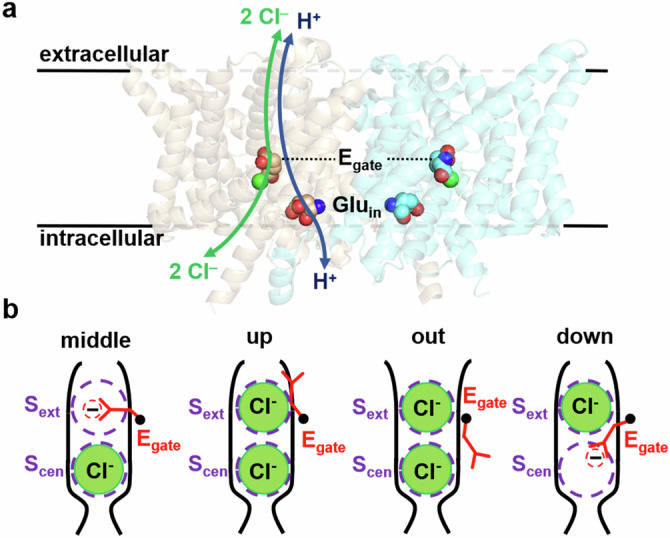 Figure 1
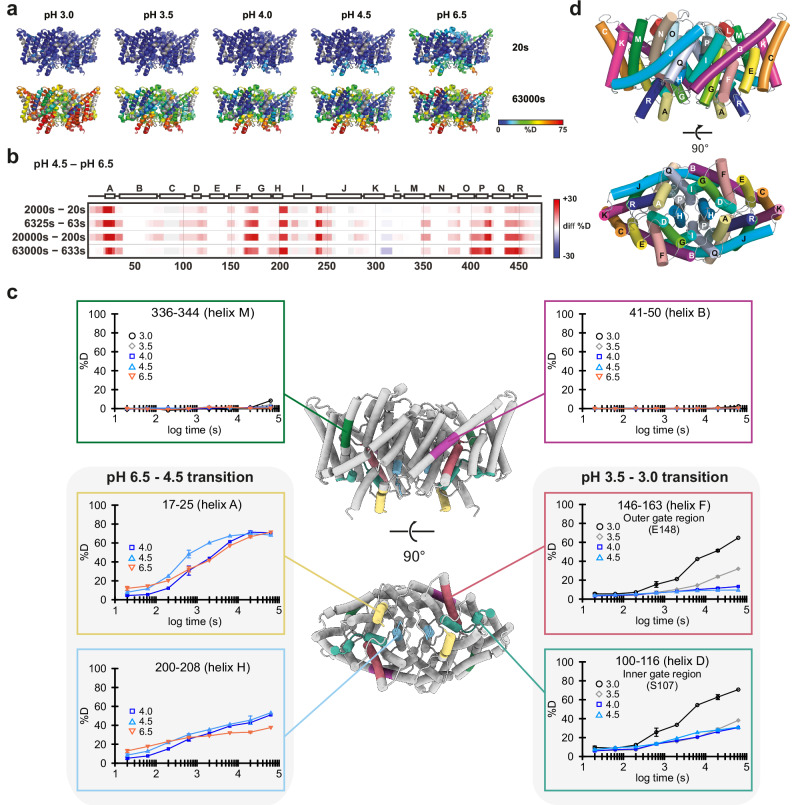 Figure 2
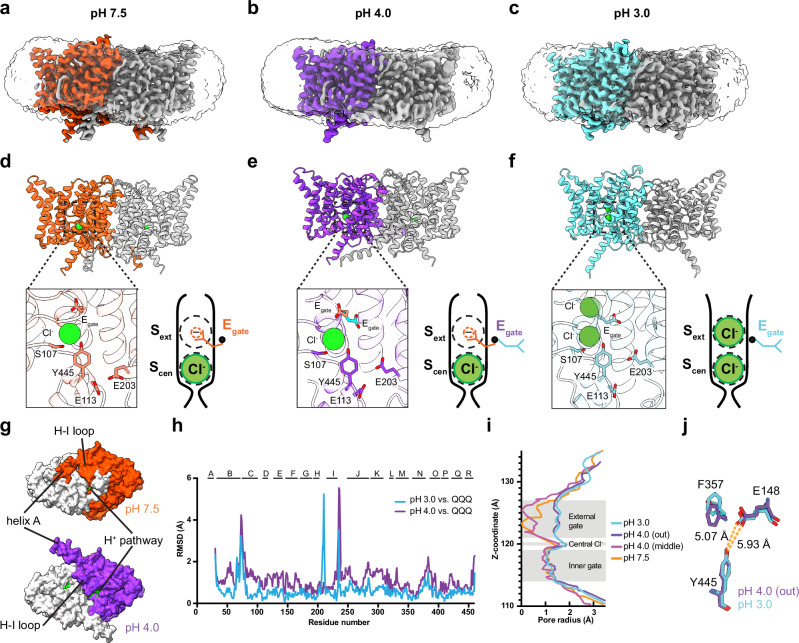 Figure 3
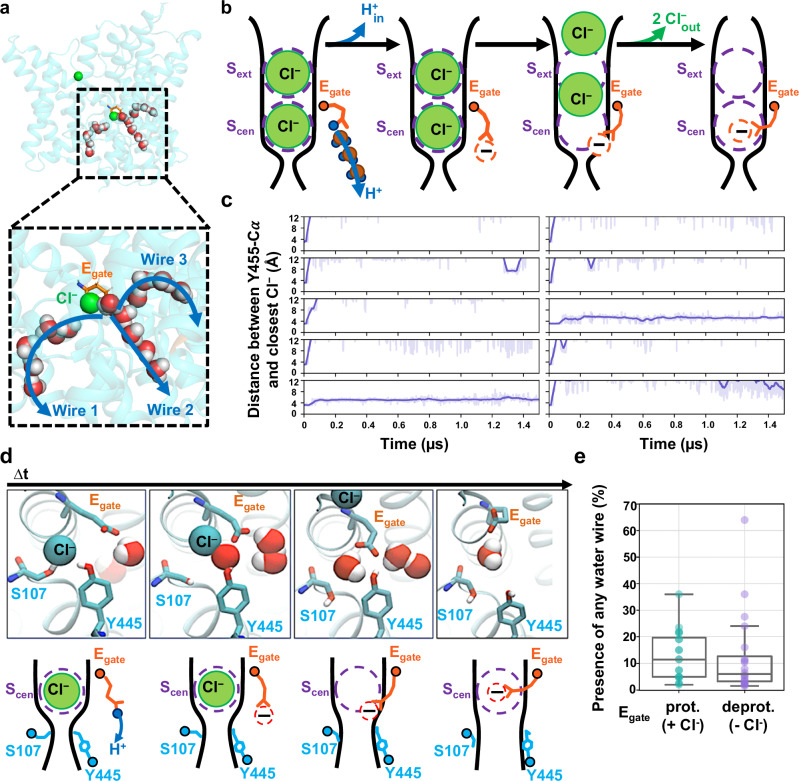 Figure 4
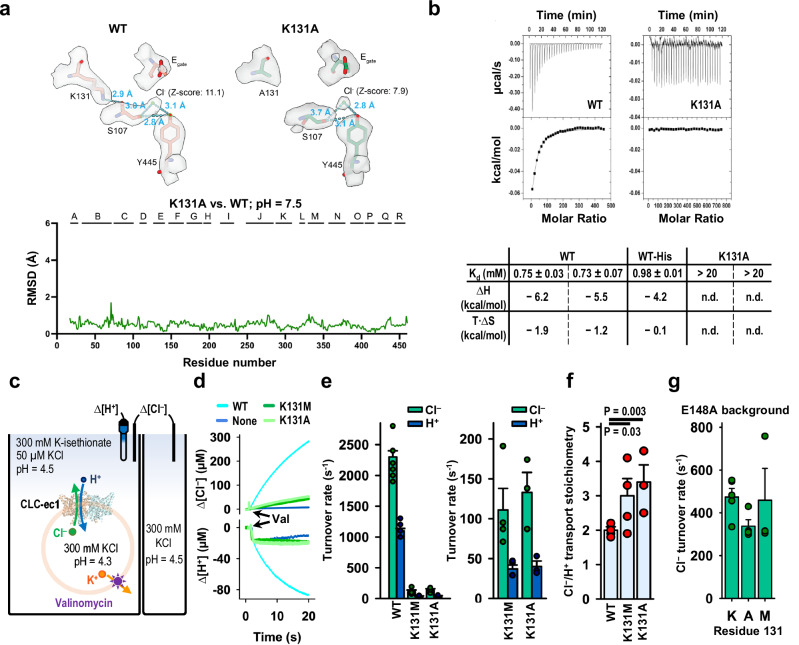 Figure 5
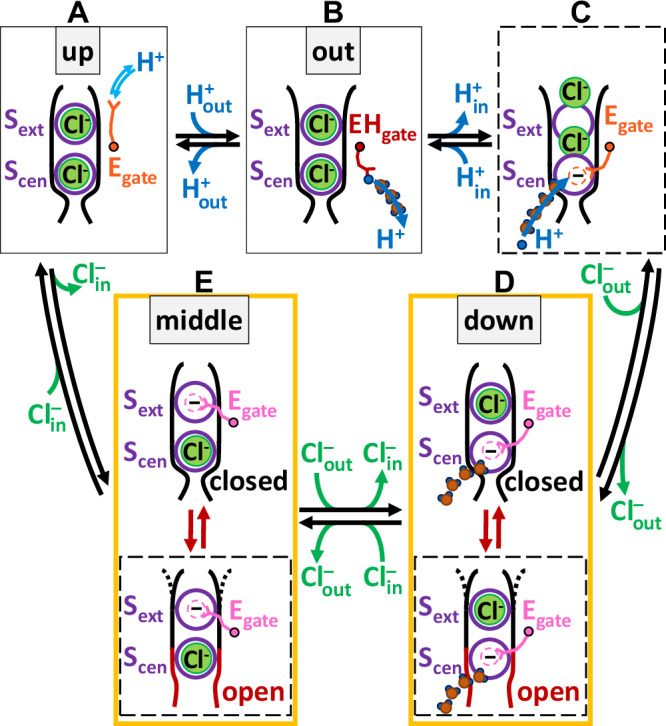 Figure 6
Peer Reviews
No public reviews on file for this paper yet. If you reviewed it on a platform where reviews are public (OpenReview, ICLR, NeurIPS, ICML), you can paste yours below so the community can read it here.
Videos
No videos yet. Explain this paper in a talk, walkthrough, or lecture? Add one.
Taxonomy
TopicsIon channel regulation and function · Ion Transport and Channel Regulation · Molecular Sensors and Ion Detection